

Having fallen in love with the riverside land and overgrown gardens
We visited Vinh Lam village, Lam Giang commune, Lao Cai province on an early winter day. Along the alluvial plains bordering the Red River, the endless green of banana plantations is gradually replacing the previously unproductive areas of corn, rice, and mixed gardens.
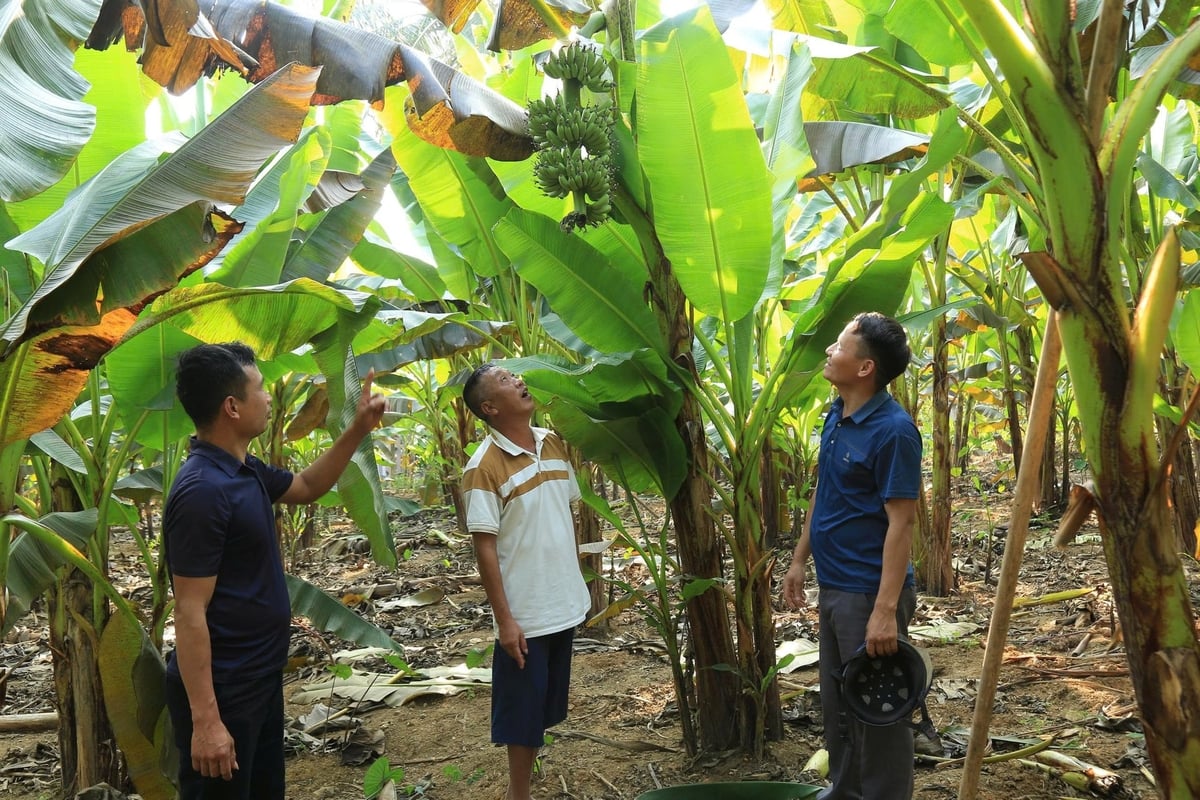
The royal banana plantations have replaced less productive corn and rice fields, bringing a decent income to the people. Photo: Thanh Tien.
Leading us on a tour of his lush green garden, Mr. Nguyen Van Loi, one of the pioneering households in the crop restructuring program, couldn't hide his joy as he looked at the bunches of bananas laden with fruit, waiting to be harvested.
Mr. Loi's family currently owns more than 5 sao (approximately 0.5 hectares) of mixed orchards. Previously, this area was mainly used to grow cinnamon or other crops, but the economic efficiency was low and the care was laborious. Recognizing that the fertile alluvial soil along the Red River was suitable for fruit trees, Mr. Loi decided to switch to growing the "royal banana" variety.
"This banana variety is very easy to grow; once it takes root, it thrives. We've had seedlings for a long time, so we can just gradually propagate them. I'm planning to expand to the entire alluvial plain to specialize in growing this crop," Mr. Loi shared.
According to Mr. Loi's experience, growing bananas is much easier than growing corn or other crops. The average planting density is about 50-60 plants per sao (approximately 1000 square meters). The secret to getting large bunches of beautiful bananas lies in pruning and fertilizing. Only 3 plants should be kept per clump to concentrate nutrients on the bunch.
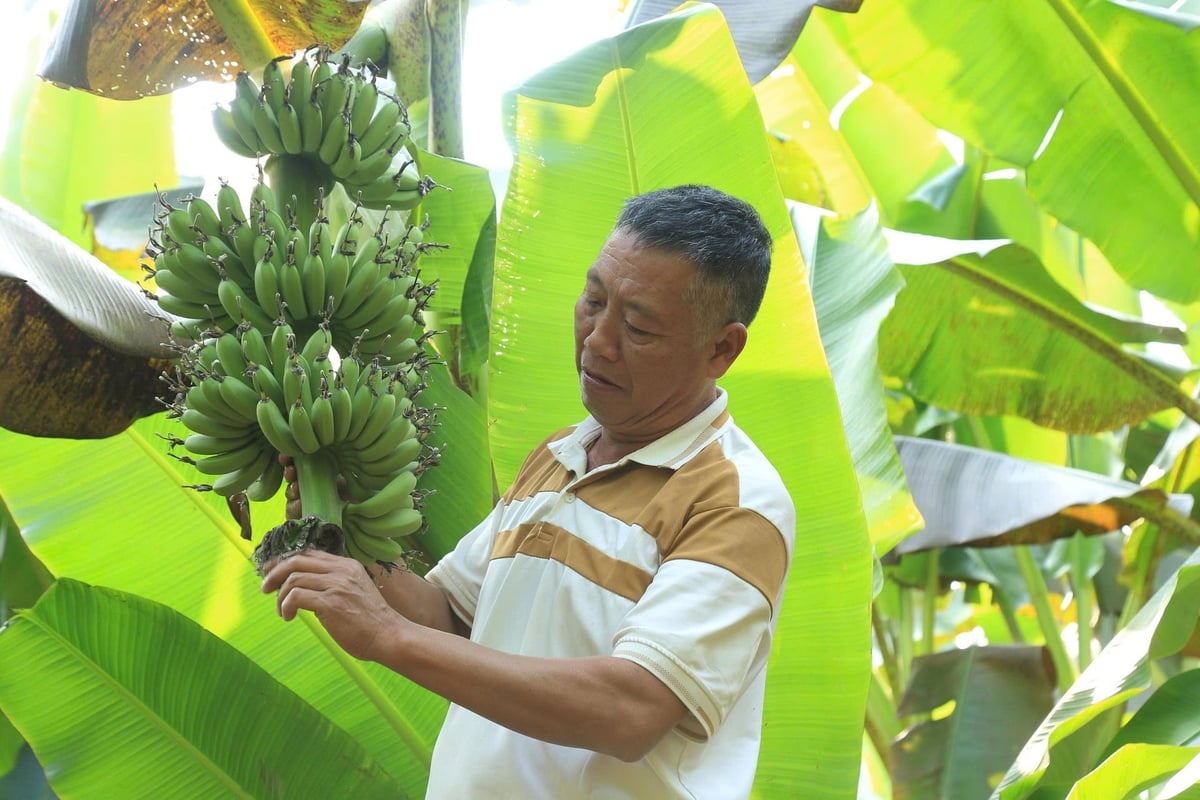
Mr. Loi's family converted more than 5 acres of mixed garden land into banana plantations. Photo: Thanh Tien.
To protect the fruit, the locals carefully wrap each bunch of bananas in plastic bags. This method helps prevent frost from darkening the peel, promotes faster growth and better appearance, and also prevents pests such as stem borers and fruit flies from damaging the fruit.
Superior economic efficiency compared to corn and rice.
Switching from corn to bananas has also brought joy to the family of Mr. Vu Van Hung, a resident of Vinh Lam village. With an area of over 6 sao (approximately 6,000 square meters), Mr. Hung previously grew corn twice a year. However, the corn was mainly used to feed chickens and ducks and did not provide a significant direct income. Since switching to commercial banana cultivation three years ago, his family's income has increased two to three times.
Hung said enthusiastically, "Growing bananas is much easier; it doesn't require the hard work of plowing and tilling like growing corn. This alluvial soil is very suitable; the plants grow naturally, and they hardly need much fertilizer to thrive."
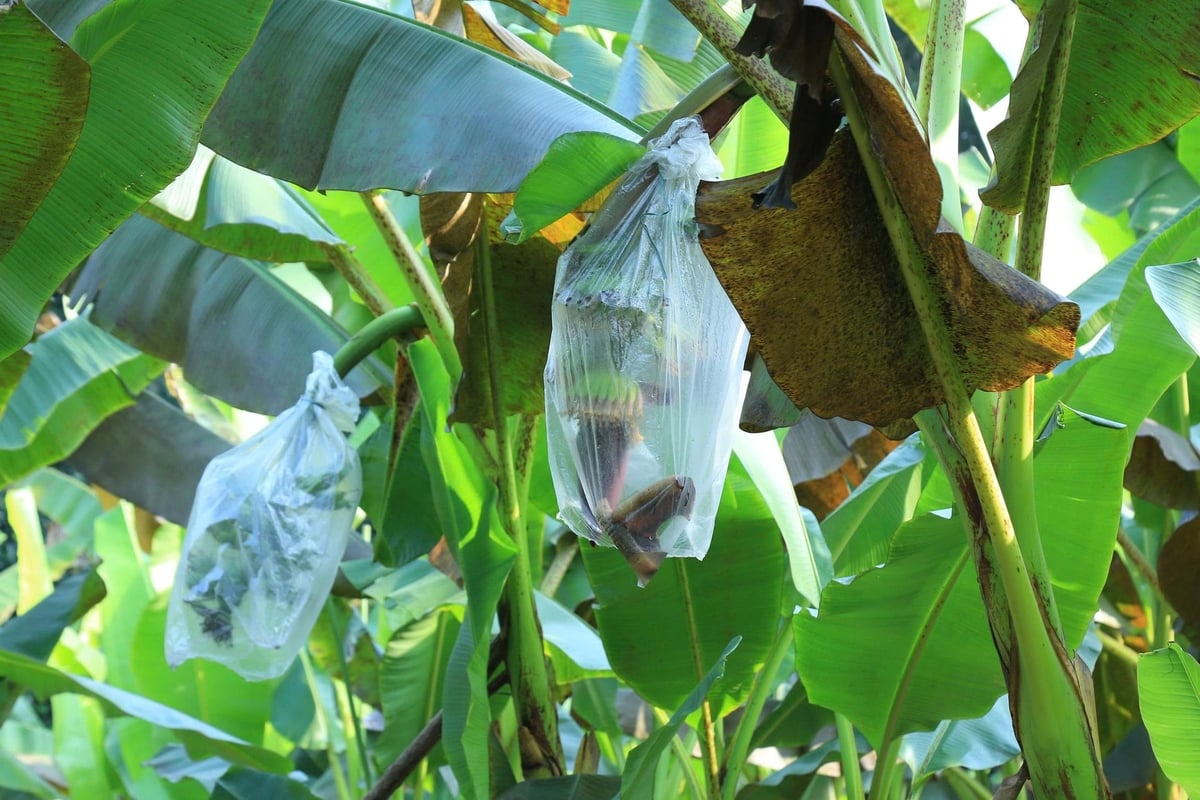
Banana bunches are wrapped in plastic bags by locals to protect them from pests and diseases. Photo: Thanh Tien.
In terms of economic efficiency, a bunch of royal bananas can sell for up to 140,000 VND (approximately 20,000 VND per bunch) when prices are high. Even during the off-season, the price fluctuates between 10,000 and 12,000 VND per bunch. With a short harvesting cycle (from flowering to harvesting in the summer only about 40 days), banana trees provide income year-round.
With 50-60 plants per sao (360m2), each banana clump yields about 3 bunches per year. After deducting expenses, each sao of bananas brings in profits many times higher than growing rice or corn.
Besides harvesting the fruit, the banana trunk and leaves are also fully utilized after being cut down. The trunks are used as feed for livestock and poultry, helping to save on animal husbandry costs; the decaying leaves and trunks left in the garden become an excellent source of organic fertilizer, retaining moisture and improving soil, creating a closed-loop, safe, and sustainable production process.
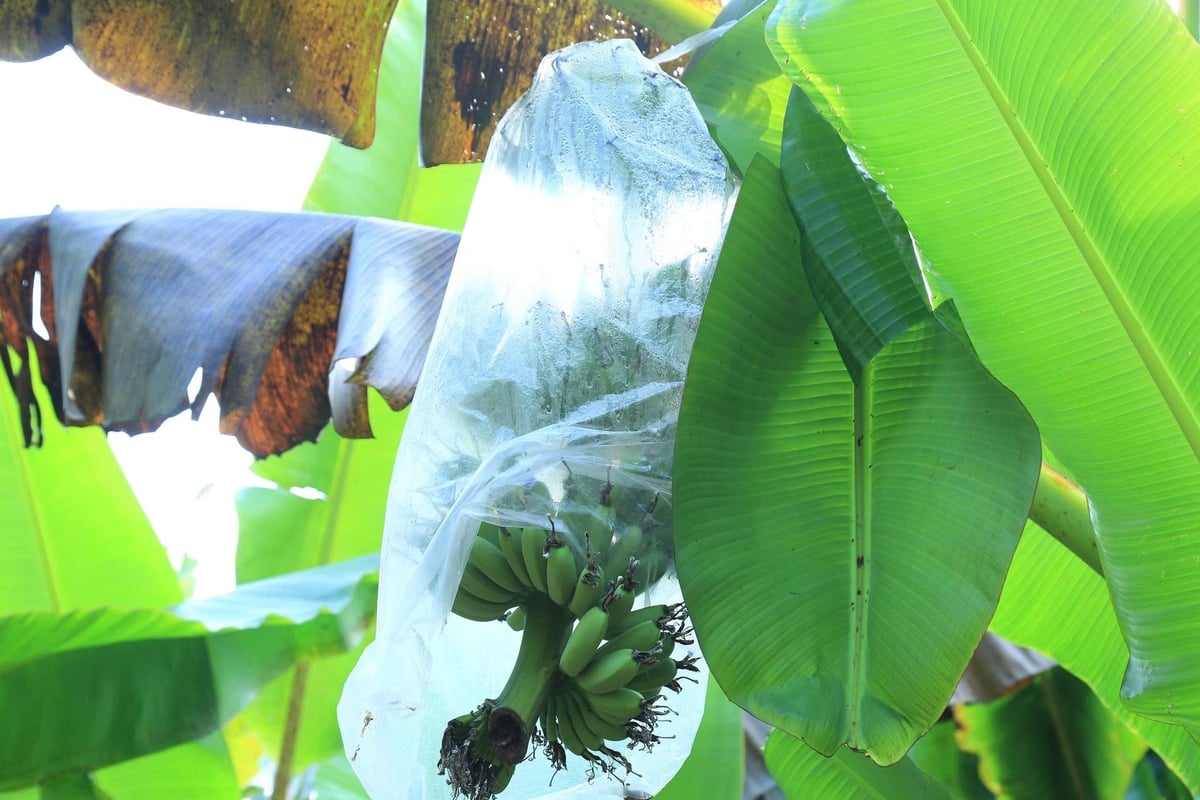
Each plot of land planted with royal bananas can yield approximately 20 million VND per year. Photo: Thanh Tien.
Sustainable development orientation, value enhancement.
According to Mr. Nguyen Van Duc, head of Vinh Lam village, the banana planting movement is spreading throughout the village. Currently, there are more than 10 households with large-scale banana cultivation, each with more than one acre, while many households cultivate on a smaller scale, utilizing their unused garden land.
"People are actively converting areas of ponds, gardens, and low-yielding corn fields, even low-productivity rice paddies in streams and creeks, to banana cultivation. With current market prices, banana trees offer significantly better economic returns than rice, while requiring considerably less care," Mr. Duc affirmed.
This positive shift has significantly contributed to local poverty reduction efforts. Vinh Lam village currently has 154 households. Thanks to economic development, the poverty rate has dropped sharply, with only 2 poor households and 2 near-poor households remaining. The average per capita income in the village is approximately 55 million VND/person/year. The villagers' bold decision to diversify their crops has created a stable source of income, leading to a continuous improvement in their material and spiritual lives.
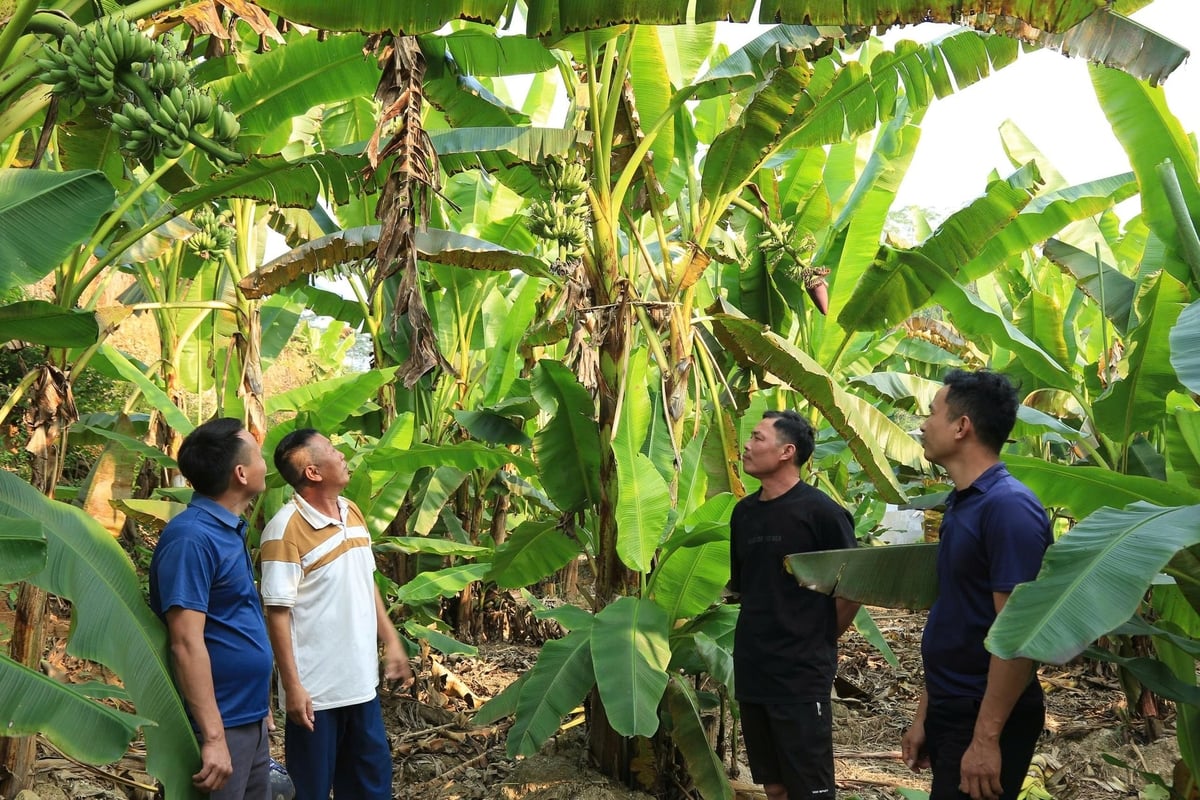
Lam Giang commune is guiding households to cooperate in production to develop the cultivation of the royal banana variety sustainably. Photo: Thanh Tien.
The market for Lam Giang's royal bananas is currently quite favorable. Traders often come directly to the orchards to purchase the bananas, or the locals transport them themselves to collection points. Lam Giang bananas are popular because of their attractive appearance, rich sweetness, distinctive aroma, and especially because of their "clean" farming practices, which use minimal pesticides.
Currently, Lam Giang commune has about 18-20 hectares of banana plantations, concentrated in Phu Lam, Vinh Lam, Nghia Giang, and Nghia Dung villages. However, production remains fragmented, and no cooperative or association has been established to ensure stable product distribution.
Mr. Khong Van Hau, Vice Chairman of the Lam Giang Commune People's Committee, said: "Banana trees bring in a decent income, but the risks from natural disasters are very high, especially in low-lying areas along the river. Typhoon No. 3 in 2024 caused many banana plantations to be flooded and completely destroyed. Therefore, the commune's orientation is not to expand the planting area indiscriminately in flood-prone areas, but to plan for higher, safer locations."
For sustainable development, Lam Giang commune is setting specific directions. Besides encouraging people to switch to suitable crops, the commune focuses on linking with processing facilities to solve the problem of stable output, avoiding the situation of bumper harvests leading to price drops, and at the same time increasing the value of products.
Source: https://nongnghiepmoitruong.vn/chuoi-ngu-the-chan-ngo-lua-tren-dat-bai-ven-song-d788906.html











![Anticipating future trends: [Part 1] New livelihoods from floating tank frog farming model](https://vphoto.vietnam.vn/thumb/402x226/vietnam/resource/IMAGE/2025/12/13/1765607984017_dsc06888-210118_726-133559.jpeg)























































Comment (0)