

 |
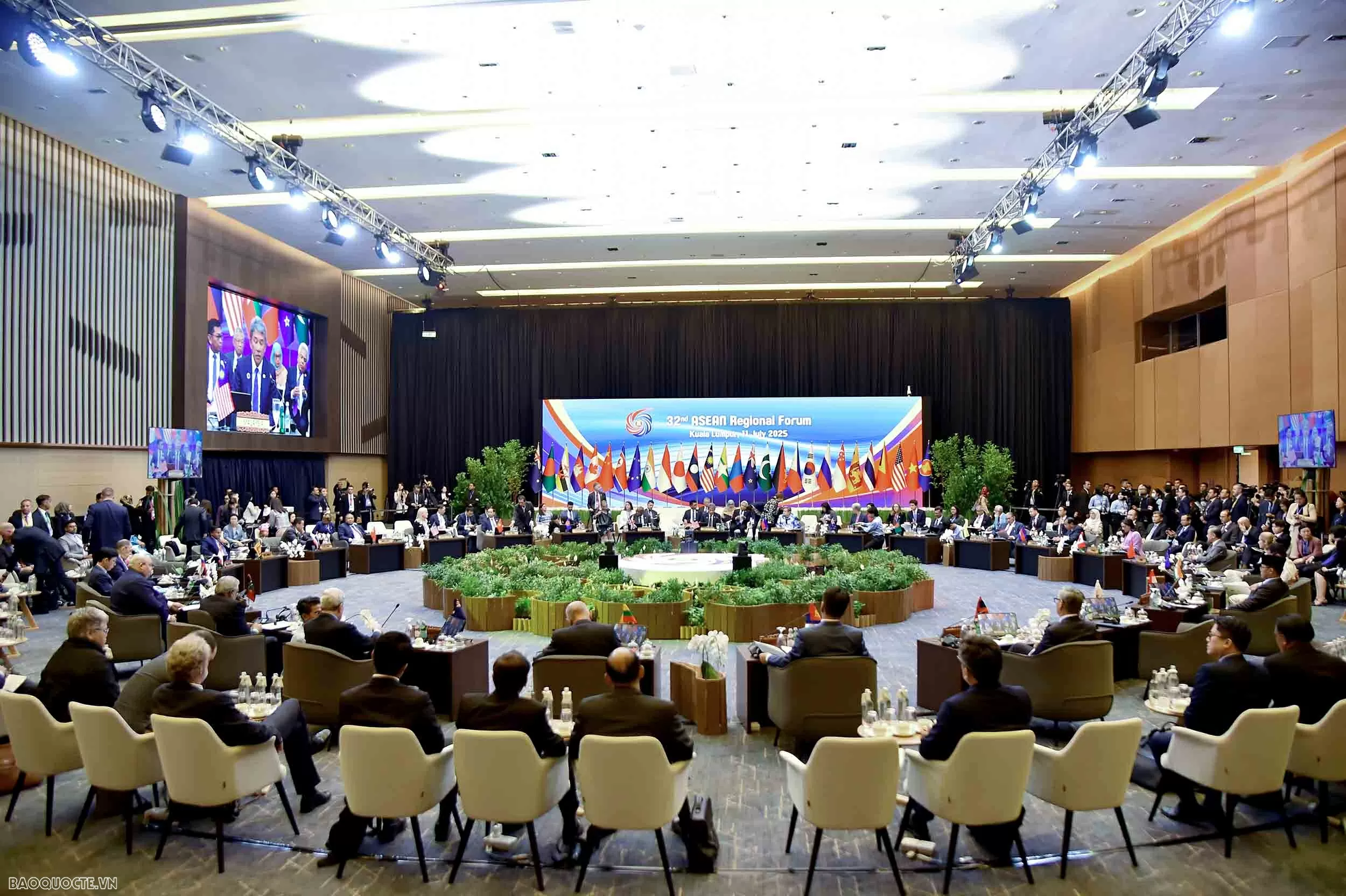
| The 32nd ASEAN Regional Forum (ARF) was held within the framework of the ASEAN Foreign Ministers' Meeting in Malaysia on July 11. (Photo: Quang Hoa) |
In a recent analysis on the Modern Diplomacy website, expert Abdullah Akbar Rafsanjani, a research fellow at the Center for Security and Foreign Affairs Studies (CESFAS), analyzed the role of ASEAN in regional and global peace .
According to expert Abdullah Akbar Rafsanjani, in today's global context, Southeast Asia has demonstrated enduring regional stability, tested over a long period. Since its founding 58 years ago, ASEAN has maintained regional cohesion based on the principles of non-interference in the internal affairs of member states, dialogue, and consensus.
If peace is the global narrative, then Southeast Asia should be at the center of that narrative, not only because of its stability but also because of its capacity to resolve differences through dialogue rather than confrontation.
For nearly six decades, Southeast Asian countries have maintained a path of building regional solidarity to avoid conflict. ASEAN was founded with the goal of not being drawn into the vortex of the Cold War; its founders recognized that regional stability could only be achieved if nations trusted each other and had a common forum.
Expert Abdullah Akbar Rafsanjani highlighted that the Treaty of Friendship and Cooperation in Southeast Asia (TAC), established in 1976, has become a milestone in the formation of a regional framework to ensure the peaceful resolution of conflicts, followed by many initiatives such as the ASEAN Regional Forum (ARF), the East Asia Summit (EAS)...
Southeast Asia is a testament to the fact that peace does not necessarily stem from military alliances, but rather from dialogue, diplomacy, and unity in diversity. This is the region's strength, making ASEAN the "heart" of world peace in a multipolar world.
Source: https://baoquocte.vn/chuyen-gia-ly-giai-vi-sao-asean-la-trai-tim-cua-hoa-binh-the-gioi-321191.html














































































Comment (0)