

Against the backdrop of a rapidly changing world and challenges related to food security, climate change, and the widening development gap, the 14th ASEAN Ministerial Meeting on Rural Development and Poverty Eradication in Bangkok, Thailand, became a forum for countries to affirm their political will and shape the long-term direction for the region.
The key messages delivered at the conference indicate that ASEAN is shifting significantly from a one-size-fits-all approach to rural development towards a comprehensive, smart, and sustainable model.

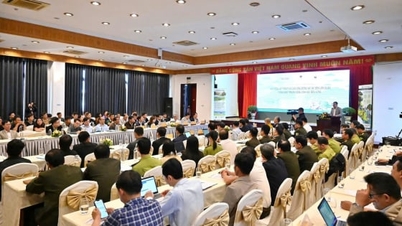
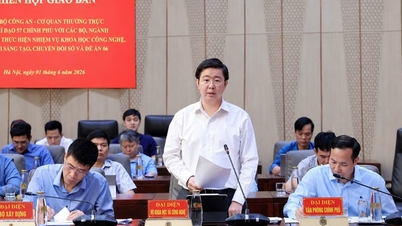
The 14th ASEAN Ministerial Meeting on Rural Development and Poverty Eradication in Bangkok, Thailand. Photo: Nguyen Thanh.
Speaking at the conference, Vietnam's Deputy Minister of Agriculture and Environment , Vo Van Hung, highly appreciated the efforts of ASEAN member countries and partners in implementing the Framework for Action on Rural Development and Poverty Eradication for the period 2021-2025.
According to the Deputy Minister, regional cooperation has yielded many important results, contributing to improving the lives of rural people, enhancing resilience, and creating significant changes in multidimensional poverty reduction. Vietnam, with its proactive and responsible spirit, continues to be an active member promoting overall cooperation.
The report presented at the conference highlighted ASEAN's commitment to building an inclusive community where all citizens, especially vulnerable groups, have opportunities for development. The Joint Statement adopted by the Ministers reaffirmed ASEAN's strategic direction, which includes promoting innovation, applying technology, leveraging indigenous knowledge, and empowering communities to lay the foundation for sustainable development. This is a continuation of the spirit of the ASEAN Community Vision 2045, placing people at the center and emphasizing the goal of "leaving no one behind."
One of the most emphasized topics at the conference was the role of innovation and digital transformation in rural development. Ministers frankly acknowledged that technology is a crucial driver in narrowing the development gap, increasing labor productivity, and expanding market access opportunities. Promoting digital connectivity, online public services, high-speed internet, and technological solutions for agriculture will enable rural people to participate more deeply in the region's digital economy .
The conference also highlighted the role of indigenous knowledge, considered the foundation of culture and livelihoods for many ASEAN communities. Leveraging traditional wisdom in conjunction with innovation not only helps maintain identity but also creates new impetus for local economic development. Models such as the One Village One Product initiative, community-based enterprises, and cultural and handicraft preservation activities were emphasized as irreplaceable values in the process of building a united and inclusive ASEAN.

The national target program for building new rural areas and sustainable poverty reduction helps people increase their income. Photo: Nguyen Thanh.
Deputy Minister Vo Van Hung also shared Vietnam's experience over more than a decade in implementing the National Target Program for New Rural Development and Sustainable Poverty Reduction. Thousands of infrastructure projects have been completed, millions of households have escaped poverty, and the economic, cultural, and social lives in many rural areas have changed significantly. Vietnam aims to essentially eliminate poverty below the minimum living standard by 2030 and increase average rural income by at least 2.5 times compared to 2020.
The Deputy Minister emphasized three important pillars in Vietnam's rural development vision: green rural areas, smart rural areas, and sustainable rural areas. This model is built to approach international standards, linking rural areas with the environment, technology, and integration. Vietnam also reaffirmed its commitment to closely coordinate with ASEAN countries to effectively implement the next phase of the Framework Action Plan.
Concluding the conference, the Joint Statement emphasized the responsibility of all countries to maintain transparent monitoring, evaluation, and reporting of progress to ensure that the results achieved bring equitable benefits to all communities.
At the same time, the conference assigned specific tasks to the ASEAN Senior Officials Meeting to strengthen inter-sectoral cooperation, promote the implementation of the Framework Action Plan 2026-2030, and create a fully operational foundation for the ASEAN Master Plan on Rural Development.
The 14th ASEAN Ministerial Meeting not only affirmed joint efforts in poverty eradication but also opened a new vision for rural development: modern, green, inclusive, and sustainable. This is a strong commitment to a more prosperous, humane, and resilient ASEAN rural future in the face of global challenges.
Source: https://nongnghiepmoitruong.vn/asean-cung-co-hop-tac-vi-nong-thon-ben-vung-d789035.html






















![[Photo] Reception to welcome General Secretary and President To Lam and his wife on their State visit to the Philippines](https://vphoto.vietnam.vn/thumb/1200x675/vietnam/resource/IMAGE/2026/06/01/1780295488620_vna-potal-chieu-dai-chao-mung-tong-bi-thu-chu-tich-nuoc-to-lam-va-phu-nhan-tham-cap-nha-nuoc-toi-philippines-8798060-7855-jpg.webp)


























































Comment (0)