

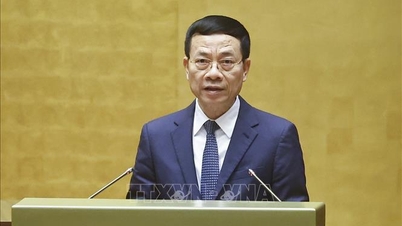
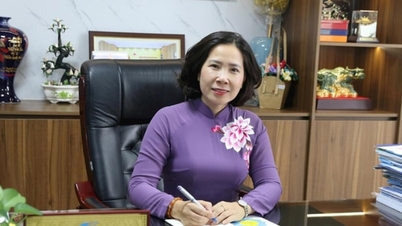
Explaining why only over 3% of the 2% interest rate subsidy package has been disbursed, Governor of the State Bank of Vietnam Nguyen Thi Hong stated that the decision to borrow or not is based on the calculations of businesses, not on a lack of information.
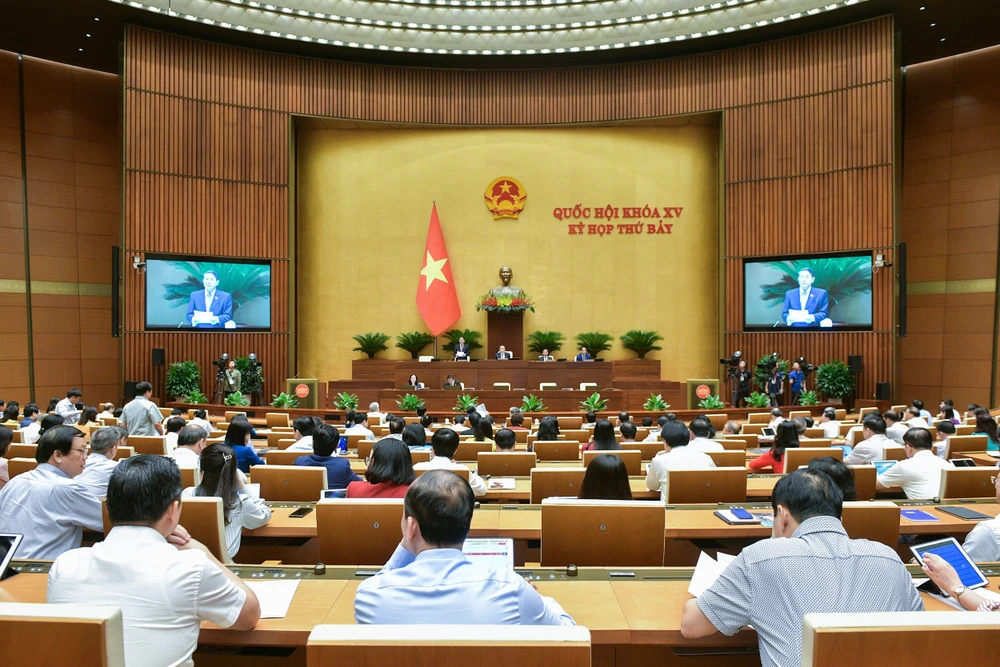
On the afternoon of May 25th, the National Assembly continued its plenary session discussion on the report of the supervisory delegation and the draft Resolution of the National Assembly on the results of the thematic supervision of "the implementation of Resolution No. 43/2022/QH15 dated January 11, 2022, of the National Assembly on fiscal and monetary policies supporting the socio -economic recovery and development program and the resolutions of the National Assembly on a number of important national projects until the end of 2023".
At the meeting, Governor of the State Bank of Vietnam, Nguyen Thi Hong, stated that Resolution 43 was implemented amidst a complex, unpredictable, and unprecedented global and domestic situation. Globally, due to the impact of the Russia-Ukraine conflict, countries implemented tight monetary policies. Domestically, there were also a number of unfavorable factors: the SCB Bank incident, the frozen real estate market, and difficulties in corporate bond issuance…
" The government has been making strenuous efforts to implement programs to alleviate difficulties for the economy," the female governor affirmed.
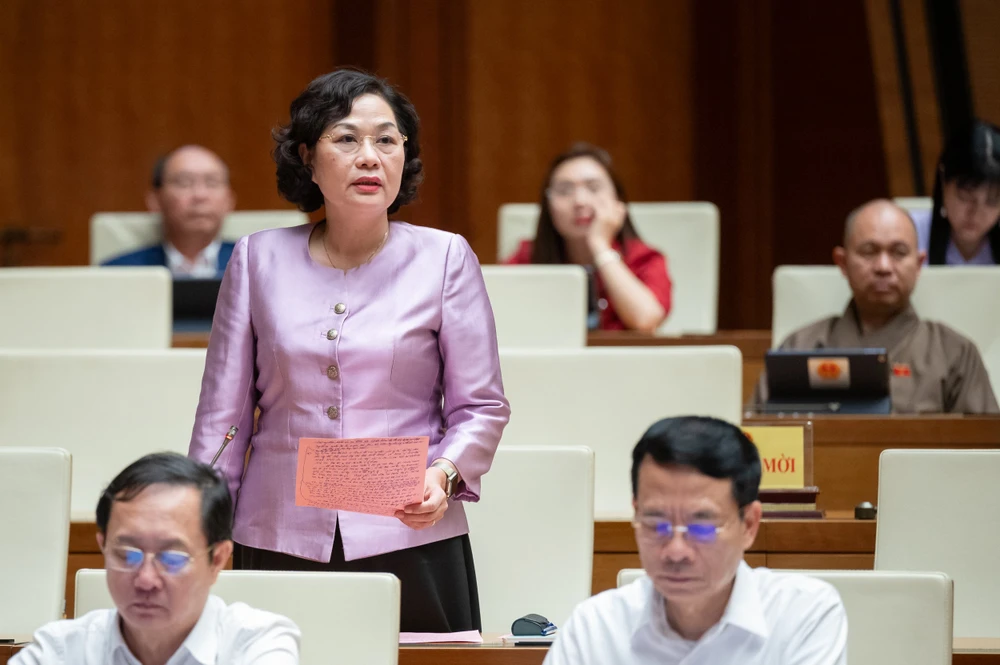
According to the head of the State Bank of Vietnam (SBV), regarding the 2% interest rate support policy, "no other program has received as much time and effort from the SBV in its implementation."
The State Bank of Vietnam (SBV) organized numerous conferences and instructed provincial and city branches to implement the program in many localities. However, acknowledging the low results of this program, the Governor explained that this policy is aimed at supporting businesses with the potential for recovery, i.e., those capable of repaying loans, and not a policy to solve the problems of all businesses in the economy facing difficulties.
"Because the loan capital in this program comes from funds mobilized by banks from the people. Only the capital from the 2% interest rate subsidy program of the Policy Bank is from the state budget. Therefore, commercial banks must lend according to current regulations, ensuring the ability to recover debts. So, whether the amount disbursed depends on the business's and the commercial bank's financial situation," the female Governor clarified.
Ms. Nguyen Thi Hong also stated that the State Bank of Vietnam has submitted a detailed report on the difficulties and limitations of this program to the Government and the National Assembly.
Responding to the assessment in the National Assembly's supervisory delegation's report that one of the reasons for the low disbursement rate under this policy is "insufficient communication with customers; according to a VCCI survey, only 29.5% of businesses are aware of this policy," Ms. Nguyen Thi Hong suggested further consideration of this assessment.
“Not only do the State Bank of Vietnam branches in localities organize conferences, but they also hold networking events and invite representatives from business associations. This means that members of business associations are able to access information through their representatives. Banks also post information on support policies on their websites… The VCCI only surveyed 8,000 private enterprises, which is less than 1% of the total number of enterprises nationwide, and conducted the survey in a short period of time, so it cannot be used as a guide to evaluate the entire program,” Ms. Nguyen Thi Hong clarified.
The Governor of the State Bank of Vietnam expressed his appreciation for the earlier statement by a National Assembly representative that, in a complex context, policies that are not yet aligned with reality are understandable, but the important thing is to learn lessons to support the people and ensure that budget funds reach businesses and individuals as quickly as possible. The Governor of the State Bank of Vietnam stated that, with the 2% interest rate support program, businesses shouldn't decide to borrow simply because they receive interest rate support. More importantly, businesses need to carefully consider what they will use the loan for and whether they have the ability to repay it.
"Interest rates are just one of the input costs, so to support businesses, tax solutions and other policies could be considered," said Ms. Nguyen Thi Hong.
In summary, with the 40 trillion VND interest rate subsidy package, 3.05% had been disbursed by the end of 2023, and the program has concluded. The government has reported and proposed to the National Assembly that no further resources be mobilized for this program. If the 2% interest rate subsidy policy continues, it could be integrated into another program, such as transferring it to the Social Policy Bank's support policy or other social security programs.
ANH PHUONG
Source: https://www.sggp.org.vn/co-the-can-nhac-giai-phap-thue-chinh-sach-khac-thay-vi-ho-tro-2-lai-suat-post741556.html


![[Photo] Two flights successfully landed and took off at Long Thanh Airport.](/_next/image?url=https%3A%2F%2Fvphoto.vietnam.vn%2Fthumb%2F1200x675%2Fvietnam%2Fresource%2FIMAGE%2F2025%2F12%2F15%2F1765808718882_ndo_br_img-8897-resize-5807-jpg.webp&w=3840&q=75)









































































Comment (0)