

Throughout the artificial intelligence boom, there have been numerous warnings about a speculative bubble that could rival the dot-com frenzy of the late 1990s, a period that ended in a catastrophic collapse and wave of bankruptcies.
The "dot-com bubble" (also known as the "tech bubble") is a term used to describe the period of explosive growth and collapse of the stock market, primarily occurring in the late 1990s (approximately 1995-2000).
Currently, global technology companies are spending hundreds of billions of dollars on advanced chips and data centers.
This move is not only to keep up with the surge in the use of chatbots like ChatGPT, Gemini, and Claude; but also to ensure they are ready for a more disruptive economic shift: from humans to machines.
The final cost could amount to trillions of dollars. This financing comes from venture capital, debt, and more recently, a number of unconventional deals that have garnered attention on Wall Street.
Even some of the most ardent AI proponents acknowledge that the market is booming, but still express belief in the technology's long-term potential. They argue that AI will reshape many industries, cure diseases, and advance human progress.
However, never before has so much money been spent so quickly on a technology that, however promising, has yet to be proven a profitable business model.
Executives who are quietly skeptical of the most hyped-up assessments of AI – or at least are scrambling to monetize it – may feel they have no choice but to catch up with their rivals' investments, or risk being left behind.
A trillion-dollar spending spree.
The figures released far exceeded all precedent. When Sam Altman, CEO of OpenAI, announced the $500 billion Stargate AI infrastructure plan in January, the price tag sparked skepticism.
Since then, competitors have ramped up spending, including Meta's Mark Zuckerberg, who has pledged to invest hundreds of billions of dollars in data centers.
Not to be outdone, Altman then stated that he expects OpenAI to spend "trillions of dollars" on infrastructure.
The big question is: Where does the money come from?
To fund these projects, companies are venturing into a new area. In September, chipmaker Nvidia announced an agreement to invest up to $100 billion in building OpenAI's data centers.
This agreement has led some analysts to question whether Nvidia is trying to financially back up its biggest customer so they can continue to buy Nvidia's expensive products.
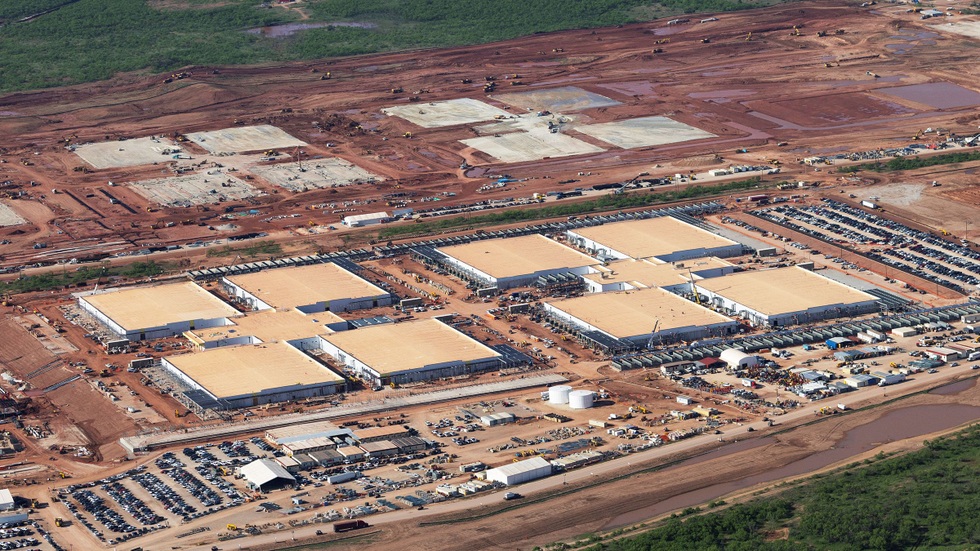
Open AI's data center is under construction (Photo: Written).
These concerns have plagued Nvidia throughout its boom period. The AI chip giant has supported dozens of companies, including AI model makers and cloud service providers.
Some of them later used that capital to acquire semiconductors from Nvidia. The deal with OpenAI was simply on a much larger scale.
OpenAI itself, which doesn't have the long-standing and profitable business operations of its partners Microsoft or Oracle, has also indicated that it may pursue debt financing. According to The Information, OpenAI expects to spend $115 billion in cash by 2029.
Other major tech companies are also becoming increasingly reliant on debt. Meta has turned to lenders to secure $26 billion in financing for a data center complex in Louisiana.
Similarly, JPMorgan Chase and Mitsubishi UFJ are leading a loan of over $22 billion to support Vantage Data Centers' plans to build a massive data center campus.
Is the return commensurate? The core question is, will all this money generate a profit?
According to a report by Bain&Co, by 2030, AI companies will need total annual revenue of $2 trillion just to cover computing power. However, Bain predicts its revenue could be $800 billion lower than that figure.
"The numbers being presented are so extreme that they're really hard to understand. I'm sure this number isn't zero, but it's a reasonable possibility that a huge amount of capital will be destroyed in this cycle," said David Einhorn, a prominent hedge fund manager at Greenlight Capital.
This craze isn't limited to the giants. More and more lesser-known companies are trying to capitalize on the data center craze.
Nebius, a cloud service provider spun off from Russia's Yandex, recently signed an infrastructure deal with Microsoft worth up to $19.4 billion. And Nscale, a lesser-known UK data center company, is partnering with Nvidia, OpenAI, and Microsoft.
Notably, Nscale previously focused on another vibrant area: cryptocurrency mining.
When technology doesn't live up to expectations.
The investment frenzy was overshadowed by persistent skepticism about the technology's true benefits. In August, investors became worried after researchers at the Massachusetts Institute of Technology (MIT) found that 95% of organizations did not get a return on their investments in AI initiatives.
More recently, researchers at Harvard and Stanford universities have offered a possible explanation. They discovered that employees are using AI to create "worklops"—a new term for "AI-generated work content disguised as good work, but lacking the content to meaningfully advance a task."
The promise of AI is to increase productivity. However, researchers have found that the prevalence of "worklops" could cost large organizations millions of dollars annually due to lost productivity.

More and more AI chatbots are being launched onto the market (Image: n8n Blog).
AI developers themselves are facing the challenge of dwindling profits. For years, they've been betting on the "law of scaling"—the idea that greater computing power, data, and models will inevitably lead to breakthroughs.
However, over the past year, these costly efforts seem to have stalled. After months of promoting GPT-5 as a breakthrough, OpenAI's release of the latest model in August has been met with mixed reactions.
In his speech, Sam Altman acknowledged that "we are still missing one rather important thing" to achieve general artificial intelligence (AGI).
These concerns are exacerbated by competition from China, where companies are flooding the market with low-cost AI models. While American companies are still considered leaders, these alternatives risk price competition, making it more difficult to recoup infrastructure investments.
In addition, there is the real risk that the construction of a massive data center will be hampered by the already overloaded national power grid.
Response from Silicon Valley
Despite these criticisms, the AI industry has remained steadfast. The CEO of Open AI shared at an event in August: “Are we in a phase where investors in general are overly excited about AI? I think so. Is AI the most important thing that will happen for a very long time? My opinion is also yes.”
Meanwhile, Mark Zuckerberg also echoed this sentiment, emphasizing that the bigger concern is not spending enough.
To counter negative academic reports, OpenAI and Anthropic have published their own studies, showing that their systems are having a significant impact.
An Anthropic report shows that three-quarters of companies are using Claude to automate tasks. OpenAI, meanwhile, released its GDPval rating system, stating that "the most advanced models currently available are approaching the quality of work of industry professionals."
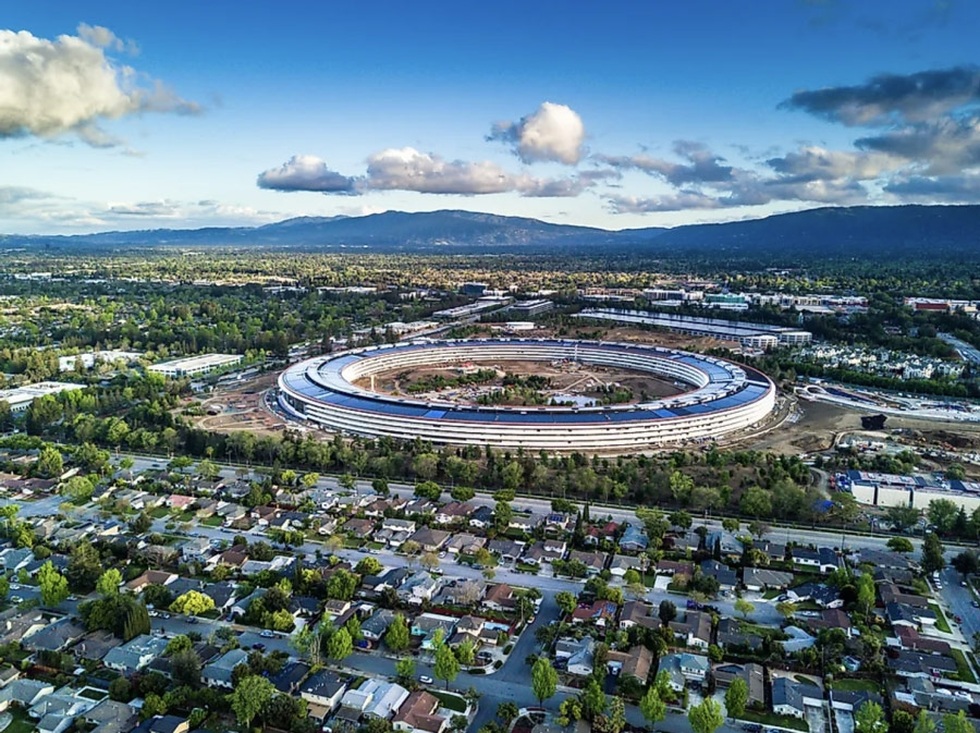
Silicon Valley – home to many of the world's leading technology companies – is witnessing numerous collaborations related to AI and data centers (Photo: SF).
Developers hope that, as AI models improve, they will be able to convince businesses and individuals to spend more on this technology.
Is 1999 repeating itself?
So, will history repeat itself? The dot-com bubble was fueled by speculation in internet companies, many of which lacked clear revenue or business models.
A bubble is an economic cycle characterized by a rapid increase in market value to a level unsupported by fundamental factors, often ending in a collapse.
Much like today's AI boom, dot-com companies attracted massive amounts of investment, often based on dubious metrics like "website traffic" rather than profits. When the market crashed in 2001, many companies were liquidated.
The hallmarks of the dot-com era can be found in the massive infrastructure development and sky-high valuations of AI.
Venture capitalists are luring AI startups with private jets and generous bonuses. Some AI companies are completing multiple massive funding rounds in just one year.
"I think there are a lot of similarities to the internet bubble," said Bret Taylor, chairman of OpenAI and CEO of Sierra, a $10 billion AI startup. He acknowledged that some companies were almost certain to go bankrupt.
But, according to Taylor, there will also be large businesses that emerge and thrive, just like what happened with Amazon and Google.
"It's true that AI will transform the economy, and I think it, like the Internet, will create enormous economic value in the future. I think we're also in a bubble, and a lot of people will lose a lot of money," he said.
However, market observers have also pointed out some important differences.
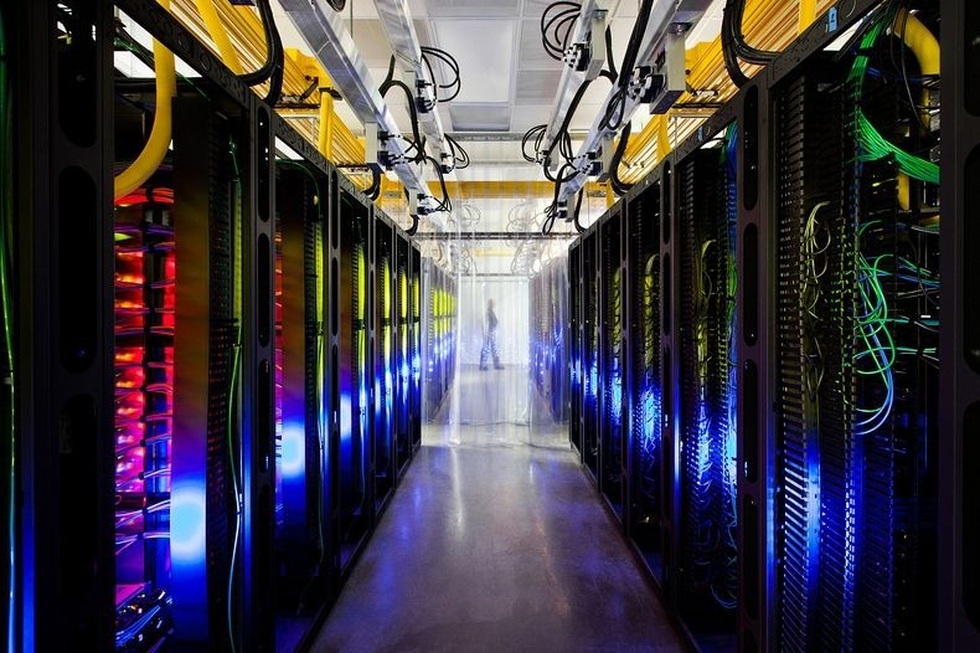
A Google data center (Photo: ST).
First, there's the health of the leading companies. Most of the U.S. tech "Mag-7" are long-established, profitable giants that contribute significantly to the growth of the S&P 500 Index and hold massive cash reserves.
Secondly, the adoption of AI is happening at a breakneck pace. OpenAI's ChatGPT has around 700 million weekly users, making it one of the fastest-growing consumer products in history.
Finally, unlike many dot-com companies, leading AI companies are generating real revenue, even if they aren't yet profitable. OpenAI forecasts revenue to more than triple by 2025, reaching $12.7 billion.
Although the company doesn't expect to be profitable until the end of the decade, a recent deal to help employees sell shares has given the company an implied valuation of $500 billion – making it the world's most valuable company that has never been profitable.
Source: https://dantri.com.vn/cong-nghe/con-sot-dau-tu-nghin-ty-do-la-vao-ai-va-noi-so-bong-bong-dot-com-20251020134738052.htm




![[Image] Vietnam's colorful journey of innovation](/_next/image?url=https%3A%2F%2Fvphoto.vietnam.vn%2Fthumb%2F1200x675%2Fvietnam%2Fresource%2FIMAGE%2F2025%2F12%2F14%2F1765703036409_image-1.jpeg&w=3840&q=75)


































































![[Image] Vietnam's colorful journey of innovation](https://vphoto.vietnam.vn/thumb/402x226/vietnam/resource/IMAGE/2025/12/14/1765703036409_image-1.jpeg)





























Comment (0)