

Nvidia invests $1 billion in Nokia to boost AI technology and 6G networks.
Nvidia will spend $1 billion to acquire a 2.9% stake in Nokia. The two companies will collaborate on developing artificial intelligence (AI)-based networking solutions and integrate Nokia's data center communications products into Nvidia's future AI infrastructure.
Nvidia CEO Jensen Huang said the deal will help make the US the center of the next 6G revolution. Nokia expects the new devices to start generating revenue from 2027, launching commercially over 5G networks before transitioning to 6G.
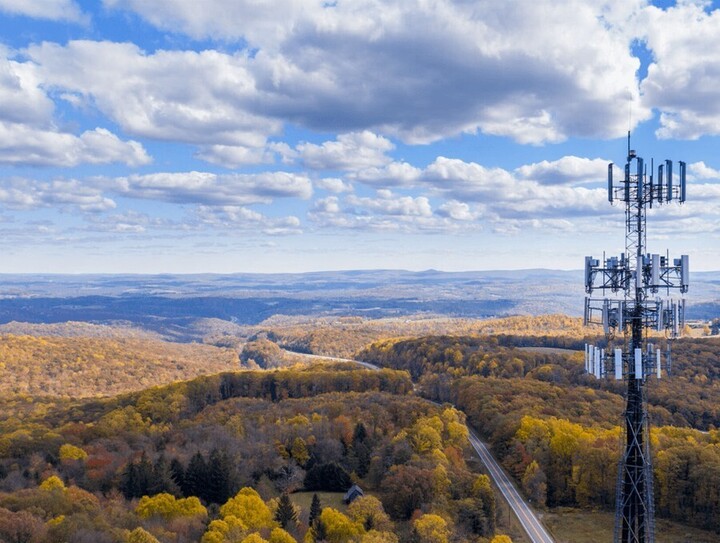
6G is expected to begin rolling out in the early 2030s. (Source: Nokia)
Nvidia and Nokia will also partner with T-Mobile US to develop AI radio technology for 6G networks, with trials beginning next year.
Since joining Nokia in April, CEO Justin Hotard – who previously led Intel's data center and AI divisions – has been aggressively pushing the strategy of expanding into the data center sector. He shared that he wants Nokia to learn from Nvidia's speed and efficiency.
According to analyst Paolo Pescatore, this is a strong confirmation of Nokia's capabilities. He believes that next-generation networks like 6G will play a crucial role in enabling AI-based experiences.
Alibaba Cloud expands globally amid the AI wave.
Alibaba Cloud – the cloud computing arm of Alibaba Group – is accelerating its expansion into international markets, particularly in the Middle East, to meet the growing demand for AI and cloud computing services.
The company has just opened its second data center in Dubai, as part of a plan to invest 380 billion yuan (approximately $53.4 billion) over the next three years in AI and cloud computing infrastructure. This is the latest center in Alibaba Cloud's global expansion, following centers in Thailand, South Korea, Malaysia, Mexico, and several cities in China.
To date, Alibaba Cloud has a presence in 92 availability zones across 29 regions. In the Middle East, demand for high-performance cloud services and AI is booming in sectors such as finance, healthcare , gaming, and public services.
According to Canalys, global spending on cloud infrastructure services reached $321.3 billion in 2024, a 20% increase year-on-year. The development of AI models is the main driver of this growth. Canalys forecasts spending will continue to increase by 19% in 2025.
Elon Musk launches Grokipedia – Wikipedia's AI rival.
On October 28th, Elon Musk announced Grokipedia – an online encyclopedia using artificial intelligence, developed by his company xAI. Musk claimed that version 0.1 of Grokipedia was "better than Wikipedia," even though the website experienced temporary outages shortly after its launch.
The Grokipedia homepage features a large search bar, allowing users to create accounts and customize color schemes. When searching, results are displayed similarly to Wikipedia, with titles, chapters, and references – but without images. Currently, Grokipedia has approximately 885,200 articles.

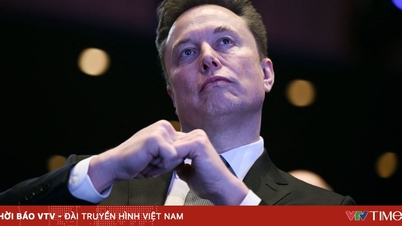
Elon Musk at a Tesla event. (Source: Tesla)
Grokipedia uses existing sources like Wikipedia, particularly on technical topics. However, users cannot edit content as they can on Wikipedia – a feature that the Wikimedia Foundation argues would reduce transparency and credibility.
Musk argues that Wikipedia is politically biased towards the left, and that Grokipedia is more neutral thanks to its integrated fact-checking system. However, Wikimedia counters that there is no credible evidence to prove Wikipedia's bias over the past 25 years.
Grokipedia uses large language models (LLMs), which can generate false information (hallucinations). Grokipedia's fact-checking methods have not been clearly disclosed, leading experts to question the platform's reliability.
Source: https://vtcnews.vn/cong-nghe-29-10-nvidia-bat-tay-nokia-elon-musk-thach-thuc-wikipedia-ar983848.html


![[Photo] Two flights successfully landed and took off at Long Thanh Airport.](/_next/image?url=https%3A%2F%2Fvphoto.vietnam.vn%2Fthumb%2F1200x675%2Fvietnam%2Fresource%2FIMAGE%2F2025%2F12%2F15%2F1765808718882_ndo_br_img-8897-resize-5807-jpg.webp&w=3840&q=75)

















































































Comment (0)