


This is not just a change in the form of tax calculation, but a profound reform in management thinking, implementation methods, and the relationship between tax authorities and taxpayers. This transformation is expected to contribute to building a more transparent, fair, and modern business environment, in line with the spirit of Resolution 68-NQ/TW of the Politburo on the development of the private economy, aiming to reform tax policies and move towards a sustainable national financial system.
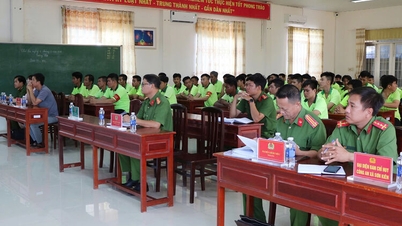
In many localities, the tax authorities are urgently organizing guidance conferences, dialogues with taxpayers, and training sessions on the process of electronic tax declaration and payment, and the use of invoices from point-of-sale systems. Provincial tax authorities are coordinating with local governments, business associations, and technology companies to support business households in each step of the implementation.
According to Mr. Mai Son, Deputy Director of the Tax Department, to date, 98% of business households have declared and paid taxes electronically, more than 18,500 households under the lump-sum tax system have switched to electronic declaration, and 133,000 households have registered to use electronic invoices from cash registers. These figures demonstrate the significant efforts of the entire tax sector in the digital transformation process and also show the rapid adaptation of the business household community.
Deputy Director Mai Son stated that the transition from lump-sum tax to declaration-based tax is not just a change in tax calculation methods, but a comprehensive transformation, encompassing management methods, service mindset, and the way taxpayers are supported. The tax authorities recognize the need for groundbreaking innovation and, more importantly, collaboration with taxpayers to ensure the smooth and effective implementation of the lump-sum tax elimination process.
According to Mr. Mai Son, in reality, the transition from lump-sum tax to declaration-based tax will not be as complicated as many people think. Farmers only need to start by: familiarizing themselves with proper record-keeping according to regulations, registering for and using electronic invoices if eligible; and getting acquainted with applications that support electronic tax declaration and payment, such as eTax Mobile.
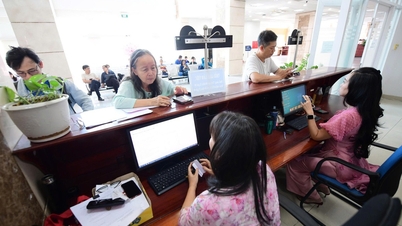
Currently, the tax authorities provide free integrated electronic tax services, from tax registration and declaration to tax payment, enabling business households to declare and pay taxes quickly, anytime, anywhere with just a few taps on their smartphones or computers, without having to go directly to the tax office.
Mr. Mai Son also stated that, to reassure taxpayers during the transition, the tax sector has been implementing a comprehensive range of support solutions in the spirit of accompanying taxpayers. These include advising on the improvement of transparent and fair institutional and policy frameworks; continuing to simplify and reform administrative procedures, enhancing the provision of smart and automated electronic tax services; innovating and diversifying communication strategies tailored to different target groups, providing easy-to-understand and easy-to-follow guidance; and simultaneously improving the quality of human resources in the tax sector, strengthening the mindset and awareness of prioritizing taxpayers in service delivery.
From a professional perspective, Ms. Nguyen Thi Cuc, President of the Vietnam Tax Consulting Association (VTCA), believes that the shift from lump-sum tax to declaration-based tax is a crucial reform in modernizing tax management, helping to increase revenue transparency, ensure fairness in tax obligations, and reduce risks for both tax authorities and taxpayers. This reform will encourage business households to be more responsible in their operations, while also creating a foundation for them to develop into enterprises in the future.
Accounting software and digital services companies are becoming crucial bridges in this process. Companies have designed product packages specifically for small businesses, featuring simple interfaces, automatic report generation, and direct connections to the electronic invoice portal and tax payment portal. In collaboration with tax authorities, MISA Joint Stock Company has launched a program offering "Free software to 2 million small businesses implementing the elimination of lump-sum tax according to Resolution 68-NQ/TW". This program is considered a practical solution, helping small businesses become familiar with a more transparent tax management method, reducing compliance costs, and minimizing errors during the initial transition phase.
The transition from lump-sum to declaration-based accounting is gradually showing positive signs. Based on the experiences of various localities, the majority of business households support the new policy, have begun using simple accounting software, are becoming familiar with electronic invoices, and are forming the habit of keeping records. Some households, after the transition, reported that declaration-based accounting makes it easier to track revenue and expenses, and opens up opportunities for expense deductions, tax refunds, or easier access to loans thanks to clear financial records.
Meanwhile, Mr. Tran Van Hung, the owner of a motorbike repair shop in Ninh Binh , said that since using the electronic invoice and declaration software, recording and tracking revenue has become much easier. Everything is stored on the system, so there's no fear of errors.
Ms. Nguyen Thi Lan, owner of a small coffee shop in Hanoi , shared: “I understand this is the right direction, helping to increase transparency, but I'm still worried because the declaration process is quite complicated. If there were specific instructions and easy-to-use software, we would feel more at ease.”
However, many challenges remain, such as numerous small businesses, especially in rural areas, lacking sufficient technological equipment, not fully understanding the tax declaration process, or being concerned about the cost of software and digital signatures. According to experts, for this process to succeed, flexible transition support policies are needed, allowing businesses time to familiarize themselves with the new system and providing specific guidance. Tax authorities should continue to deploy online support channels, instructional videos , organize "tax declaration support points" in localities, and strengthen dialogue with taxpayers.
At the grassroots level, provincial tax authorities are tasked with organizing training, providing consultation, and offering technical support to business households, coordinating with technology companies to ensure everyone can use the tax declaration software. Some localities have established mobile "electronic tax declaration support teams" at markets and shopping centers, helping business households practice directly on computers and phones.
Along with the tax authorities' preparations, business households themselves need to be more proactive. Tax declaration will be easier if business households do five things well: check their books and keep valid documents; register to use electronic invoices; participate in local training; choose appropriate software; and update information promptly through the electronic tax service portal.
Experts believe that the shift from lump-sum tax to declaration-based tax is not only technically significant but also represents a turning point in the financial management thinking of household businesses. When income, expenses, and tax obligations are transparent and fair, business owners will have more motivation to expand their scale, access credit policies, insurance, and other official government support.
Source: https://baotintuc.vn/kinh-te/cuoc-cai-cach-chamden-tung-ho-kinh-doanh-20251103080226923.htm





































































































Comment (0)