

On June 9th, Military Hospital 175 announced that it had successfully treated a critical case of systemic toxic epidermal necrolysis (Lyell's syndrome).
The patient is Mrs. NTT (67 years old). Previously, Mrs. T. was prescribed erythromycin, an antibiotic commonly used in respiratory and skin infections.
After three days of taking the medication, Mrs. T. began to experience skin damage that spread throughout her body, with many areas of skin peeling, ulcerating, and the epidermis tearing in patches. According to the doctors, this is a typical sign of Lyell's syndrome.
Despite receiving treatment at two different medical facilities, the patient's condition worsened. Doctors then requested an inter-hospital consultation with Military Hospital 175, assessing the patient's condition as very serious, with a 50% risk of death, requiring specialized treatment.

Shortly afterward, the patient was transferred to the Burn and Microsurgery Department at Military Hospital 175. At this time, the patient had 92% body damage, with numerous areas of peeling and abrasions, blisters, and progressive epidermal necrosis.
The condition is particularly severe in pressure areas such as the back and buttocks. Patients experience significant pain, are unable to sit up independently, and exhibit symptoms of severe infection and toxicity.
The doctors immediately implemented an intensive treatment protocol, including resuscitation, broad-spectrum antibiotics, immunosuppressants, intravenous nutrition, wound care, and daily dressing changes.
Due to the large area of injury, each dressing change takes nearly two hours and requires the coordination of 5–6 staff members, along with strict infection control measures.
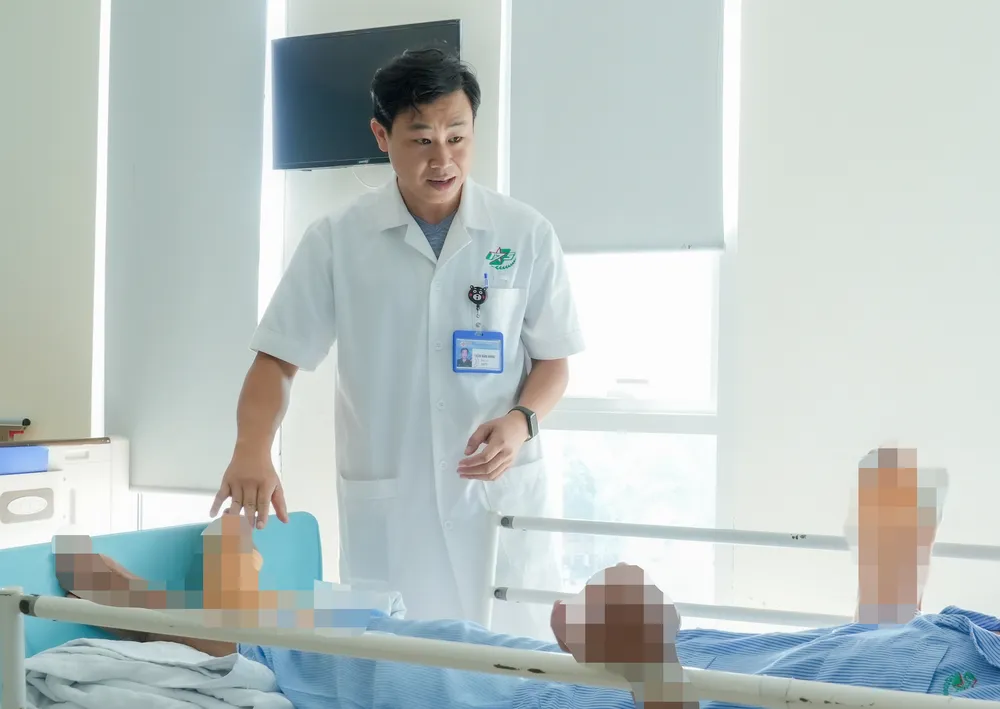
Lieutenant Colonel, Specialist Doctor Thân Văn Hùng, Military Hospital 175, examining a patient.
After 10 days of treatment, the patient began to improve, with reduced fever and pain, and the affected skin area gradually shrinking. To date, the patient has been discharged in a stable condition, with only 10% of the affected area remaining, and is able to walk independently.
Lieutenant Colonel, Specialist Doctor Thân Văn Hùng, Deputy Head of the Burn and Microsurgery Department, Military Hospital 175, assessed that this was a very serious case requiring intensive treatment in the first week to overcome the critical stage.
"This is a battle to save lives. Seeing patients recover each day is a great source of motivation for the medical team," said Dr. Than Van Hung.
Lyell's syndrome (TEN – Toxic Epidermal Necrolysis) is a severe hypersensitivity reaction to a drug, causing epidermal necrosis and generalized exfoliation. It is a rare condition with a very high risk of death if not treated promptly, especially in the elderly or those with multiple underlying medical conditions.
GIAO LINH
Source: https://www.sggp.org.vn/cuu-song-mot-phu-nu-nhiem-doc-toan-than-do-di-ung-thuoc-post798747.html


















































































Comment (0)