

The National Press Awards Ceremony on HIV/AIDS Prevention and Control will officially take place at 8:00 p.m. on December 10 at the Vietnam-Soviet Friendship Labor Cultural Palace, broadcast live on VTV9 and digital platforms of the Health and Life Newspaper.
As one of the works participating in the National Press Award on HIV/AIDS prevention and control, the photo report " Blood of love and the journey to 'block' the risk of HIV infection " by the group of authors Le Gia Thang, Le Thanh Hang, Nguyen Quang Hai (National Institute of Hematology and Blood Transfusion) has depicted the silent journey of those who preserve the safety of donated blood sources, contributing to building trust and peace of mind for the community about safe blood sources, reviving life.
The photo report not only reinforces confidence in the quality and safety of each donated blood unit, but also highlights the vital role of modern testing techniques in preventing the risk of HIV transmission through blood transfusions.
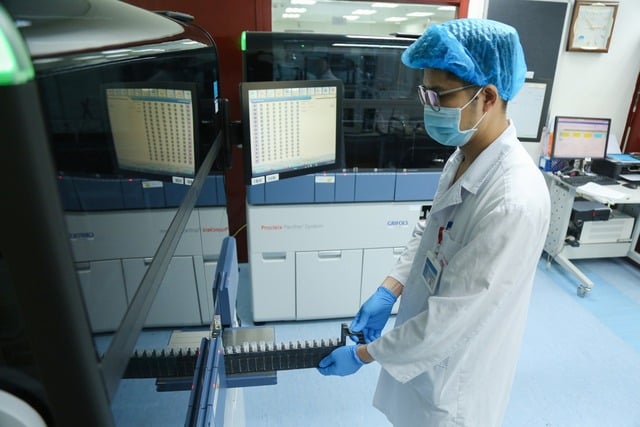
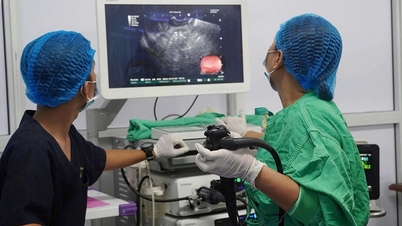
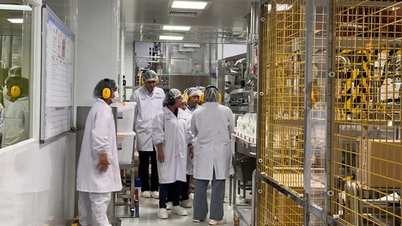
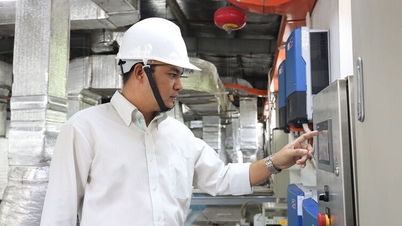
Realtime PCR (on the 6800 system) and transcription-mediated amplification (on the Panther system) are the most modern techniques being used in the world for HIV screening to promptly detect and eliminate suspected cases of HIV infection in the window period. Image from the report.
Through each frame, each moment, the group of authors wants to convey the message: Each unit of blood donated is not only a humanitarian gesture, but also a strictly controlled scientific journey; it is the perseverance and silence of people who guard day and night to bring a safe, stable and quality blood source to patients.
There, each image is a true snapshot of the rigorous scientific process, ensuring that ultimately the safest drops of blood are given to patients awaiting a chance at life.
The reportage takes readers on the journey of a blood donation unit: from the moment people voluntarily extend their arms to give away precious blood, to the scene where technicians gently receive, record information and initially preserve it. The blood tube is then transferred to the laboratory - where eyes are focused, hands are skilled in operating the modern machinery system to screen for HIV and many other pathogens...
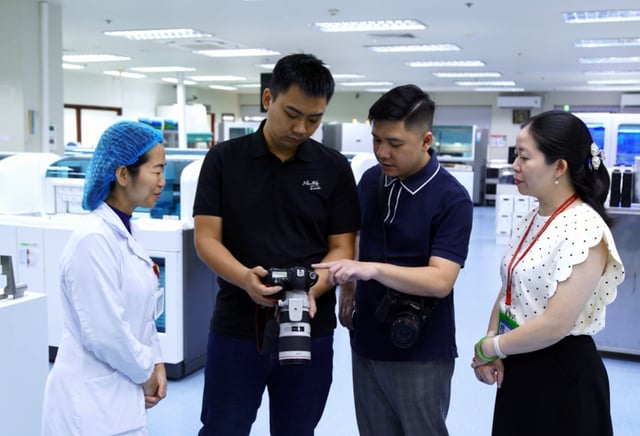
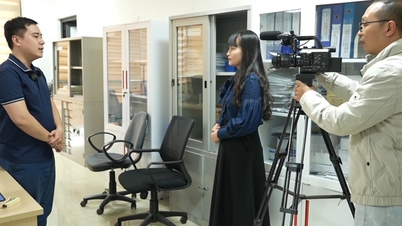
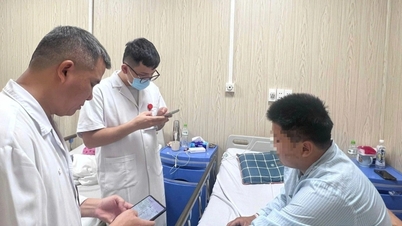
The team of authors, Le Gia Thang, Le Thanh Hang, and Nguyen Quang Hai, spoke with medical staff during the making of the documentary.
The representative of the group of authors from the National Institute of Hematology and Blood Transfusion said that it has been more than 30 years since the launch of "humanitarian blood donation" (January 24, 1994). The voluntary blood donation movement has become a regular activity, spreading love and demonstrating the responsibility of the whole society, bringing life and hope to many patients.
If in 1994, the amount of blood received nationwide, although increased compared to previous years, only reached 138,000 units, the voluntary blood donation rate was only 14.5%, then by 2024, the whole country had mobilized and received more than 1.7 million units of blood, equivalent to 1.7% of the population participating in blood donation, the voluntary blood donation rate reached 98%.
From this blood source, more than 3 million blood products have been supplied to over 700 medical facilities. The amount of blood received in 2024 was 7.4 times higher than in 2000, while the rate of voluntary blood donation increased from 30% to 98%.
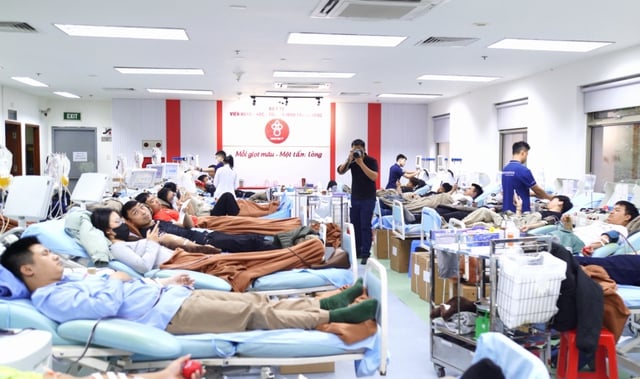
The authors captured the moments of people donating blood voluntarily.
To ensure the safety of blood recipients and prevent the transmission of bloodborne diseases, mandatory screening for pathogens is considered a particularly important solution.
The World Health Organization requires that all blood units be screened for HIV, hepatitis B, hepatitis C, and syphilis before being transfused to patients. In the strategy to ensure blood safety, three basic and important measures are: education, mobilization, and selection of safe voluntary blood donors; blood screening tests; and use of blood components.

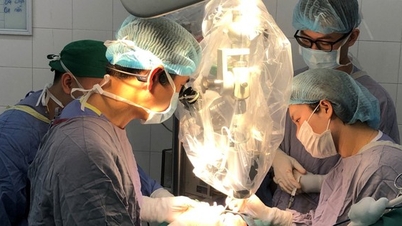
The authors process information and images for use in photo essays.
Through the photo report " Blood donation and the journey to 'block' the risk of HIV infection ", the group of authors continues to vividly depict the application of modern scientific and technological advances and the dedication of the medical team, so that each drop of blood donated becomes a safe source of life for patients.
In particular, the National Institute of Hematology and Blood Transfusion has now applied molecular biology techniques (Nucleic Acid Test - NAT) to screen 100% of received blood units, contributing to maximum prevention of HIV and virus transmission to patients when blood donors are infected with pathogens in the window period.
The proactive application of modern technology not only enhances the safety of each unit of blood but also instills strong confidence in patients, their families, and society as a whole regarding the life-saving power of blood.
'The National Press Awards Ceremony on HIV/AIDS Prevention and Control' - an event chaired by the Ministry of Health, the Department of Disease Prevention in coordination with the Health and Life Newspaper will officially take place at the Vietnam-Soviet Friendship Labor Cultural Palace at 8:00 p.m. on December 10, 2025.
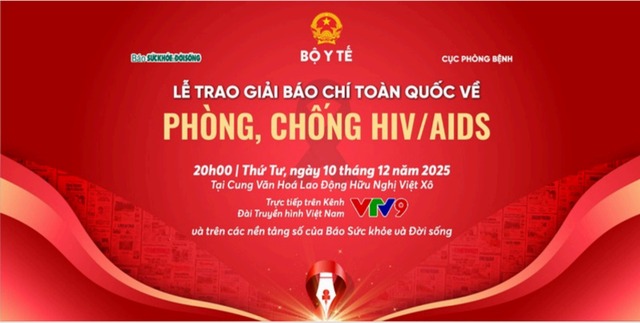
The competition was divided into three main categories: written works, photographic works, and television/multimedia works, with a total of 12 awards presented: 3 First Prizes, 3 Second Prizes, 3 Third Prizes, and 3 Consolation Prizes.
In addition, 5 "Red Ribbon" awards are also reserved to honor works with strong humanitarian spirit, spreading sharing and determination to push back HIV/AIDS in the community.
The program is broadcast live on VTV9 channel and digital platforms of Health and Life Newspaper.
Source: https://suckhoedoisong.vn/dang-sau-mot-don-vi-mau-la-ca-cuoc-chien-phong-chong-hiv-cua-nhung-con-nguoi-tham-lang-16925121006270548.htm


















![[Photo] Urgently help people soon have a place to live and stabilize their lives](/_next/image?url=https%3A%2F%2Fvphoto.vietnam.vn%2Fthumb%2F1200x675%2Fvietnam%2Fresource%2FIMAGE%2F2025%2F12%2F09%2F1765248230297_c-jpg.webp&w=3840&q=75)
























































Comment (0)