

The development of smart agriculture is urgently needed.
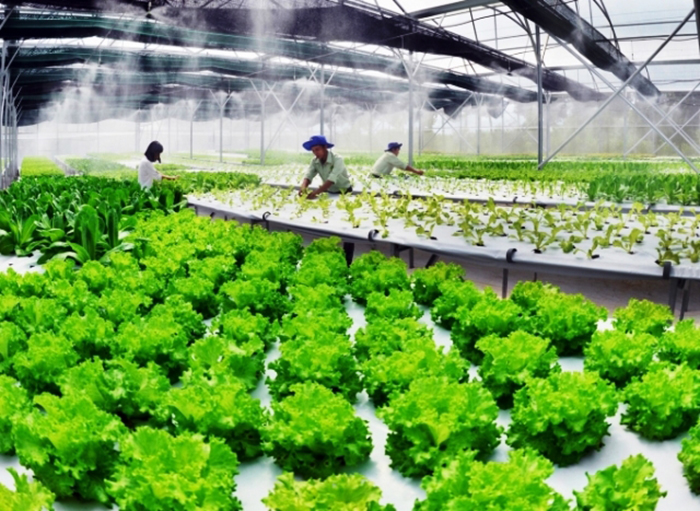
This is reflected in Resolution No. 52-NQ/TW dated September 27, 2019, of the Politburo on some guidelines and policies for proactively participating in the Fourth Industrial Revolution. At the fifth plenary session, the Central Committee of the 12th Party Congress issued Resolution 19 dated June 16, 2022, on agriculture, farmers, and rural areas until 2030, with a vision to 2045. The Resolution clearly affirmed the viewpoint: Agriculture is a national advantage and a pillar of the economy. It emphasizes the development of efficient, sustainable, and multi-valued agriculture, focusing on increasing added value and competitiveness, while promoting the development of post-harvest processing and preservation industries and developing agricultural product markets both domestically and internationally; ensuring food safety, national food security, and protecting the ecological environment; and encouraging the development of green, organic, and circular agriculture. In particular, developing sustainable and modern agriculture based on scientific and technological development, digital transformation, and breakthroughs in science and technology, including the development of biotechnology, seed technology, and nurseries; and developing linkages to build value chains from production to processing.
On February 27, 2023, the Government adopted Resolution No. 26/NQ-CP promulgating the Action Program to implement Resolution No. 19-NQ/TW dated June 16, 2022 of the Central Committee of the Communist Party of Vietnam (13th term) on agriculture, farmers, and rural areas until 2030, with a vision to 2045.
Accordingly, the Government has set out nine main groups of tasks and solutions for implementation, including promoting the development of science and technology and the science and technology market.
In fact, in recent years, starting a business in agriculture, especially smart agriculture and high-tech agriculture, has been chosen by many people. Despite facing many difficulties and hardships, many of them have succeeded, becoming exemplary figures in the movement to develop successful production and business in their localities.
According to Mr. Nguyen Van Tien, former Director of the Agriculture Department, Central Economic Committee, agriculture is clearly an advantage for Vietnam. Many countries, such as Japan and South Korea, have much harsher natural conditions than we do. We have advantages in natural conditions, climate, and soil to develop our agriculture. Since 2008, after integration, our agriculture has developed very rapidly. Therefore, in developing high-tech agriculture and smart agriculture, the top priority is efficiency. Efficiency is based on scale, technology, and management.
According to Mr. Tien, we have many mechanisms and policies for agricultural development. We have policies for land consolidation, policies to support the development of collective economic organizations and cooperatives. We have policies to support farmers in linking production and building value chains... The question is, how do we approach these policies?
Trends in the development of high-tech agriculture in the coming period.
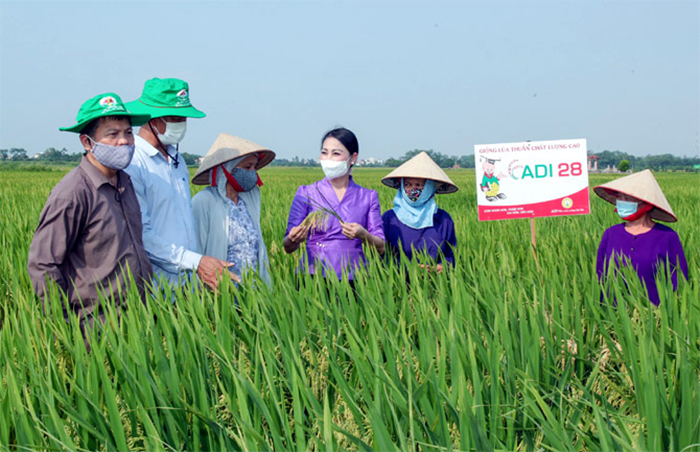
Sharing Mr. Tien's viewpoint, many other experts also believe that attention should be paid to modern agricultural trends, namely:
Firstly, we can all clearly see the current and future trend: "clean" products. To have clean products, organic farming will be a key factor in increasing the selling price of our products and expanding beyond Vietnam's borders. Besides organic production, we can participate in and develop our products according to OCOP standards, which is also one of the criteria for evaluating product quality that many localities have been and are continuing to develop.
Secondly , there's the export trend. Currently, agricultural products are being exported rapidly and in massive quantities. Every time we read the news or watch the television, we can grasp information about agricultural exports. And only through exporting can we achieve significantly higher added value compared to selling in the domestic market.
Thirdly , there is a trend towards choosing refined products that utilize advanced technology.
Fourth, it is necessary to approach and focus on professional and modern distribution systems through various forms of logistics distribution. Building a dedicated distribution channel will allow for complete control over product connection and consumption.
Finally, there is the trend of incorporating high-tech elements into production and processing to create breakthrough products. Introducing technology not only helps save costs and increase product competitiveness, but also creates a transparent and clear business environment.
What farmers and agricultural businesses need most today is for the State, Government, and local authorities to pay more attention to agriculture in their areas, especially high-tech and organic agriculture, creating conditions to help startups succeed and build more reputable products not only in the Vietnamese market but also abroad.
Furthermore, the State, ministries, and sectors need to have policies and mechanisms to support sustainable, long-term agriculture so that not only the distinctive agricultural products of different regions across the country can reach consumers, but also many other Vietnamese agricultural products. In particular, not only high-income earners but also ordinary workers can have access to them. To achieve this, the government needs to support startups with interest rates and capital to reduce costs.
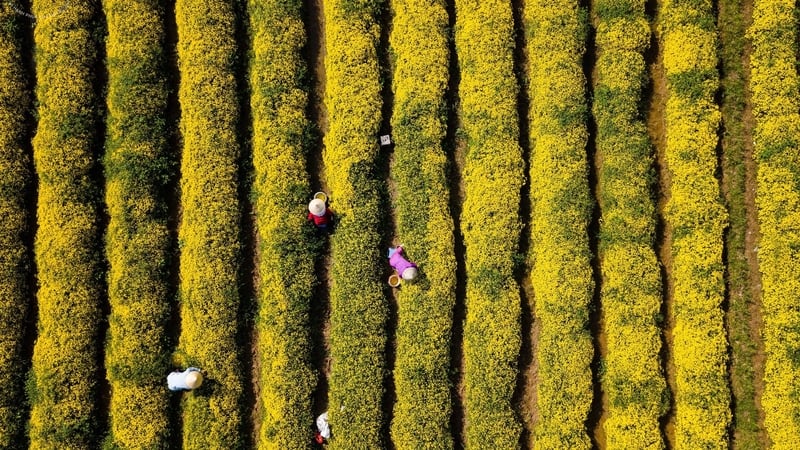
Agriculture is increasingly attracting young people, making it fertile ground for startups, especially those in agriculture, smart farming applications, and high-tech agriculture. Each individual or organization starting a business has their own path and method to enter the agricultural sector, but they all share a common goal: to elevate agricultural products and contribute to a new face for agriculture – smart agriculture in the new era.
Source

![[Photo] Prime Minister Pham Minh Chinh attends the Conference summarizing and implementing tasks of the judicial sector.](/_next/image?url=https%3A%2F%2Fvphoto.vietnam.vn%2Fthumb%2F1200x675%2Fvietnam%2Fresource%2FIMAGE%2F2025%2F12%2F13%2F1765616082148_dsc-5565-jpg.webp&w=3840&q=75)




































































Comment (0)