

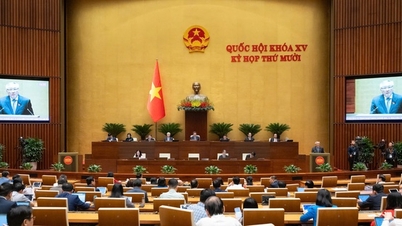
On the morning of December 2, continuing the 10th Session, the National Assembly discussed in the hall the Draft Resolution of the National Assembly on a number of breakthrough mechanisms and policies for the work of protecting, caring for and improving people's health.
Specific regulations and priority roadmap for groups of subjects eligible for periodic health check-ups
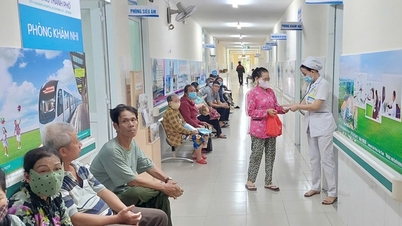
Paying attention to expanding health care benefits and reducing medical costs for people (Article 2), Deputy Head of the National Assembly Delegation of Phu Tho province Dang Bich Ngoc commented that this is a very important policy to implement the contents set out by the Politburo in Resolution 72.
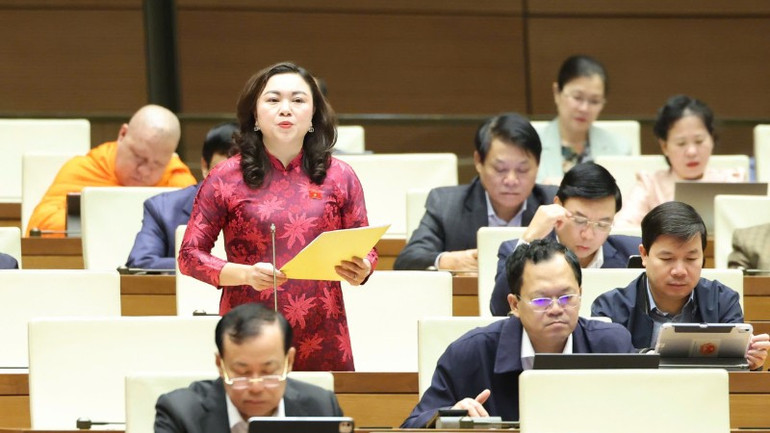
According to the draft Resolution, starting from 2026, people will be able to have periodic health check-ups or free screening at least once a year according to priority groups and roadmaps. However, according to delegate Bich Ngoc, the draft Law needs to have very clear and specific regulations on the subjects and implementation roadmap because in reality, people are really looking forward to everyone having a health check-up once a year.
Accordingly, delegates proposed that the draft Resolution should include the first priority group to conduct periodic health check-ups from 2026, including: Ethnic minority groups in remote, isolated, and particularly difficult areas, poor households, near-poor households, and disadvantaged groups.
“To facilitate these subjects to access health examinations, ensuring fairness in access to health care nationwide, the Government should specify each group of subjects and a specific priority roadmap for each group so that all people can access health services, ensuring publicity, transparency and objectivity in implementation,” the delegate suggested.
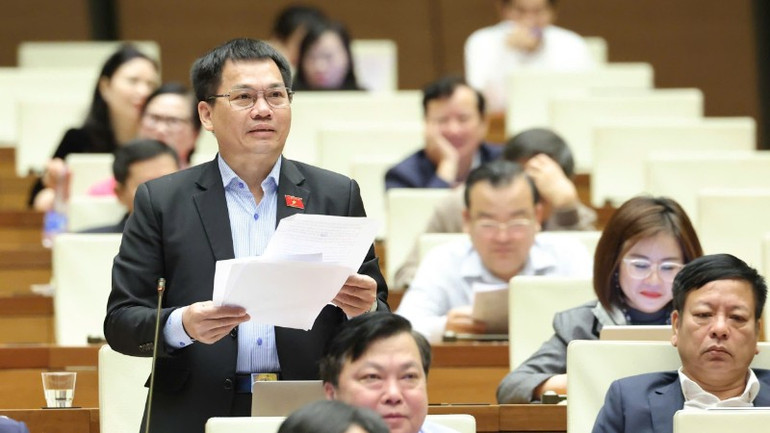
Highly appreciating the provisions in Article 2 of the draft Resolution, because this is the provision that most clearly demonstrates the humanity, progress and inclusive development orientation of the national health policy; however, the Deputy Head of the National Assembly Delegation of Lam Dong province suggested that it is necessary to specify more clearly the roadmap for increasing the benefit level and moving towards exempting hospital fees in stages of 3 to 5 years, linked to the targets on balancing the Health Insurance Fund and the State Budget.
The delegate pointed out that the reality shows that the need for medical examination and treatment increases very rapidly with the aging population and the increase in non-communicable diseases; if we do not design a tight enough roadmap, it could lead to the risk of imbalance in the medium and long term health insurance fund.
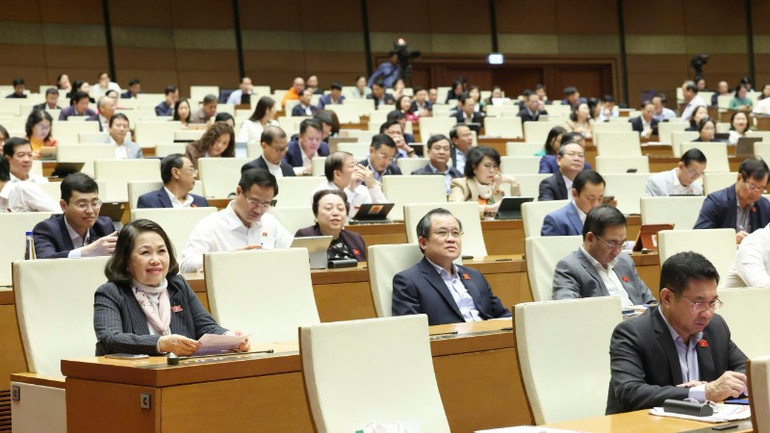
According to delegate Trinh Tu Anh (Lam Dong delegation), voters reflected that the burden of treatment costs is still the biggest barrier for patients. Many new generation drugs - such as targeted therapy drugs, immunotherapy drugs - have proven to be highly effective in treatment, helping to prolong life and improve quality of life. However, high costs prevent many patients from accessing optimal treatment. Therefore, delegates recommended timely updating of the drug list, especially for new generation cancer treatment drugs and immunomodulators, to reduce people's out-of-pocket expenses, ensuring benefits for more than 95.5 million people participating in health insurance today.
“This is a direct, practical solution so that patients – especially those with serious illnesses and those with difficult family circumstances – are not left behind in the treatment journey,” the delegate emphasized.
There are breakthrough and specific policies to attract doctors to work in remote areas.
One issue that received much attention from National Assembly delegates was the salary and allowance policies for medical staff.
Delegate Dang Thi Bich Ngoc pointed out that in recent times, many commune health stations in particularly difficult areas do not have a permanent doctor or only have one doctor who has to take on many jobs. The reason is that the current mechanism and policies are not strong enough to attract and retain qualified doctors to work and stay long-term at the grassroots health system, especially in remote, isolated and difficult areas.
Therefore, to make a breakthrough, according to delegate Bich Ngoc, in the coming time, it is necessary to have policies to attract specific human resources according to regions; have training and development mechanisms, focusing on developing local human resources (ethnic minorities), or implementing specific training programs in the form of "hand-holding" for medical staff in remote areas, remote areas, and areas with difficult ethnic minorities. At the same time, rotate upper-level staff to support and transfer techniques to commune-level; promote the application of digital transformation for remote medical consultation and treatment.
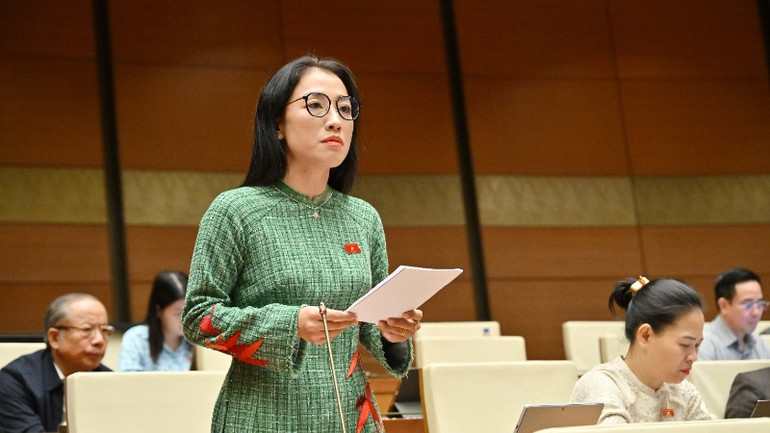
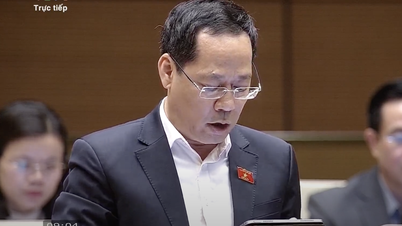
Concerned about the training of medical human resources, delegate Tran Khanh Thu (Hung Yen Delegation) assessed that in the new Draft Resolution, which mentioned the policy of postgraduate training in a number of majors, there has not been a breakthrough solution related to creating human resources early and from afar. Meanwhile, human resources, especially medical human resources, always play an important role, deciding the success or failure in public health care; current medical human resources at the grassroots level have not really met the requirements, and cannot be an attractive place and ensure conditions for professional development for each doctor.
According to the Ministry of Health's assessment, the total number of health workers is currently about 431,700 people, much lower than the level of 632,500 people in the Health Human Resources Development Plan for the 2011-2020 period.
From the above analysis, the female delegate of Doan Hung Yen proposed to add the medical doctor training subjects of public training institutions to the group of subjects guaranteed by the State budget, supported with tuition fees during the training period with a commitment to work as assigned by the State after graduation. This will ensure the source of students, especially students with difficult circumstances, to have the opportunity to achieve their desire to become doctors, while also solving the problem of medical human resources in remote areas, areas lacking doctors.
Welcoming the regulation on ranking doctors' salaries from level 2 and 100% professional incentive allowance for special fields, delegate Nguyen Tam Hung (Ho Chi Minh City Delegation) suggested that the Drafting Committee consider adding professional responsibility allowance according to each job position, not just according to the specialty.
"At the grassroots health care level and in resuscitation and anti-poisoning units, work pressure, on-duty intensity and occupational risks are very high. If responsibility allowances are not regulated, it will be difficult to ensure retention and create sustainable career motivation. This is a decisive factor for the strategy of developing human resources for the health sector - the biggest challenge today," the delegate said.
Source: https://nhandan.vn/de-xuat-chinh-sach-dai-ngo-va-dao-tao-nhan-luc-y-te-tu-som-tu-xa-post927353.html


![[Photo] Worshiping the Tuyet Son statue - a nearly 400-year-old treasure at Keo Pagoda](/_next/image?url=https%3A%2F%2Fvphoto.vietnam.vn%2Fthumb%2F1200x675%2Fvietnam%2Fresource%2FIMAGE%2F2025%2F12%2F02%2F1764679323086_ndo_br_tempimageomw0hi-4884-jpg.webp&w=3840&q=75)

![[Photo] Parade to celebrate the 50th anniversary of Laos' National Day](/_next/image?url=https%3A%2F%2Fvphoto.vietnam.vn%2Fthumb%2F1200x675%2Fvietnam%2Fresource%2FIMAGE%2F2025%2F12%2F02%2F1764691918289_ndo_br_0-jpg.webp&w=3840&q=75)












































































Comment (0)