

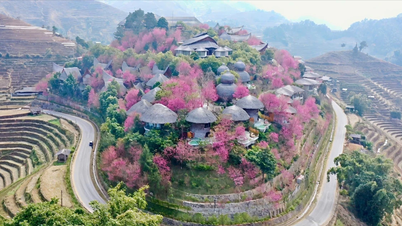
Nestled in the tranquil countryside of Hop Thanh village, Quy Mong commune, the Quy Mong communal house and temple complex sits atop a high, bowl-shaped mound, its location harmonious and imposing. While not particularly large in scale, the site impresses with its serene and simple appearance; it is this simplicity in architecture that creates its profound value, where the imprint of the past remains evident in every roof, column, and step.
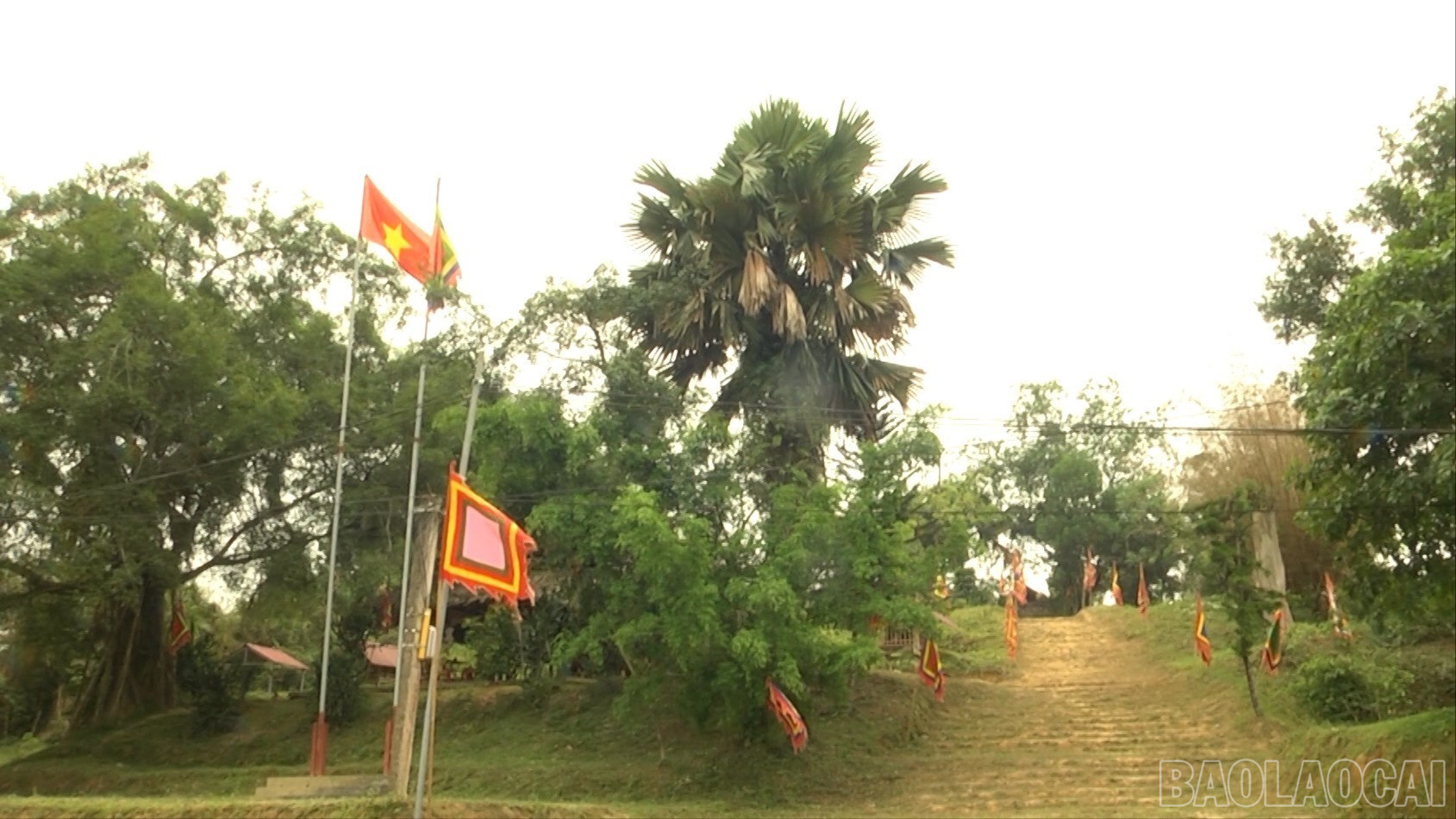
According to local elders, the name Quy Mong is directly related to the Quy Hoa prefecture of the former Hung Hoa province, a vast area that once included Thuy Vi, Tran Yen, Van Chan, Van Ban, and Yen Lap. Through changes in geographical boundaries and administration, traces of the place name "Quy" gradually faded. Today, Quy Mong is considered a rare surviving example of a place name, a reminder of a region that once played a crucial role in the resistance against the Mongol-Yuan invaders in the 13th century.
Quy Mong is also a long-standing settlement area of many ethnic groups, with the Muong people making up the majority. Through generations, the Muong people here have preserved their distinctive traditional culture, from house architecture and customs to religious practices and festivals. In this community life, the Quy Mong communal house and temple play a central role in cultural and spiritual activities, connecting people with history, their roots, and each other.
The Quy Mong communal house and temple complex was formed in the late 19th and early 20th centuries. Initially, the communal house and temple were built only with thatch, bamboo, and leaves. During the Nguyen dynasty, a group of Muong people led by Mr. Dinh Van Can (from Huong Can, Thanh Son, Son Tay in the past) traveled upstream along the Thao River to reclaim land, establish a village, and renovate the communal house and temple. Since then, the structure has been closely associated with community life, becoming a spiritual anchor for the local residents for many generations.
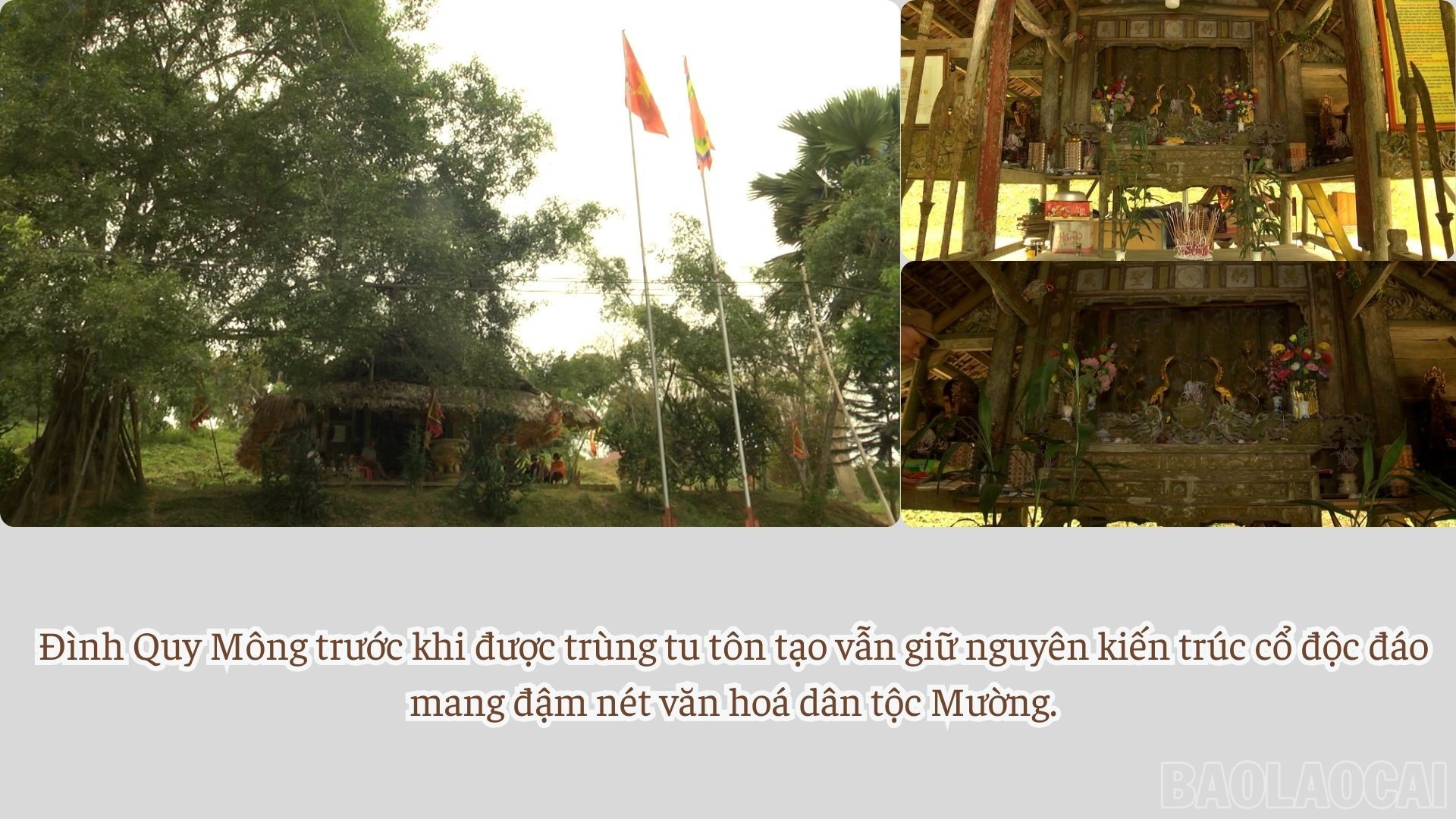
According to surviving documents, Quy Mong communal house is a place of worship for many prominent figures in the Vietnamese folk belief system. The main deity worshipped at the communal house is Tan Vien Son Thanh - one of the 'Four Immortals', symbolizing the power to control nature and the aspiration to protect human life. In addition, the communal house also worships the Great King of the Nation, the Great King of the Kingdom, 18 civil and military officials, and the God of Agriculture, thereby clearly reflecting the worldview and beliefs of the rice- farming agricultural inhabitants of the upper Red River region.
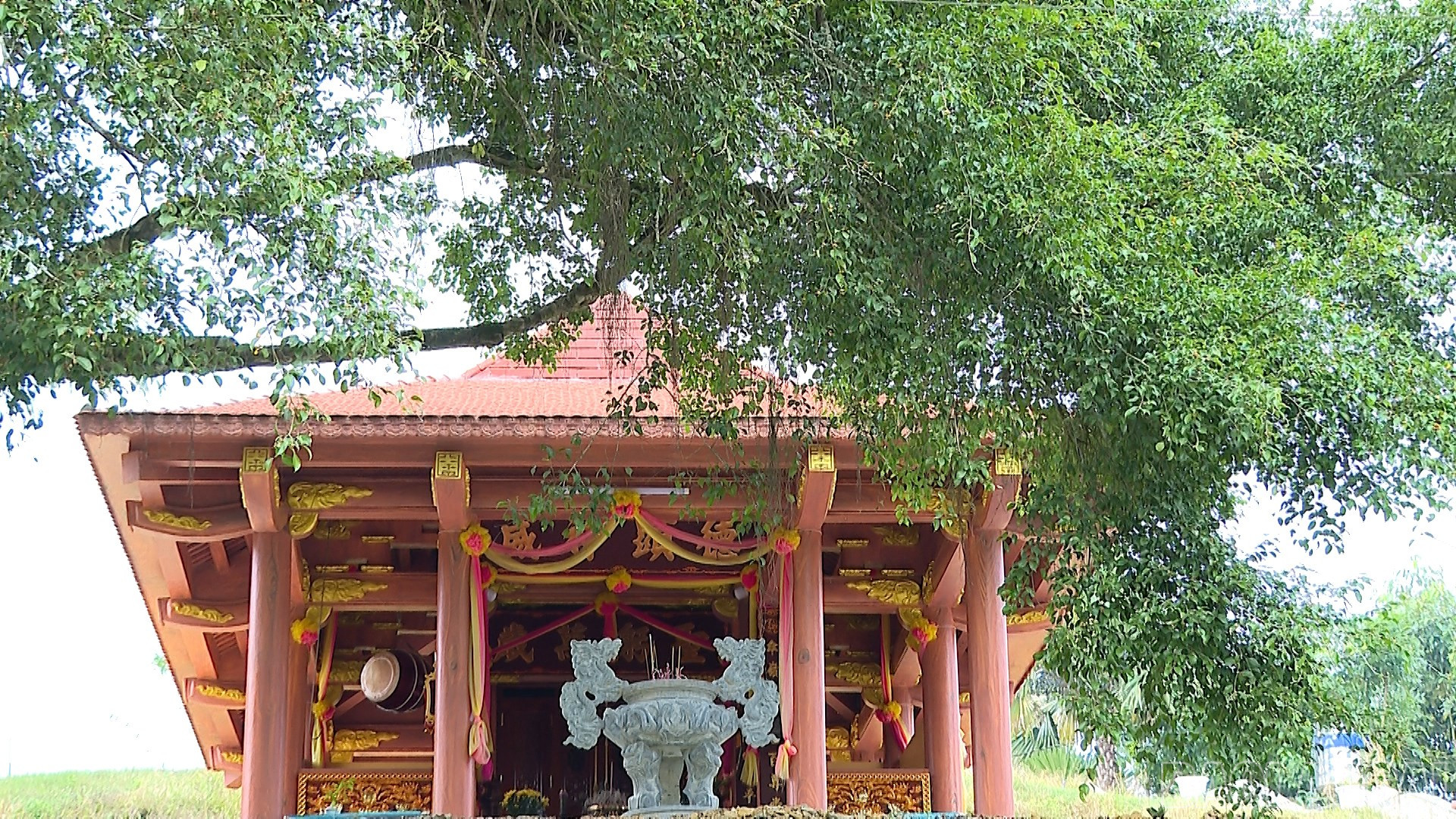
Architecturally, Quy Mong communal house is built in the shape of the Chinese character "一" (one), consisting of three bays with wooden columns, a thatched roof, a main hall, and a sanctuary. The unique feature that gives the communal house its distinctive value is the strong imprint of Muong culture. The communal house is built in the style of a semi-stilt house, with the sanctuary located on the upper floor, a layout close to the traditional living space of the Muong people. The wood carvings depicting the four mythical creatures, the four seasons, and folk patterns are meticulously and harmoniously rendered, showcasing the aesthetic sense and exquisite craftsmanship of the ancient artisans.
The temple still preserves many valuable artifacts, such as horizontal plaques, couplets, altars, umbrellas, and canopies, especially four sets of altars and crowns that are of archaeological value. The altars are made of jackfruit wood, painted red and gilded, and the crowns are made of rare black bronze, intricately carved with dragon and phoenix motifs.
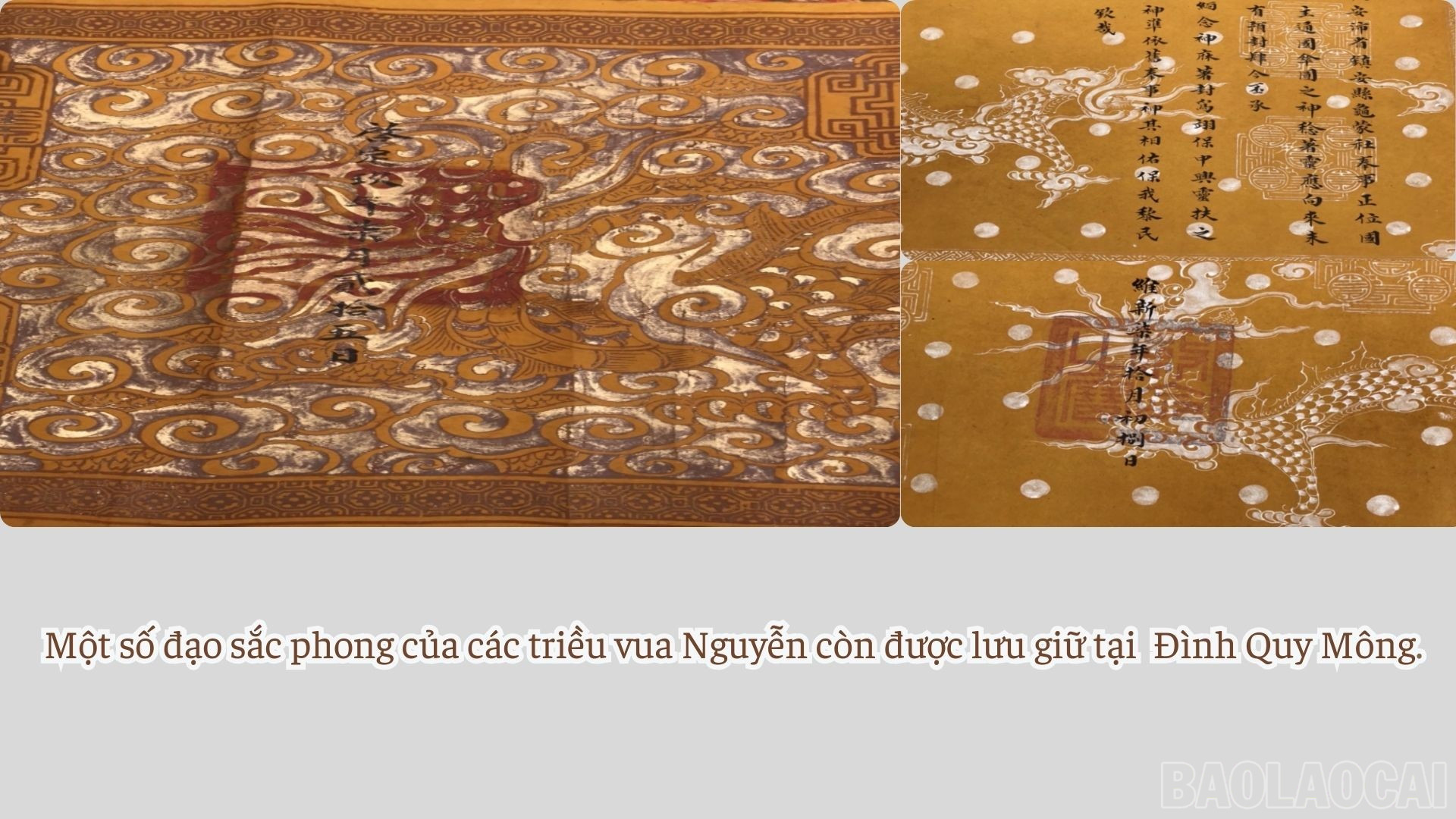
Notably, Quy Mong communal house still preserves 9 royal decrees from the Nguyen dynasty – valuable historical documents that clearly reflect the position and role of the communal house in the religious life of the community through many periods.
Specifically, the First National Tan Vien Mountain God was granted four royal decrees in the third year of Duy Tan (1909), the fifth year of Duy Tan (1911), and two royal decrees in the ninth year of Khai Dinh (1924). The Second High Mountain God Great King (mid-level deity) received three royal decrees, granted in the first year of Thanh Thai (1889), the third year of Duy Tan (1909), and the ninth year of Khai Dinh (1924). The Southern Tran Quoc Great King (mid-level deity) was granted two royal decrees in the fifth year of Duy Tan (1911) and the ninth year of Khai Dinh (1924). The continuous presence of royal decrees across many dynasties shows that Quy Mong communal house was not only a religious institution of the village, but also a cultural and spiritual center with a stable position, officially recognized by the feudal court.
Not far from the communal house, after climbing 67 steps, lies Quy Mong Temple, a sacred and tranquil space. The temple is dedicated to Mother Dong Cuong, Princess Que Huong, and Mrs. Nguyen Thi Hoa, who, along with her two sisters, played a key role in developing the vast land from Ngoi Rao to Ngoi Thia. The temple's architecture follows the semi-stilt house style, harmonizing with the natural landscape and creating a peaceful and intimate atmosphere.
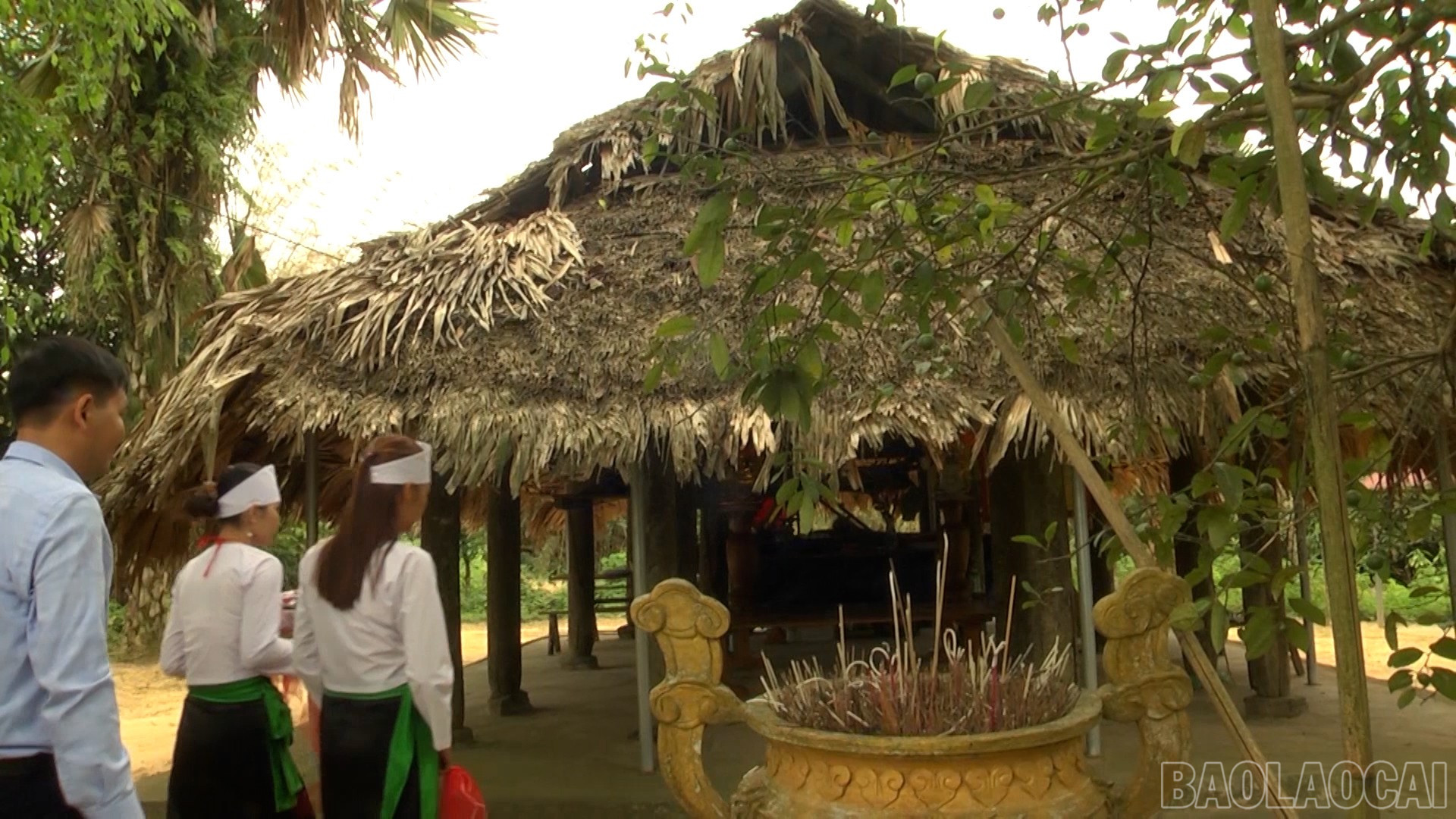
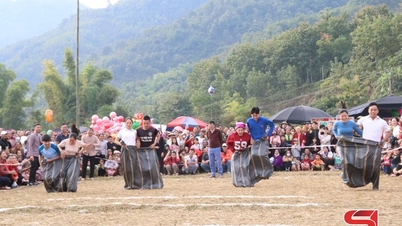
Not only present in architecture and historical documents, the Quy Mong communal house and temple also thrive in festival life. The festival is held annually on the 7th day of the first lunar month. During the festival, lively activities take place with many folk games, such as tug-of-war, stick pushing, throwing the "con" (a type of ball), and swinging. Particularly noteworthy is the Mỡi dance of the local Muong people, which mimics agricultural labor and conveys the hope for a bountiful harvest and a prosperous life, a tradition that has been preserved and passed down through generations.
Through the vicissitudes of history, the Quy Mong communal house and temple complex remains not only as an ancient architectural structure but has also become a living memory for the local community. The carefully preserved royal decrees, the regular maintenance of traditional rituals, and the practice of the Mỡi dance demonstrate the close and continuous connection between the site and the cultural and spiritual life of the Muong people in Quy Mong.
The restoration and preservation of the temple complex in recent years has not diminished its original traditional architecture; on the contrary, it has created conditions for the monument to continue to exist as a functioning cultural space, where present generations can connect with history with reverence, not with distant nostalgia.
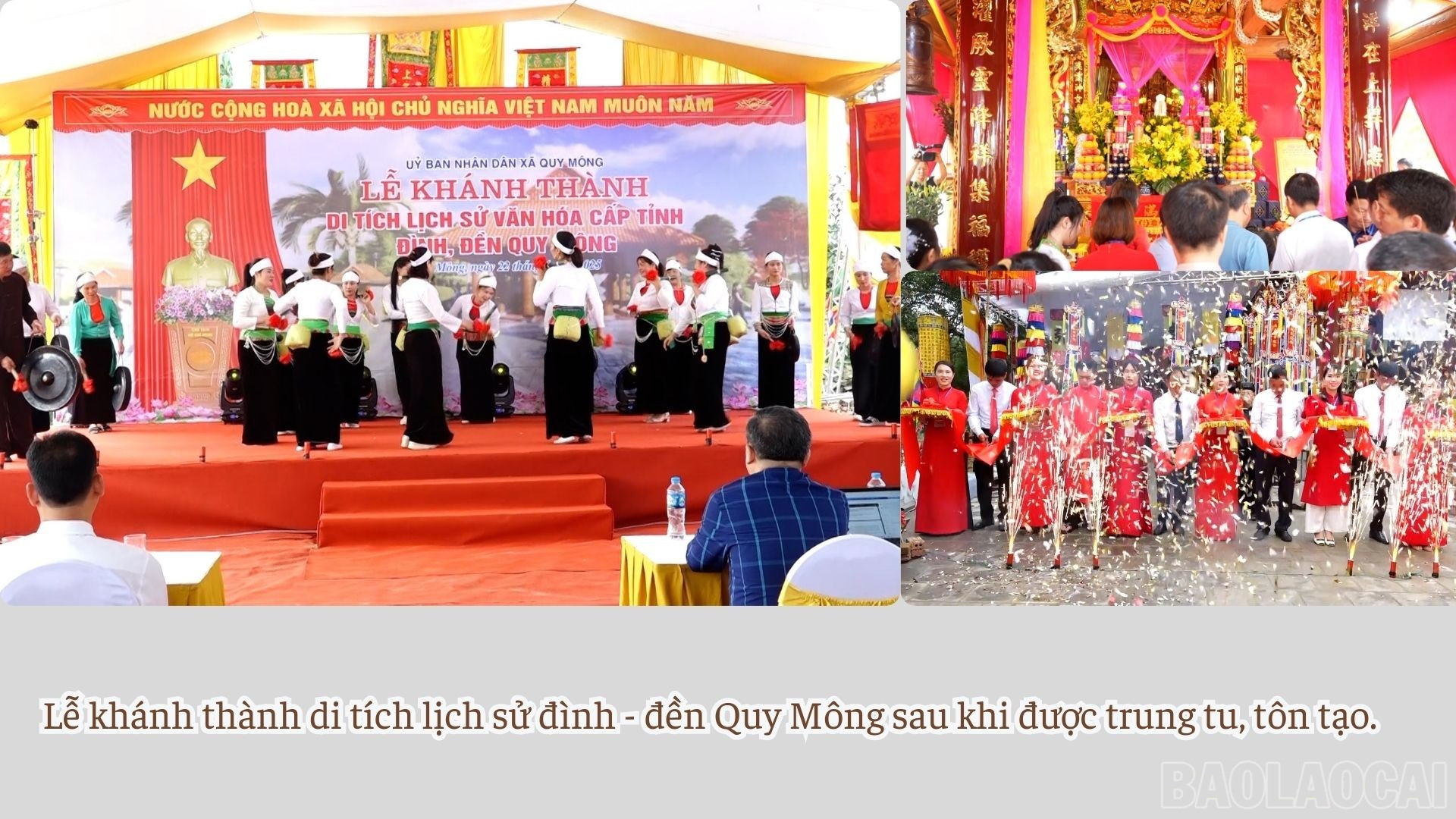
In the modern era, where many traditional values face the risk of fading, Quy Mong communal house and temple steadfastly maintain their role as anchors of identity, connecting people to their roots. It is this quiet yet enduring presence that gives the site its profound value—a value that lies not only in its age or architecture, but in the fact that the heritage continues to be lived with, preserved, and passed on by the community.
Source: https://baolaocai.vn/dinh-den-quy-mong-va-dau-an-quy-hoa-trong-khong-gian-van-hoa-nguoi-muong-post888871.html


![[Image] Vietnam's colorful journey of innovation](/_next/image?url=https%3A%2F%2Fvphoto.vietnam.vn%2Fthumb%2F1200x675%2Fvietnam%2Fresource%2FIMAGE%2F2025%2F12%2F14%2F1765703036409_image-1.jpeg&w=3840&q=75)







































![[Image] Vietnam's colorful journey of innovation](https://vphoto.vietnam.vn/thumb/402x226/vietnam/resource/IMAGE/2025/12/14/1765703036409_image-1.jpeg)























Comment (0)