

Classes are flexible depending on the season and customs.
Phuc Son Primary School is now located in Cau Thia ward, Lao Cai province – an area with complex terrain and numerous streams cutting through villages. The population is scattered, with 99% being ethnic minorities, mainly Thai and Muong people. Their livelihoods still depend on rice cultivation; life remains quite difficult. Given these geographical conditions and the hardships faced by the people, bringing them back to school, especially the elderly, has become a very challenging task.
Based on her experience in Phuc Son, Ms. Phu Minh Diep, from Phuc Son Primary School (Cau Thia Ward), shared that literacy programs in mountainous areas cannot follow a rigid model, nor can they simply chase targets. Classes can only be sustainable when they are organized flexibly according to seasons, customs, and the everyday needs of the people.
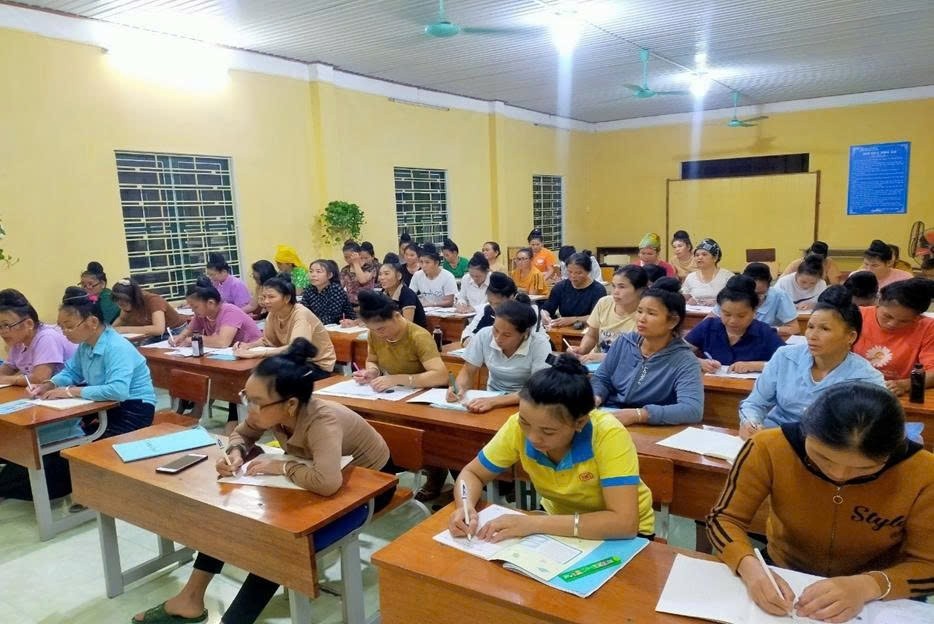
Most of the students were older, the oldest being 56 years old.
According to Ms. Minh Diep, maintaining and improving the quality of literacy programs is not just about "keeping standards," but more importantly, about helping people see the value of literacy in their own lives. In 2023, Phuc Son Primary School proactively advised on opening phase II of literacy classes for 40 students, aged 15 to 60, prioritizing women, girls, and people with disabilities. Statistics show that the literacy rate in the area has reached a high level, but behind this result are many difficulties.
Most of the students are elderly, the oldest being 56 years old. Some dropped out of school more than 40 years ago and have forgotten almost all of their letters. During the day, they still work in the fields, returning home late at night; during the harvest season, time for studying becomes even more limited. Many have had to temporarily put their studies on hold to work far from home. "The most difficult thing is not teaching literacy, but how to help people overcome their reluctance to learn at their age," Ms. Minh Diep said.
From the outset, the school recognized that maintaining student enrollment would be difficult if the classroom didn't adapt to the rhythm of village life. The outreach efforts were implemented through a "door-to-door, speak to each person" approach, with the cooperation of local authorities, the Women's Union, and the Youth Union. The communication wasn't just slogans, but linked to very specific benefits in daily life.
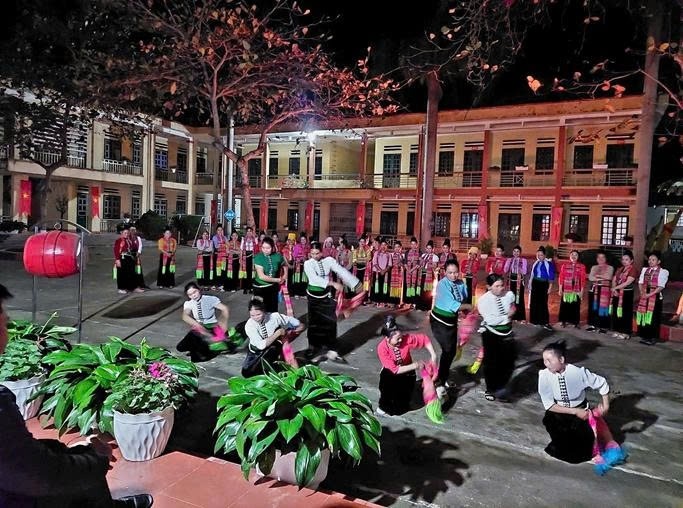
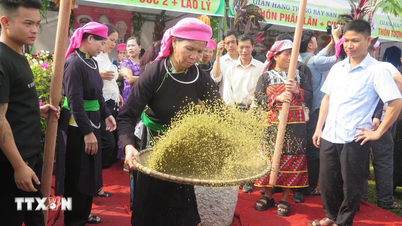
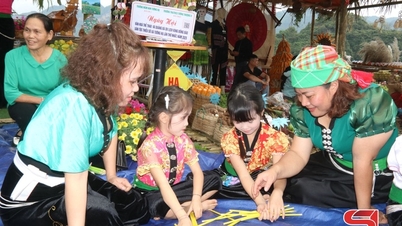
Practicing traditional dances like neck stretching, bamboo pole dancing, making traditional balls, and playing recreational volleyball together helps students feel connected to the class.
Given the local characteristics, organizing classes always requires flexibility. “We carefully study customs and traditions to arrange class times appropriately. During the off-season, classes can be held in the evening or during the day; during busy seasons, classes are held at lunchtime. Holidays, festivals, and community events are all canceled, allowing students to study while participating in village activities,” Ms. Diep shared.
In addition, the teachers selected for the classes are those who understand the customs and psychology of the local people, many of whom are bilingual; in teaching, they flexibly divide students into groups according to their level, and incorporate ethnic languages when necessary. Besides the main curriculum, the school also compiles additional content suitable for each group. Students who have forgotten how to read and write for many years receive separate tutoring.
Each month, the class holds a group activity where students can read books and newspapers, reinforce their knowledge, and share experiences in developing their family's economy . Beyond just learning to read and write, the literacy class also serves as a familiar space for cultural activities. During breaks, students practice traditional dances like neck stretching, bamboo pole dancing, making traditional balls, and playing volleyball.
Thanks to these flexible approaches, the literacy class not only achieved its goals but also attracted more students. By the end of the course, the number of students had increased to 45, all of whom successfully completed the program.
Even at an old age, one can still learn to read and write.
Speaking to reporters, Ms. Minh Diep said that the most difficult thing when opening literacy classes is persuading elderly people to return to school. “In our literacy class, the oldest student is 56 years old. Initially, it was very difficult to persuade them, because the women were reluctant to go to school, afraid they wouldn't be able to keep up,” Ms. Diep recounted.
According to her, thanks to the close coordination between the school, local authorities, and organizations, especially the Women's Association, the women were approached door-to-door. The way they spoke wasn't slogan-based, but very down-to-earth.
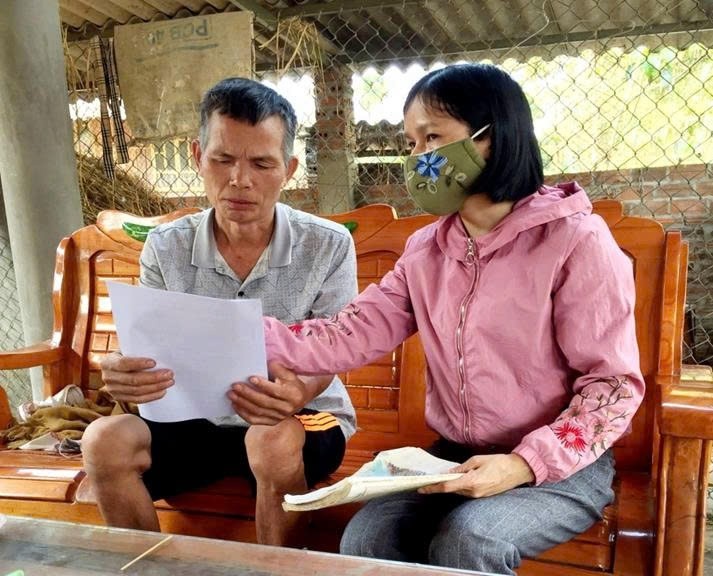
The outreach efforts were carried out using a "door-to-door, person-to-person" approach, in coordination with local authorities.
"We say that even at an older age, it's still possible to learn to read and write, to acquire knowledge of techniques and science applicable to daily life, economic development, and raising children and grandchildren. And more importantly, mothers and grandmothers will set a good example for their children and grandchildren," she said.
The school and the Women's Association also regularly visit the classes, sharing, encouraging, and motivating students every week, emphasizing the importance of setting a good example, attending classes regularly, and completing the program so that their children and grandchildren can follow suit.
Recalling memorable moments, Ms. Diep shared the story of Ms. Lo Thi Suy, 56 years old. Previously, she was hesitant to go to restaurants because she couldn't read menus and had to order whatever others ordered. After learning to read and calculate prices, she chose her own dishes and managed her family's business. Her family even held a small party to celebrate her success.
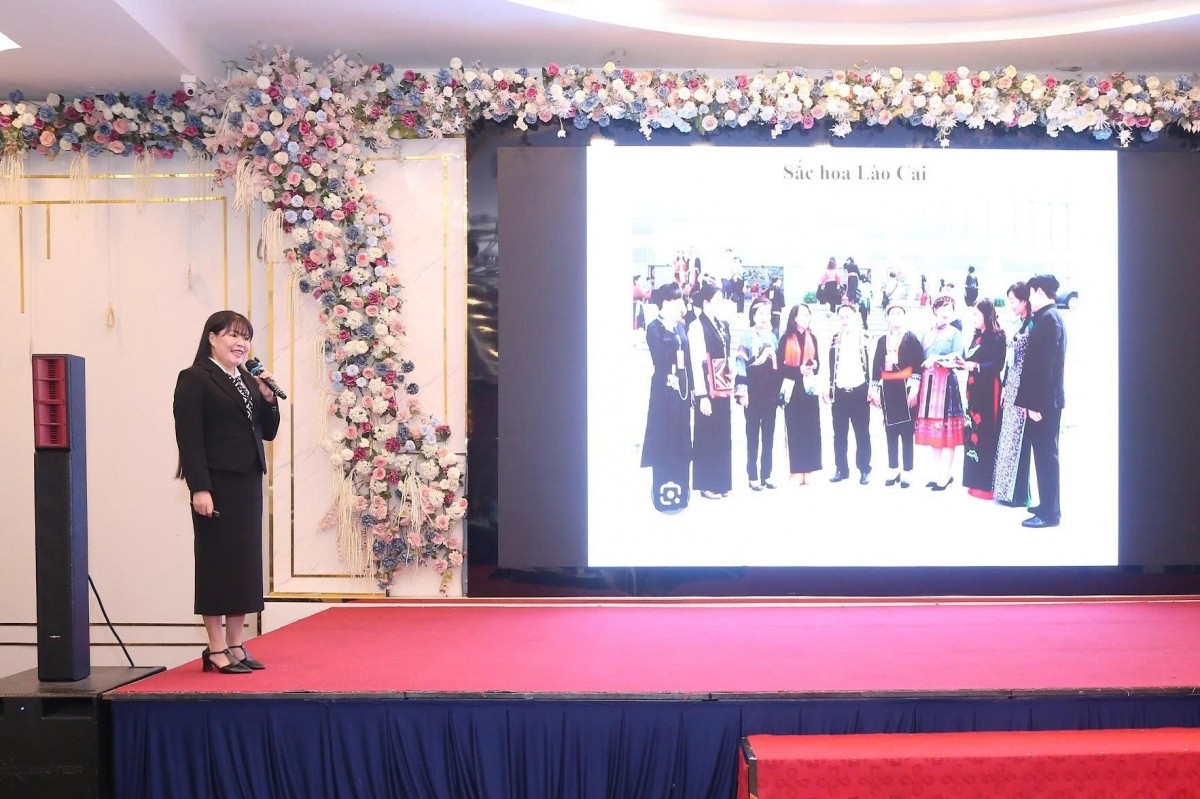
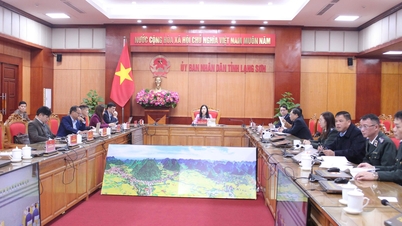
Ms. Minh Diep shared her experiences at the Workshop on Exchange and Recognition of Advanced Models in Literacy Eradication for Ethnic Minorities.
“Many other students had also dropped out of school for decades, forgetting how to read and write, but thanks to the patience and dedication of the teachers, by the end of the year they had learned to read and write and completed the program. Our teachers teach all day, afternoon, and evening, sometimes 7-8 lessons a day, but with determination, they have helped students overcome the barriers of age and knowledge,” Ms. Diep shared.
From that small classroom, literacy is quietly opening new doors for the people of Phuc Son highlands—not with fanfare or ostentation, but with enough resilience to remain in every home and every village. "We don't think about achievements or targets, but about how to ensure that the villagers don't drop out, so that they see learning to read and write as something they themselves take responsibility for," said Ms. Minh Diep.
For Ms. Phu Minh Diep and the teachers at Phuc Son Primary School, the literacy class is not just about teaching reading and writing, but about opening a small door – where elderly people can confidently hold a pen for the first time, read a line of text, and gradually change their lives starting from very simple things.
Source: https://baolaocai.vn/tu-nuong-ray-den-bang-den-hanh-trinh-xoa-mu-chu-o-phuc-son-post888893.html




![[Image] Vietnam's colorful journey of innovation](/_next/image?url=https%3A%2F%2Fvphoto.vietnam.vn%2Fthumb%2F1200x675%2Fvietnam%2Fresource%2FIMAGE%2F2025%2F12%2F14%2F1765703036409_image-1.jpeg&w=3840&q=75)
























































![[Image] Vietnam's colorful journey of innovation](https://vphoto.vietnam.vn/thumb/402x226/vietnam/resource/IMAGE/2025/12/14/1765703036409_image-1.jpeg)






















Comment (0)