

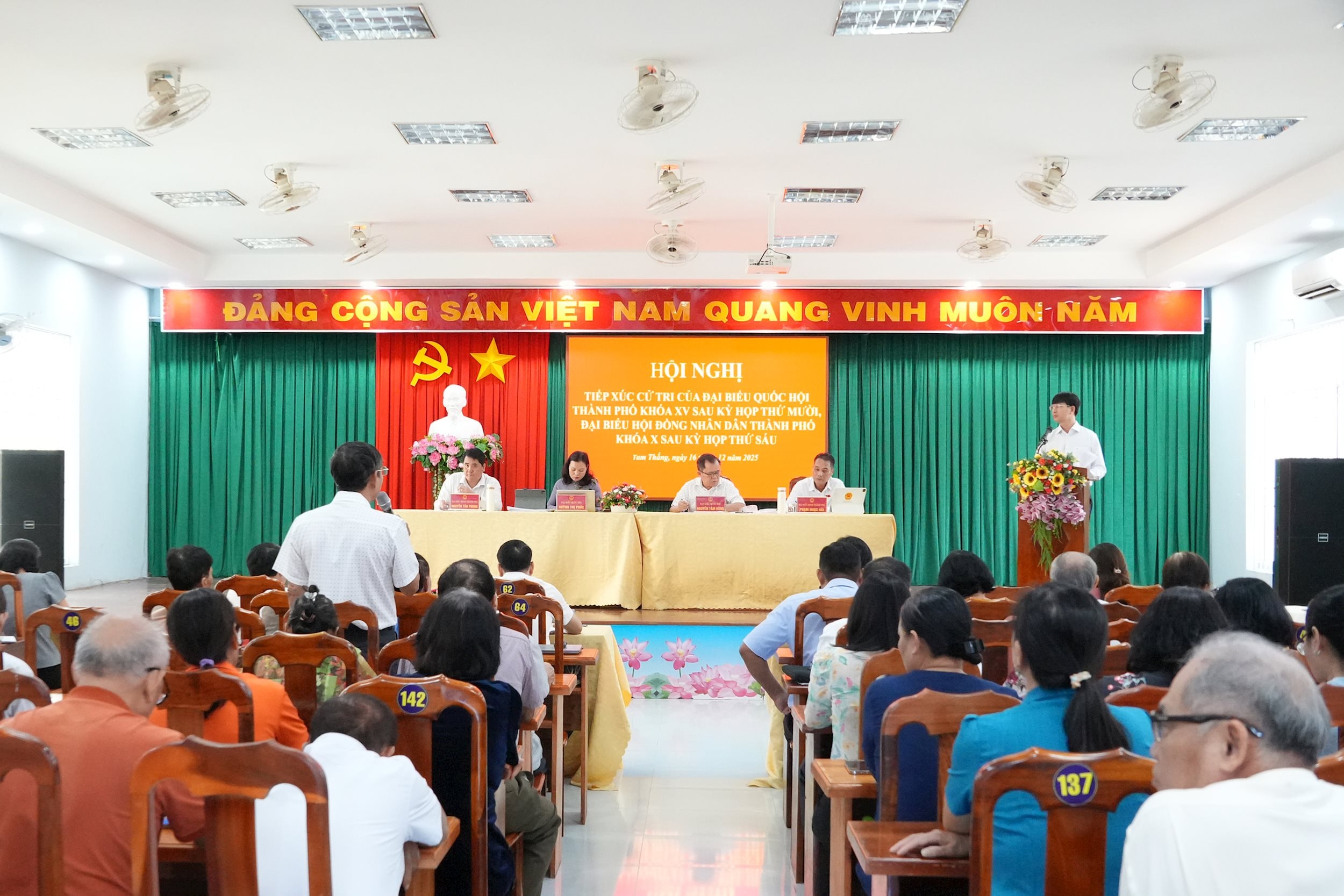
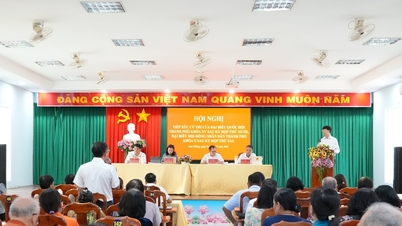
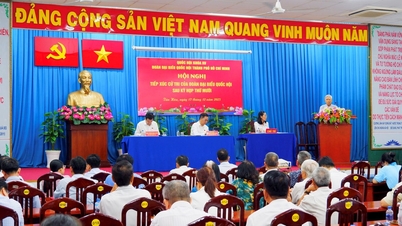
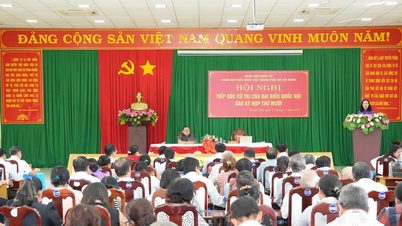
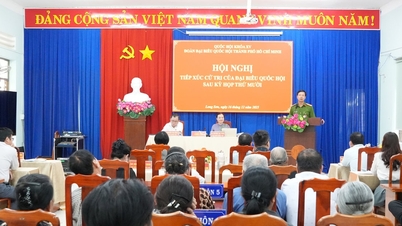
At a meeting with constituents held by National Assembly deputies of Ho Chi Minh City, 15th term, following the Tenth Session, in Tam Thang ward, voters from Tam Thang, Vung Tau, Rach Dua, and Phuoc Thang wards (Ho Chi Minh City) raised many issues related to people's lives, most notably the persistent environmental pollution caused by businesses interspersed within residential areas.
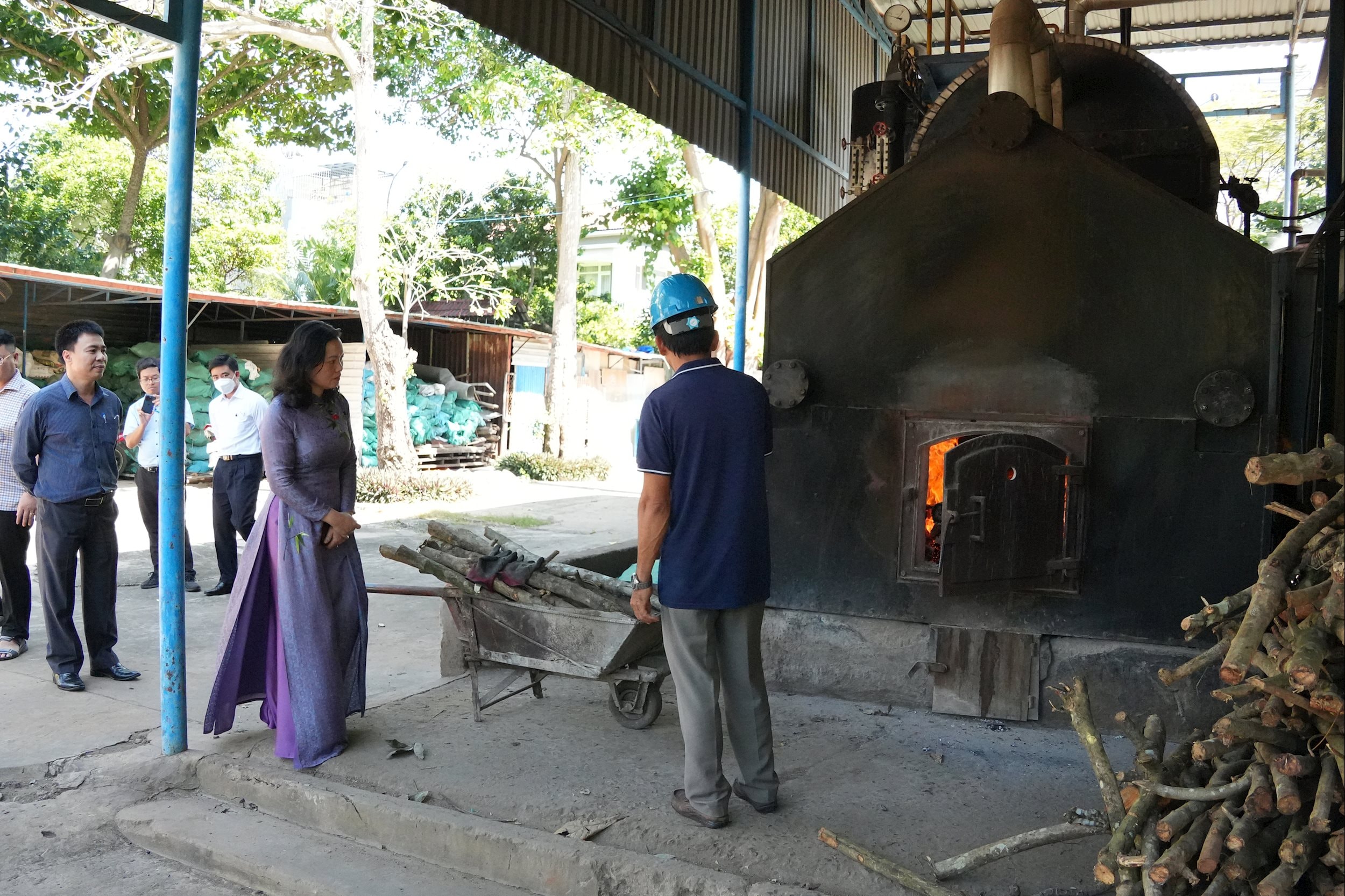
Immediately after the meeting with constituents, the Deputy Head of the Ho Chi Minh City National Assembly Delegation, along with local leaders and relevant agencies, directly surveyed and recorded the actual feedback from constituents in the area of alley 262, Le Loi Street, Tam Thang Ward.
According to feedback from voters, the residential area at alley 262, Le Loi Street, has been frequently affected by smoke and foul odors emanating from an industrial laundry facility that has been operating in the middle of the residential area for many years. At times, the unpleasant smoke and odor spread throughout the residential area, forcing residents to close their doors and windows, disrupting their daily lives, and directly impacting their health and quality of life.
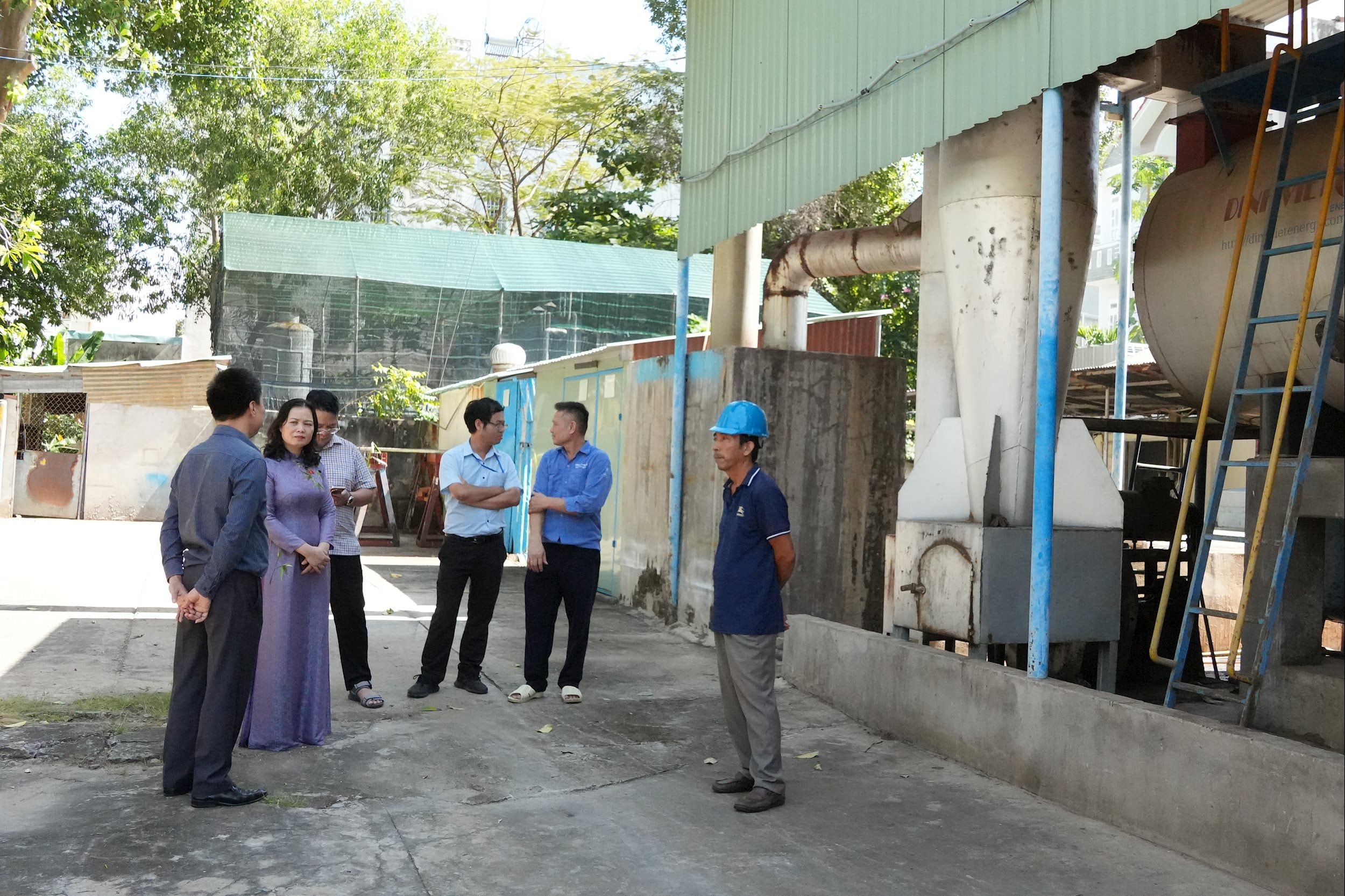
Voters stated that, previously, through numerous petitions via channels such as neighborhood committees, wards, People's Council representatives, and National Assembly representatives, the industrial laundry business located in alley 262, Le Loi Street, was inspected and reminded by authorities to address the issue of wastewater discharge into the environment. While this was resolved, air pollution remains inconsistent, fluctuating between severe and mild levels, only to recur after a period of time. Voters cited the specific example of smoke from the laundry facility's furnace being discharged directly into the environment without proper treatment, causing increasing frustration and concern among residents about the long-term impact of pollution on their living environment.
At the conference, voters expressed their desire for authorities to regularly and continuously inspect and monitor businesses, requiring them to take corrective measures, use appropriate materials, and apply proper procedures for odor and smoke treatment according to standards, ensuring that it does not affect residential areas. They also requested strict penalties for violations of environmental protection laws.
Voters also requested that the City's National Assembly Delegation closely monitor the government's implementation of measures to definitively address the situation, avoiding a "one-time" or "batch-based" approach that leads to recurring violations and long-term impacts on the living environment and people's health.
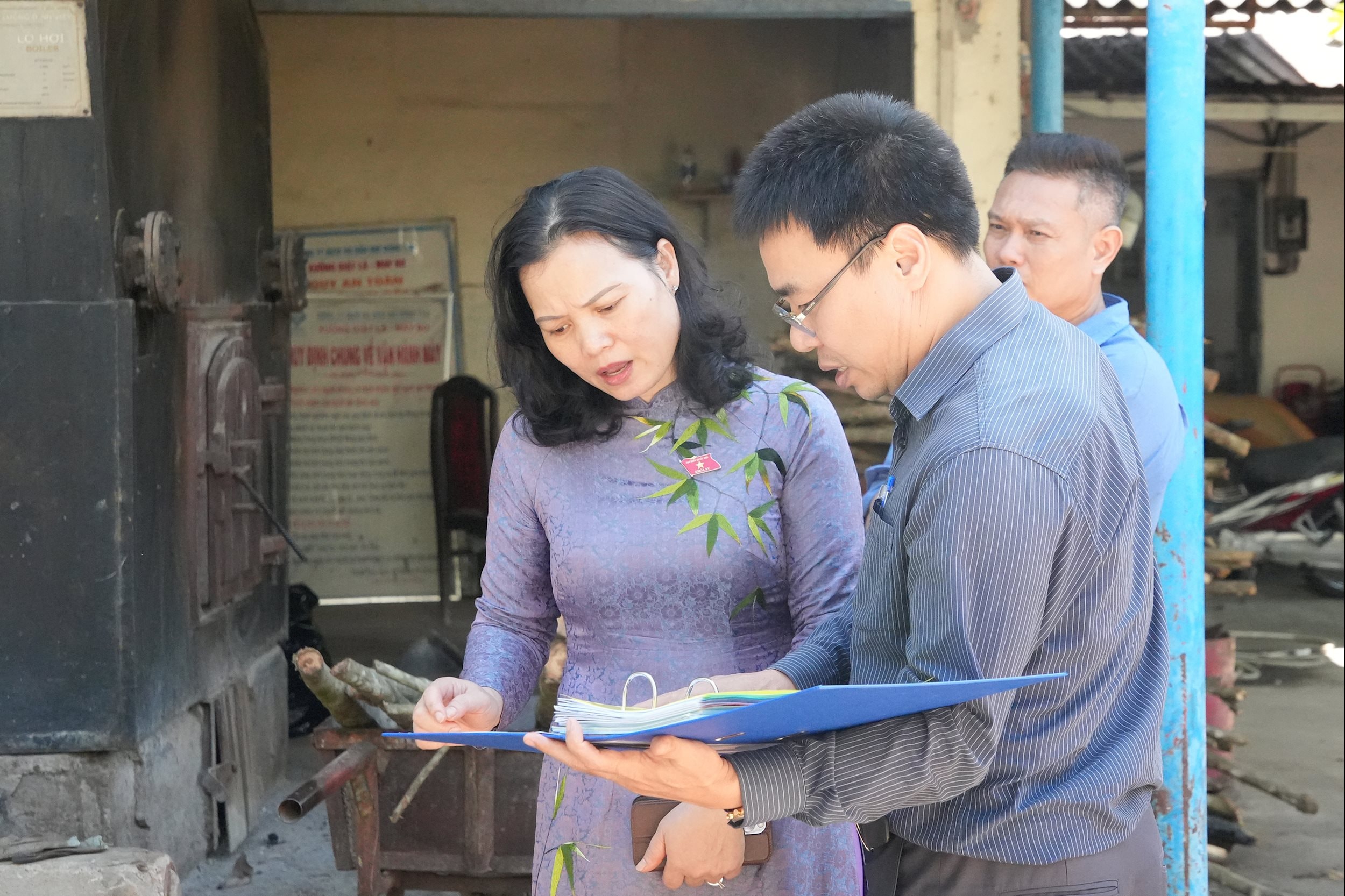
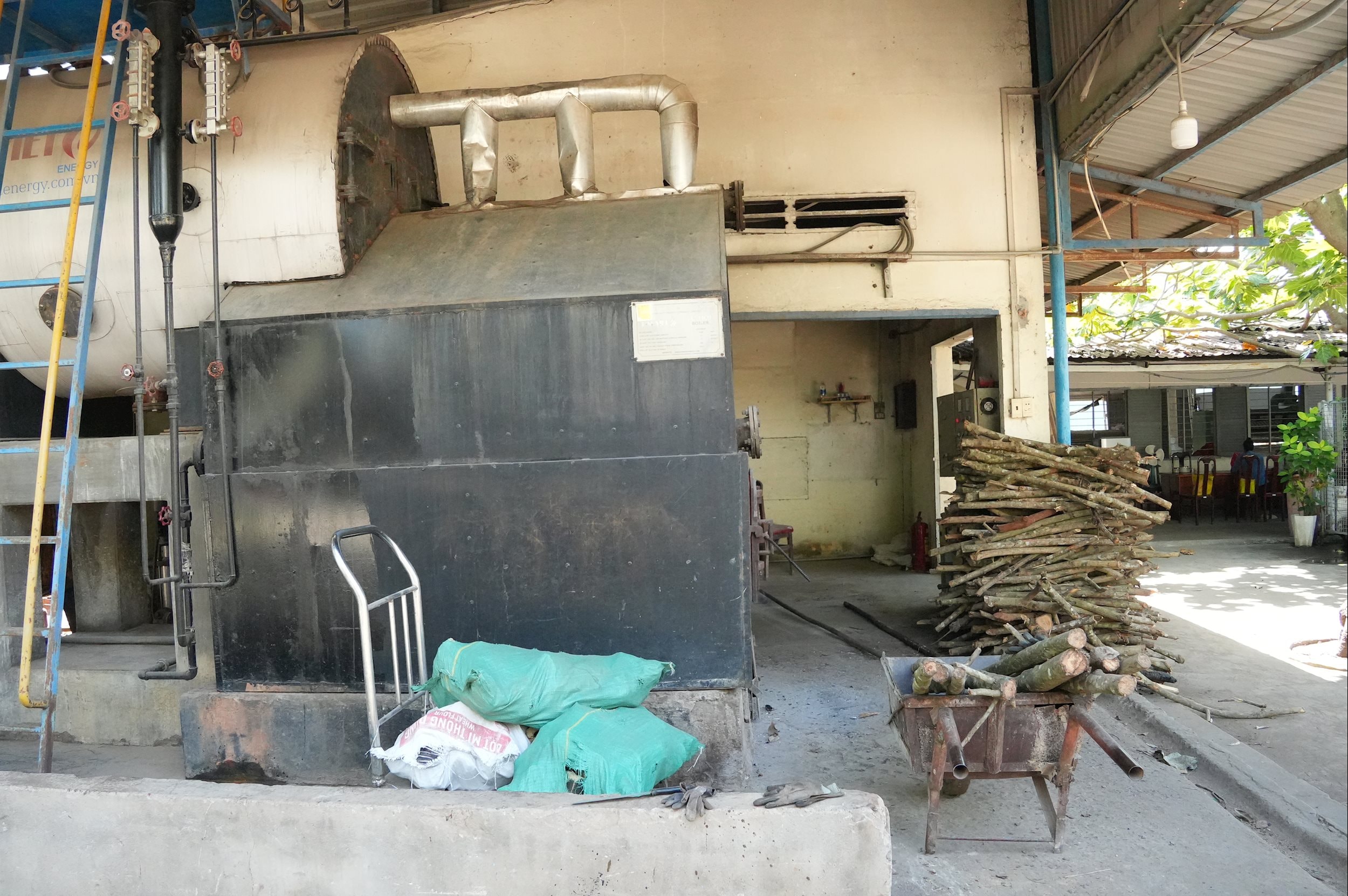
Based on feedback from voters and on-site surveys, it was found that the machinery was old, the processes were rudimentary, and the furnaces were fueled by wood. Representatives of the Ho Chi Minh City National Assembly Delegation and leaders of Tam Thang ward initially acknowledged that the voters' concerns about the potential for pollution from the laundry facility if not strictly controlled were well-founded.
In discussions with National Assembly representatives and ward leaders, the owner of the laundry facility stated that the facility had been operating for many years. Following complaints from residents about pollution, the facility had gradually addressed the issues and had registered for relocation. They had also repeatedly sent written requests to the authorities to consider relocating the laundry facility to an industrial zone or concentrated production area, but had not yet received any response regarding whether their relocation request would be considered.
The Deputy Head of the City's National Assembly Delegation requested Tam Thang ward to coordinate with relevant departments and agencies to urgently conduct a comprehensive inspection of the facility's compliance with environmental protection regulations; clarify whether the exhaust gas treatment process meets the required standards; and if there are violations of environmental protection laws, to resolutely handle them strictly. At the same time, they should promptly advise the competent authority to consider and respond to the laundry business's request for assistance in relocating to an industrial park or concentrated production zone, in order to facilitate business operations for organizations and individuals as prescribed, but most importantly, to ensure environmental protection.
Listening to and incorporating voters' opinions goes beyond simply contacting, providing information, and clarifying issues raised by voters; it is concretized through practical actions. From on-site surveys and inspections, the National Assembly delegation continues to closely monitor the resolution process by competent authorities and the remediation of long-standing, unresolved issues by businesses that have been causing public dissatisfaction.
According to the people: Being close to the people, timely, and practical in the local context means that National Assembly representatives are working alongside functional agencies in addressing existing issues, meeting the legitimate aspirations of voters and the people, with the requirement that what needs to be done immediately should not be delayed, avoided, or passed on, thereby contributing to ensuring sustainable development, protecting the living environment and the health of the people.
Sharing their thoughts on the voter outreach and survey activities conducted by the Ho Chi Minh City National Assembly Delegation and the leaders of Tam Thang ward, many voters expressed their agreement with the two-way nature of receiving feedback and the information exchanged and explained between voters and representatives and leaders of various sectors and localities. At the same time, voters also highly appreciated the sense of responsibility, closeness to the people, and direct engagement with the people by the Ho Chi Minh City National Assembly Delegation immediately after listening to voters' opinions and suggestions. This demonstrates that suggestions are not only "heard" and "recorded" but also "thoroughly addressed," further building trust among the people in the voter outreach activities and the handling of voter suggestions by representatives and elected bodies.
Source: https://daibieunhandan.vn/doan-dbqh-tp-ho-chi-minh-khao-sat-ve-o-nhiem-moi-truong-ngay-khi-t-iep-nhan-phan-anh-tu-cu-tri-10400778.html
![[Photo] Prime Minister Pham Minh Chinh receives the Governor of Tochigi Province (Japan)](/_next/image?url=https%3A%2F%2Fvphoto.vietnam.vn%2Fthumb%2F1200x675%2Fvietnam%2Fresource%2FIMAGE%2F2025%2F12%2F16%2F1765892133176_dsc-8082-6425-jpg.webp&w=3840&q=75)
![[Photo] Prime Minister Pham Minh Chinh receives Lao Minister of Education and Sports Thongsalith Mangnormek](/_next/image?url=https%3A%2F%2Fvphoto.vietnam.vn%2Fthumb%2F1200x675%2Fvietnam%2Fresource%2FIMAGE%2F2025%2F12%2F16%2F1765876834721_dsc-7519-jpg.webp&w=3840&q=75)
![[Image] Leaked images ahead of the 2025 Community Action Awards gala.](/_next/image?url=https%3A%2F%2Fvphoto.vietnam.vn%2Fthumb%2F1200x675%2Fvietnam%2Fresource%2FIMAGE%2F2025%2F12%2F16%2F1765882828720_ndo_br_thiet-ke-chua-co-ten-45-png.webp&w=3840&q=75)

![[Live] 2025 Community Action Awards Gala](/_next/image?url=https%3A%2F%2Fvphoto.vietnam.vn%2Fthumb%2F1200x675%2Fvietnam%2Fresource%2FIMAGE%2F2025%2F12%2F16%2F1765899631650_ndo_tr_z7334013144784-9f9fe10a6d63584c85aff40f2957c250-jpg.webp&w=3840&q=75)




























































Comment (0)