


Stay ahead of technology trends.
Statistics within the University of Da Nang show that many graduates from the University of Technology, trained in fields such as electronics and telecommunications, information technology, embedded systems, control and automation, and mechatronics, are largely working at semiconductor companies in the city (accounting for approximately 70-80% of the total number of engineers working at these companies).
In 2024, the school opened a microelectronics - integrated circuit design major, enrolling 65 students. It is projected that this number will increase to 80-100 students in 2026. By 2030, the goal is to train at least 2,000 highly qualified personnel with university degrees or higher to serve the semiconductor industry...
In 2018, Ho Chi Minh City University of Technology and Education offered undergraduate programs in Electronic Engineering Technology and Electronic and Telecommunications Engineering Technology. These are closely related majors/specializations within the Semiconductor Integrated Circuit Design program, with approximately 150 students admitted annually. Currently, the university is training its second cohort of Semiconductor Integrated Circuit Design students, with nearly 120 students.
Nguyen Cong Vu (a first-year student at the University of Technology and Education) said: "In my opinion, this is a profession with many career development opportunities in the future, as technology explodes and the policies and mechanisms of the central and local governments, especially Da Nang city, are geared towards becoming a technology center with the digital economy accounting for 40% of GRDP."
At the Vietnam-Korea University of Information and Communication Technology, many new majors have been opened to meet market demands, such as: Artificial Intelligence; Semiconductor Microchips; and Financial Technology.
According to statistics from the Ministry of Education and Training , in 2025, the number of candidates registering for their first choice in STEM fields will reach over 220,000, an increase of nearly 42,000 candidates compared to 2024 - the most impressive increase in many years. This confirms the high expectations of students for STEM fields, given the numerous policies implemented by the central and local governments to support this sector.
Prepare teaching resources.
In recent years, universities have proactively prepared a pool of lecturers to meet the training needs in the STEM field. Specifically, Da Nang University of Technology has 17 full-time lecturers specializing in semiconductor microchips, including 6 associate professors and 11 PhDs, most of whom were trained in the US, Japan, Germany, South Korea, and Taiwan.
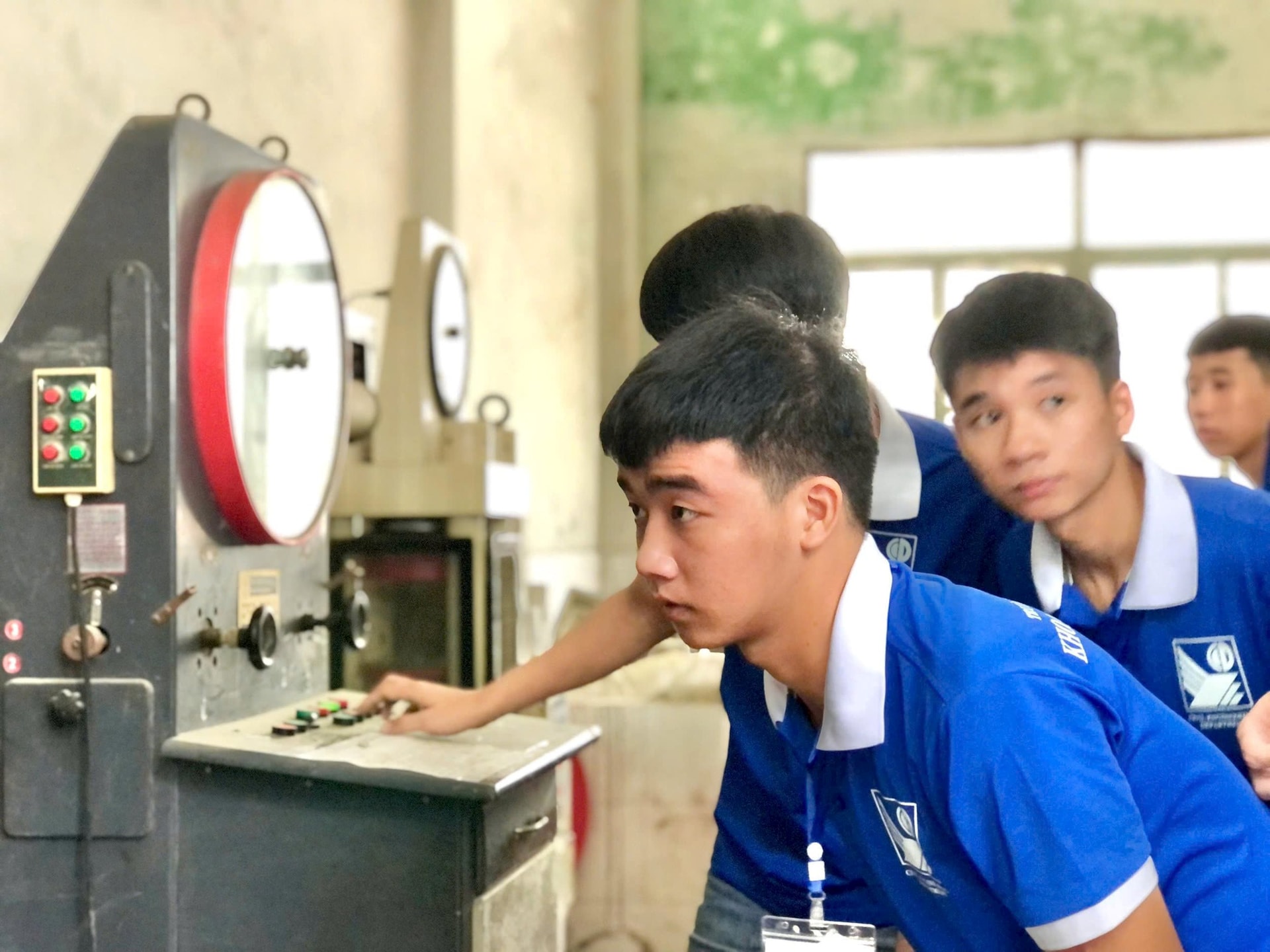
Da Nang University of Technology and Education organizes the teaching staff participating in semiconductor integrated circuit design training based on the number of full-time lecturers of the Department of Electronics and Telecommunications under the Faculty of Electrical and Electronics Engineering; lecturers with expertise from related fields within the Faculty of Electrical and Electronics Engineering...
Within the framework of the "Enhancing Education, Training, Management and Research Capacity Project 2022-2027" funded by ODA from the Korean Government, the Vietnam-Korea University of Information and Communication Technology is implementing online courses on the Coursera platform for all lecturers and teaching assistants to update and enhance their knowledge in their respective fields.
Associate Professor Dr. Dang Cong Thuat, Head of the Training Department at Da Nang University of Technology, said that the university is adjusting the training programs for related majors, while also adding basic, foundational, and specialized courses related to the field of integrated circuit design.
In addition, the school collaborates with the National Innovation Center (NIC), the TRESEMI expert group, FPT, the University of Information Technology - Vietnam National University Ho Chi Minh City, etc., to organize short training courses to supplement knowledge and skills in using EDA tools, focusing on the final design stage in the chip design process before production. Simultaneously, the training program is reviewed and updated with many new modules, directly incorporating industry-standard design tools into the curriculum.
Dr. Nguyen Linh Nam, Vice Rector of the University of Technical Education, said that the university has improved its technology training program, including semiconductor integrated circuit design, in accordance with the new regulations of the Ministry of Education and Training and the University of Da Nang.
Over the past two years, having participated in numerous professional training courses on semiconductor integrated circuits and currently attending an advanced integrated circuit training course, Mr. Phan Ngoc Ky, lecturer at the Faculty of Electrical and Electronic Engineering, University of Technical Education, has had the opportunity to access leading semiconductor experts in Vietnam and around the world, as well as utilize professional and in-depth materials and textbooks.
“The output of STEM students in general, and integrated circuit design students in particular, requires strict standards and requirements from recruiting companies. Therefore, continuous innovation and updating of the curriculum is mandatory. A unique characteristic of this field of training is that it cannot be observed with the naked eye; it requires learning through tools and equipment to verify the phenomena. Therefore, investing in equipment is equally important, and this is also a challenge for schools and students in STEM fields,” Mr. Ky shared.
Source: https://baodanang.vn/don-dau-thi-truong-lao-dong-3303426.html







































































































Comment (0)