

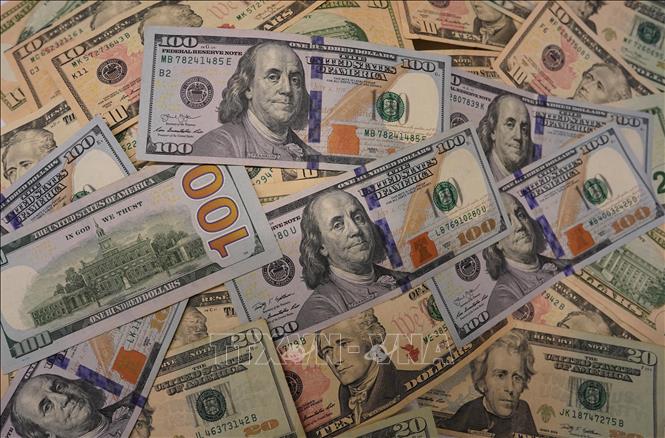
Specifically, in the December 12th trading session in New York, the USD index – a measure of the dollar's strength against a basket of six major currencies – rose 0.1% to 98.44, recovering from a two-month low. However, overall for the week, the index still fell by approximately 0.6%, marking its third consecutive week of decline. Since the beginning of December, the USD has lost 1.1% of its value and has fallen more than 9% since the beginning of 2015, heading towards its sharpest annual decline since 2017.
The developments in this week's trading session reflect a "weekend break" sentiment and position adjustments following the prolonged decline of the USD. According to Bob Savage, Head of Macro Market Strategy at BNY, the weakening of the USD is largely due to the impact of the Fed's monetary policy, as the US central bank cut interest rates this week.
Against other major currencies, the USD rose 0.2% against the Japanese yen to 155.93 yen/USD, as markets focused on the Bank of Japan's (BoJ) policy meeting next week, with expectations of a rate hike remaining. Meanwhile, the euro was flat at 1.1735 USD/euro, after having just touched a more than two-month high in the previous session. The British pound fell 0.2% to 1.3375 USD/pound, after data showed the UK economy unexpectedly contracted in the three months to October 2025, increasing expectations that the Bank of England (BoE) will soon cut interest rates.
Despite a correction on December 12th, both the euro and the pound are on track for a third consecutive weekly gain against the US dollar, reflecting the weakening trend of the greenback over the past week.
Looking back at the beginning of the week, the US dollar rose slightly on December 8th as investors remained cautious ahead of a series of policy meetings by major central banks, particularly the Fed meeting. At that time, the USD index rose 0.2% to 99.18, amidst market certainty that the Fed would cut interest rates by 0.25 percentage points, but might signal a more cautious approach to subsequent steps.
By mid-week, the Fed officially lowered interest rates for the third consecutive time this year, bringing the federal funds rate to a range of 3.5-3.75%. However, statements from Fed Chairman Jerome Powell and the accompanying message were considered by investors to be not overly hawkish, thus reinforcing the trend of selling USD. In addition, internal disagreements within the Fed and uncertainty about inflation and labor market prospects are making investors more cautious about the outlook for US monetary policy in 2026.
Investors are pricing in the possibility of the Fed cutting interest rates two more times in 2026, in contrast to the more cautious stance of policymakers. This context increases downward pressure on the USD, especially as many other central banks are expected to keep interest rates unchanged or even raise them.
Medium- and long-term forecasts also indicate a less positive outlook for the US dollar. Many major Wall Street banks, such as Deutsche Bank, Goldman Sachs, and Morgan Stanley, believe the USD could continue to weaken in 2026 due to interest rate differentials between the Fed and the rest of the world . According to consensus estimates compiled by Bloomberg, the USD index will fall by approximately 3% by the end of 2026, while some organizations predict a decline of up to 5% in the first half of the year.
Thus, despite a slight recovery in the final trading session of the week on December 12th, the US dollar closed the week on a weaker note, pressured by expectations of continued Fed easing of monetary policy and the shift of capital flows towards currencies with more attractive interest rate prospects. This trend is expected to continue, at least in the short term, as the market continues to seek clearer signals from US economic data and the Fed's policy direction for the coming year.
A weaker dollar is expected to push up import prices, increasing the value of profits that American businesses generate abroad, and supporting exports – a trend that could be welcomed by the Trump administration, especially as he repeatedly complains about the trade deficit. A weaker dollar could also encourage capital flows into emerging markets due to higher interest rates that are more attractive to investors.
Source: https://baotintuc.vn/thi-truong-tien-te/dong-usd-danh-dau-tuan-giam-thu-ba-lien-tiep-20251213102428584.htm


![[Photo] Prime Minister Pham Minh Chinh attends the Conference summarizing and implementing tasks of the judicial sector.](/_next/image?url=https%3A%2F%2Fvphoto.vietnam.vn%2Fthumb%2F1200x675%2Fvietnam%2Fresource%2FIMAGE%2F2025%2F12%2F13%2F1765616082148_dsc-5565-jpg.webp&w=3840&q=75)


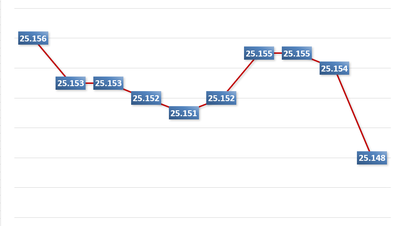

![[Infographic] Cross-exchange rates for determining taxable value from December 11-17](https://vphoto.vietnam.vn/thumb/402x226/vietnam/resource/IMAGE/2025/12/11/1765413245543_infographic-ty-gia-tinh-cheo-de-xac-dinh-tri-gia-tinh-thue-tu-11-1712-20251211021920.jpeg)
























































































Comment (0)