

Podcasts, a trendy new trend.
Podcasts are becoming an increasingly trendy media trend in this age of technology and busy people. Podcasts are highly versatile, allowing users to do all sorts of things while still keeping up with the news, something that other platforms struggle to do.
Podcasts are similar to radio in the past, but the difference is that people can listen to any program they like at any time, even while walking their dog, driving, or washing dishes. This is an advantage in information dissemination that news organizations need to leverage in regaining their place in the hearts of readers, especially young readers.
It would be even better if podcasts included not just audio, but also visuals or video . Research firm Morning Consult found that many podcast listeners prefer watching podcasts on YouTube rather than listening to audio-only versions. Another study showed that podcasts with both sound and visuals attract more new podcast users and younger podcast listeners (ages 18-34) on YouTube, compared to other platforms like Spotify or Google Podcasts.

Podcast platforms like YouTube are a good way for journalists to reach a wider audience. (Image: YouTube)
YouTube started generating advertising revenue for creators much earlier than other social media or sharing platforms. Furthermore, these video podcasts don't necessarily have to be visually stunning or complex. Many podcasts are uploaded with simple videos, or even just a series of still images. Yet, this is often more appealing to users than audio alone.
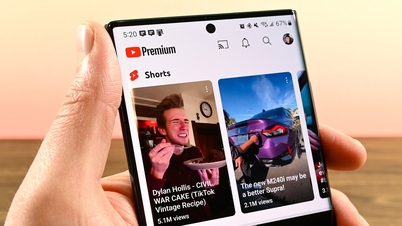
In particular, YouTube recently rolled out a dedicated “Podcast” tab and supported featured podcasts from mainstream news organizations, such as The New York Times and NPR. Several news organizations have highlighted that YouTube is still refining its podcast strategy and may expand it further in the future.
“We are committed to supporting the future of journalism, and that means continuing to create opportunities for the journalism industry to leverage the latest technology and techniques to thrive on YouTube,” promised Elena Hernandez, a YouTube spokesperson. “Whether it’s long-form video, short-form video, or podcasts, we’re always working to improve the experience and support a wider range of formats for news creators.”
From ESPN's breakthrough…
Many news organizations are now making excellent use of this platform as a cost-effective and efficient news distribution channel. Mike Foss, vice president of digital production at ESPN, said that a year ago, the media outlet only streamed two podcasts on YouTube. Now, they have 28 podcasts on the platform and four programs dedicated to YouTube.
Foss said it was a two-part process. The first was driven by the platform itself. YouTube introduced YouTube Shorts, vertical videos under 60 seconds long, to compete with TikTok in 2021. ESPN realized it could turn its featured videos into Shorts and was surprisingly rewarded with a large number of views.
Slate magazine is finding success with its podcast-style content on YouTube. Photo: Slate
Then, when ESPN began experimenting with longer videos, with data streams lasting around 30 minutes for “priority” events, Foss said the viewership for those longer video streams was “really high,” so “it came naturally to us that we started doing this on a larger scale and more frequently with podcasts.”
Instead of creating separate YouTube channels for each topic, ESPN primarily groups them by genre – NBA, soccer, and MMA channels are three of the most popular channels users can subscribe to. Foss says that YouTube viewership, especially podcasts, represents a “new audience” for ESPN.
…up until the successful launch of Slate and NPR
Another highly successful example of podcasts in general, and YouTube podcasts in particular, is Slate magazine. They achieved 190 million downloads from a single podcast series including Political Gabfest, Slow Burn, and Amicus in 2022. This digital news organization relies on podcasts for approximately half of its revenue and sells subscriptions that include additional podcast content.
Furthermore, earlier this year, Slate announced a partnership with YouTube to bring its programs to the platform. YouTube has over 2.6 billion monthly active users. This video platform clearly has a massive global audience, with more than half of internet users worldwide accessing YouTube at least once a month.
“ Discovery has become one of the biggest challenges in the podcast industry, and we see this as a real opportunity to build scale and reach new audiences on YouTube, the most used platform in the world,” said Slate President Charlie Kammerer.
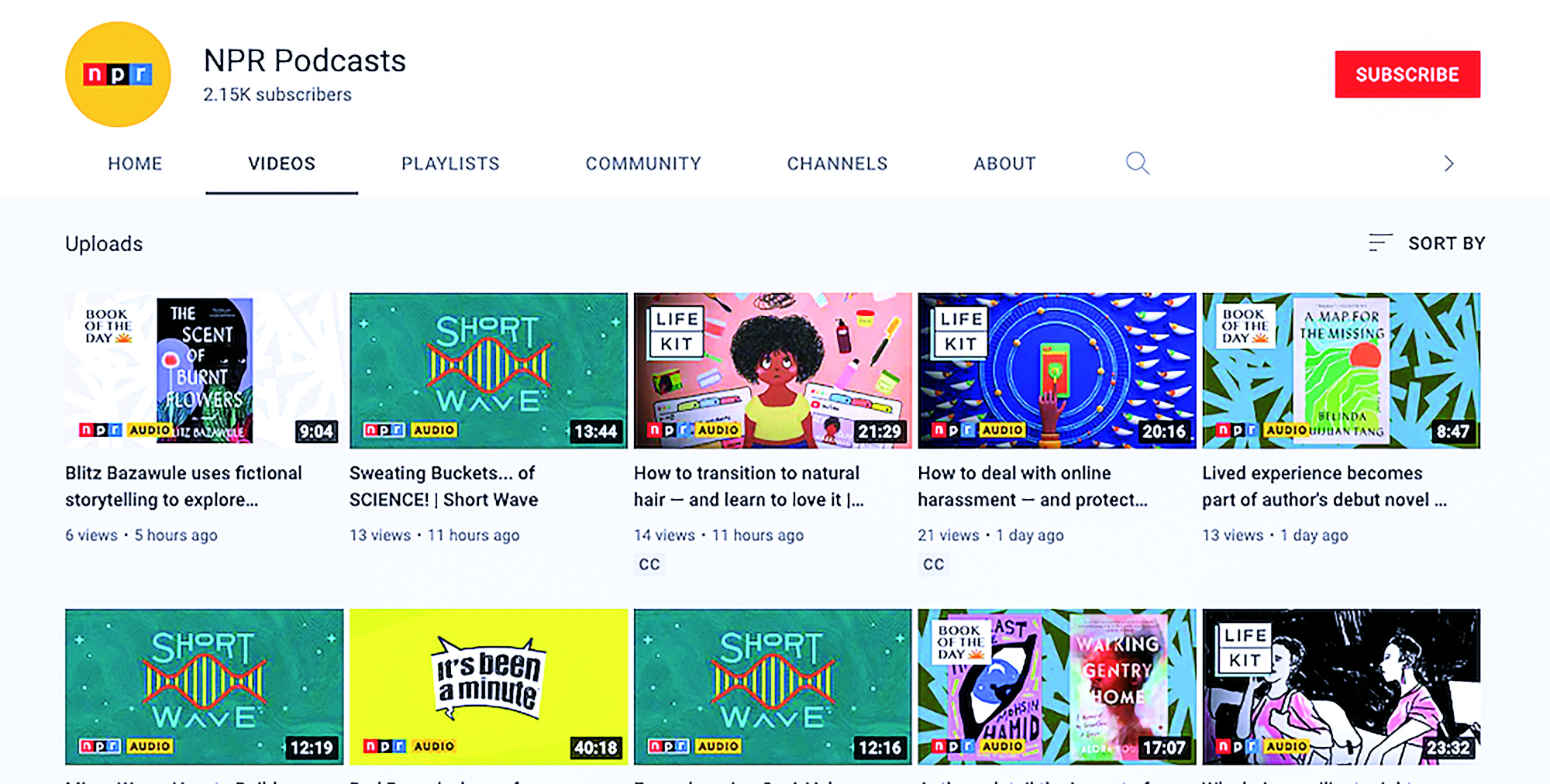
Meanwhile, the American broadcaster NPR currently uploads approximately 65 episodes from its 25 active podcasts to YouTube each week. This media outlet, which has a strong presence in both audio and video, hosts its podcasts on a dedicated YouTube channel with around 34,500 subscribers, along with additional channels such as Planet Money, Fresh Air, NPR Daily News, NPR Entertainment, and Alt.Latino.
NPR has found that podcasts with more visual elements tend to perform better than those with limited graphics or static images. However, YouTube is still relatively new to NPR. Keith Jenkins, the channel's vice president of visual and music strategy, notes that the journalism community needs to redefine what a "podcast" is in order to attract a wider audience.
However, to succeed in this endeavor, Jenkins emphasizes that we “need to view it as an overall strategy, while also being prepared to change direction depending on what makes the most sense.” Because the mission to win back readers is extremely challenging, requiring utmost effort, even sacrifice if necessary.
Hoang Hai
Source

![[Photo] Prime Minister Pham Minh Chinh receives the Governor of Tochigi Province (Japan)](/_next/image?url=https%3A%2F%2Fvphoto.vietnam.vn%2Fthumb%2F1200x675%2Fvietnam%2Fresource%2FIMAGE%2F2025%2F12%2F16%2F1765892133176_dsc-8082-6425-jpg.webp&w=3840&q=75)
![[Live] 2025 Community Action Awards Gala](/_next/image?url=https%3A%2F%2Fvphoto.vietnam.vn%2Fthumb%2F1200x675%2Fvietnam%2Fresource%2FIMAGE%2F2025%2F12%2F16%2F1765899631650_ndo_tr_z7334013144784-9f9fe10a6d63584c85aff40f2957c250-jpg.webp&w=3840&q=75)
![[Image] Leaked images ahead of the 2025 Community Action Awards gala.](/_next/image?url=https%3A%2F%2Fvphoto.vietnam.vn%2Fthumb%2F1200x675%2Fvietnam%2Fresource%2FIMAGE%2F2025%2F12%2F16%2F1765882828720_ndo_br_thiet-ke-chua-co-ten-45-png.webp&w=3840&q=75)
![[Photo] Prime Minister Pham Minh Chinh receives Lao Minister of Education and Sports Thongsalith Mangnormek](/_next/image?url=https%3A%2F%2Fvphoto.vietnam.vn%2Fthumb%2F1200x675%2Fvietnam%2Fresource%2FIMAGE%2F2025%2F12%2F16%2F1765876834721_dsc-7519-jpg.webp&w=3840&q=75)














![[Video] Bach Mai Hospital puts into operation a group of the world's most modern equipment.](https://vphoto.vietnam.vn/thumb/402x226/vietnam/resource/IMAGE/2025/12/17/1765931442107_dung00-58-18-13still010-jpg.webp)










































![[Video] Independence and self-reliance linked with international integration through 40 years of reform](https://vphoto.vietnam.vn/thumb/402x226/vietnam/resource/IMAGE/2025/12/16/1765899635777_1-1-8054-png.webp)





























Comment (0)