

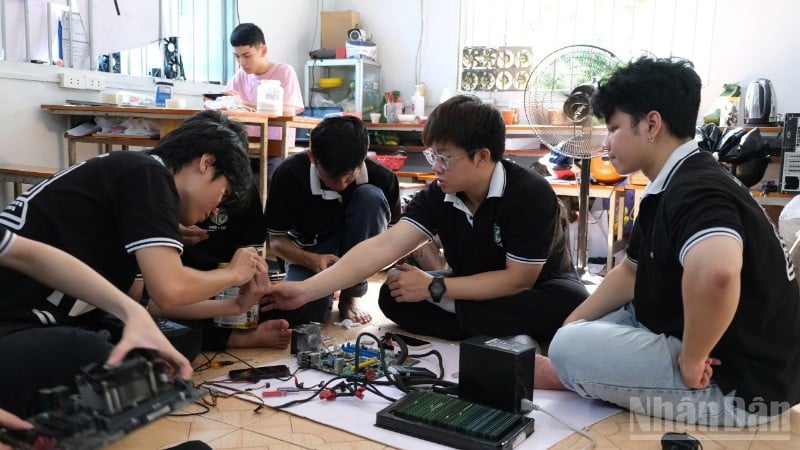
This dedication and responsibility not only helps bridge the digital divide for the places these young intellectuals go to, but also affirms the creative thinking and commitment of young intellectuals to pressing practical issues of the community.
Reviving technology, spreading knowledge.
The predecessor of the "Old Computers - New Knowledge" team stemmed from the concerns raised during the volunteer movement in 2008-2009. Master Phan Dinh Duy, a lecturer in the Computer Engineering Department and one of the founders of the team, recalled: At that time, the popularization of computer literacy in remote areas faced significant obstacles in terms of infrastructure and equipment. Recognizing that teaching theory without practical tools would be ineffective, the founding members came up with the initiative to collect old computers, repair them for teaching purposes, and donate them to local communities.
From a small group with a rudimentary structure, operating in challenging conditions, the model has now developed into a large-scale organization with approximately 50 permanent members, bringing together students from various universities in the area.
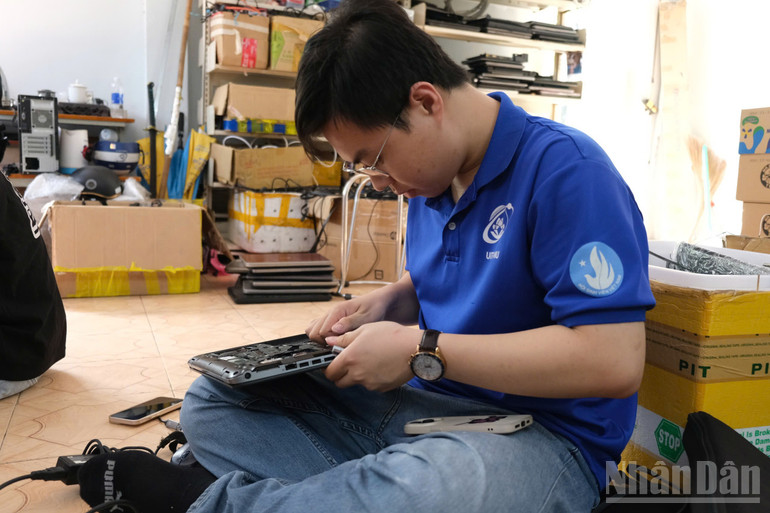
The core value of "Old Computers - New Knowledge" lies in its highly specialized process and circular economy mindset. Instead of becoming electronic waste, old equipment and components from businesses and benevolent individuals are collected and brought to the team's "workshop." Here, a rigorous process of sorting, testing, repairing, and assembling is carried out. After thorough setup and testing, the computers are completely transformed, ready for a new mission.
In addition, when old components become unusable and need replacing, students go to flea markets and scrap yards to buy electronic components by the kilogram at a cheap price of about 20,000-30,000 VND to sort through and reuse any circuit boards that are still functional.
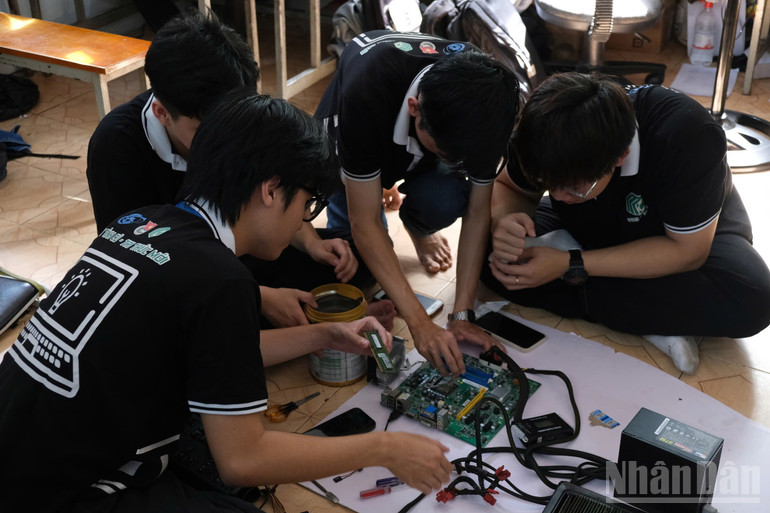
This is a miniature circular economy model with profound social significance, directly addressing the issue of technological waste and extending the lifespan of equipment. More importantly, it creates equal access to knowledge for disadvantaged groups. Computers with configurations that may no longer be suitable for demanding graphic tasks in the city represent a wealth of knowledge, capable of serving the learning and information retrieval needs of underprivileged students, or supporting administrative work in remote villages, emphasized Master Phan Dinh Duy.
Although donation activities are scattered throughout the year, the most intense periods are during the two major campaigns: Spring Volunteer Program and Green Summer Program. Since October 2024 alone, the team has successfully donated nearly 200 computer sets.
However, this charitable endeavor also faces numerous challenges, particularly in transportation and supply-demand imbalances. Transporting electronic equipment over long distances carries significant risks of damage, requiring volunteers to be constantly prepared to troubleshoot technical issues locally and with the beneficiaries. Furthermore, the demand from volunteer teams remains high while the supply of components is limited, preventing many planned support initiatives from being implemented.
Cultivate character and foster a spirit of dedication.
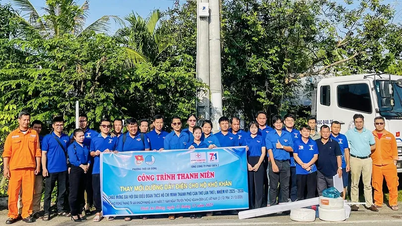
Proof of this practical effectiveness is the positive feedback from the beneficiary localities and organizations. During the school's 2025 Green Summer campaign, five computer sets were donated to the Fatherland Front Committee of Dong Khoi commune, Vinh Long province.
Commenting on this initiative, Ms. Phan My Thanh Tuyen, Vice Chairperson of the Fatherland Front Committee of Dong Khoi Commune, affirmed: "This is extremely practical support, contributing to improving the working conditions of officials and civil servants and enhancing their ability to serve the people."
Beyond creating value for the community, "Old Computers - New Knowledge" is also an ideal training ground for students, future technology engineers. Participating in the team helps young people not only strengthen their professional skills but also improve their soft skills in management, organization, and teamwork.
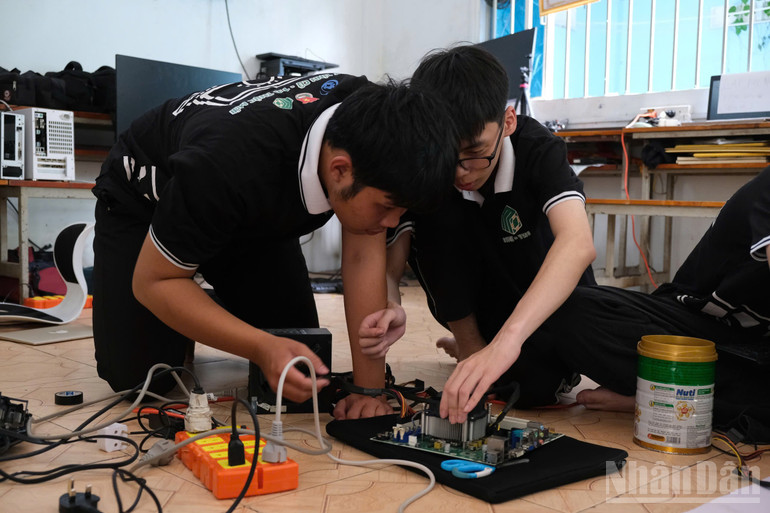
Le Duc Nhan, the current team leader, shared that the happiness of the people when they receive the devices is the biggest motivation for the members to stay committed to the movement. The spirit of solidarity and sharing within the team has created enduring vitality for the model for nearly two decades.
Furthermore, the humanistic nature of this model has created a strong ripple effect. Starting as a school-level team, the model has been expanded to the Ho Chi Minh City National University, inspiring many other units to build similar teams. The success of this model also lies in its ability to connect with and mobilize social resources.
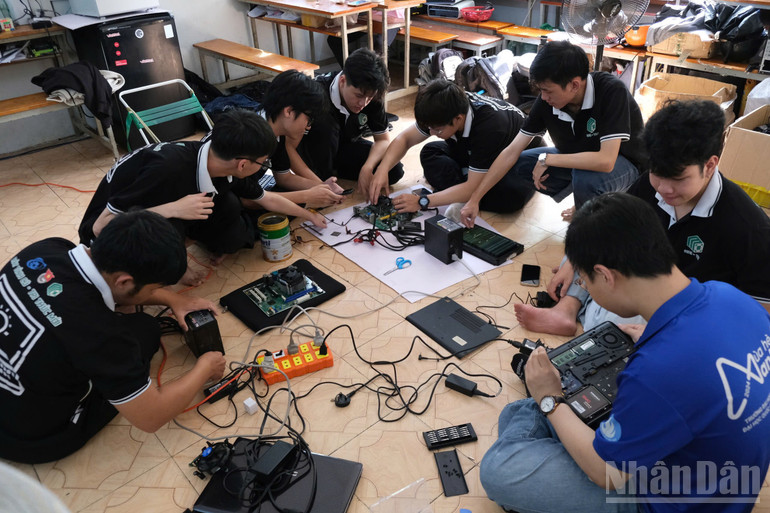
The team has built a sustainable network of partnerships with businesses and alumni. Furthermore, the members don't just stop at donating devices; they also organize technology playgrounds and experiential events for children, incorporating lessons on information technology through outdoor activities.
In the context of the country's accelerated digital transformation, leveraging social resources to equip disadvantaged areas with digital infrastructure is a correct and practical approach. Not only does this connect professional training with social realities and use knowledge as a foundation for charitable activities, but these refurbished computers also carry the passionate hearts and aspirations of young people, contributing to building a learning, civilized, and compassionate society.
Source: https://nhandan.vn/gan-tri-thuc-with-phung-su-cong-dong-trong-thoi-ky-chuyen-doi-so-post930153.html

























































Comment (0)