

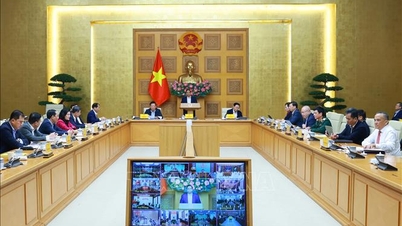
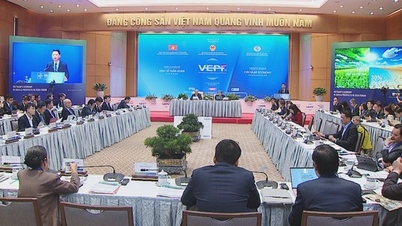
On the morning of December 16th, in Hanoi, the Import-Export Department ( Ministry of Industry and Trade ) organized a seminar titled "Solutions for High and Sustainable Export Growth".
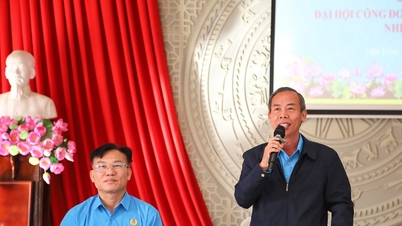
Speaking at the seminar, Mr. Tran Thanh Hai, Deputy Director of the Import-Export Department, emphasized that the 30-year milestone since 1995 is not only significant in terms of time, but also a special mark in the integration process. From a starting point where total import-export turnover was very low, less than 1 billion USD, after 30 years, the growth of import-export activities has gone hand in hand with the integration and opening up of the economy .
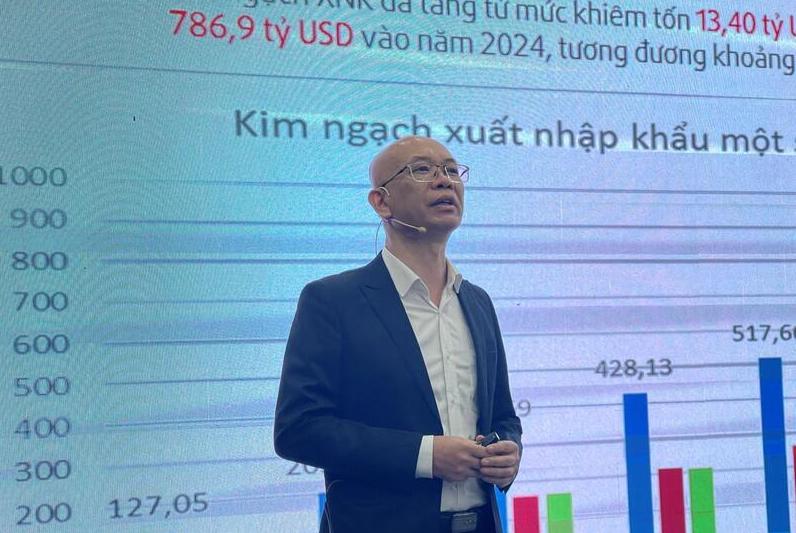
Mr. Tran Thanh Hai successively reviewed the notable milestones: surpassing 100 billion USD in 2009, 200 billion USD in 2011, 300 billion USD in 2015, and then progressing to 400-500 billion USD in the 2017-2019 period. Notably, in a short time, Vietnam continued to surpass the 600-700 billion USD mark in the 2021-2022 period.
"2025 will be a very special year, as we will successively surpass two milestones: $800 billion and over $900 billion," Mr. Hai emphasized, considering this a "double record" for Vietnam's import and export.
Not only has there been growth in scale, but the trade balance has also undergone a significant shift. Mr. Hai stated that before 2010, Vietnam consistently experienced a trade deficit, "even at times a very deep deficit." However, 2012 marked a crucial point when the trade balance began to stabilize and move towards a surplus. "From 2015 to the present, we have basically maintained a trade surplus, with a record high in 2023," Mr. Hai cited, demonstrating that imports and exports have not only expanded in volume but have also contributed positively to macroeconomic stability.
However, according to Mr. Tran Thanh Hai, this picture of achievements also raises many issues that need to be addressed directly. Regarding the structure of goods, the largest export groups currently remain computers, electronic products and components; machinery, equipment, tools, and spare parts; and telephones and components, alongside traditional industries such as textiles, footwear, wood, and wood products. Looking at the export and import structure, a clear similarity can be seen, reflecting the reality that Vietnam still imports many components and semi-finished products for assembly and export.
Accordingly, Mr. Hai frankly pointed out three major imbalances: market imbalance due to concentration on a few key partners; imbalance in the entities involved, with FDI enterprises accounting for a large proportion of exports; and especially imbalance in added value.
"Currently, the majority of the value we create lies in the final production stage, while stages such as design, branding, and distribution are still limited," Mr. Hai observed.
In this context, import and export activities are also affected by many major trends in global trade. Mr. Hai emphasized the trend of trade fragmentation and regionalization, the rise of protectionism, trade defense measures, along with the increasing demand for sustainable development and greening of supply chains. Greening is not just about the product itself, but about the entire production and distribution process. This is a challenge, but if businesses grasp it well, it can also become a competitive advantage.
Based on his analysis of the current situation, Mr. Tran Thanh Hai believes that the requirements for Vietnam's import and export sector in the coming period are not only to maintain a high growth rate, but more importantly, to restructure the growth drivers towards greater sustainability and self-reliance. For sustainable import and export development, there must first be goods available; developing domestic production is the core foundation of any trade strategy.
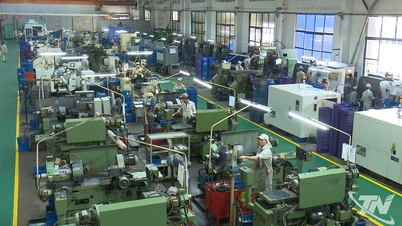
According to Mr. Hai, in the coming period, Vietnam needs to pay special attention to developing foundational industries capable of supplying raw materials, components, and semi-finished products for key export industries. Gradually reducing dependence on imported inputs will not only help increase the localization rate but also enhance the economy's resilience to external shocks and the risk of supply chain disruptions. "Only when we can proactively manage production can we talk about increasing the real value of exported goods," Mr. Hai said.
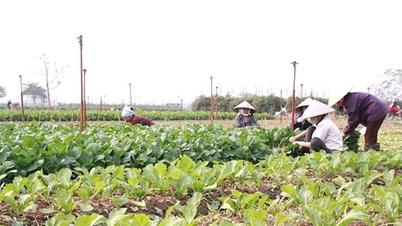
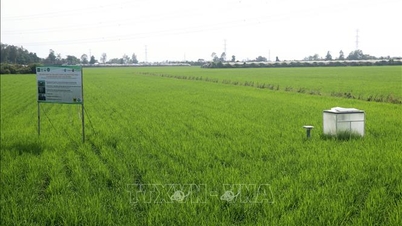
Along with industry, agriculture and agricultural products continue to be identified as an important pillar of Vietnam's exports in the coming period. However, according to Mr. Hai, agricultural exports cannot follow the same old path of focusing on quantity, but need to shift strongly towards quality, deep processing, and brand building.
Another overarching direction, repeatedly mentioned by Mr. Tran Thanh Hai, is mastering technology and market standards. In the context of increasingly stringent requirements for sustainable development, emission reduction, and greening the supply chain, meeting standards is no longer an option but a mandatory condition.
"Greening is not just about a single product, but about the entire process of production, distribution, and consumption. Businesses that adapt early will have a clear competitive advantage," Mr. Hai stated.
From a market perspective, Mr. Hai believes that in addition to effectively exploiting traditional markets, Vietnam needs to continue diversifying export markets, reducing excessive dependence on a few key markets. Making good use of new-generation free trade agreements (FTAs) not only helps expand markets but also acts as a "lever" for businesses to raise production standards, improve management, and enhance compliance.
FTAs are not just about tariff preferences, but also a framework for businesses to enhance their long-term competitiveness.
In parallel, Mr. Tran Thanh Hai particularly emphasized the role of new trade methods, especially cross-border e-commerce. In the context of increasingly high costs of accessing traditional markets, e-commerce is opening up new opportunities for businesses, especially small and medium-sized enterprises (SMEs), to directly participate in the global value chain. E-commerce not only helps expand markets but also shortens the distance between producers and consumers, which will be one of the new drivers of export growth in the coming period.
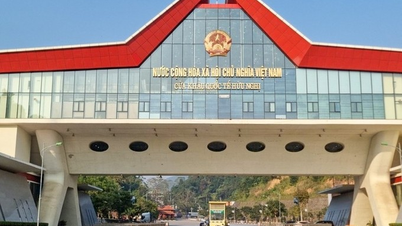
Another indispensable pillar is logistics. According to Mr. Hai, having goods and markets is important, but if logistics costs are high and transportation times are long, the competitiveness of exported goods will be eroded. Therefore, improving logistics capacity, optimizing the supply chain, and effectively connecting production, export, and distribution are fundamental requirements for maintaining sustainable export growth.
From a state management perspective, Mr. Tran Thanh Hai stated that relevant agencies will continue to support businesses in improving institutions, reforming administrative procedures, enhancing market information provision, and providing early warnings of trade risks. The goal is to create a favorable environment for businesses to confidently invest long-term, improve their competitiveness, and participate more deeply in the global value chain.
Source: https://baotintuc.vn/kinh-te/giai-phap-duy-tri-da-tang-truong-ben-vung-2026-khi-xuat-khau-2025-lap-ky-luc-moi-20251216121818490.htm
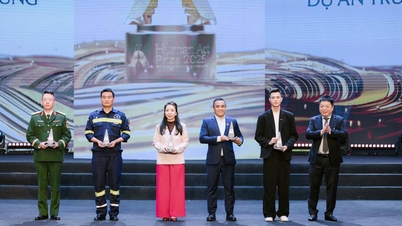
![[Live] 2025 Community Action Awards Gala](/_next/image?url=https%3A%2F%2Fvphoto.vietnam.vn%2Fthumb%2F1200x675%2Fvietnam%2Fresource%2FIMAGE%2F2025%2F12%2F16%2F1765899631650_ndo_tr_z7334013144784-9f9fe10a6d63584c85aff40f2957c250-jpg.webp&w=3840&q=75)


![[Image] Leaked images ahead of the 2025 Community Action Awards gala.](/_next/image?url=https%3A%2F%2Fvphoto.vietnam.vn%2Fthumb%2F1200x675%2Fvietnam%2Fresource%2FIMAGE%2F2025%2F12%2F16%2F1765882828720_ndo_br_thiet-ke-chua-co-ten-45-png.webp&w=3840&q=75)
![[Photo] Prime Minister Pham Minh Chinh receives Lao Minister of Education and Sports Thongsalith Mangnormek](/_next/image?url=https%3A%2F%2Fvphoto.vietnam.vn%2Fthumb%2F1200x675%2Fvietnam%2Fresource%2FIMAGE%2F2025%2F12%2F16%2F1765876834721_dsc-7519-jpg.webp&w=3840&q=75)
![[Photo] Prime Minister Pham Minh Chinh receives the Governor of Tochigi Province (Japan)](/_next/image?url=https%3A%2F%2Fvphoto.vietnam.vn%2Fthumb%2F1200x675%2Fvietnam%2Fresource%2FIMAGE%2F2025%2F12%2F16%2F1765892133176_dsc-8082-6425-jpg.webp&w=3840&q=75)






















































Comment (0)