

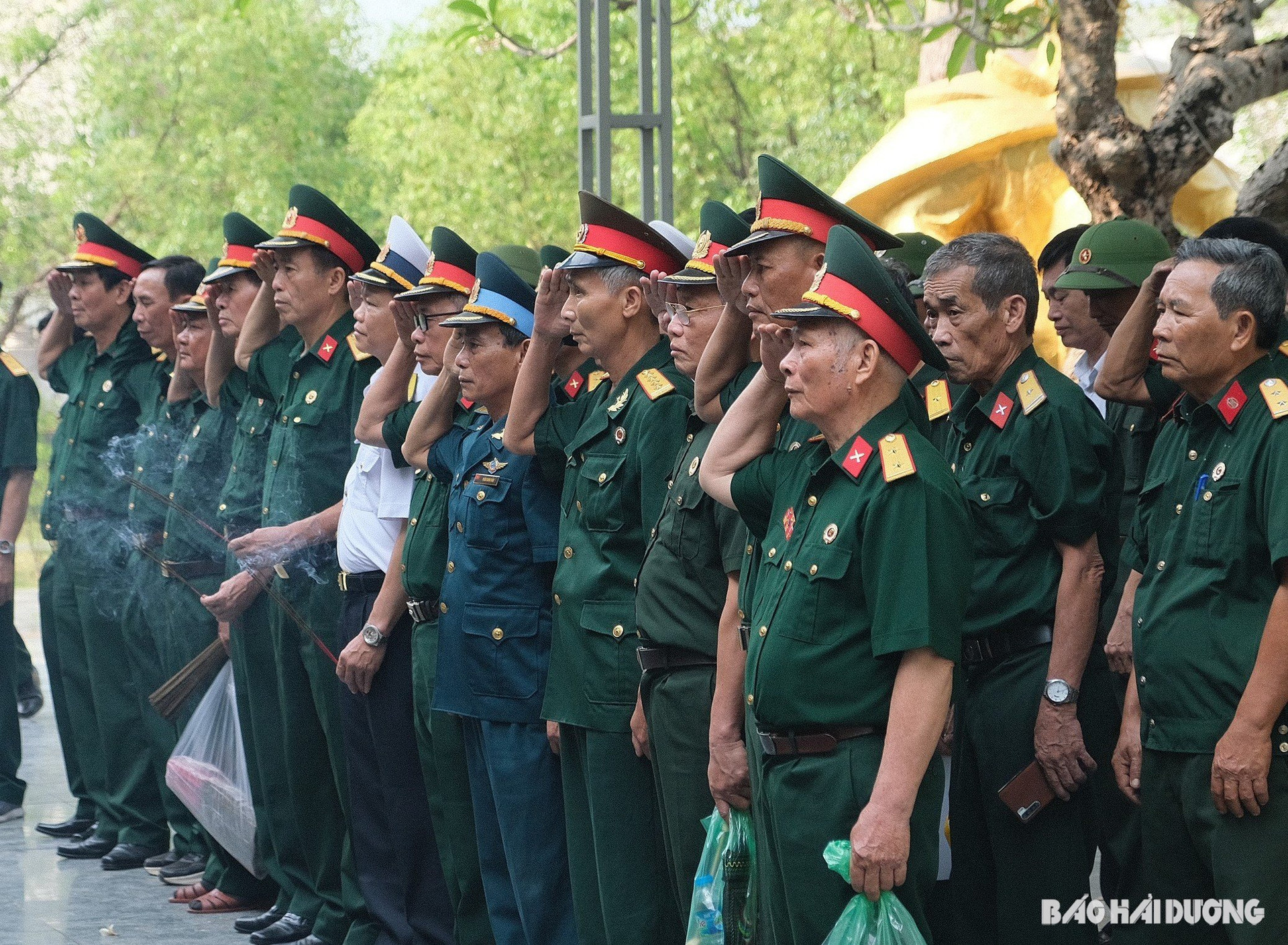
These days, throughout the martyrs' cemeteries in Dien Bien, a poignant voice still resonates: "The precious blood of the heroic martyrs has soaked every inch of land and blade of grass in the fortifications and trenches, further dyeing the national flag red and making the homeland greener."
"The young men from the village have all come up here!"
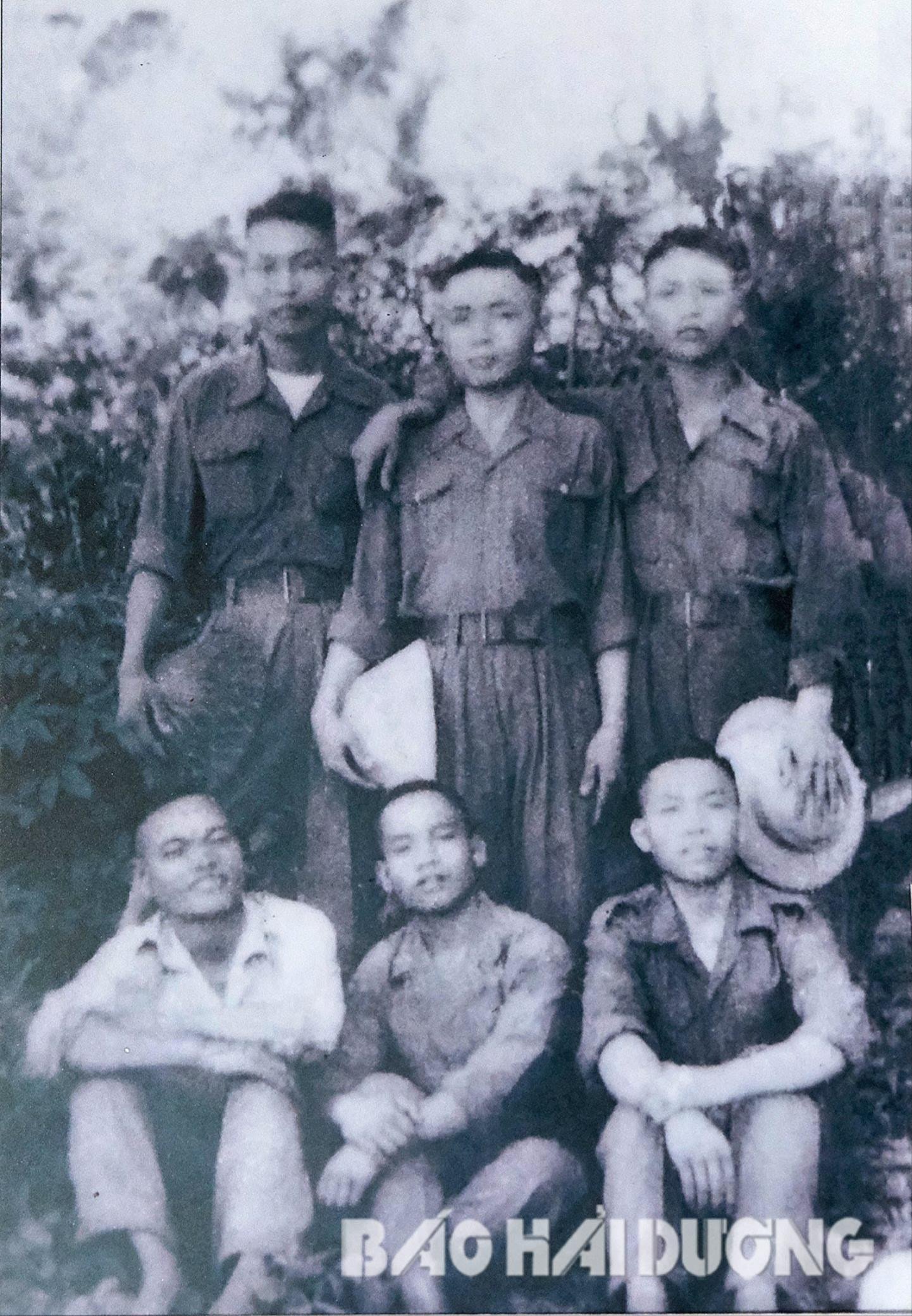
- You're so small, how will you be able to keep up with them? You'll die if you try...
- The young men from the village are all heading up there, Mom! I can go. I don't mind dying!
That's the whispered story of Mr. Nguyen Duc Noi and his mother in a dark room in Lang Xuyen village, Gia Tan commune (Gia Loc district) 73 years ago. At that time, everything was secret. French military outposts were everywhere. If anyone joined the resistance, their family would face difficulties. Therefore, even though 19 families in Lang Xuyen bid farewell to their sons going off to war with no promise of return, absolutely no one in the village knew.
In 1952, when he packed his bags and said goodbye to his parents and siblings to go to Dien Bien Phu, my grandfather was only 16 years old.
"It was a dark, gloomy night. Nineteen young men from Lang Xuyen, guided by a soldier, silently set off on the operation. Every now and then, when they encountered lights from the enemy's posts, they would all lie flat on the ditch," Grandpa Noi recounted.
I don't remember how long it took to walk to Bac Giang for training, and then on to Dien Bien Phu. Upon arrival, my grandfather was assigned to C509, E174, F316. His unit's mission was "Reconnaissance, engineering, and protection."
Early in the morning of May 6, 1954, when nearly a ton of explosives detonated on Hill A1 – the most important stronghold, the key gateway directly protecting the command center – where the French army's headquarters were located, Mr. Noi was in Hong Liu village (now part of Noong Bua ward, Dien Bien Phu city), right at the foot of Hill A1, on duty caring for and transporting wounded soldiers.
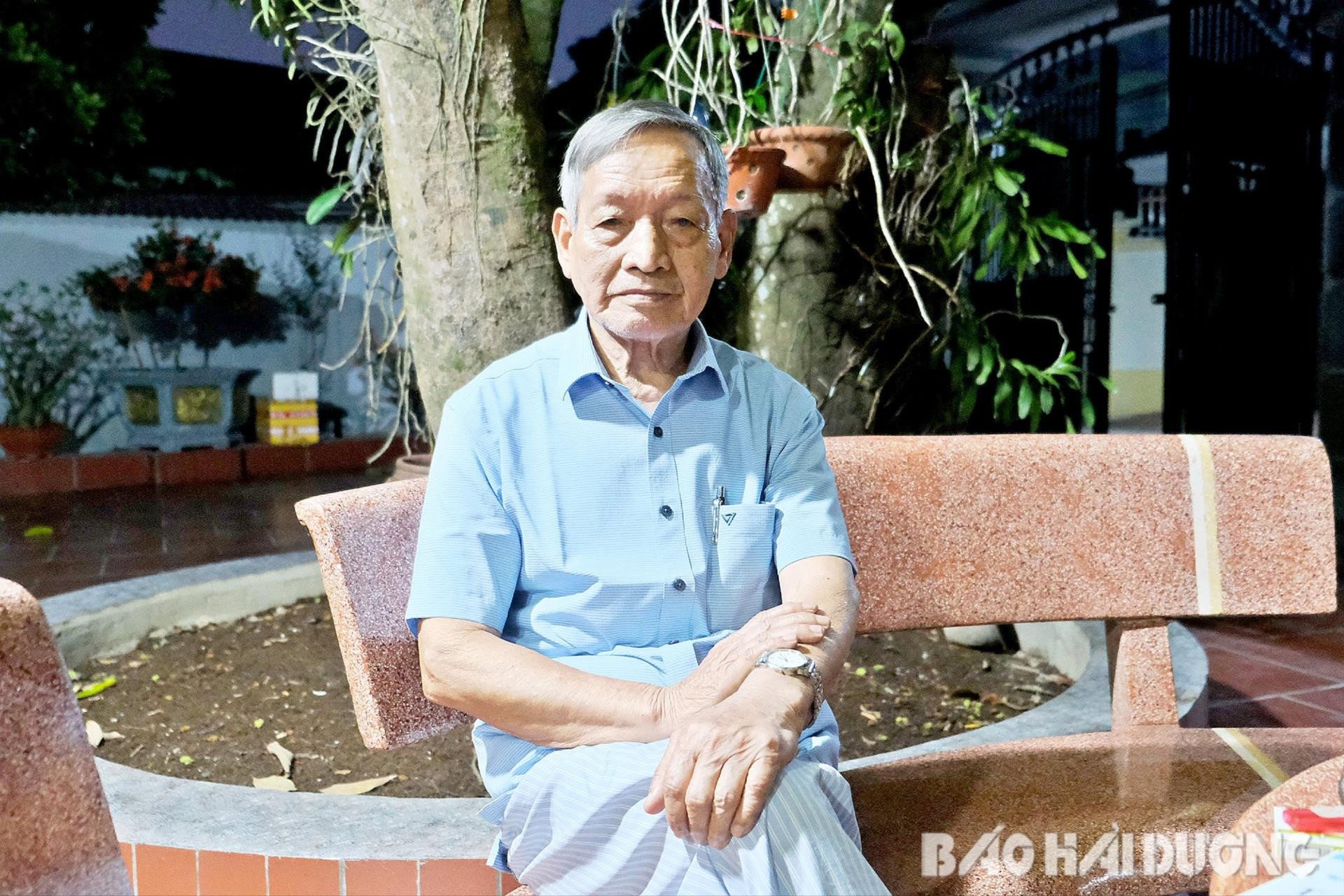
Mr. Nguyen Duc Noi, 89 years old, is a 4th-degree war invalid who served in the Na San fort (a key siege battle in the Northwest Campaign, located in Mai Son district, Son La province). December 1, 1952. After the campaign ended, my grandfather changed professions, dedicating his youth to the Northwest region and then to neighboring Laos before returning to his hometown of Gia Loc.
- At the Na San outpost, news arrived that I was dead. My mother has already set up an altar!
Throughout the campaign, he faced numerous life-threatening situations and suffered injuries, yet he always cherished the thought that he was fortunate enough to return home to his family. His comrades, he wondered, lay buried meters below the surface in trenches and fortifications. In 2013, he returned to the battlefield.
- Dien Bien Phu was very different then, even though bomb craters and fortifications were still there. Many of my comrades were still there. They never came back!
On April 23rd and 24th, Mr. Nguyen Duc Noi was one of 15 people from Hai Duong who attended a meeting between Party and State leaders and representatives of veterans and former youth volunteers in Hanoi to commemorate the 70th anniversary of the Dien Bien Phu Victory.
During the Dien Bien Phu Campaign, Gia Loc still has 51 wounded soldiers, sick soldiers, and military personnel who directly participated in and served in the fighting.
Dad said, "The campaign's over, let's go home."
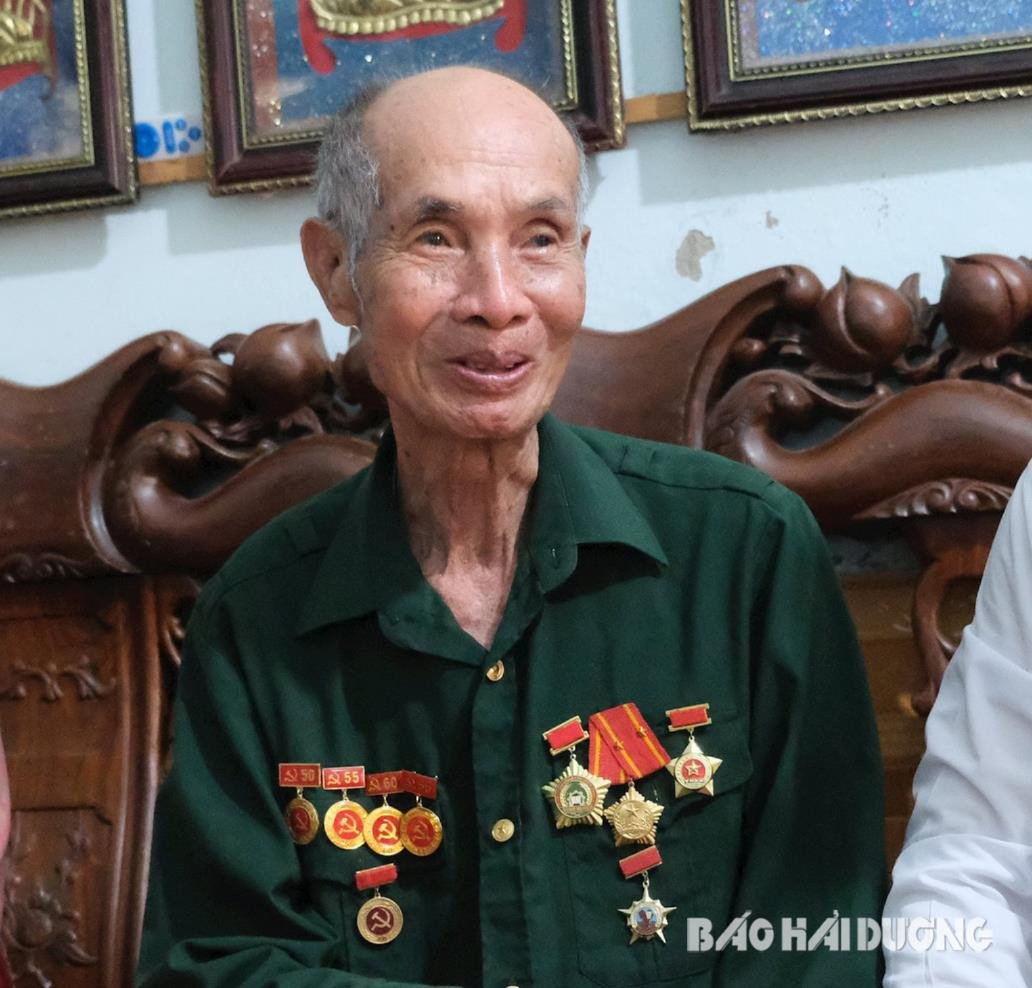
Mr. Do Xuan Nha, born on February 3, 1932, is from Ung Hoe commune (Ninh Giang district), now residing in Thanh Truong ward (Dien Bien Phu city). Mr. Nha enlisted in the army in 1952 and was discharged in 1958, belonging to H3, E176, F316.
"After the campaign ended, he stayed here to work on the farm, helping everyone rebuild Dien Bien. Seventy years have passed, and now he's no longer as sharp-minded, but he still urges his children and grandchildren, 'The campaign is over, let's go back to our hometown.' But there's no one left in our hometown anyway," said Mr. Do Xuan Tho, the eldest son and currently the Head of the Organization Department of the Dien Bien District Party Committee (Dien Bien province), when we visited him.
Mr. Nha is a severely wounded veteran, with a 3/4 disability rating and a bullet still lodged in his lung. He has difficulty walking and needs assistance, but he is very enthusiastic when recounting the battles of the past, even if his stories are disjointed. After the campaign ended, like many other veterans, he stayed in Dien Bien and became a farm worker. To have the Dien Bien of today, countless generations have shed blood, sweat, and tears to cultivate it. Mr. Nha has seven children working in Dien Bien province and other provinces. His children all remember that their father dedicated his youth to the Northwest region, and therefore, everything they do today is for that same cause. Dien Bien and the Northwest have become an indispensable part of their lives, their second home.
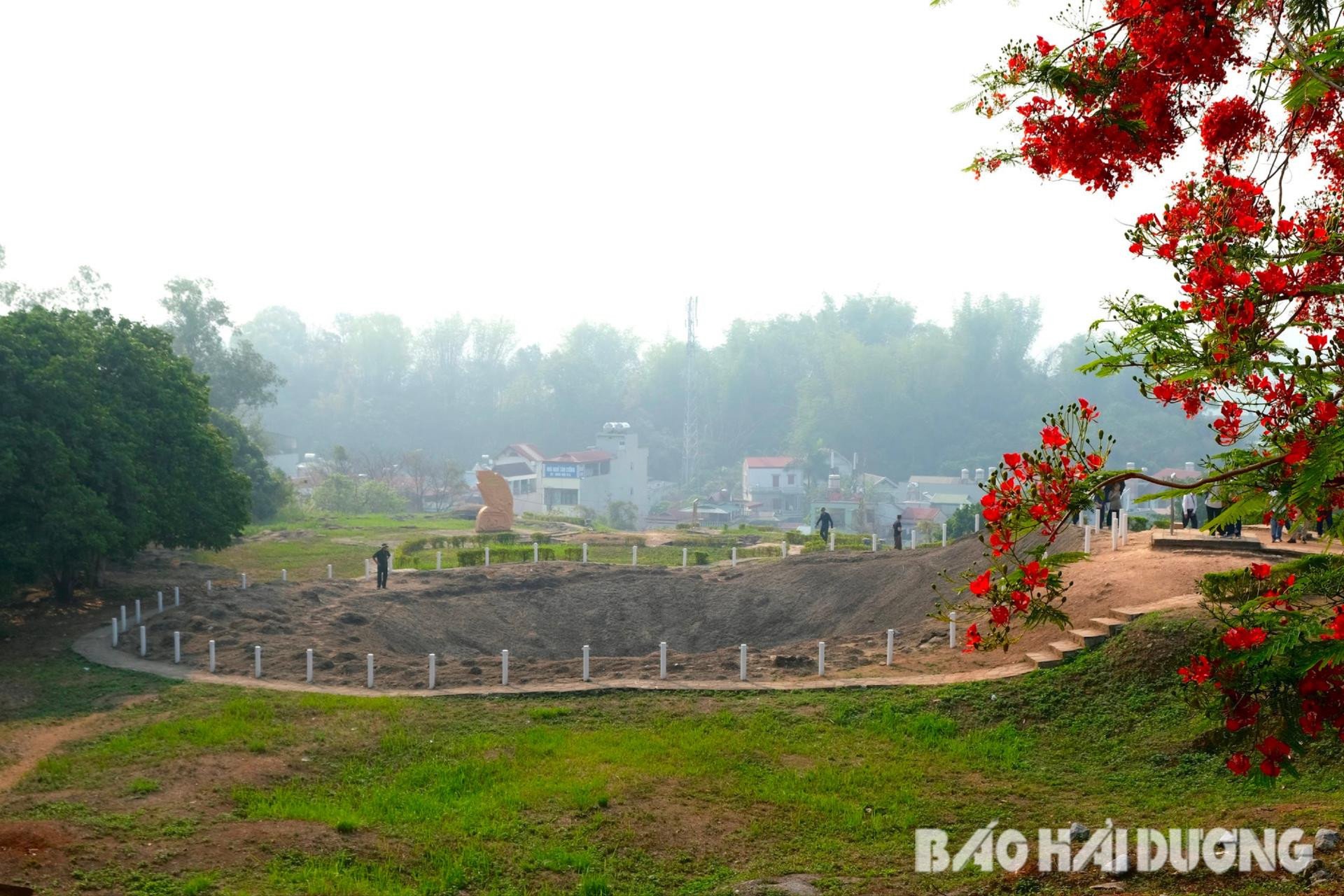
During the Dien Bien Phu Campaign, Hai Duong province had tens of thousands of soldiers, volunteer youth, and civilian workers directly participating in the fighting and supporting the campaign. The province currently has 471 wounded soldiers, sick soldiers, and military personnel, the oldest of whom is 107 years old. Hai Duong province has 402 martyrs who directly participated in the campaign. These martyrs are located in all 12 districts, towns, and cities. Some martyrs' remains have been brought back to their hometowns, but many others remain scattered in cemeteries throughout Dien Bien Phu province, such as A1, Him Lam, Doc Lap, and Tong Khao. A few martyrs have been clearly identified, while many others lie in unidentified graves.
Next installment: Copying at the A1 National Martyrs' Cemetery.
TIEN HUYSource















































































Comment (0)