

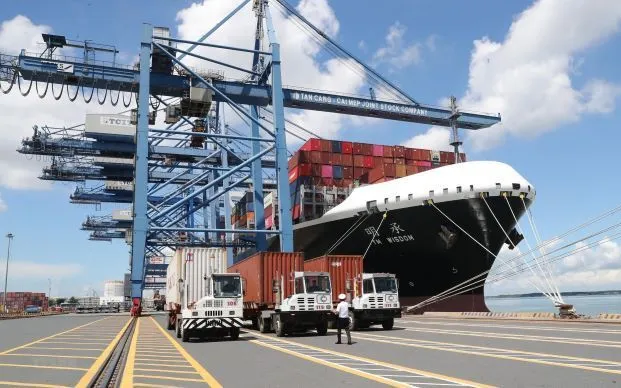
Customs announced many new points on VAT and special consumption tax.
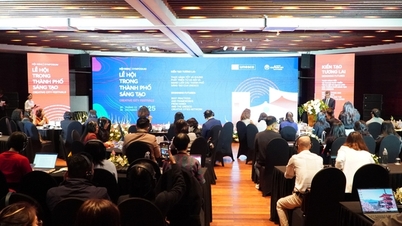
On December 4, the Customs Department held a press conference on new points regarding value added tax; special consumption tax; and the contents of Circular No. 51/2025/TT-BTC regulating electronic transactions in the field of tax on exported, imported, and transit goods and means of exit, entry, and transit.
Ms. Nguyen Thi Khanh Huyen, Customs Tax Department (Customs Department) said that the Law on Value Added Tax No. 48/2024/QH15 and its guiding decree have supplemented many regulations that were previously only guided by official dispatch. The highlight is the expansion of the list of goods not subject to value added tax, helping businesses reduce legal risks and compliance costs.
Specifically, imported goods for financial leasing are allowed to be transported directly into duty-free zones without being subject to value added tax; exported products belonging to the group of resources and exploited minerals (raw or processed according to the Government 's List) are clearly identified as not subject to tax, in line with the policy of restricting the export of raw resources. In addition, tax exemption cases such as movable assets within the import tax exemption limit, goods exchanged by border residents in the prescribed list, relics and antiques imported by competent authorities are legalized.

Along with the expansion of tax exemptions is the narrowing of some incentives.
However, along with the expansion of tax exemptions, some incentives have been narrowed. Some previously tax-free items such as fertilizers, fishing vessels, and specialized agricultural machinery and equipment have been subject to a 5% tax rate.
The previous 5% tax incentives have also been adjusted to 10% for groups of products such as sugar and sugar production by-products, specialized equipment for teaching - research - experimentation, semi-processed rosin, and unprocessed forest products. The goal of the adjustment is to create a reasonable tax structure, reduce policy "gaps" and ensure fairness among product lines.
The law also clearly stipulates the principles of tax rate application: business establishments with many types of goods and services must declare according to each corresponding tax rate; if they cannot be distinguished, they must pay at the highest rate. This provision aims to limit the situation of incorrect declaration or under-declaration due to confusion or exploitation. In addition, the principles applied to unprocessed agricultural, forestry and fishery products, waste, by-products, scrap, etc. are all clearly stipulated to unify the calculation method.
According to the Customs Department, the legalization and synchronization of regulations from July 1, 2025 will help businesses be proactive in production and import-export planning; at the same time, create conditions for management agencies to strengthen supervision, apply technology in tax data exchange, and reduce administrative procedures.
The Law on Special Consumption Tax, effective from January 1, 2026, has a number of new points that create favorable conditions for businesses. That is, the Law removes the regulation that air conditioners with a capacity of 24,000 BTU or less are subject to special consumption tax, contributing to creating favorable conditions in reducing tax obligations for businesses that manufacture, import, and distribute large-capacity air conditioners, helping to reduce product costs and increase competitiveness.
The Law also expands the cases not subject to special consumption tax, including goods manufactured, processed or hired for processing for export abroad; goods exported abroad for which special consumption tax has been paid and returned by the foreign side upon import; certain types of cars running within the boundaries of historical sites, hospitals, and schools; helicopters and gliders used for rescue, search and rescue, and pilot training.
In case it is necessary to amend or supplement taxable/non-taxable subjects to suit the socio-economic context in each period, the Government shall submit to the National Assembly Standing Committee for consideration, decision and report to the National Assembly at the nearest session.
Supplementing conditions for deduction and refund of special consumption tax including cases of imported raw materials for production/processing of export goods; dissolved or bankrupt enterprises with remaining tax amount not fully deducted; tax refund according to international treaties.
However, some groups of goods have stricter regulations to ensure customs management, such as adding soft drinks according to National Standards with sugar content over 5g/100ml to the taxable objects; tightening management of tobacco and alcohol products.
At the same time, the Law also stipulates more clearly the subjects subject to special consumption tax to avoid problems arising during implementation, such as the provisions on taxable subjects being airplanes, helicopters, and gliders (replacing the concept of "airplanes" in general); regulations on votive paper and goods not including votive paper are children's toys and teaching aids...
Source: https://vtv.vn/hai-quan-cong-bo-nhieu-diem-moi-ve-thue-vat-thue-tieu-thu-dac-biet-100251204212145963.htm


![[Photo] Cat Ba - Green island paradise](/_next/image?url=https%3A%2F%2Fvphoto.vietnam.vn%2Fthumb%2F1200x675%2Fvietnam%2Fresource%2FIMAGE%2F2025%2F12%2F04%2F1764821844074_ndo_br_1-dcbthienduongxanh638-jpg.webp&w=3840&q=75)






















































































Comment (0)