

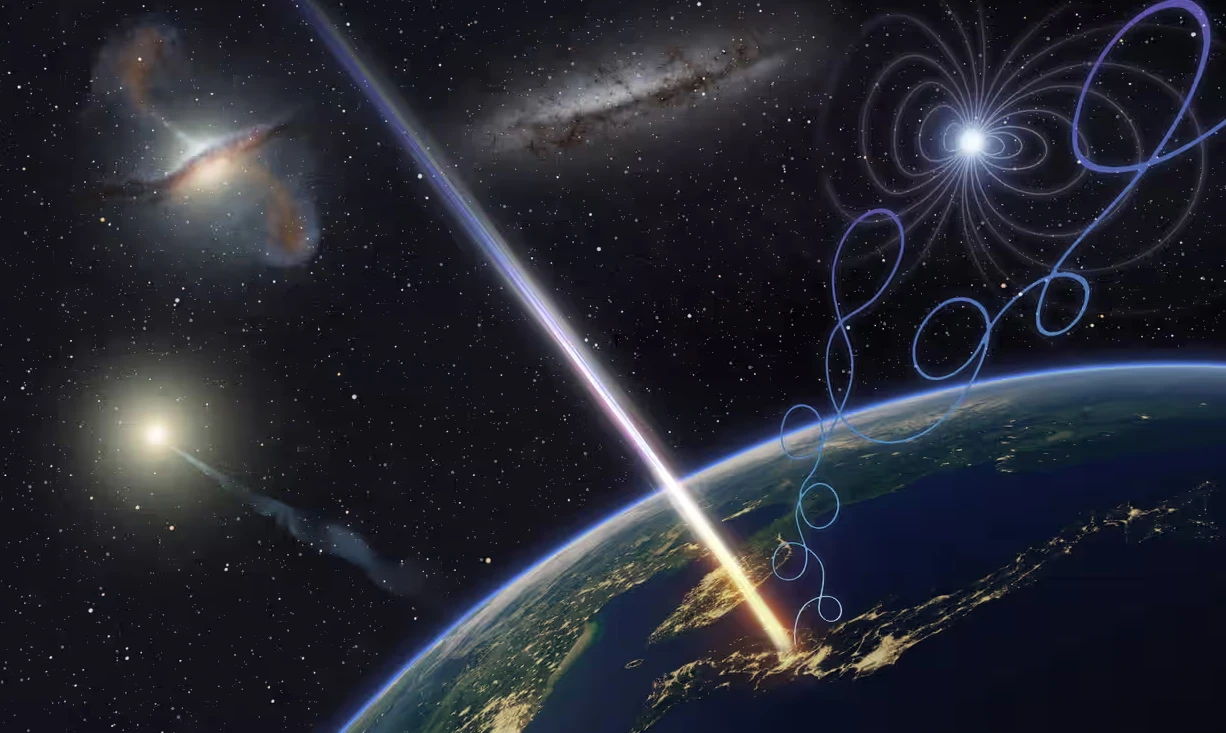
Simulating the Amataresu particle
OSAKA URBAN UNIVERSITY/KYOTO UNIVERSITY
Scientists are working to understand the origin of an extremely powerful cosmic ray, which they believe carries a type of particle originating from outside the Milky Way before reaching Earth and falling in the state of Utah.
Named Amaterasu, after the sun goddess in Japanese mythology, this is one of the most energetic particles from space ever discovered to have fallen to Earth's surface, according to a report published in the journal Science .
To date, the origin of the Amaterasu particle remains unclear, but experts believe that only the most powerful events in the universe, even far larger than a supernova explosion, could create such particles.
Professor John Matthews of the University of Utah (USA) stated: "Things that humans consider to be full of energy, like supernova explosions, still cannot create particles like Amaterasu."
The Amaterasu particle has an energy exceeding 240 exa-electron volts (EeV), which is millions of times higher than the particles produced inside the Large Hadron Collider (LHC), currently the most powerful particle accelerator ever built.
This means that the energy from the Amaterasu particle is second only to the Oh-My-God particle, which was discovered in 1991 and carries 320 EeV of energy.
Professor Toshihiro Fujii of Osaka Metropolitan University (Japan) said that at the time of the discovery of the Amaterasu particle, he thought there had been a mistake when reading the results collected by the Telescope Array observatory in Utah (USA).
"When we first discovered this extremely high-energy cosmic ray, I thought there must be a mistake, because the instrument showed the highest-energy particle detected in the last three decades," according to Professor Fujii.
The event is made even more mysterious because the Amaterasu particle appears to have originated from the Local Void, the empty space bordering the Milky Way.
Source link
![[Photo] Prime Minister Pham Minh Chinh receives Lao Minister of Education and Sports Thongsalith Mangnormek](/_next/image?url=https%3A%2F%2Fvphoto.vietnam.vn%2Fthumb%2F1200x675%2Fvietnam%2Fresource%2FIMAGE%2F2025%2F12%2F16%2F1765876834721_dsc-7519-jpg.webp&w=3840&q=75)

![[Photo] Prime Minister Pham Minh Chinh receives the Governor of Tochigi Province (Japan)](/_next/image?url=https%3A%2F%2Fvphoto.vietnam.vn%2Fthumb%2F1200x675%2Fvietnam%2Fresource%2FIMAGE%2F2025%2F12%2F16%2F1765892133176_dsc-8082-6425-jpg.webp&w=3840&q=75)

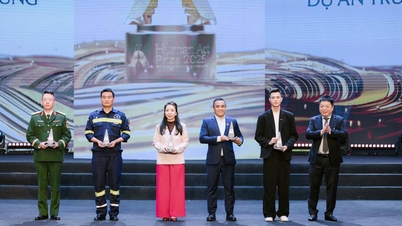
![[Live] 2025 Community Action Awards Gala](/_next/image?url=https%3A%2F%2Fvphoto.vietnam.vn%2Fthumb%2F1200x675%2Fvietnam%2Fresource%2FIMAGE%2F2025%2F12%2F16%2F1765899631650_ndo_tr_z7334013144784-9f9fe10a6d63584c85aff40f2957c250-jpg.webp&w=3840&q=75)
![[Image] Leaked images ahead of the 2025 Community Action Awards gala.](/_next/image?url=https%3A%2F%2Fvphoto.vietnam.vn%2Fthumb%2F1200x675%2Fvietnam%2Fresource%2FIMAGE%2F2025%2F12%2F16%2F1765882828720_ndo_br_thiet-ke-chua-co-ten-45-png.webp&w=3840&q=75)




























































Comment (0)