

A senior scholar at the University of Cambridge (UK) plagiarized the work of a young postdoctoral researcher, according to information from a recent court hearing.
 |
| Dr. Esther-Miriam Wagner, a Cambridge scholar, has been accused of plagiarism. (Source: The Telegraph) |
The Telegraph revealed last September that Dr. Magdalen Connolly, a former Cambridge University student, sued his alma mater before a labor dispute tribunal over its handling of plagiarism allegations.
Dr. Connolly claims that the arguments in her postgraduate research were plagiarized by Wagner, a Cambridge scholar who had previously been assigned as her advisor.
Details were revealed at the trial in which Dr. Connolly sued the University of Cambridge, alleging that she was a victim of age discrimination when the university's leadership favored higher-ranking academics.
Dr. Wagner, 50, is the chief executive of the Woolf Institute – a research organization on interreligious relations – and a fellow at St Edmund's College, Cambridge. Meanwhile, Dr. Connolly, believed to be in her 30s, argues that she was treated "differently" than Dr. Wagner during the investigation and was made to feel like she was "in the wrong."
She argued that Cambridge's failure to take her case seriously meant the university had "condone plagiarism and bullying by senior staff against younger staff and students."
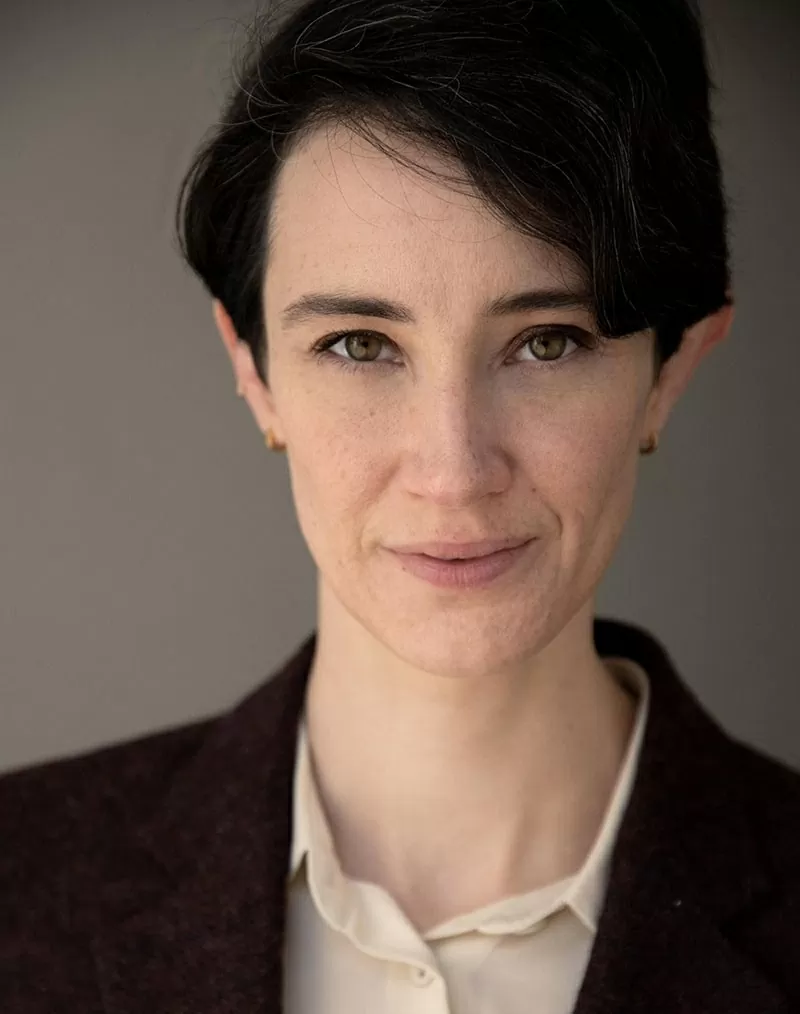 |
| Dr. Magdalen Connolly stated that she discovered her idea had been repeated in two other academic papers. (Source: Jewisharabiccultures.fak12.uni-muenchen.de) |
The judge presiding over the case, Kate Hutchings, dismissed the lawsuit, stating that although the investigation was "slow," Dr. Connolly also bore some responsibility due to her persistent and prolonged complaints. Furthermore, there was no evidence to suggest that age played a role in the case.
However, the ruling revealed that an internal Cambridge University report from July 2024 had acknowledged the plagiarism allegations against Dr. Wagner, who continues to work at the university.
Dr. Wagner is an experienced scholar who graduated with honors in Semitic languages, Islamic studies, and Indo-European studies from Friedrich Schiller University in Jena, Germany.
According to the Daily Mail , Judge Kate Hutchings stated: “There is no doubt that the investigation into the plagiarism has been slow. Both sides are responsible for this…”
However, she added: “We found that Dr. Connolly has not provided any factors (beyond age) or concrete evidence to conclude that the reason she was treated this way was due to her age. A person complaining of plagiarism of a different age would not be treated differently.”
The trial in Cambridge revealed that Connolly began working as a postdoctoral researcher in October 2014 and filed a formal written complaint in July 2020, alleging that Dr. Wagner had “stolen” an idea she shared in a research group and included it in a paper without giving her credit.
Specifically, Connolly claims to be the first to publicly question the established dating of a Hebrew-Arabic manuscript. Although the manuscript is believed to date from the 17th century, Dr. Connolly states that in 2016, she publicly suggested to Dr. Wagner and the group that it might be about a century later. In 2019, she was shocked to discover this argument present in two of Dr. Wagner's academic papers, presented as if it were her own idea.
An internal committee at the University of Cambridge concluded in a preliminary report that, although only "briefly and not directly related to the main argument of the papers in question," two of Dr. Wagner's papers contained "signs of plagiarism."
Speaking in court, Dr. Connolly stated that the four-year process following her formal lawsuit against Dr. Wagner in July 2020 had "profoundly impacted" her mental health and led her to leave academia.
The former graduate student told the jury that she wasn't asking for disciplinary action against Dr. Wagner, but simply wanted to ensure that "if someone else spoke up, they would be treated with more respect than I was."
Source


![[Photo] Prime Minister Pham Minh Chinh attends the Conference summarizing and implementing tasks of the judicial sector.](/_next/image?url=https%3A%2F%2Fvphoto.vietnam.vn%2Fthumb%2F1200x675%2Fvietnam%2Fresource%2FIMAGE%2F2025%2F12%2F13%2F1765616082148_dsc-5565-jpg.webp&w=3840&q=75)



















































































Comment (0)