

HSBC Bank assesses that Vietnam is maintaining one of the highest growth rates in the region.
Public investment and FDI fuel growth.
The "Vietnam at a glance - Unstoppable progress" report by HSBC's Global Investment Research Unit, published on October 28th, shows that Vietnam continues to record outstanding growth in the region. GDP in the third quarter increased by 8.2%, far exceeding market forecasts and maintaining its position as the fastest-growing economy in Southeast Asia. This marks the second consecutive quarter with growth exceeding 8%, confirming the sustainable recovery momentum.
According to HSBC, this result reflects a comprehensive recovery of the economy, not only in manufacturing but also in services and consumption. While many ASEAN countries witnessed a slowdown in exports due to a stagnation in "frontloading" activities, Vietnam's trade continued to grow by double digits, demonstrating its flexible adaptability and effective market expansion capabilities.
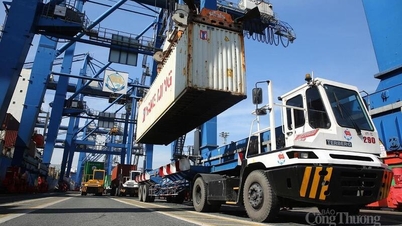
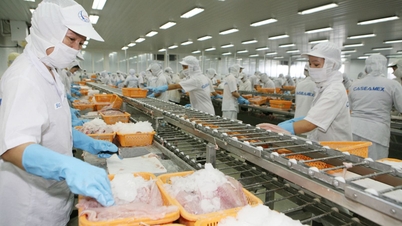
Industrial production in the third quarter increased by 10% year-on-year; import and export turnover increased by nearly 20%. The trade surplus doubled compared to the first half of the year thanks to expanded exports to markets outside the US. HSBC assesses this as evidence of Vietnam's central role in the regional supply chain.
The electronics sector, particularly consumer devices and components, continued to drive growth. Exports to the US increased by nearly 30% thanks to strong demand for products serving artificial intelligence. "Vietnam is becoming a crucial link in the global technology supply chain," the report stated.
Simultaneously, the service sector and domestic consumption showed a clear recovery. Retail sales in the third quarter increased by 12%, reflecting improved consumer confidence. Tourism led the region with 15 million international visitors, equivalent to 120% of pre-pandemic levels. Notably, the number of Chinese tourists increased sharply despite not yet being granted visa exemption, affirming the attractiveness and competitiveness of Vietnam as a destination.
According to HSBC, public investment and foreign direct investment (FDI) continue to be key drivers. In the third quarter, actual investment increased by nearly 10% year-on-year, but disbursement progress only reached about 50% of the annual plan. FDI increased by 15% year-on-year, with Singapore, China, and the US being the three largest investors.
This year's FDI structure has seen a notable shift: Singapore and mainland China each account for approximately 25% of total newly registered capital, while South Korea's market share has decreased, giving way to the US. This shift shows that Vietnam remains a safe and attractive destination amidst the volatile global trade environment.
On the other hand, real consumption in the third quarter increased by more than 8% year-on-year, indicating robust domestic demand. The transportation, accommodation, and tourism sectors continued to record high growth, contributing to the overall recovery momentum.
The macroeconomic environment remains stable: inflation is at 3.4%, and credit is growing strongly. Flexible monetary policy helps balance economic stability and support growth. The State Bank of Vietnam aims for a 19-20% increase in credit in 2025 to boost the economy, especially the production and consumption sectors.
HSBC raises its GDP forecast for Vietnam to 7.9% - the highest in ASEAN.
Following the positive results, HSBC significantly raised its forecast for Vietnam's GDP growth in 2025 from 6.6% to 7.9% and in 2026 from 5.8% to 6.7% – the highest among ASEAN economies. At the same time, the bank slightly adjusted its inflation forecast to 3.3% for 2025 and 3.5% for 2026.
HSBC notes that Vietnam stands out due to its balance across three pillars: manufacturing, services, and investment. Policies aimed at stabilizing the macroeconomy, controlling prices, and promoting infrastructure development have helped maintain high growth rates while attracting high-quality FDI.
In particular, embracing new technological trends, especially in electronics and AI, is opening up opportunities for Vietnam to move up the global value chain. HSBC assesses that, if the pace of public investment disbursement improves and financial stability is maintained, Vietnam could achieve 8% growth next year – approaching the 10% target for 2026.
"Vietnam continues to demonstrate its ability to adapt quickly and resiliently to global changes. The combination of strong production capacity, consumer spending, and stable policies has helped Vietnam maintain one of the highest growth rates in Asia," HSBC experts commented.
Mr. Minh
Source: https://baochinhphu.vn/hsbc-nang-du-bao-tang-truong-viet-nam-len-gan-8-dan-dau-asean-102251028152849676.htm









































































Comment (0)