

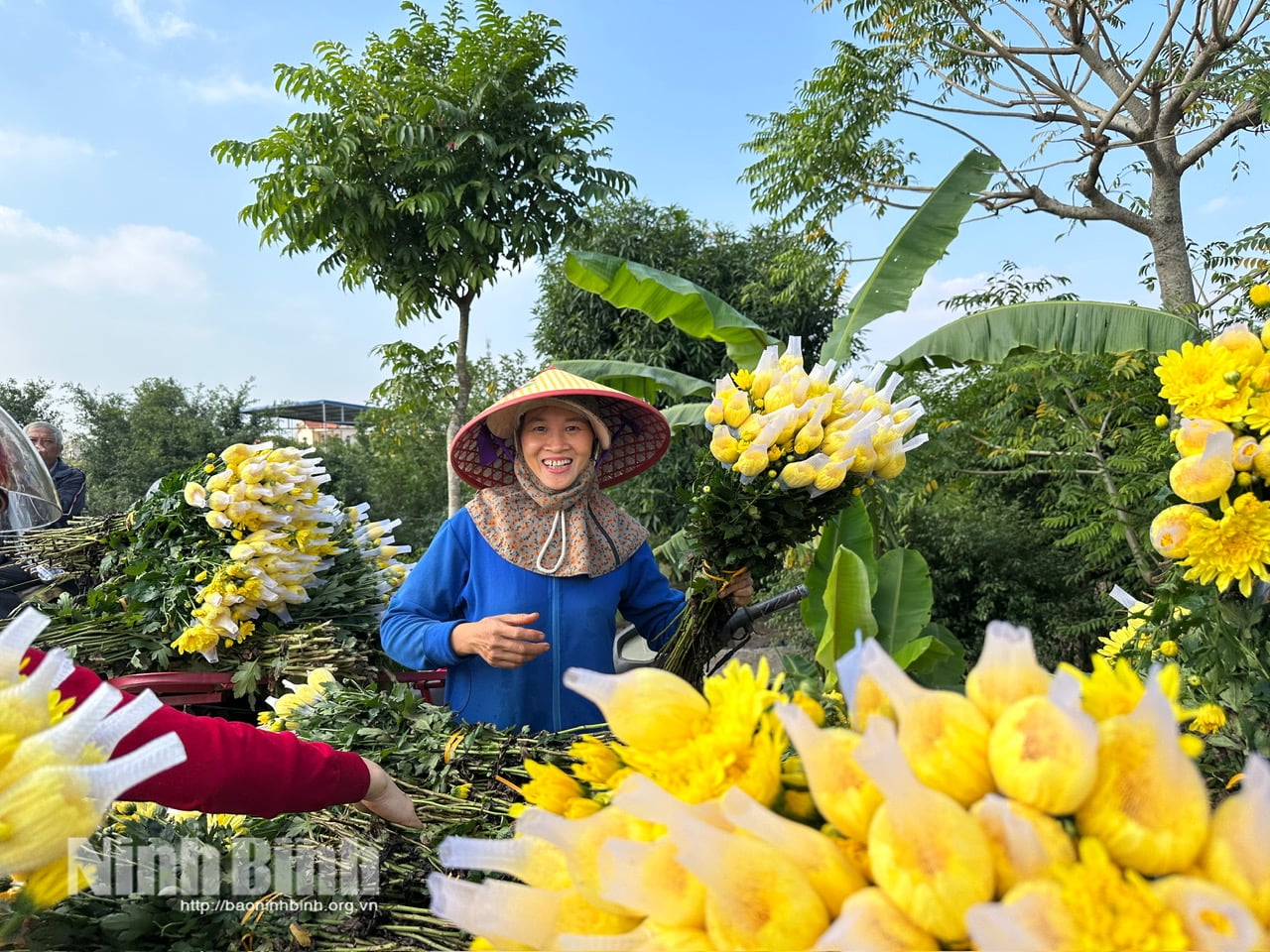
"Fate" with alluvial land
Lying right at the foot of Tan De Bridge - the vital bridge connecting Ninh Binh and Hung Yen provinces - Hong Ha flower village appears like a brilliant picture on the Red River. Just turn down the dike, visitors from afar will immediately be overwhelmed by the "colorful carpets" stretching far and wide...
According to many people in Hong Ha flower village: Their "fate" with the flower industry began in the early 90s of the last century. At that time, the pioneer farmers only dared to experiment with growing only one Tet crop with traditional flower varieties such as violets, gladiolus, dahlias or lilies to replace corn and potatoes. But it was the fertile, loose alluvial soil of the Red River that "repaid" the growers with flowers that were larger, more colorful and had a more lasting fragrance than elsewhere.
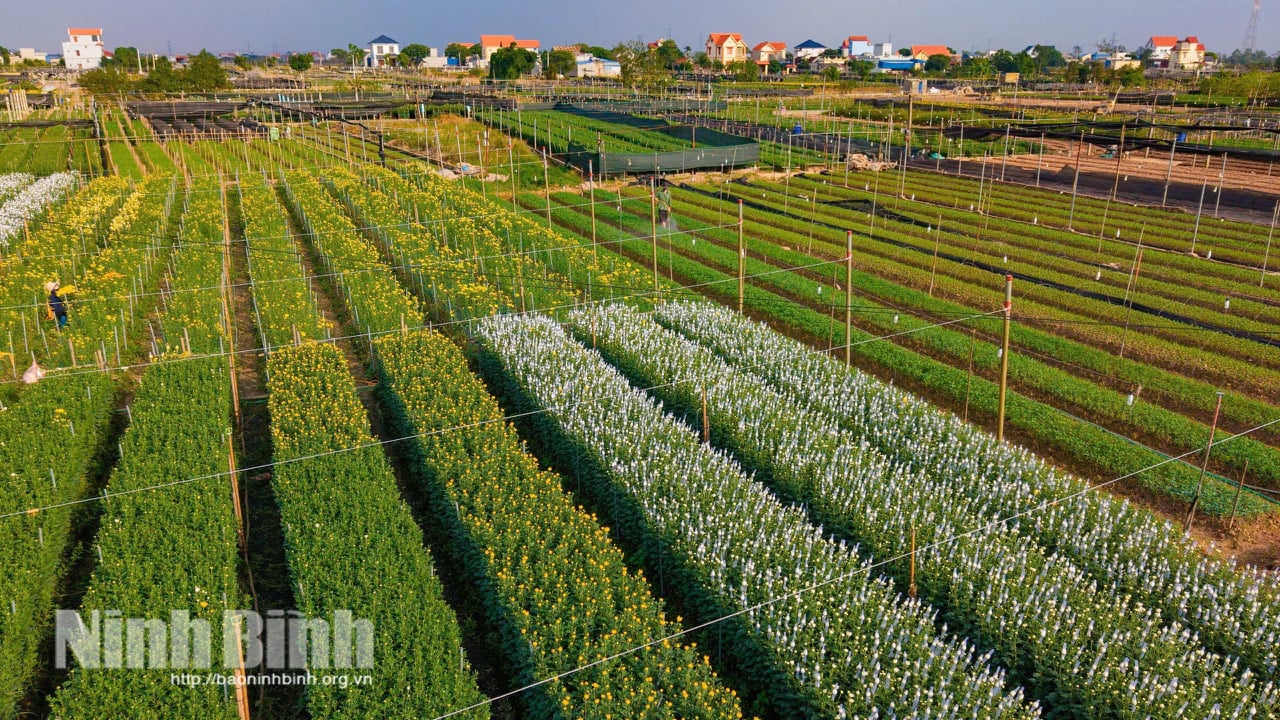
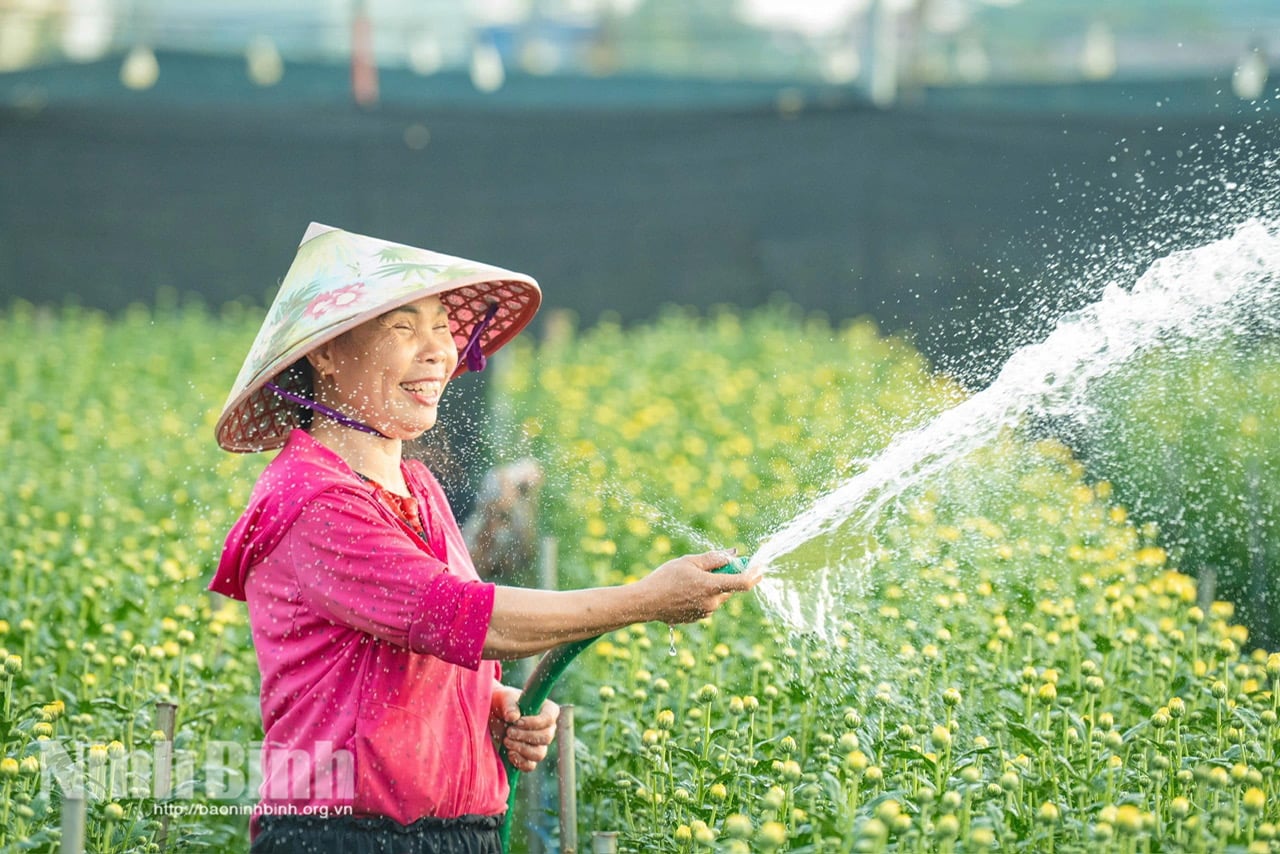
Realizing that the economic efficiency of flower cultivation far exceeds that of rice and corn, people began to explore ways to overcome the weather and introduce new varieties to turn the alluvial land into a "factory" for year-round flower production. Up to now, the flower village has expanded its area to over 80 hectares with about 500 households engaged in the profession, mainly concentrated in two residential groups Hong Ha 1 and Hong Ha 2.
The vitality of the craft village is not only present in the fields but also bustling at the flower market at the beginning of the village. Although the market is open all month, to fully experience the "soul" of Hong Ha flower village, you must come here on the full moon and the first day of the lunar month. As soon as the morning mist still lingers on the river, the market at the beginning of the village is awakened, bustling with the calls of buyers and sellers, the rumbling of motorbike and truck engines mixed with the pungent, fragrant scent of freshly cut leaves and flowers.
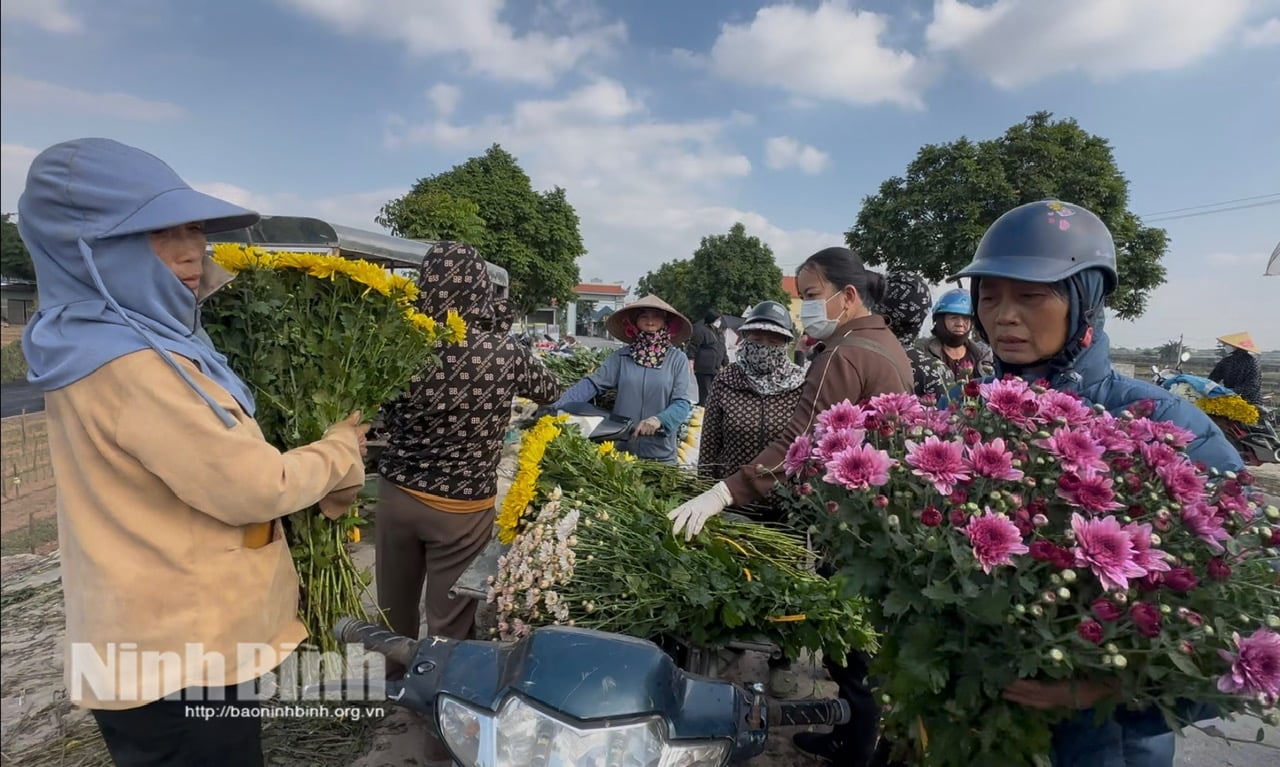
Under makeshift umbrellas, tens of thousands of large yellow chrysanthemums, diamond white chrysanthemums, bright red gladiolus... were stacked higher than people's faces. Traders from all over the neighboring provinces were busily driving their vehicles to "buy goods", everyone was in a hurry to choose the most beautiful and freshest bouquets to make it to the market early tomorrow.
While quickly tying up bunches of chrysanthemums still wet with night dew, Ms. Truong Thi Hien (Nhan Ha commune) - a regular customer of the market, excitedly shared amidst the hustle and bustle: " On weekdays, full moon days, new moon days or the end of the year, the demand for flowers increases sharply, so I often go to Hong Ha flower village to import goods. The flowers here are famous for being fresh, big, beautiful and very durable in color. If I bring them back to retail to wholesalers in the countryside, I never have to worry about them being unsold."
Just like that, the trucks filled with "spring colors" left the village one after another, carrying the scent of the Red River delta land to spread everywhere.
Barefoot "engineers" and the secret to "lighting up" spring
If the beauty of Hong Ha lies in the brilliant flower carpets along the river, the real strength of the craft village lies in the calloused hands and sharp calculating minds of the farmers. Since 1998, when chrysanthemums were brought back for mass cultivation, Hong Ha people have not only “grown flowers” but have truly “mastered the growth process” of the flower.
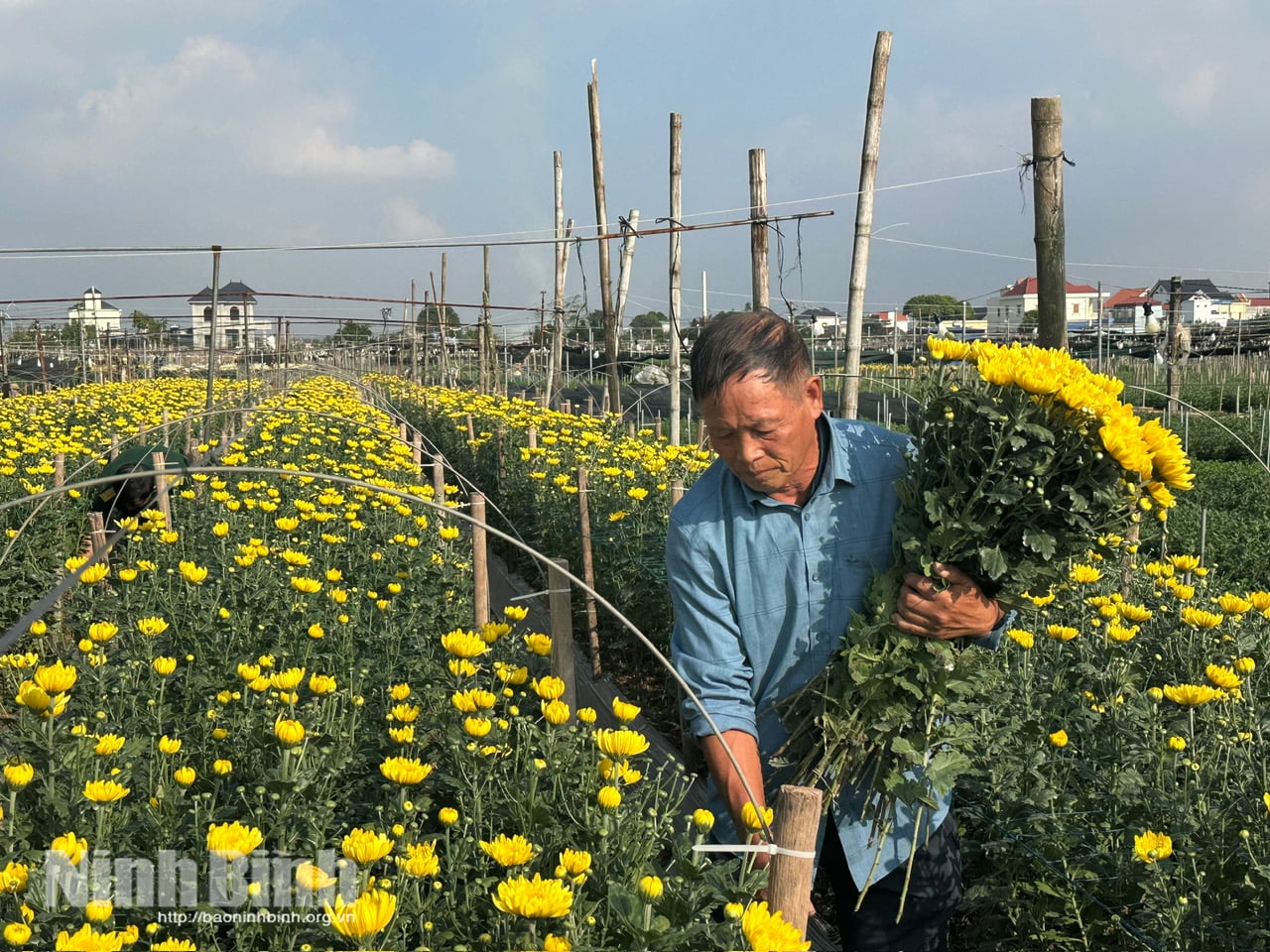
Meeting Mr. Do Van Du (Hong Ha 1 residential group) in the middle of a field of chrysanthemums in full bloom, one can see the great entrepreneurial spirit of the people here. Owning 6 acres of alluvial land, Mr. Du chose to specialize in chrysanthemum cultivation to maximize profits.
While quickly trimming the excess shoots, Mr. Du shared the secret to achieving a net profit of 35-50 million VND/sao per crop: “The secret is to “time the drop” so that the flowers bloom at the right time when the market is most “thirsty”. Doing it this way is high pressure, but if the crop is successful, the income is equal to a whole hectare of rice in the past.”
In contrast to Mr. Du's "all-in" approach, Mr. Tran Van Trinh in Hong Ha 2 residential group chose a safer move. With 4 sao of land, he did not put all of it into one type but divided it into some to grow gladiolus, some to grow chrysanthemums and then lilies. Mr. Trinh smiled gently but his eyes were full of calculation of a long-time practitioner: "I follow the principle of "dividing eggs into many baskets", each season has its own produce. If the market fluctuates, I can still recover. Doing agriculture now requires not only diligence but also knowing how to calculate the way back so that the cash flow is always circulating."
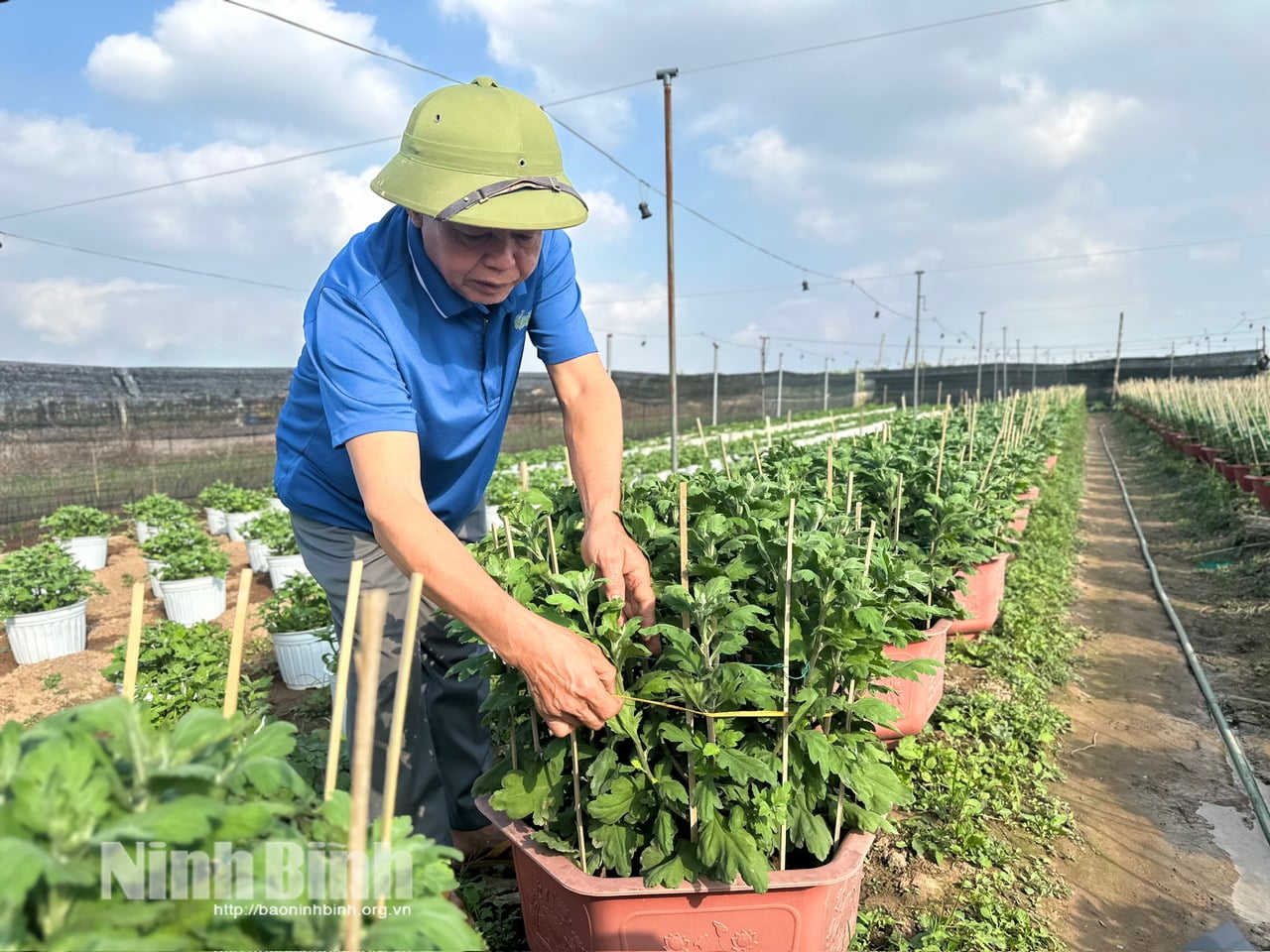
Besides households specializing in large-scale cut flower cultivation such as Mr. Du and Mr. Trinh, Hong Ha flower village also has people who specialize in growing seeds and potted flowers - a field that requires meticulousness and meticulousness. A typical example is Mr. Vu Duy Hoc (Hong Ha 1 residential group). With nearly 30 years of experience in growing flowers (since 1996), Mr. Hoc is currently cultivating 5 sao of alluvial land but has chosen a difficult segment: Growing seeds and growing commercial potted flowers with more than 30 varieties from raspberry chrysanthemums, dragon beards to chrysanthemums, peonies...
In his family garden, Mr. Hoc revealed that to have a pot of Tet chrysanthemums "round as a raspberry, with hundreds of flowers blooming evenly", the grower must grasp two core issues: substrate and light. Holding a pot of large chrysanthemums in bud, Mr. Hoc enthusiastically said: "The substrate I mix must be especially loose so that the roots can "breathe". But the deciding factor for survival lies in the additional lighting technique. Most chrysanthemum varieties are short-day plants, meaning they bloom easily when planted in the fall and winter. Therefore, if you want them to grow tall and not bud early, you must turn on the light at night.
Pausing to emphasize the most important detail, Mr. Hoc revealed the formula he had learned over decades: “For the large-flowered chrysanthemum variety, the timing of power cut-off is the golden key. I have to calculate the exact schedule every day. The immutable rule is to cut off the power exactly 80 days before the flowers bloom. If it is one day early or one day late, the flowers will miss Tet, and the whole crop will be ruined.”
Obviously, the prosperity of Hong Ha flower village today is not due to luck. It is the result of the systematic application of science and technology, combined with the flexible economic thinking of the "barefoot engineers" on the banks of the Red River. It is this bravery and thinking that has become the fulcrum that helps the people here stand firm in the face of the harsh challenges of nature.
Thinking back to last October, when the Red River rose, the flood damaged many flower fields, and all the hard work put into taking care of them was at risk of going down the drain.
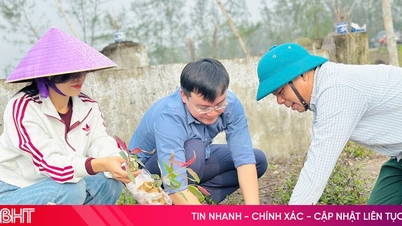
But the Hong Ha people did not have time to lament or give up. With the spirit of “when the water recedes, people move forward”, people hurriedly cleaned the soil, cleaned the fields and replanted as soon as the water receded. The rows of chrysanthemums and gladiolus were replanted with all care, so that today, the green shoots have grown strongly again, covering the traces of the mud of the past.
Leaving Hong Ha as the sunset gradually sets in, the lights begin to be turned on, the light lighting up the belief in a warm and prosperous Tet flower crop. It seems that after the fury, the land is even more compassionate, promising to return to the flower village a spring full of colors and fragrance, making up for the difficult days of planting in storms and floods.
Source: https://baoninhbinh.org.vn/lang-hoa-hong-ha-noi-phu-sa-hoa-huong-sac-251209085256340.html
































































Comment (0)