


TPO - The traditional craft village of Tu Van (Le Loi commune, Thuong Tin district, Hanoi ) is entering its peak production period to meet the increased demand for national flags during the National Day on September 2nd.
VIDEO : The traditional flag-making village is bustling before National Day on September 2nd. For over 70 years, the people here have preserved and developed the sacred craft of embroidering and sewing flags, contributing to enhancing national pride. |
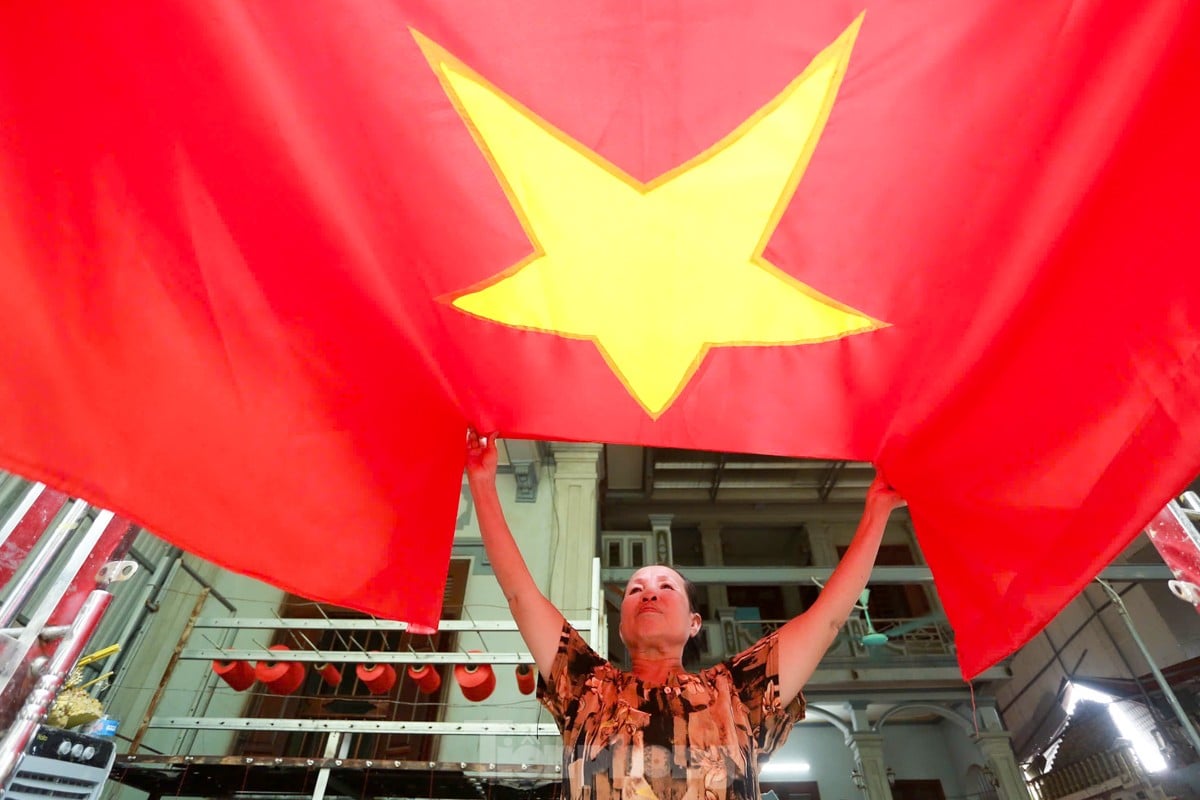 |
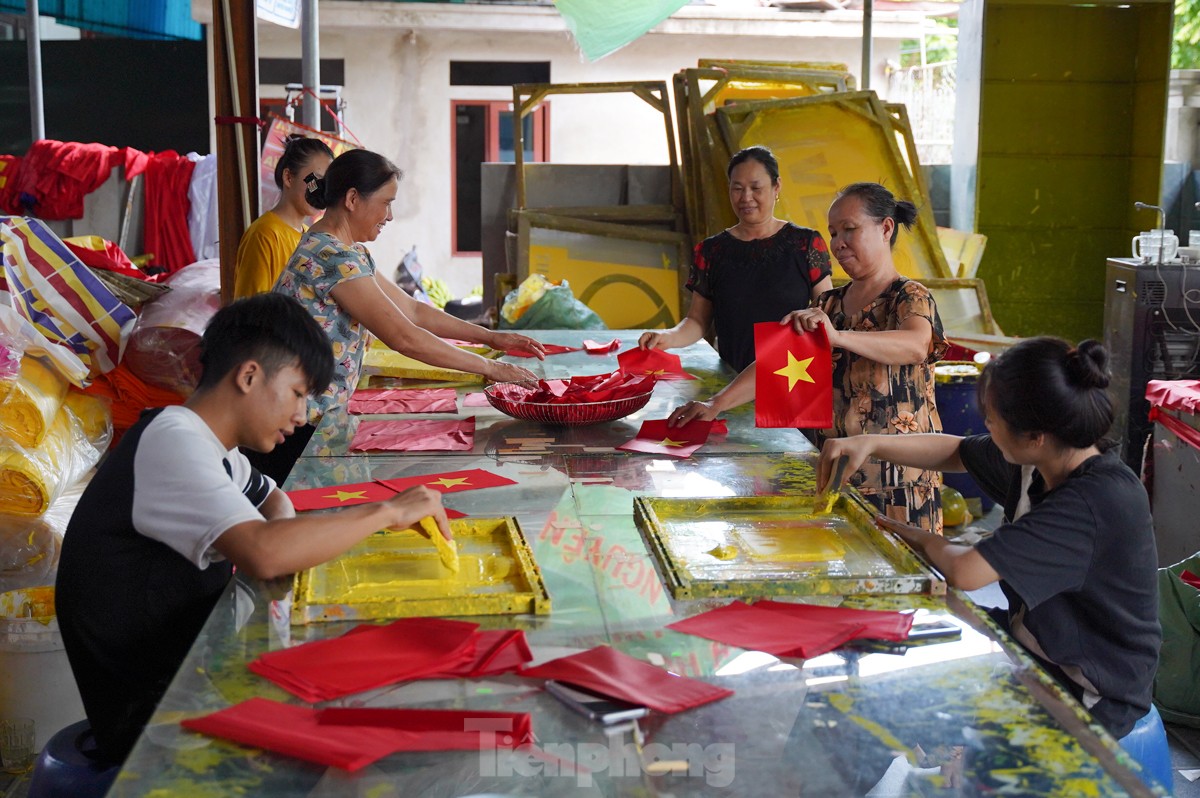
In the last days of August, as the whole country was looking forward to the 79th anniversary of National Day on September 2nd, the flag makers of Tu Van village (Le Loi commune, Thuong Tin district, Hanoi) were busy working to supply flags to the nationwide market. |
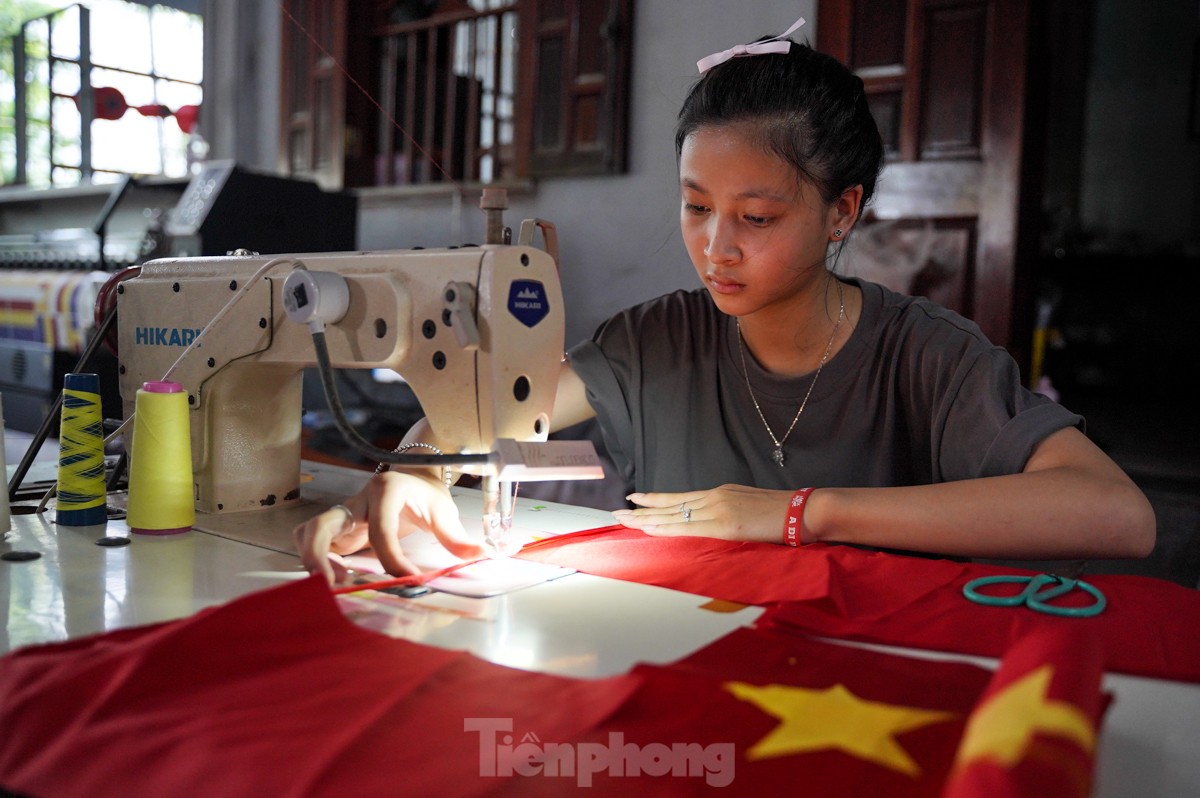 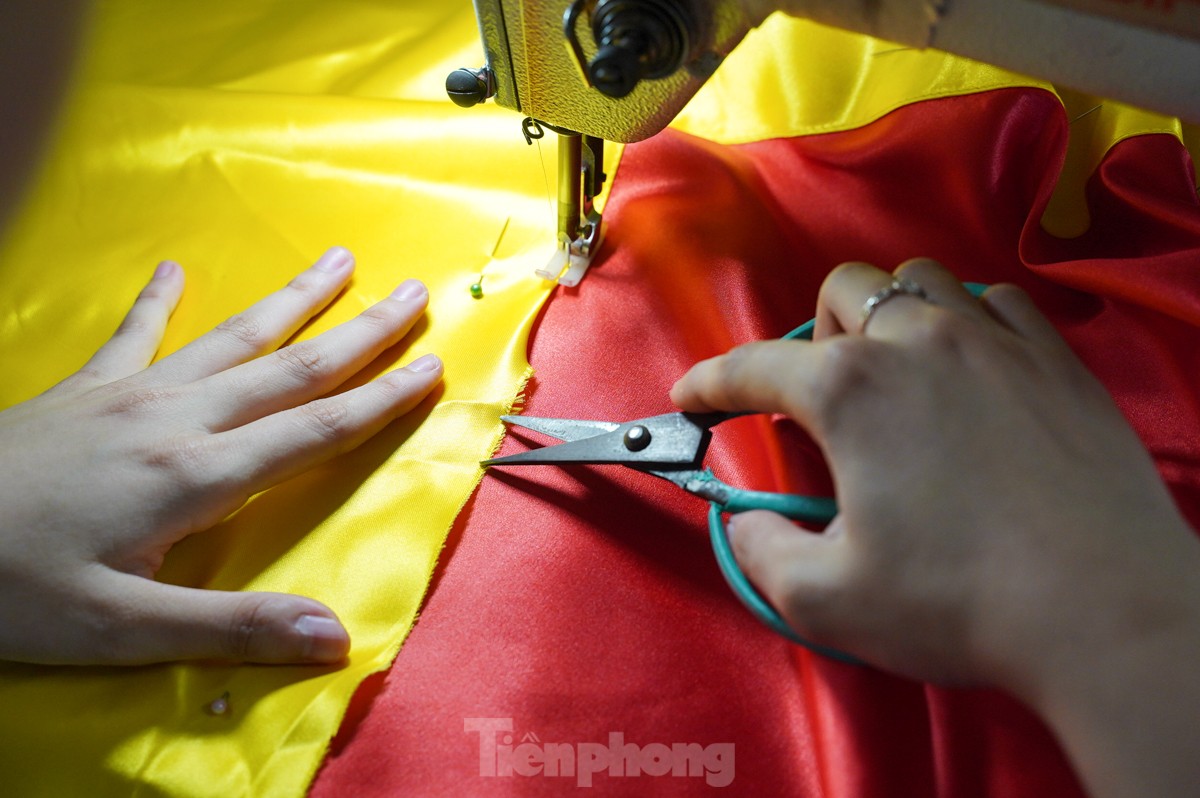 |
| This place is famous as the largest village in Hanoi for making national flags, and is associated with important national events. |
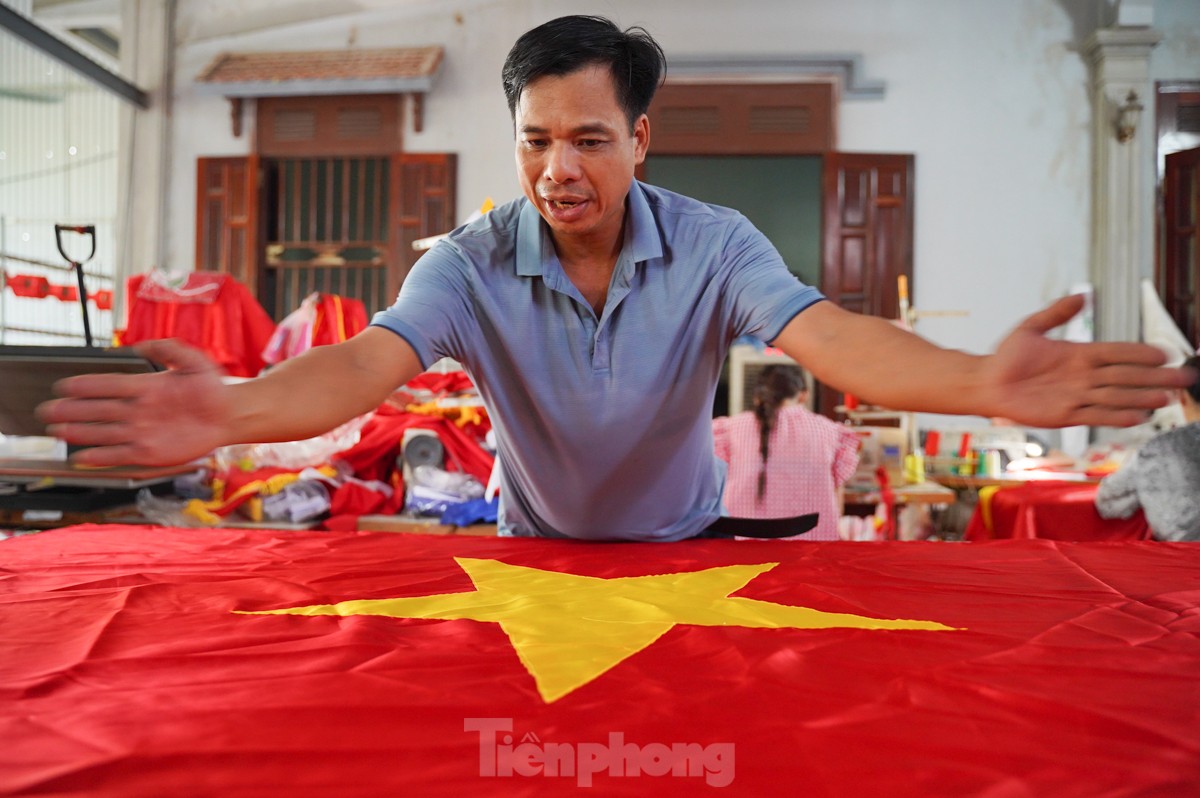 |
Speaking to Tien Phong newspaper , Mr. Nguyen Van Phuc, one of the long-standing business owners in Tu Van village, said that the flag market this year is very vibrant, especially as September 2nd approaches. At his facility, employees have to work overtime to meet market demand. "From cutting the fabric to various sizes, to printing the star images, embroidering, and sewing the finished flags... each step is meticulously carried out, reflecting the dedication of the people in this traditional craft village," Mr. Phuc said. |
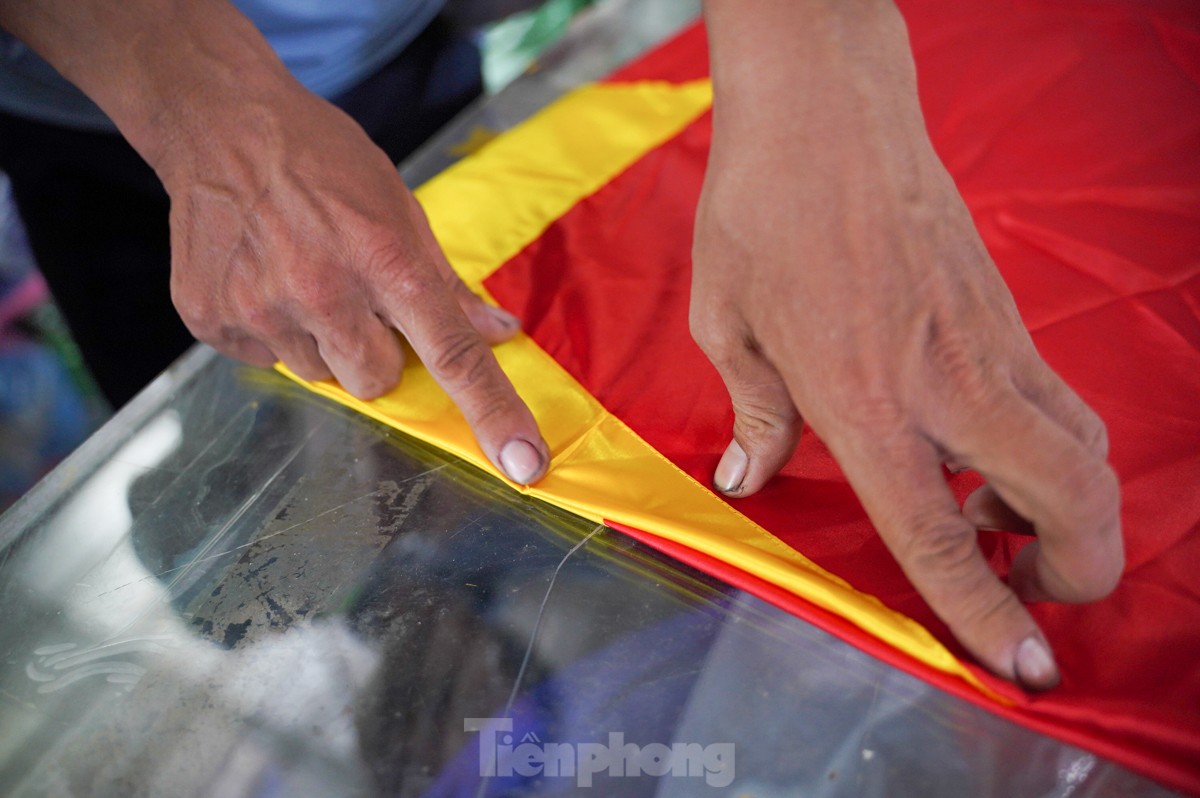 |
"Every stitch we make is filled with pride and responsibility, contributing to the creation of the national flag that flies proudly," Mr. Phuc added. |
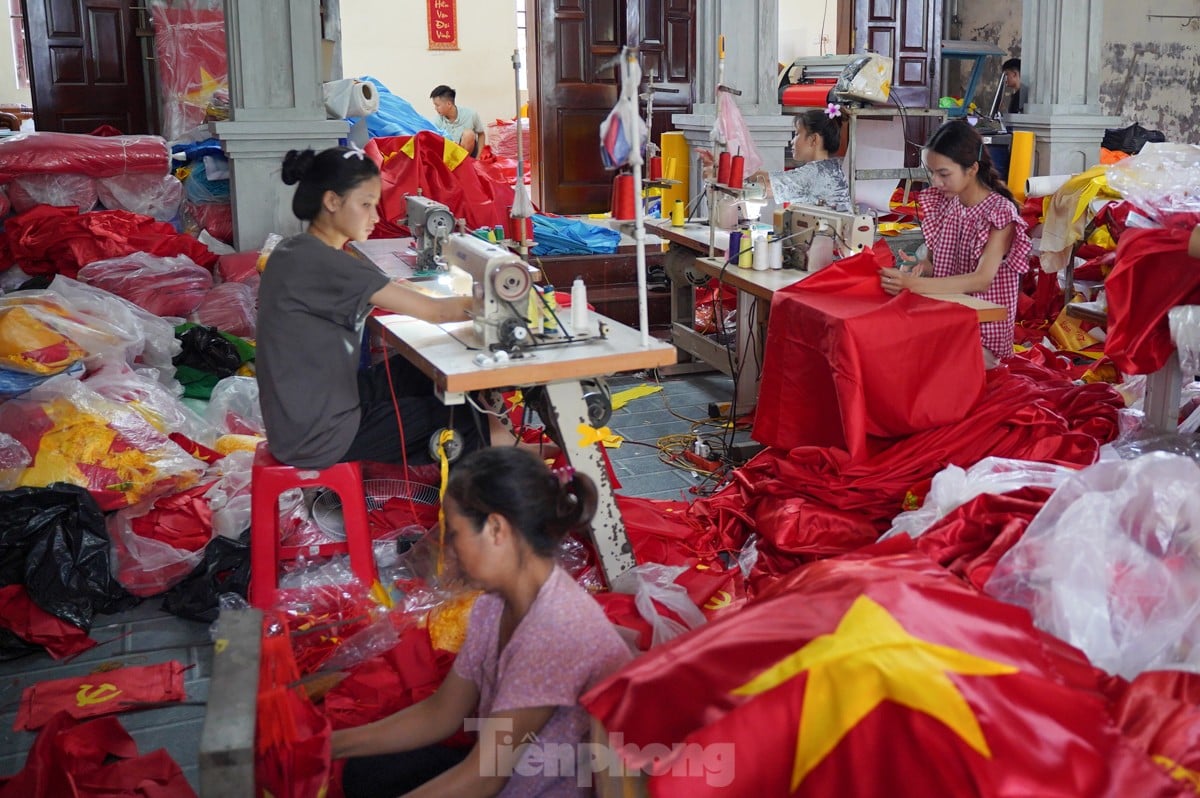 |
In Tu Van village, many families have passed down the craft of sewing national flags for four generations. This work not only provides a stable income but also brings pride and connects them to the sacred traditions of the village craft. |
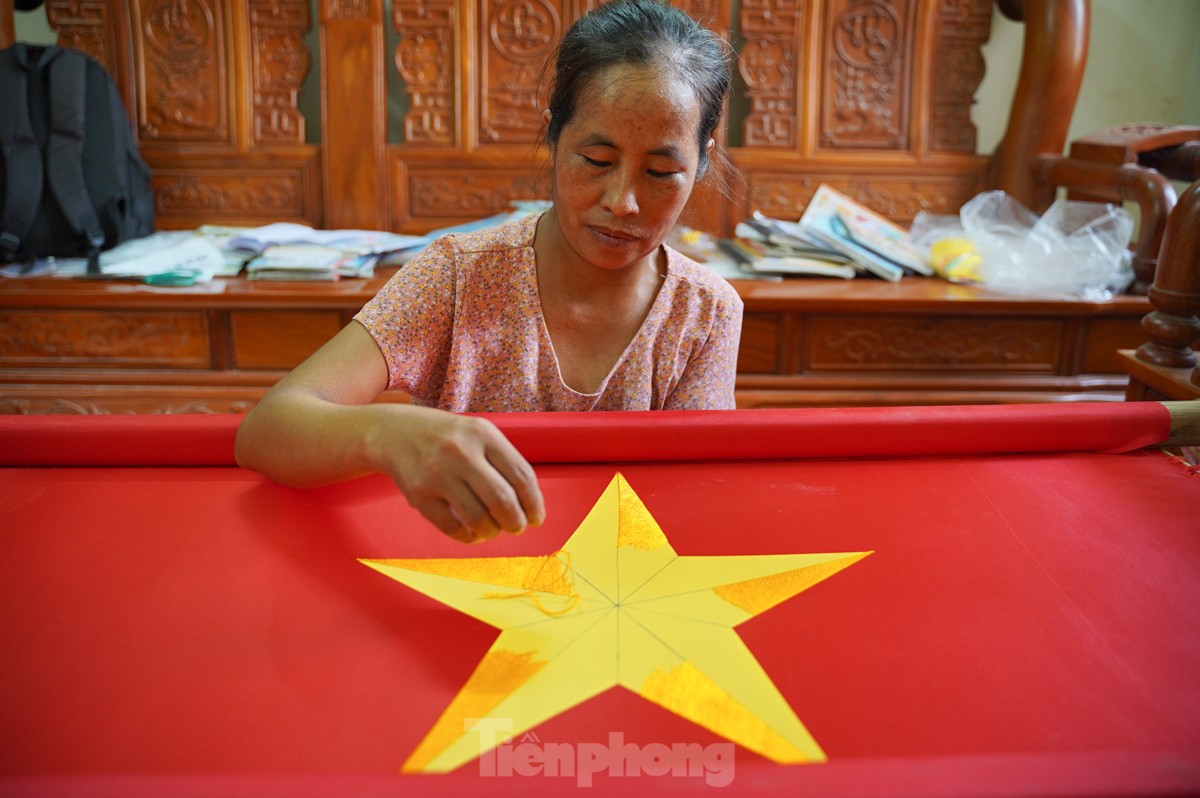 |
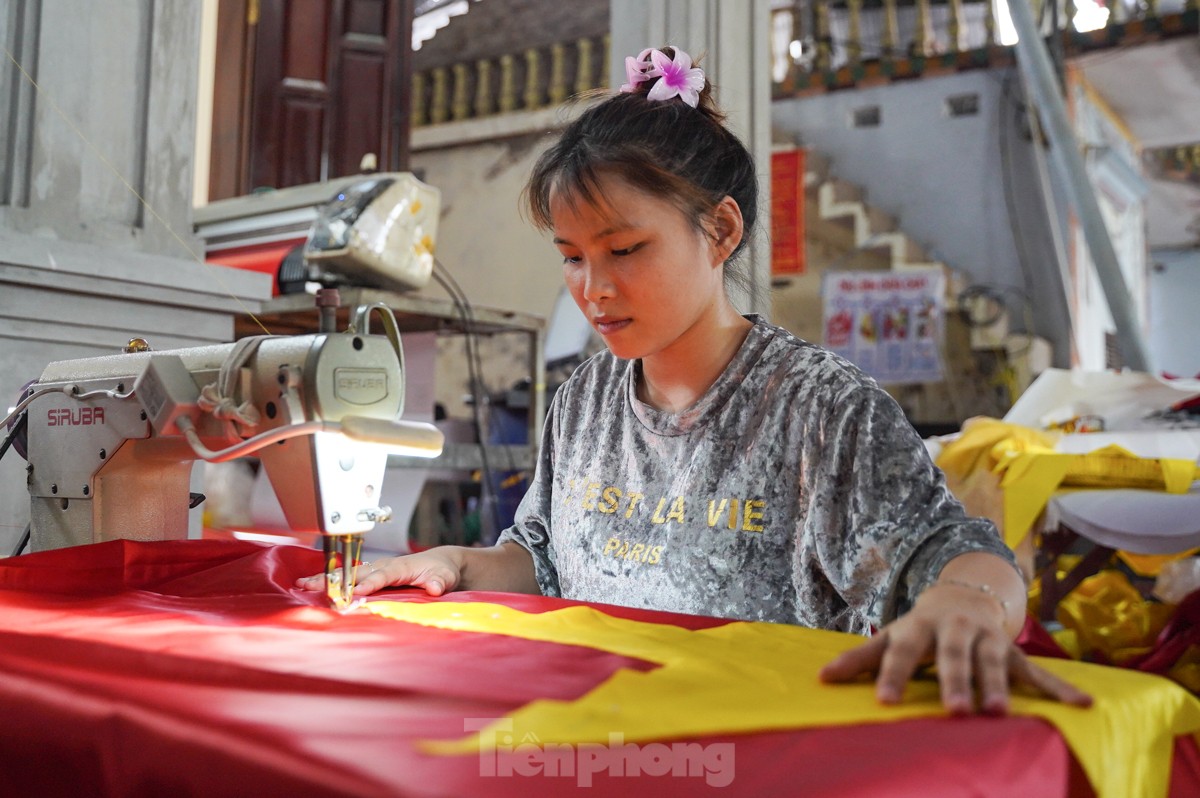
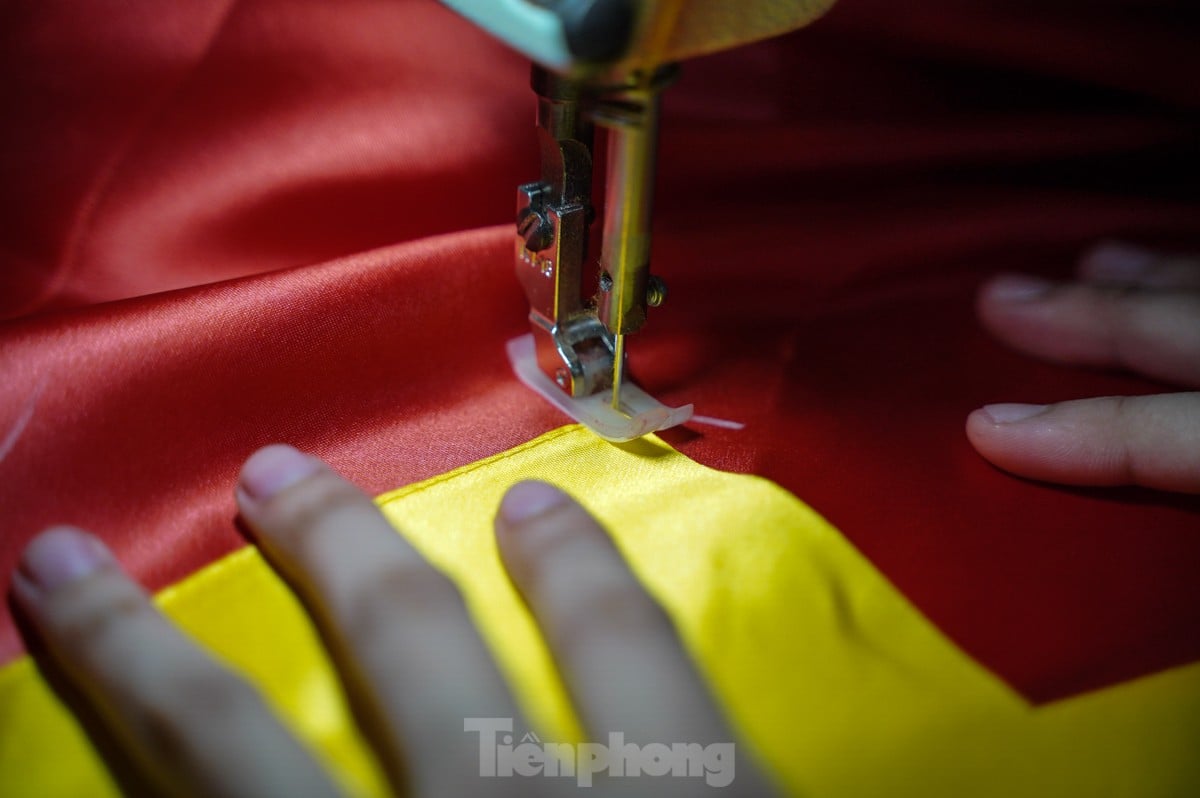
| Ms. Nguyen Thi Huan diligently embroiders the national flag. "Embroidering a flag by hand is a meticulous process, usually taking 2-3 days. For those new to the craft, it can take up to a week to complete. Every stitch on the flag requires absolute precision," Ms. Huan said. |
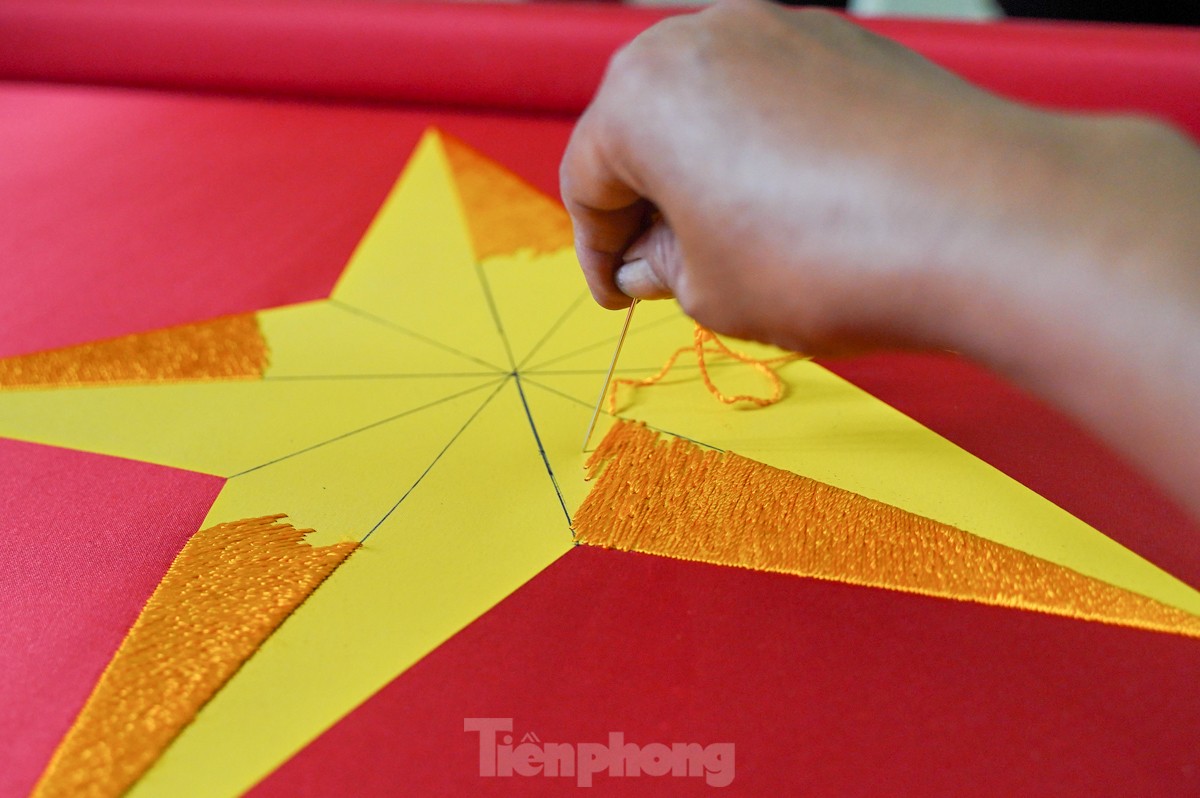 |
Each stitch is even and precise, creating the image of a brilliant five-pointed golden star against a deep red background. |
 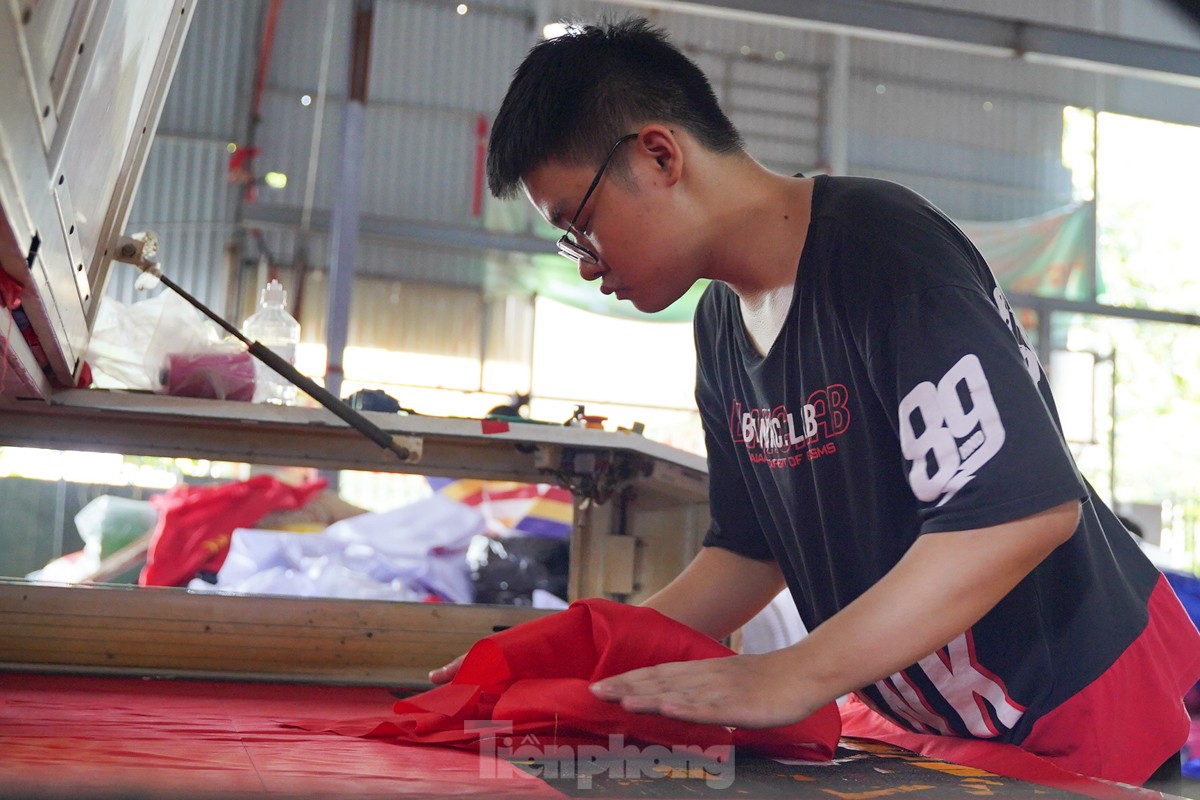  |
According to the villagers of Tu Van, producing a flag used to be very time-consuming. However, many workshops now use advanced machinery and computer programming, resulting in higher accuracy and productivity. For large flags intended for display on islands, selecting the fabric from the outset is crucial, as it must withstand harsh weather conditions such as sun and sea breezes. Every step, from fabric selection and cutting to printing and finishing, needs to be done meticulously to ensure the durability and quality of the flag. |
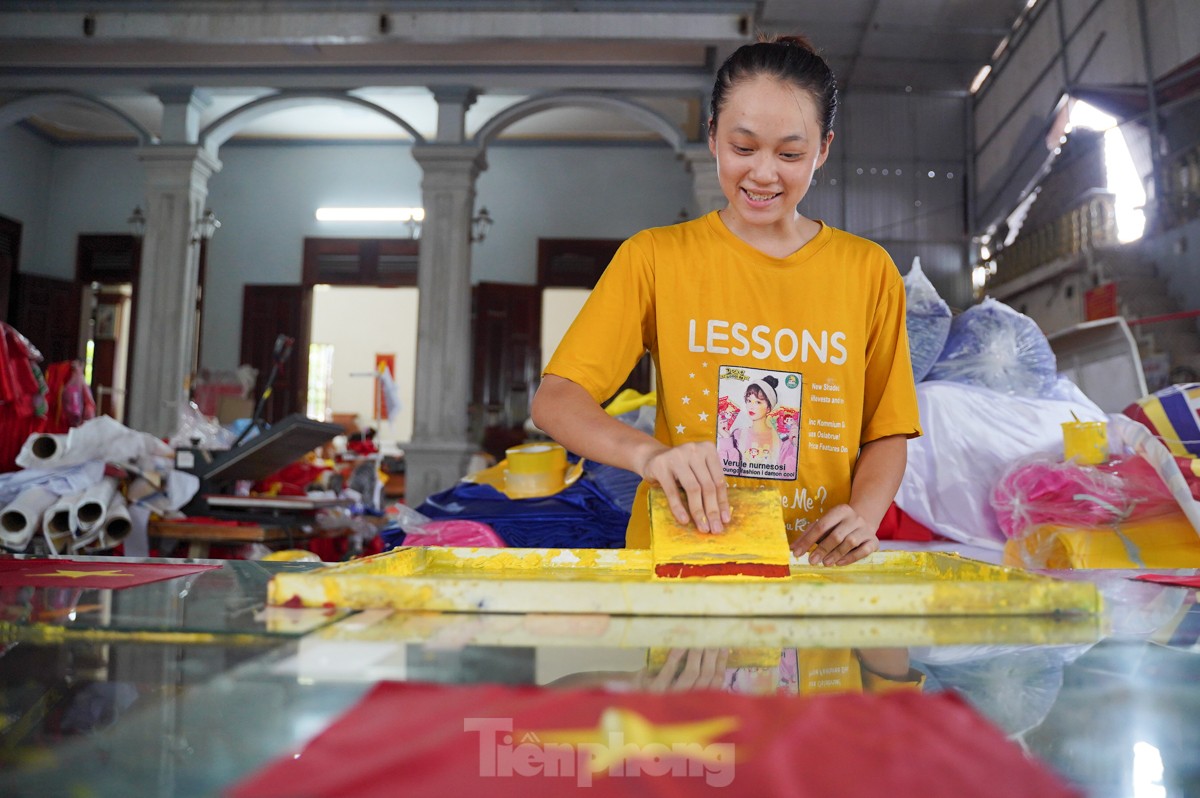 |
"Every time I see the national flags flying, with my handprint on them, I feel incredibly proud. That's the joy and motivation that makes me love and be more committed to my job," shared a worker currently employed at Mr. Phuc's house. |
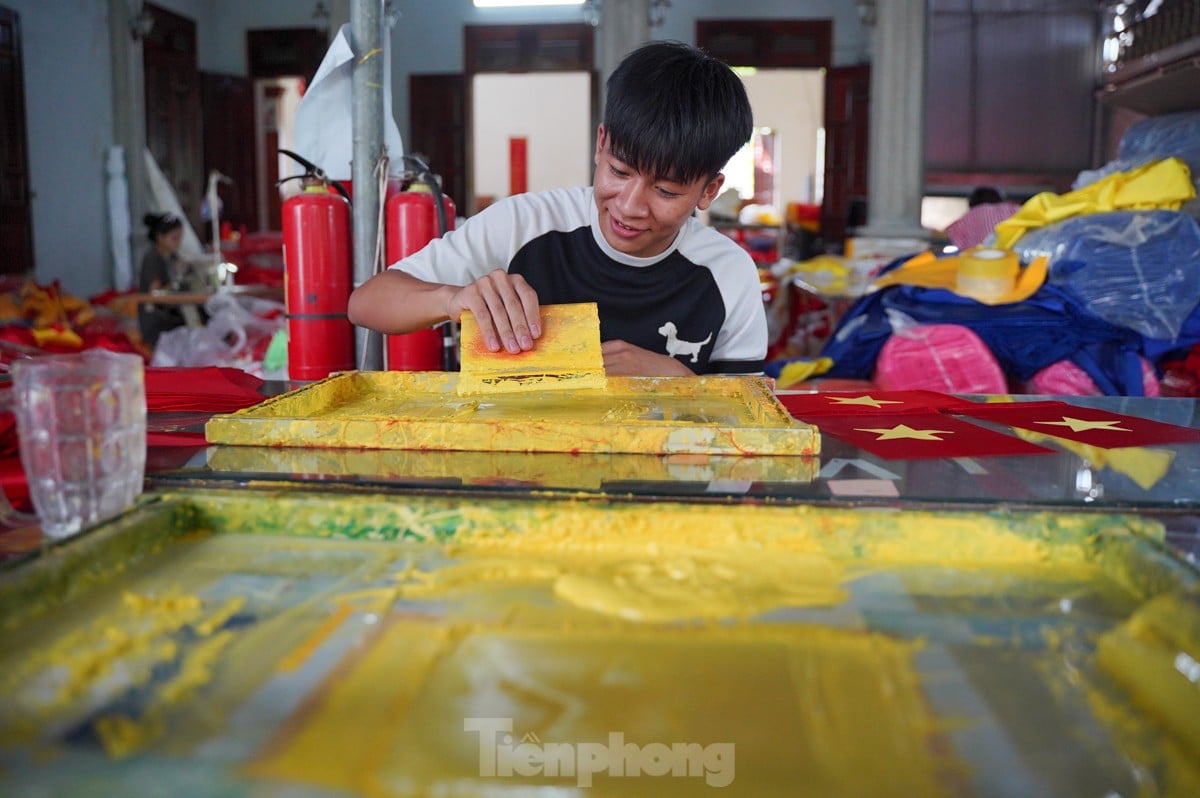 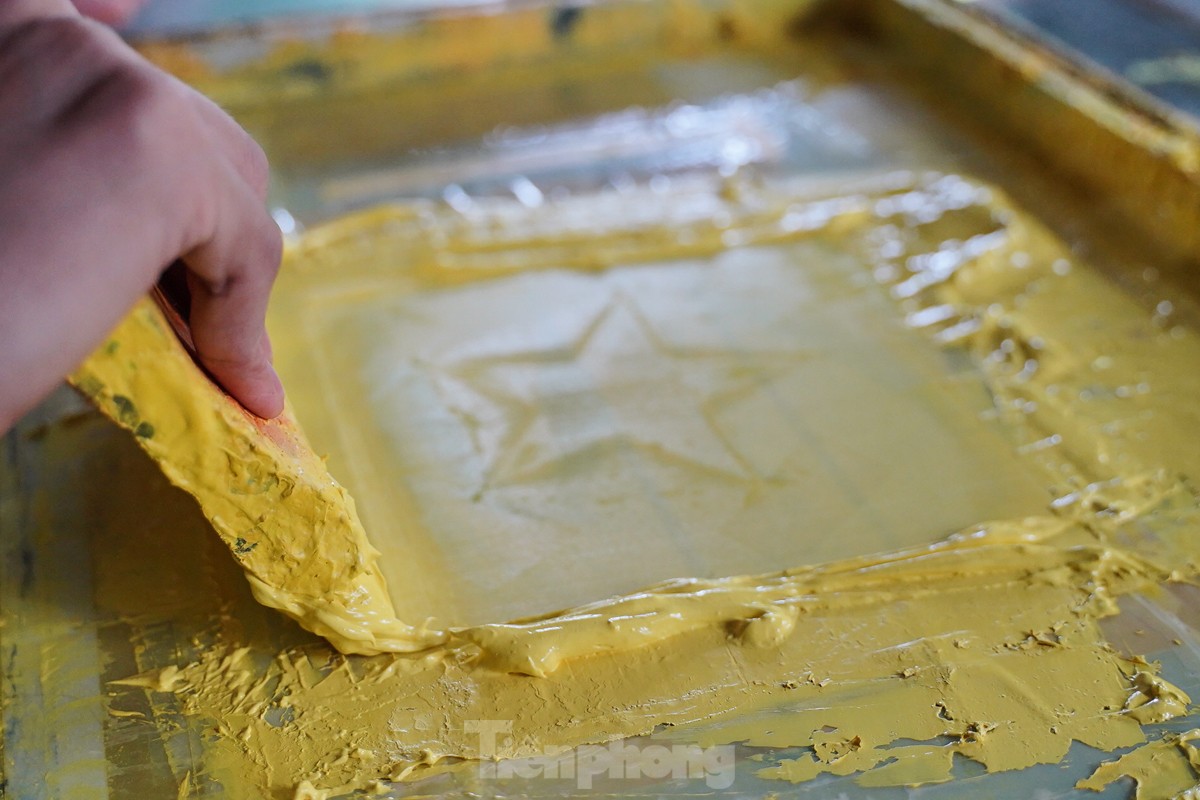 |
| Nowadays, very few young people in the village pursue this profession due to its arduous nature. Wishing to pass the craft on to future generations, many families teach their children the trade from a young age, recognizing it as a profession passed down from their ancestors and a source of pride for the people of Tu Van village. |
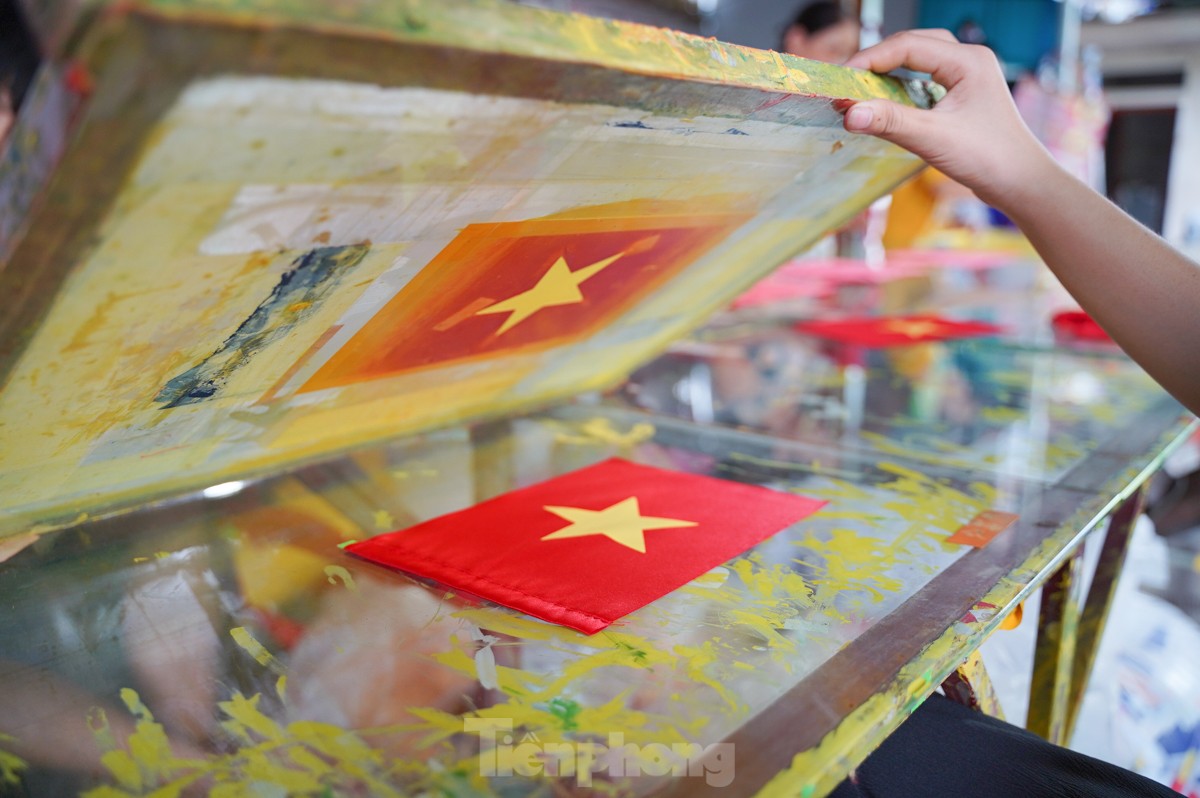 |
The flag printing mold is not just a production tool, but also a symbol of patriotism and national pride. |
 |
Each day, the factory can produce thousands of flags. During peak periods such as National Day on September 2nd, production can increase even more, requiring workers to work continuously throughout the day. |
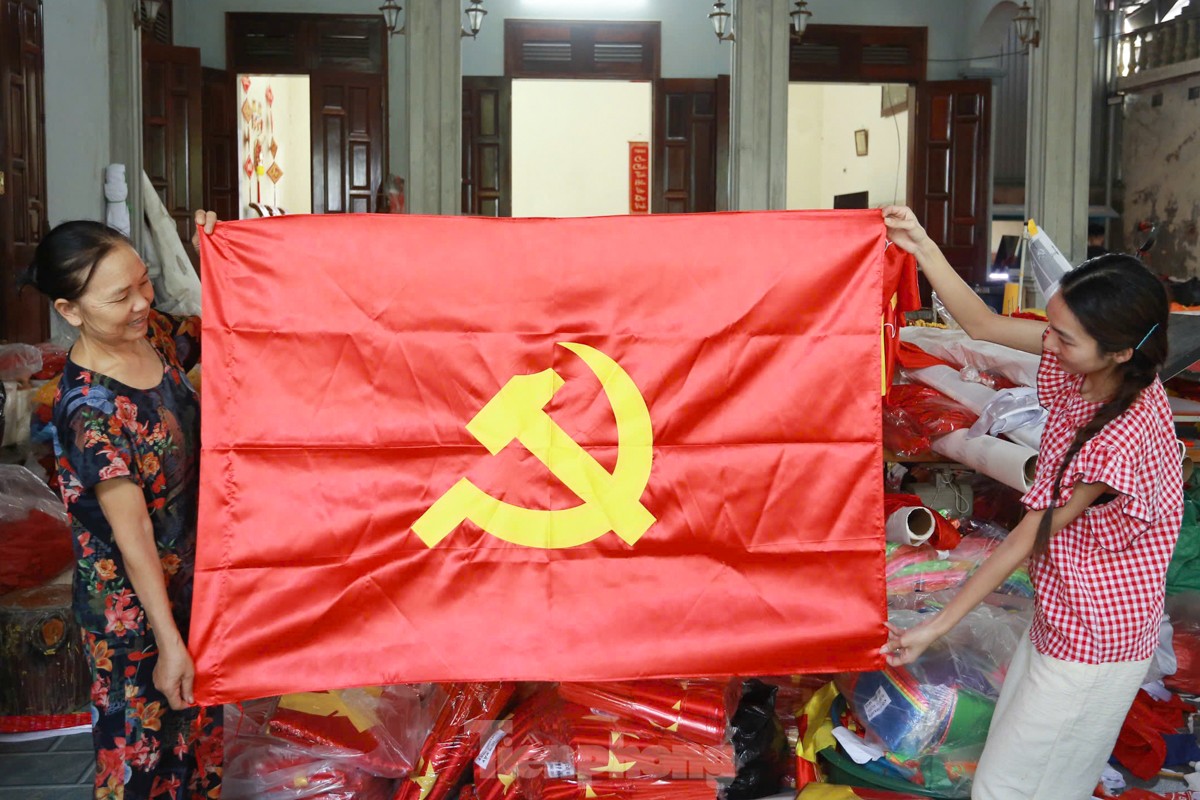 |
The flags have been completed. |
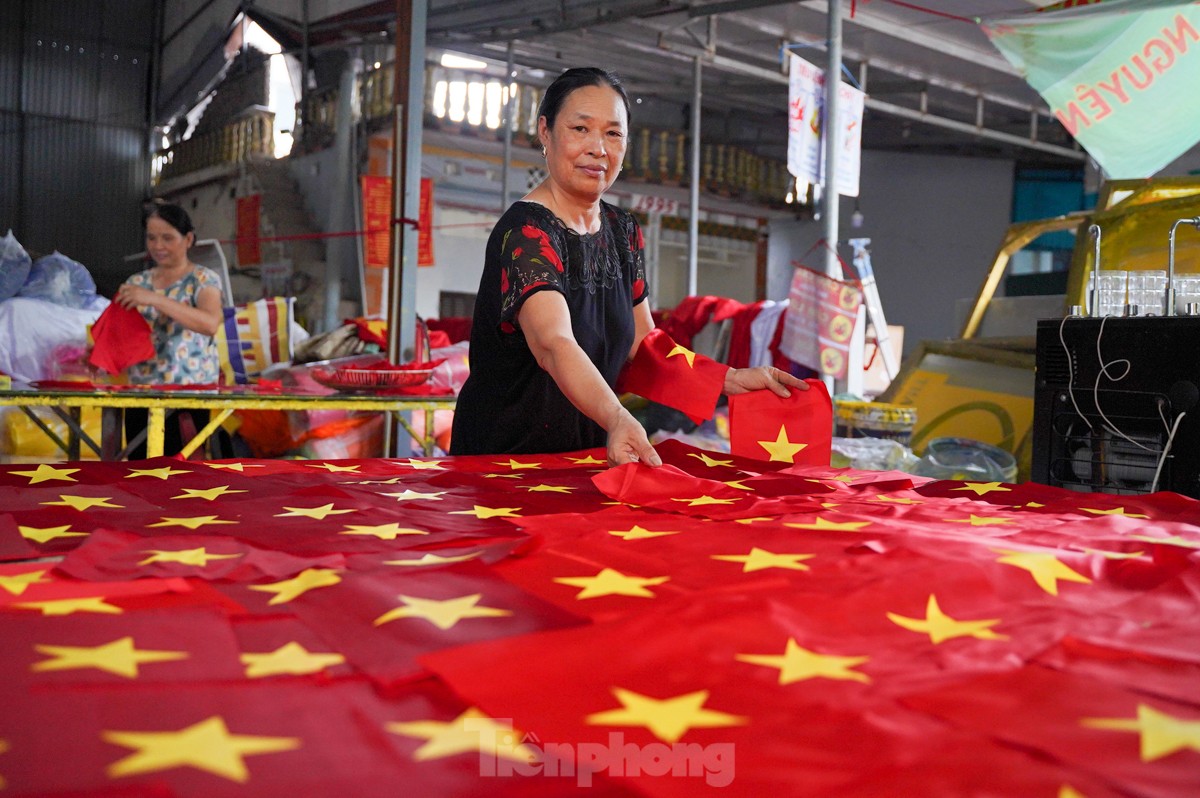
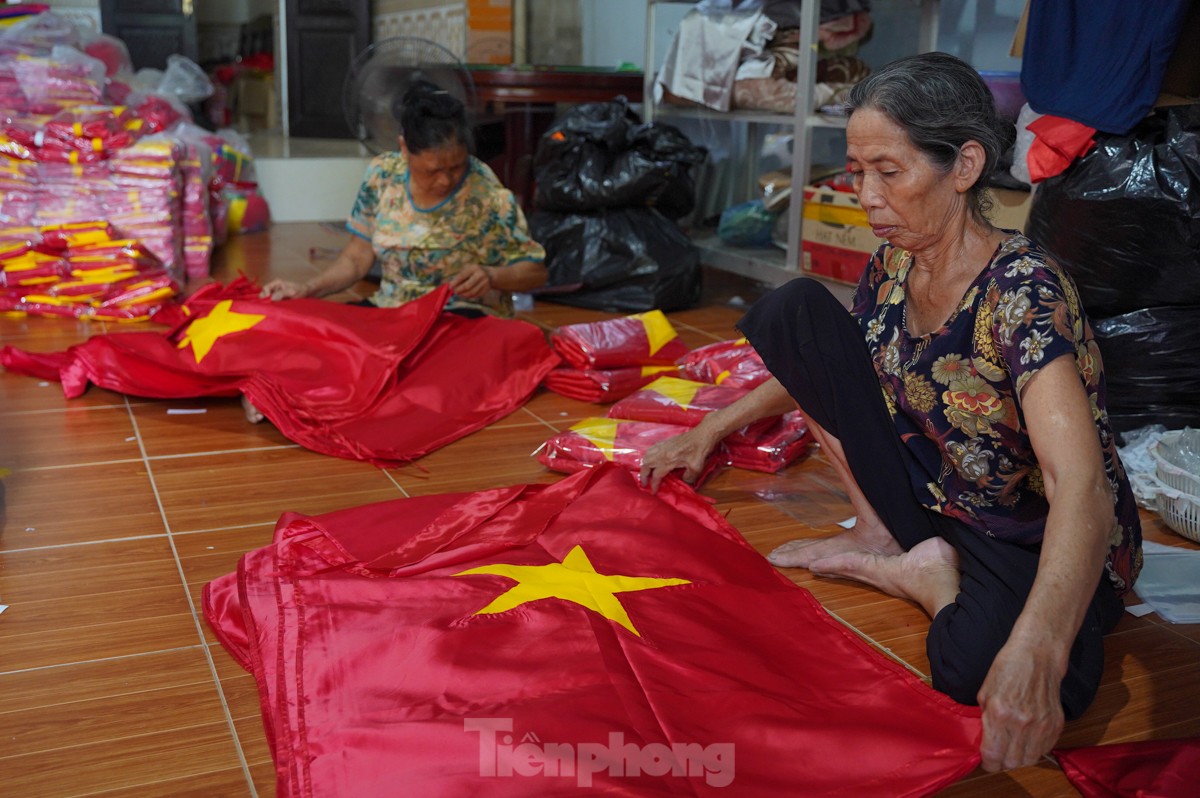 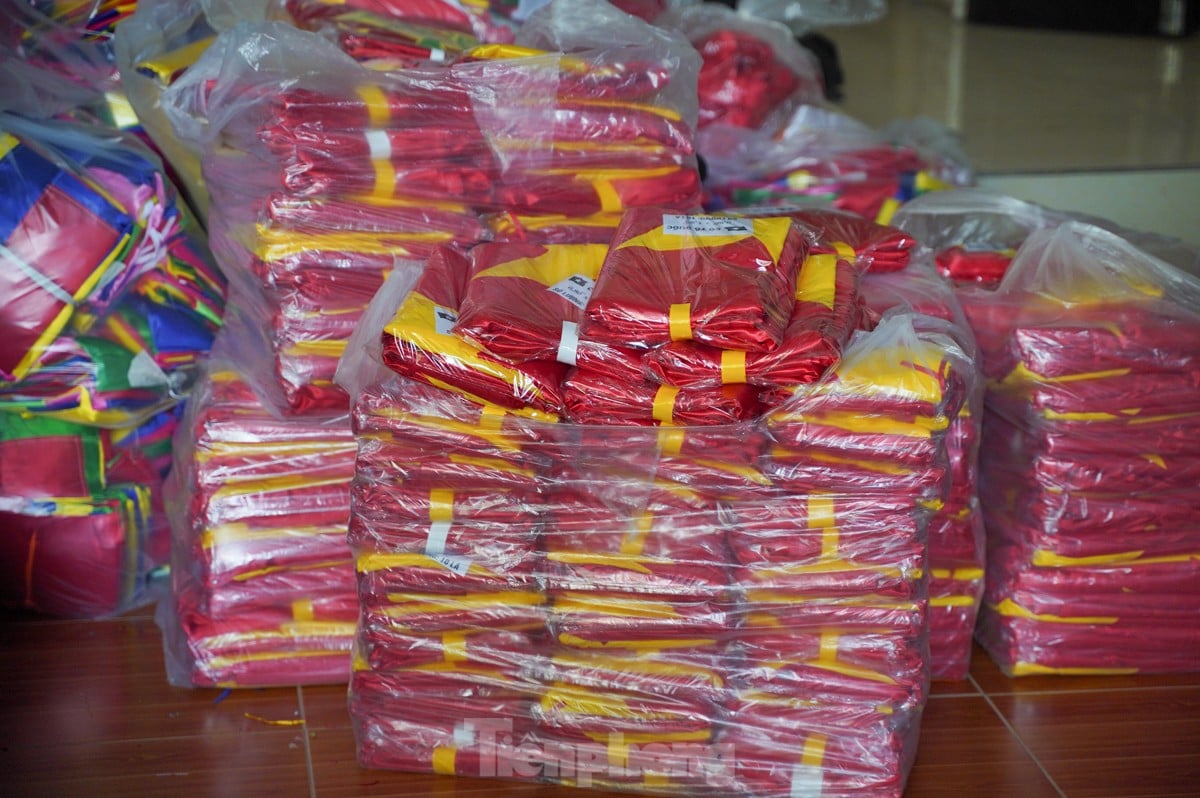 |
The finished products are neatly arranged by the workers here, ready to be brought to market for the National Day celebration on September 2nd. |
 |
Source: https://tienphong.vn/lang-nghe-chuyen-may-theu-co-to-quoc-tat-bat-truoc-ngay-quoc-khanh-29-post1666139.tpo

![[Photo] Closing Ceremony of the 10th Session of the 15th National Assembly](/_next/image?url=https%3A%2F%2Fvphoto.vietnam.vn%2Fthumb%2F1200x675%2Fvietnam%2Fresource%2FIMAGE%2F2025%2F12%2F11%2F1765448959967_image-1437-jpg.webp&w=3840&q=75)

![[Photo] Prime Minister Pham Minh Chinh holds a phone call with the CEO of Russia's Rosatom Corporation.](/_next/image?url=https%3A%2F%2Fvphoto.vietnam.vn%2Fthumb%2F1200x675%2Fvietnam%2Fresource%2FIMAGE%2F2025%2F12%2F11%2F1765464552365_dsc-5295-jpg.webp&w=3840&q=75)











































![[OFFICIAL] MISA GROUP ANNOUNCES ITS PIONEERING BRAND POSITIONING IN BUILDING AGENTIC AI FOR BUSINESSES, HOUSEHOLDS, AND THE GOVERNMENT](https://vphoto.vietnam.vn/thumb/402x226/vietnam/resource/IMAGE/2025/12/11/1765444754256_agentic-ai_postfb-scaled.png)







































Comment (0)