

Korean research suggests that eating kimchi, pickled radishes, and other fermented vegetables can reduce belly fat and lower the risk of type 2 diabetes.
The study, published in the journal BMJ Open on February 1st, found that kimchi, or pickled radishes, are rich in fiber, lactic acid bacteria that boost the gut microbiome, vitamins, and polyphenols. Experts say consuming three servings of kimchi daily may reduce the risk of obesity. Previous studies have also shown that bacteria from kimchi have anti-obesity effects in animals.
Scientists analyzed the health outcomes of more than 115,000 volunteers, aged 40 to 69, who registered for the Korean Health Examination. Participants answered questionnaires about the frequency of eating different foods each day, with options ranging from one to five and more than five servings per day.
Participants also had their height, weight, body mass index (BMI), and waist circumference measured. A BMI of 18.5 or higher was considered underweight, between 18.5 and 25 was considered "normal" weight, and above 25 was considered obese.
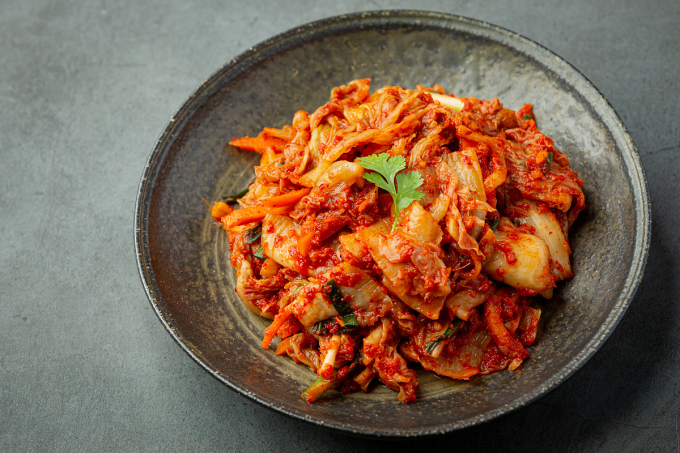
Napa cabbage kimchi is a type of kimchi commonly consumed in Korea and other Asian countries. Photo: Freepik
In the study, volunteers primarily ate cabbage kimchi, radish kimchi, and watery kimchi. A serving of cabbage or radish kimchi was 50g, and a serving of watery kimchi was 95g. Researchers from Chung Ang University in South Korea defined abdominal obesity as having a waist circumference of at least 88 cm for men and 83 cm for women.
The results showed that moderate kimchi consumption reduced fat in overweight individuals. However, eating too much kimchi led to an increase in fat. After accounting for external factors, experts found that consuming a maximum of three servings of kimchi a day reduced the risk of being overweight by 11%. Men who ate this amount of kimchi had a 10% lower rate of abdominal fat, while the figure for women was 8%.
However, people who eat too much kimchi (5 or more servings per day) tend to have larger waistlines and are more likely to be overweight.
Thuc Linh (According to NY Post )
Source link

![[Photo] National Assembly Chairman Tran Thanh Man working with the Standing Committee of the National Assembly's Ethnic Council](https://vphoto.vietnam.vn/thumb/1200x675/vietnam/resource/IMAGE/2026/05/21/1779337435930_ndo_br_1-jpg.webp)
![[Image] "Journey of Hope" promotes the organ and tissue donation movement in Vietnam.](https://vphoto.vietnam.vn/thumb/1200x675/vietnam/resource/IMAGE/2026/05/20/1779294400833_1-8910-jpg.webp)




































































































Comment (0)