

Medical research shows that relying solely on cough to identify lung disease is not enough. Many diseases such as COPD (chronic obstructive pulmonary disease), interstitial lung disease, asthma or early stage lung cancer often start with very mild symptoms that are easily overlooked.
Below are early signs to watch out for to detect lung disease promptly, according to Times of India (India).
Shortness of breath during daily activities
Shortness of breath is often the first sign of lung disease. In people with COPD or interstitial lung disease, reduced oxygen exchange forces the body to breathe harder, making it difficult to breathe even with mild exertion.
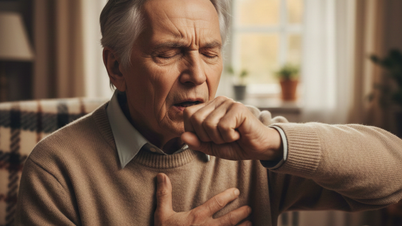
Feeling short of breath when walking, climbing stairs or doing housework can also be an early sign of airway obstruction. When experiencing this condition, many people often reduce their daily activities, causing the symptoms to be overlooked and delaying medical attention.

Feeling short of breath when walking, climbing stairs or doing housework can also be an early sign of airway obstruction.
ILLUSTRATION: AI
Chronic cough with phlegm
A persistent cough, lasting eight weeks or more, may be an early sign of COPD or chronic bronchitis. Initially, the cough is usually mild, infrequent, and sometimes produces a little phlegm.
Chronic coughs result from inflammation of the lining of the airways and overreaction of the mucus glands. This symptom can last for months before more obvious signs such as wheezing or chest tightness appear.
Frequent respiratory infections
Recurrent respiratory infections such as bronchitis, pneumonia, or sinusitis can be a sign that your airway defenses are failing. People with early lung disease, especially COPD or cystic fibrosis, are more susceptible to infections.
If you have 2-3 or more respiratory infections in a year, you should have your lungs checked early to prevent long-term damage.
Chronic fatigue, lack of energy
Fatigue is a common but often overlooked symptom. When the body’s oxygen supply is reduced, cells function less efficiently and the body uses more energy. People with early stages of COPD or interstitial lung disease may feel tired all the time, despite getting enough sleep and maintaining a normal lifestyle.
Chest pain or discomfort
A feeling of tightness or mild discomfort in the chest is sometimes mistaken for musculoskeletal or digestive problems. However, in early COPD, it is often a sign of airway inflammation or reduced lung compliance.
Purple lips or fingertips
This sign is uncommon in the early stages, but lack of oxygen in the blood can cause the lips, nails, or fingertips to turn blue. Even if it is short-lived, this should be checked out as soon as possible.
What should be done to prevent?
Lung disease can be better controlled if people follow these tips:
- Avoid secondhand smoke: Quitting smoking is the most effective prevention measure.
- Reduce exposure to pollution: Limit indoor and outdoor smoke.
- Regular exercise: Helps improve lung capacity and cardiovascular health.
- Maintain a healthy weight: Reduces metabolic stress and improves breathing.
- Occupational safety: Use protective equipment when exposed to dust or chemicals.
These measures are especially important for people at high risk, helping to protect lung function and reduce long-term complications.
Source: https://thanhnien.vn/mua-lanh-la-ho-nhung-dau-hieu-som-cua-benh-phoi-185251203081030013.htm



![[Photo] Worshiping the Tuyet Son statue - a nearly 400-year-old treasure at Keo Pagoda](/_next/image?url=https%3A%2F%2Fvphoto.vietnam.vn%2Fthumb%2F1200x675%2Fvietnam%2Fresource%2FIMAGE%2F2025%2F12%2F02%2F1764679323086_ndo_br_tempimageomw0hi-4884-jpg.webp&w=3840&q=75)
![[Photo] Parade to celebrate the 50th anniversary of Laos' National Day](/_next/image?url=https%3A%2F%2Fvphoto.vietnam.vn%2Fthumb%2F1200x675%2Fvietnam%2Fresource%2FIMAGE%2F2025%2F12%2F02%2F1764691918289_ndo_br_0-jpg.webp&w=3840&q=75)






















































































Comment (0)