

 |
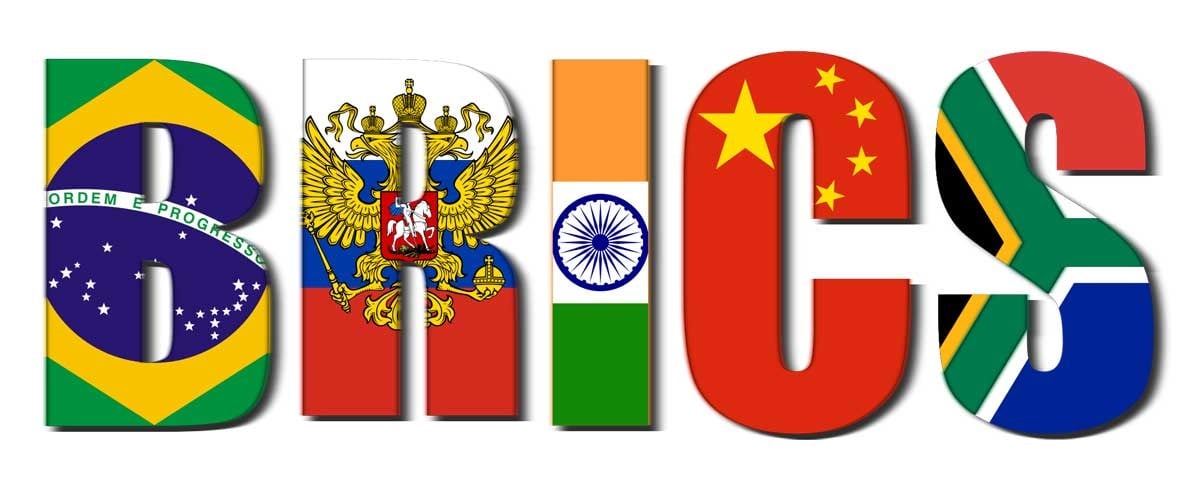
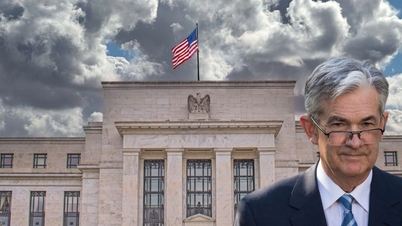
| How will BRICS contribute to diversifying international reserve currencies? (Source: Getty) |
Recently, in an article on China-US Focus , Dr. Dan Steinbock, a strategist on a multipolar world, stated that the pressure to diversify the world's reserve currencies has been present for a long time.
This issue intensified after 2008, but has received even more attention since 2022, particularly following the Russia-Ukraine conflict (February 2022). It will be a key topic at the upcoming BRICS summit, and this trend is likely to be further amplified after the summit.
In 2016, then-US Treasury Secretary Jack Lew warned that: “The more we condition the use of the US dollar and the financial system on continuing to conform to foreign policy, the greater the risk that countries will switch to other currencies and other financial systems in the medium term.”
Both the Trump administration and the current Biden administration ignored Lew's warnings. As a result, countries in the Southern Hemisphere are increasingly interested in BRICS.
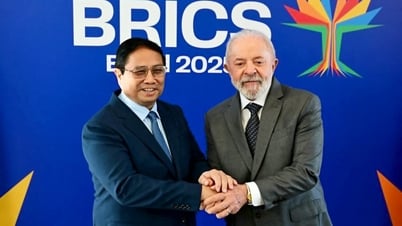
The main theme at the BRICS summit in Johannesburg, South Africa, this August will be the bloc's concerted action to develop alternative payment systems to the US dollar.
Risks from USD monopoly
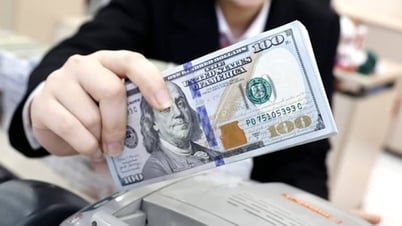
Nobel Prize-winning economist Paul Krugman notes that the vast majority of world trade is still settled in the US dollar. Many banks based outside the United States accept USD deposits. Many corporations outside the US borrow in USD. Central banks hold largely US dollar reserves.
Nevertheless, the current “forced” monopoly of the USD – the world’s disproportionate dependence on the US currency for payments and trade invoicing, the reliance on it by non-US financial companies and corporations, and the high proportion of the greenback in central bank reserves – is increasingly concerning not only in the Southern Hemisphere but also in major Western economies.
The "weaponization" of the US dollar in the name of the international community, but without broad consensus, puts trade bills and payments, foreign corporations, and central bank reserves at risk.
Recently, US Treasury Secretary Janet Yellen stated that there remains no alternative to the dollar-based monetary system. She then again warned of a catastrophic scenario if Washington does not agree on a new debt ceiling.
Similarly, the British also once touted the "good fortune" of the British pound until 1914. But that preeminent position ended with the excessive strain on the British economy after 1945.
Although the beginning of the 21st century has its own unique characteristics, there won't be too many differences compared to almost a century ago.
Advantages of international currency diversification
So how will BRICS contribute to diversifying international reserve currencies?
Thanks to its organizational flexibility, the bloc can implement unilateral, bilateral, and multilateral measures. These measures are driven by the BRICS founding economies (Brazil, Russia, India, and China), ambitious new members, and alliance partners who share the same vision or are considering membership.
According to Anil Sooklal, South Africa's ambassador responsible for relations with Asia and BRICS, around 22 countries have officially applied to join the group, while a similar number of countries have "informally inquired about becoming BRICS members." Countries reportedly interested in joining include Argentina, Iran, Saudi Arabia, and the United Arab Emirates (UAE).
The increasing number of large and populous emerging economies could create a kind of “network effect” and “positive spillover” that would be crucial to kickstarting the infrastructure for the proposed alternative global financial system.
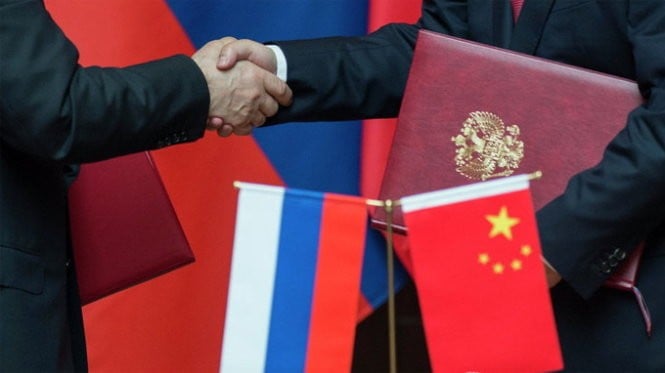 |
| Prior to the conflict in Ukraine, the Atlantic Council described Russia and China as “partners in the process of de-dollarization.” (Source: RIA) |
However, what BRICS represents is not simply de-dollarization. The goal is not to eliminate the greenback, a sentiment often portrayed by BRICS critics and political opponents, particularly in the West. Prior to the conflict in Ukraine, the Atlantic Council described Russia and China as “partners in the de-dollarization process.”
That collaboration was seen as “an alternative to the US-dominated global credit payment messaging system SWIFT.” The “handshake” between Russia and China was once understood as a legitimate and de-dollarized alliance, but rather as a “plot” to replace the greenback.
However, the reality is somewhat different. BRICS has little to do with countries subtly seeking to disrupt the international order. Instead, much like asset managers seeking to maintain appropriate diversification in their portfolios, BRICS' strategic goal is diversification and readjustment, not mere de-dollarization.
From Keynes' Bancor to BRICS currency diversification
Currently, most BRICS economies remain significantly dependent on the US dollar, while those economies sanctioned by Washington and/or its allies have significantly reduced their USD reserves, often opting instead for gold.
What the major BRICS economies are seeking is a more diversified global monetary regime. If this is not addressed gradually and over time, it will change through a major and sudden global crisis. The BRICS goal is not to replace the USD but to diversify the monetary system so that it better reflects today's global economy.
Looking back at history, this is not a new idea. John Maynard Keynes, the British economist and one of the most influential figures of the 20th century, made a similar argument for Bancor – a supranational currency (a name inspired by the French word “banque”) – at an event in 1944. However, this idea was rejected by American negotiators.
At that time, the British pound and the US dollar were the world's main reserve currencies. However, Keynes warned that the dominance of the greenback would lead to significant uncertainty and volatility following the reconstruction and recovery of Western Europe and other major economies.
That is precisely what happened in 1971, when President Nixon unilaterally ended the convertibility of the US dollar into gold. Although introduced as a temporary measure, this decision rendered the greenback a permanently floating fiat currency.
When gold ceased to be a measure of value, the perception of value replaced value itself. The consequence was a global gold price shock triggered by the double oil crisis, followed by a quadrupling of oil prices, then inflation and stagflation, and finally record-high US interest rates and large-scale rearmaments.
Geopolitically, the US continues to rely on major Western economies and Japan, but in international economics, it is unwilling to relinquish its dominant position. As a result, the monopoly of the US dollar contributed to asset bubbles in the 1980s, early 1990s, early 2000s, and ultimately in 2008.
Amid the Great Recession, People's Bank of China Governor Zhou Xiaochuan revived the idea and called on major Western economies to "reform the international monetary system."
Major commitments have been made in the European Union (EU), the US, and Japan, but nothing significant has materialized. Therefore, organizations such as the BRICS New Development Bank (NBD) and the Asian Infrastructure Investment Bank (AIIB) are working to find new monetary agreements.
The BRICS do not seek to disrupt the world order. Instead, they seek to promote diversification directly. The BRICS move also reflects the aspirations of a multipolar world economy, where global growth prospects are driven by large emerging economies.
Source


![[Photo] Explore the US Navy's USS Robert Smalls warship](/_next/image?url=https%3A%2F%2Fvphoto.vietnam.vn%2Fthumb%2F1200x675%2Fvietnam%2Fresource%2FIMAGE%2F2025%2F12%2F10%2F1765341533272_11212121-8303-jpg.webp&w=3840&q=75)
![[Photo] The captivating scenery of the fragrant maple forest in Quang Tri](/_next/image?url=https%3A%2F%2Fvphoto.vietnam.vn%2Fthumb%2F1200x675%2Fvietnam%2Fresource%2FIMAGE%2F2025%2F12%2F10%2F1765353233198_lan09046-jpg.webp&w=3840&q=75)


























![[Video] The craft of making Dong Ho folk paintings has been inscribed by UNESCO on the List of Crafts in Need of Urgent Safeguarding.](https://vphoto.vietnam.vn/thumb/402x226/vietnam/resource/IMAGE/2025/12/10/1765350246533_tranh-dong-ho-734-jpg.webp)





























































Comment (0)