

The Federal Reserve's final meeting of the year is not simply a closing ceremony for a turbulent year of interest rates, but rather a prelude to a larger storm brewing on the horizon in 2026.
That was the moment when Chairman Jerome Powell's term ended, ushering in a sensitive period of power transition, where the independence of the world's most powerful central bank was being put to the test against unprecedented political and legal pressures.
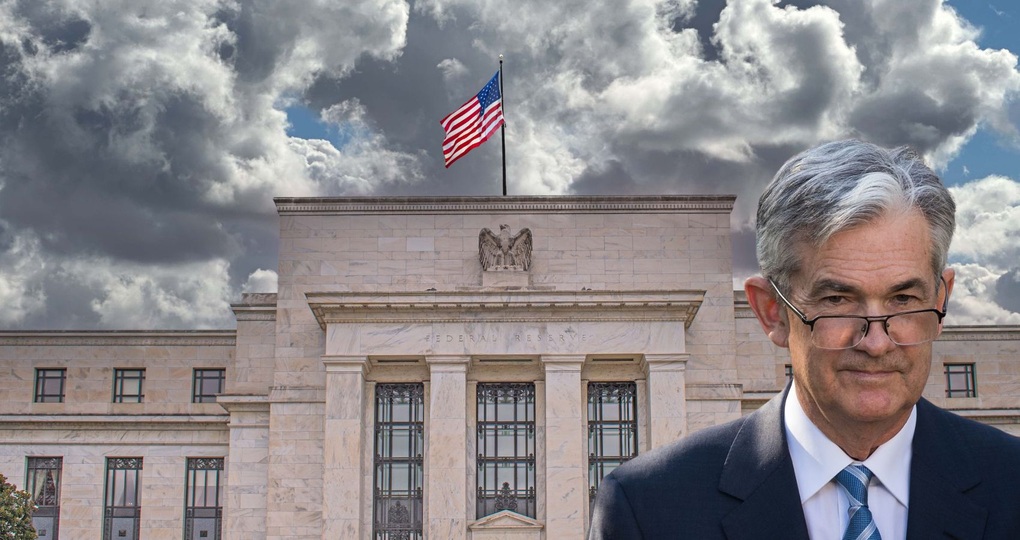
The Fed enters a turbulent 2026 as Powell's term comes to an end (Photo: The UNN).
A rift in "herd mentality"
Before facing the personnel changes expected in 2026, the Fed is grappling with a deeply divided internal structure within the Federal Open Market Committee (FOMC). The absolute consensus, or what critics call "herd mentality," that has traditionally helped the Fed maintain market confidence, is now showing serious signs of fracturing.
At this December meeting, Chairman Jerome Powell is striving to rally support for a third consecutive interest rate cut. However, this task is by no means easy.
Observers point out that the 19-member policymaking committee is fragmented by conflicting viewpoints. One side worries about persistently high inflation – a factor that requires interest rates to remain unchanged. The other sees risks from a cooling labor market, with unemployment rising to 4.4% and large businesses continuing to lay off staff.
Significantly, this division could lead to a rare scenario: Fed officials could vote against Powell's decision. If this happens, it would be the largest dissenting vote in six years.
Governor Christopher Waller once warned of a risky 7-5 vote scenario, where a single change of mind could cause the entire monetary policy to shift, shaking financial confidence in the central bank's direction.
Amid a shortage of official economic data due to the temporary government shutdown, the Fed is having to conduct policy based on vague signals. The most likely strategy currently, as experts call it, is "hawkish rate cuts," meaning lowering interest rates to support employment, but immediately signaling a pause to assess the situation.
This is a cautious move, or rather a temporary solution, to reconcile the fiercely opposing factions within the party.
A tumultuous transfer of power.
While the interest rate split is the current issue, the personnel story is a ticking time bomb for 2026. Jerome Powell's term as chairman will officially end in May 2026. At the beginning of the new year, President Donald Trump is expected to announce his successor, with the most prominent name being mentioned being Kevin Hassett – the White House's top economic advisor.
However, the path for the new president to take power will not be a bed of roses. The successor is expected to face a challenging confirmation process in the Senate.
A clear lesson can be seen in the case of Stephen Miran (Trump's nominee for the Board of Governors), who barely made it through the confirmation process with a narrow 48-47 vote.
Furthermore, changing the chairman does not necessarily mean an immediate change in the face of the Fed. The agency's power structure is designed to be extremely complex and cumbersome to prevent a rapid consolidation of power.
Governors serve terms of up to 14 years and are arranged in a staggered system, making it impossible to replace the entire board overnight. For example, Vice President Philip Jefferson and Governor Lisa Cook both served terms far exceeding those of the president, creating strongholds protecting the continuity of monetary policy.

The Fed's independence is being challenged (Photo: Axios).
The spears are aimed at the "fortress" of independence.
2026 is also predicted to be a year of legal battles and institutional pressure targeting the Fed's independence. This isn't limited to the top levels in Washington; the Fed's reach at the local level is also under scrutiny. Treasury Secretary Scott Bessent recently stirred controversy by questioning the residency of regional reserve bank presidents.
Although the proposed local residency requirement is explained as an attempt to bring the Fed back to its original federal principles, observers view it as an attempt to interfere with the highly independent personnel selection process of its branches.
Regional bank presidents, who hold crucial votes on the FOMC, face the risk of being replaced or significant pressure when making interest rate decisions. The fact that all of these regional leadership positions have completed their five-year terms and are awaiting reappointment early next year makes the power dynamics at the Fed more unpredictable than ever.
As 2026 approaches, the Fed will not only have to grapple with the economic challenges of inflation and employment, but also struggle to maintain its "untouchable" position amidst political waves. As Kathy Bostjancic, Chief Economist at Nationwide, suggests, what we may see is a more cautious Fed, taking exploratory steps: cutting interest rates, then pausing and waiting.
That anticipation isn't just for economic data; it's also a breath-holding moment awaiting transformative changes within the most powerful financial system on the planet.
Source: https://dantri.com.vn/kinh-doanh/song-ngam-tai-fed-nam-2026-khi-chiec-ghe-nong-khong-chi-doi-chu-20251209201816477.htm




























![[Video] The craft of making Dong Ho folk paintings has been inscribed by UNESCO on the List of Crafts in Need of Urgent Safeguarding.](https://vphoto.vietnam.vn/thumb/402x226/vietnam/resource/IMAGE/2025/12/10/1765350246533_tranh-dong-ho-734-jpg.webp)































































Comment (0)