

Wall Street is experiencing its best days yet. Just ahead of the Federal Reserve's crucial policy meeting, all three major stock indices – the Dow Jones, S&P 500, and Nasdaq – closed at new record highs, extending their gains thanks to positive signals from US-China trade negotiations.
But in stark contrast to the festive atmosphere in the financial markets, in Washington D.C., the world's most powerful monetary policymakers are preparing for one of their most challenging meetings. They are like captains navigating a massive economic ship through turbulent waters without a compass or nautical chart.
The Federal Open Market Committee (FOMC), the Fed's decision-making body, will hold a meeting over two days, October 28-29 (US time). The final decision will be announced at 2 PM Eastern Time on October 29, which is approximately 1 AM on October 30 in Vietnam.
And the storm they face stems from an unprecedented event: the US federal government has been shut down for nearly a month due to political gridlock. This situation has prevented the release of numerous key economic reports, particularly September employment data. The Fed is having to make decisions amidst a thick fog of information, a nearly unprecedented situation.
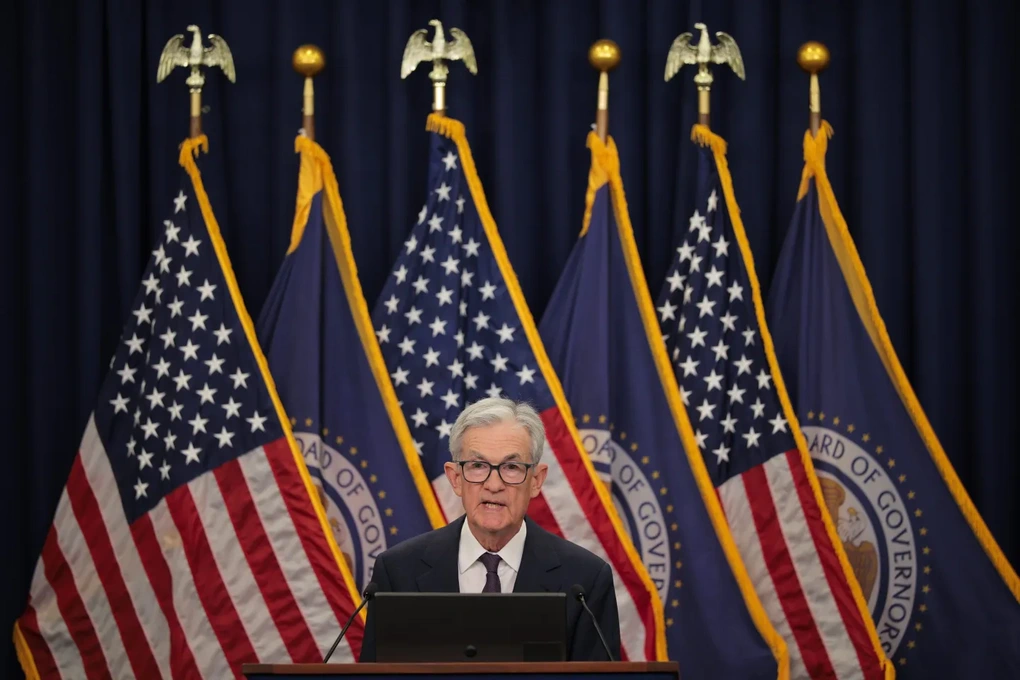
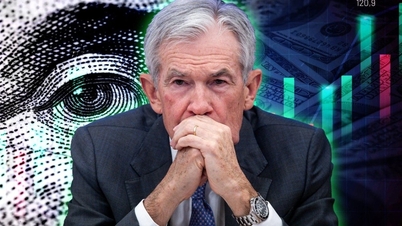
The Fed is expected to announce its second interest rate cut of the year on October 29 (US time) (Photo: Pinterest).
A rate cut is almost certain.
Despite the lack of data, the market is almost 100% certain that the Fed will act. According to CME Group's FedWatch tool, there is a 96.7% probability that the Fed will cut the benchmark interest rate by another 0.25 percentage points. If this happens, it would be the second cut in 2025, bringing the benchmark rate down to 3.75-4%.
So what is the basis for this confidence? The only glimmer of hope piercing through the fog is the September Consumer Price Index (CPI) report, released by the US Department of Labor last Friday. The report showed inflation rising only 3% year-on-year, lower than expert forecasts.
Scott Helfstein, investment strategist at Global X, commented: “Concerns that tariffs will drive up prices haven’t materialized across most product categories. There’s nothing in the inflation data that would prevent the Fed from cutting interest rates next week.” He added that while prices have risen, it’s not enough to deter the Fed from supporting the economy.
Experts from Bank of America also agree, stating that the latest CPI data "will keep the Fed focused on the labor market." And with the jobs report still uncertain, "a rate cut in October is almost certain."
The gamble between inflation and jobs
The Fed's upcoming decision is a real test of wits, balancing its two core objectives: controlling inflation while maintaining low unemployment. These two goals seem to be moving in opposite directions.
On one hand, there are concerns about a weakening labor market. Even before the government shutdown, figures were already showing clear signs of fatigue.
In August, the economy created only 22,000 jobs, a disappointing figure. Fed Chairman Jerome Powell himself acknowledged in September that the central bank is increasingly concerned about the growing risks to the job market. Cutting interest rates would provide some breathing room for businesses, encouraging borrowing to expand production and hire.
On the other hand, there's the specter of inflation. Although the September CPI was lower than expected, the 3% level is still significantly higher than the Fed's long-term target of 2%. Price pressures stem partly from the tariffs imposed by the Trump administration on its trading partners. Keeping interest rates high is a traditional tool for cooling inflation.
Against this backdrop, policymakers are forced to rely on "a multitude of information sources from both the public and private sectors that remain available," as Powell acknowledged. This is a real gamble, because a wrong decision could plunge the economy into recession or fuel inflation.
It's not just about interest rates.
The focus of the meeting is not just on raising or lowering interest rates. Experts are paying attention to another important move: the possibility that the Fed will announce the end of its balance sheet shrinking program, also known as "quantitative tightening" (QT).
For many years, the Fed has bought trillions of dollars worth of bonds to inject money into the economy. QT is the reverse process, which is to let those bonds mature without reinvesting, thereby gradually withdrawing money from the system.
Ending the QT period earlier than expected would signal a strong loosening of monetary policy, complementing interest rate cuts. Both Bank of America and analyst Diane Swonk predict this scenario will unfold.
Furthermore, the Fed operates under considerable political pressure. President Trump has repeatedly and publicly criticized Chairman Powell on social media. The legal controversies surrounding Fed Governor Lisa Cook have also cast a shadow over the independence of the world's most powerful central bank.
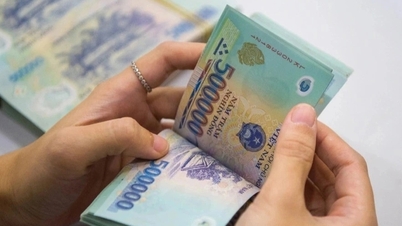
If the Fed lowers interest rates as expected, short-term borrowing costs, from credit cards to auto loans, will all decrease (Illustration: turismo.cadiz.es).
Impact on your wallet
A single 0.25 percentage point cut may not produce an immediate change, but it's part of a trend. Economists anticipate another cut in December. If so, borrowing costs could be significantly cheaper by the end of the year.
This will directly impact loans with variable interest rates, such as credit cards or home loan lines of credit (HELOC) secured by mortgages.
For those planning to buy a home, the good news is that mortgage interest rates have fallen to their lowest level in a year. However, don't expect a further sharp drop.
Danielle Hale, chief economist at Realtor.com, explains: "Fed decisions are often anticipated by the market, meaning the upcoming rate cut has largely already been factored into the price." In other words, the market has already "discounted" this information.
Once again, all eyes are on the Fed – where even a small move can change the rhythm of the market. This decision is made amidst many uncertainties, but it carries far greater weight than the numbers. The Fed's choice will send a clear message about confidence, risks, and the direction of the economy in the coming months.
Source: https://dantri.com.vn/kinh-doanh/fed-hop-giua-suong-mu-du-lieu-bai-toan-cho-nen-kinh-te-so-1-toan-cau-20251027213521395.htm




























































































Comment (0)