

Addressing unemployment thoroughly
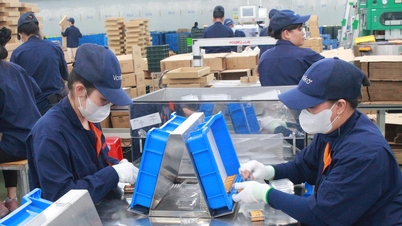
According to Nguyen Van Manh, Director of the Department of Internal Affairs of Hue City, from the beginning of 2025 to the present, the Employment Service Center has organized 15 job fairs, with more than 200 businesses participating, providing advice to over 44,500 people through direct consultations at the center, by phone, and online consultations on the website and social media.
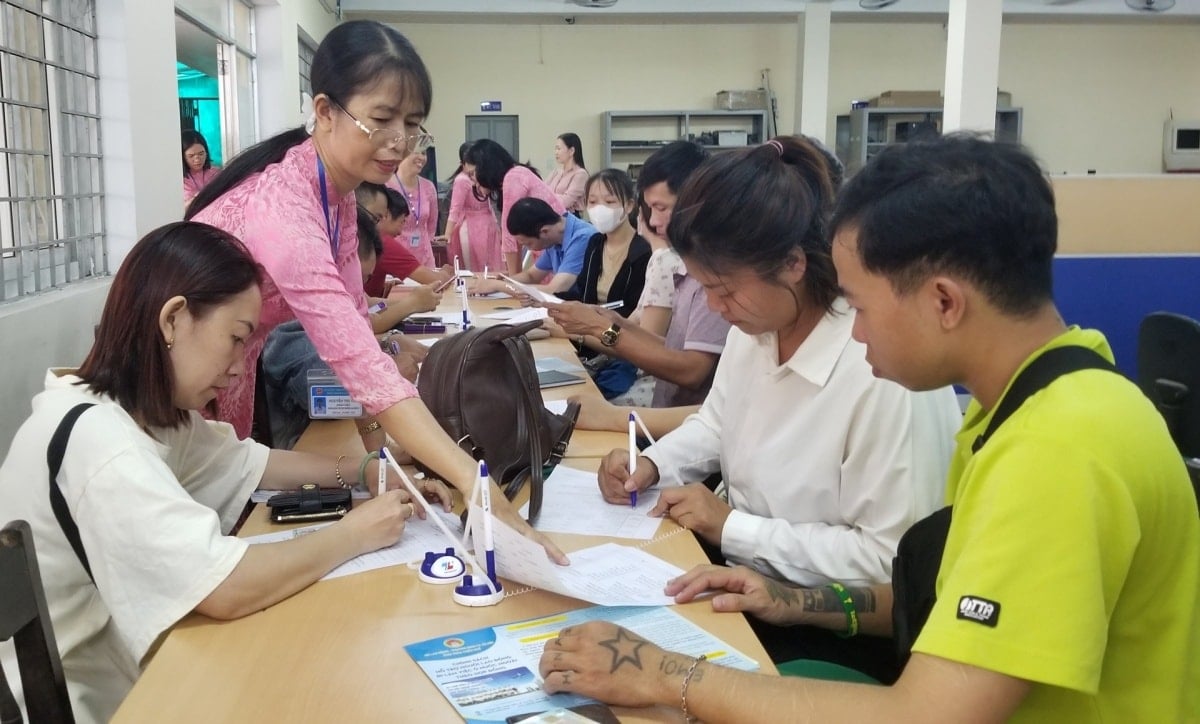
Connecting workers to employment opportunities has always been a top priority for Hue City in its poverty reduction efforts.
In particular, the Sustainable Job Fair 2025, held in September 2025, featured 34 participating units and over 40 booths from businesses and vocational education institutions, offering 12,000 job and training opportunities both domestically and internationally to the poor and economically disadvantaged.
According to the Director of the Department of Internal Affairs of Hue City, in recent times, the employment policy, implemented synchronously from the central to local levels, has had a positive impact, creating noticeable changes in socio-economic life.
In Hue City, job creation for workers has always been considered a top priority, ensuring that people benefit from the most appropriate policies. As a result, many households have gradually overcome poverty in areas such as healthcare, education , and housing, contributing to the effective implementation of the National Target Program for Sustainable Poverty Reduction giai đoạn 2021-2025.
In the coming period, Hue City will integrate programs, projects, and initiatives from the central and local governments, mobilizing social resources to promote job creation, especially within the framework of the National Target Program for Sustainable Poverty Reduction. The city will also continue to advise on and implement solutions to develop the labor market, improve the quality of labor market forecasting and information, expand the market for sending workers abroad under contract, and review the labor situation in enterprises, especially those experiencing labor shortages.
Furthermore, to date, 100% of communes and wards have issued plans and developed detailed poverty alleviation strategies for each household based on the level of access to basic social services for poor households; at the same time, they have reviewed the needs of the poor for support in terms of capital, vocational training, job creation, etc., to implement poverty reduction support policies and ensure the targets and plans are met.
Currently, Hue City is implementing policies to support poor people/poor households and near-poor people/near-poor households in education, training, and job creation. Policies supporting health insurance for poor and near-poor households are also receiving attention from relevant departments and agencies; housing support policies are being implemented throughout the city. In addition, Hue City is also promoting preferential credit policies to help poor households develop their economy.
Multiple integrated solutions
Based on the poverty reduction targets for the 2022-2025 period, Hue City has allocated specific poverty reduction targets for each commune and ward annually throughout the period. Therefore, in order to overcome difficulties and limitations, and to continue building on the achievements, with the central goal of helping poor households escape poverty sustainably, the leaders of Hue City have proposed the following solutions:
Firstly, the leaders of Hue City requested that the agencies in charge of the programs coordinate with the Department of Finance and the People's Committees of communes and wards to review and evaluate the tasks of the Program in order to organize implementation according to their authority or delegated authority; and to research and propose programs for the 2026-2030 period based on legal grounds and an evaluation of the results of the 2021-2025 period, ensuring suitability to the locality, needs, and target groups, and linking the responsibility of officials and people in the implementation of the Program.
Secondly, we must continue to innovate implementation methods, while effectively integrating and mobilizing resources in the process of implementing the three national target programs for poverty reduction, namely: building new rural areas, sustainable poverty reduction, and socio-economic development in ethnic minority areas.
The implementation is not only the responsibility of the government at all levels but also requires the active participation of the entire political system, creating clear changes in the socio-economic development of the locality.
Implement poverty reduction policies, programs, and projects in a synchronized, timely, and effective manner; integrate and effectively utilize resources in the implementation of national target programs; continue to mobilize resources from businesses, associations, organizations, individuals, and the entire society to focus on addressing shortcomings in indicators related to housing, healthcare, education, and clean water... in order to effectively carry out poverty reduction and support poor households in achieving sustainable poverty alleviation.
Thirdly, strengthen propaganda and mobilization efforts to raise awareness and responsibility among officials and the public. Continue to effectively improve the capacity of communities and program managers at all levels, with a focus on the grassroots level. Prioritize training and dissemination of newly issued regulations, policies, and guidelines to ensure that officials have sufficient capacity to lead and implement the program correctly. The focus should be on raising awareness and promoting action in sustainable poverty reduction; fostering the tradition of solidarity and mutual support; and inspiring self-reliance and self-improvement among the poor, encouraging them to proactively overcome poverty without relying on assistance from the State and society.
Fourth, continue to thoroughly disseminate the Party's guidelines and the State's policies on implementing social security and sustainable poverty reduction policies at all levels, sectors, and localities, ensuring that everyone, at all levels, and in all sectors, fully understands this work. From there, strengthen the leadership role and responsibility of Party committees, governments, the Vietnam Fatherland Front, political and social organizations, the people, and the responsibility of the heads of agencies, organizations, and units in implementing activities related to social security linked to sustainable poverty reduction; promote the dissemination of laws and regulations, raise awareness among all levels, sectors, and the people about social security, while simultaneously strengthening inspection and supervision of the implementation of social security and sustainable poverty reduction policies.
Fifth, continue to research and evaluate the effective implementation of livelihood models and projects suitable to the local situation; invest in infrastructure with priority given to developing production areas, attracting investment, and creating all conditions to help the poor expand production and access product markets to create jobs and increase income so that poor and near-poor households can improve their quality of life and contribute to escaping poverty. Promote socio-economic development associated with vocational education, focusing on vocational training according to market needs to concentrate on creating jobs for the poor; provide vocational training for the poor who need to learn a trade, improve their professional skills and practical abilities; continue to effectively implement preferential credit policies for students, especially poor students and students from disadvantaged families.
Source: https://daibieunhandan.vn/tp-hue-dat-quyet-tam-cao-cho-muc-tieu-giam-ngheo-10393280.html

![[Image] Leaked images ahead of the 2025 Community Action Awards gala.](/_next/image?url=https%3A%2F%2Fvphoto.vietnam.vn%2Fthumb%2F1200x675%2Fvietnam%2Fresource%2FIMAGE%2F2025%2F12%2F16%2F1765882828720_ndo_br_thiet-ke-chua-co-ten-45-png.webp&w=3840&q=75)
![[Photo] Prime Minister Pham Minh Chinh receives Lao Minister of Education and Sports Thongsalith Mangnormek](/_next/image?url=https%3A%2F%2Fvphoto.vietnam.vn%2Fthumb%2F1200x675%2Fvietnam%2Fresource%2FIMAGE%2F2025%2F12%2F16%2F1765876834721_dsc-7519-jpg.webp&w=3840&q=75)
![[Live] 2025 Community Action Awards Gala](/_next/image?url=https%3A%2F%2Fvphoto.vietnam.vn%2Fthumb%2F1200x675%2Fvietnam%2Fresource%2FIMAGE%2F2025%2F12%2F16%2F1765899631650_ndo_tr_z7334013144784-9f9fe10a6d63584c85aff40f2957c250-jpg.webp&w=3840&q=75)

![[Photo] Prime Minister Pham Minh Chinh receives the Governor of Tochigi Province (Japan)](/_next/image?url=https%3A%2F%2Fvphoto.vietnam.vn%2Fthumb%2F1200x675%2Fvietnam%2Fresource%2FIMAGE%2F2025%2F12%2F16%2F1765892133176_dsc-8082-6425-jpg.webp&w=3840&q=75)















![[Video] Independence and self-reliance linked with international integration through 40 years of reform](https://vphoto.vietnam.vn/thumb/402x226/vietnam/resource/IMAGE/2025/12/16/1765899635777_1-1-8054-png.webp)




























































Comment (0)