

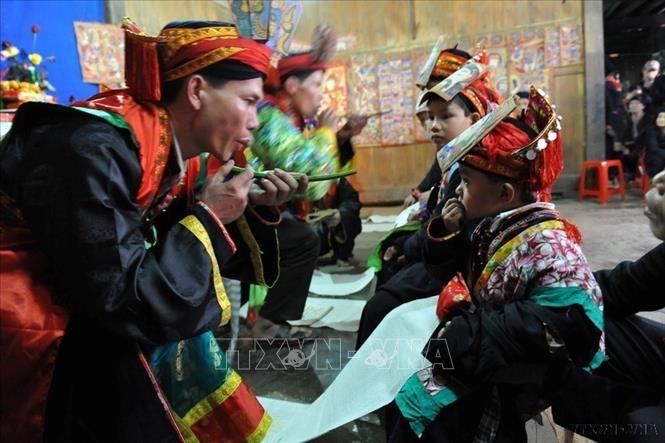
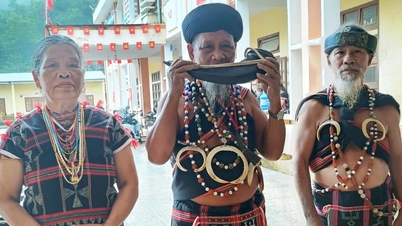
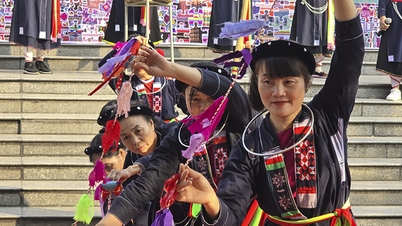
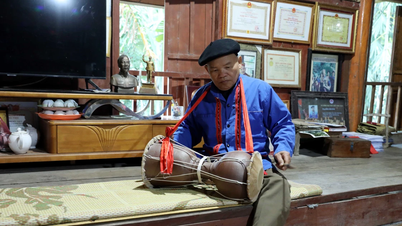
The shaman performs the ritual of bestowing weapons upon the apprentice at the "Coming-of-Age" festival - an indispensable ceremony of the Red Dao people. Photo: VNA
Traditional culture is the foundation.
Regarding innovation in the cultural and artistic fields, many opinions suggest that the diverse and unique traditional culture of the country is the foundation and promising "ground" for entrepreneurship and innovation. Currently, there are still many values of Vietnamese traditional culture that have not been fully exploited, and there is still much "room" to further promote investment in creativity and innovation.
According to Dr. Tran Thi Ngoc Minh from the Academy of Journalism and Communication, entrepreneurship and innovation in general, and entrepreneurship and innovation in the cultural field in particular, receive special attention from the Party and the State. Entrepreneurship cannot be sustained and developed sustainably without a cultural aspect. Conversely, culture becomes an effective business product and service for entrepreneurial and innovative activities. Entrepreneurial and innovative activities contribute to generating income from exploiting cultural values, serving as an effective tool for preserving, maintaining, and promoting traditional cultural values.
Sharing the same viewpoint, Associate Professor Do Huong Lan (Faculty of Social Sciences and Humanities, Vietnam National University, Hanoi) analyzed that, in the context of a world undergoing significant transformation under the impact of digital transformation, the cultural industry has emerged as a field with both rich economic potential and significant importance in preserving, renewing, and spreading national identity. Entrepreneurship and innovation in the cultural industry is not just about business startups, but also about startups in terms of ideas, thinking, and connecting tradition and modernity, preservation and development, and indigenous culture with the global market. With its diverse and rich cultural heritage, Vietnam has all the conditions to strongly develop this field if it adopts the right, creative, and timely approach.
From a strategic perspective, Associate Professor, Dr. Bui Hoai Son, a member of the National Assembly's Committee on Culture and Society, affirmed that cultural industries such as film, fine arts, music , design, advertising, fashion, video games, cultural tourism, publishing, television, performing arts, and handicrafts all share a common characteristic: a deep dependence on creative power – an element irreplaceable by pure investment or simple production technology. Therefore, cultural industries are considered a "fertile ground" for innovation, where emotions, identity, art, and technology intersect to create new values.
According to Associate Professor, Dr. Bui Hoai Son, innovation in content and form of expression is not only a need, but also a path for Vietnamese culture to integrate with the global flow without losing its identity. When cultural values are presented in the language of the times, they will never become outdated or out of place. On the contrary, these innovations will help culture continue to spread and touch people's hearts.
A comprehensive set of solutions is needed.
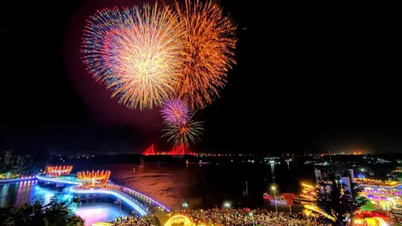
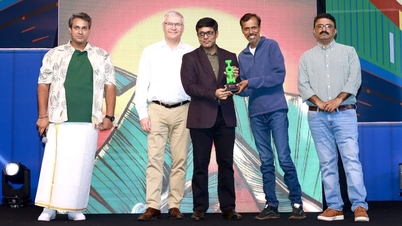
Citing the success of combining cultural, tourism, artistic, sports, and commercial products based on culture and history, a representative from the Ho Chi Minh City Department of Tourism stated that the Ho Chi Minh City River Festival 2024 won the Ho Chi Minh City Innovation Award 2025 and achieved international success with two Gold Awards at the International Business Awards (IBA - one of the world's prestigious awards under the Stevie Awards system of the United States, 2025) in the categories of "Arts, Entertainment and Public Festival" and "Cultural Event".
This festival boasts many highlights, from creative combinations to the themed art performance "Legendary Train Journey," recreating the nation's glorious history in the form of an outdoor musical on the Saigon River. Cinematic special effects and modern technology are applied in the stage design, with flexible and constantly changing settings creating surprises for the audience. The program tells the story of special trains that have traveled on the Saigon River throughout history, linked to important milestones in the nation's history. The festival also features traditional and contemporary art performances, sports competitions, and reenactments of trade and daily life on the river, clearly demonstrating the innovative spirit in the festival's products and its high impact.
According to Dr. Tran Thi Ngoc Minh from the Academy of Journalism and Communication, Ho Chi Minh National Academy of Politics, to promote entrepreneurship and innovation in the cultural sector in Vietnam, solutions need to be implemented uniformly and synchronously, contributing to creating new momentum for development and promoting the cultural values, identity, and spirit of the Vietnamese people in the new era. These solutions include continuing to build and improve the legal system, creating a favorable legal framework for entrepreneurship and innovation in the cultural sector during the period of international integration. Along with that, all levels and sectors need flexible mechanisms and policies for entrepreneurial activities in the cultural sector, especially policies related to censorship and evaluation of works, intellectual property rights; providing preferential support in terms of taxes, capital, and premises; and continuing to facilitate the creation, production, and business of cultural products and services.
Dr. Tran Thi Ngoc Minh argues that the cultural market is where supply and demand interact, with cultural products and services circulating and implemented according to market principles. Entrepreneurs and innovators in the cultural sector who want to succeed need to build a healthy and fair competitive cultural market. Currently, copyright infringement, plagiarism, and copying are hindering the development of cultural industries, affecting the effective exploitation of the cultural market, and creating many risks for legitimate producers and investors. Therefore, relevant authorities need to strengthen inspections and checks, protect copyright and related rights and obligations; strictly handle violations; and promptly reward and encourage successful entrepreneurs who make practical contributions to the development of the country's culture.
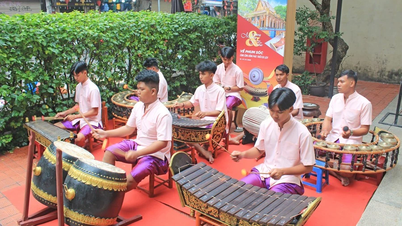
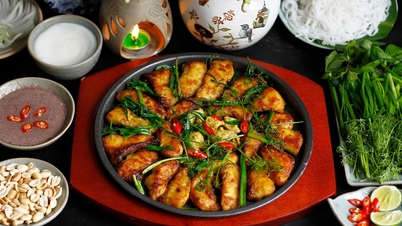
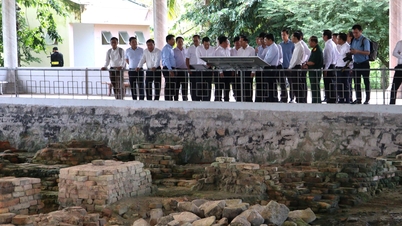
Emphasizing the solution of promoting entrepreneurial and innovative activities based on traditional foundations to both contribute to economic growth and spread national cultural identity, according to Ms. Dang Huynh Thao Vi (University of Economics and Finance, Ho Chi Minh City), Vietnam has enormous potential for innovative entrepreneurship based on culture. Vietnam possesses a vast cultural treasure trove with tens of thousands of historical relics and scenic spots, nearly 8,000 folk festivals, more than 5,000 craft villages, hundreds of folk games, and dozens of traditional performing arts... all of which are very favorable for innovative entrepreneurial activities and projects that integrate culture and history in the new era.
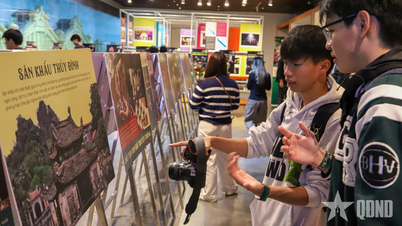
Concerned about solutions to promote entrepreneurship and innovation in the cultural and artistic fields for young people, Associate Professor Lam Nhan, Rector of Ho Chi Minh City University of Culture, believes that while entrepreneurship is quite common and widespread in economic, financial, and commercial fields, it is still relatively new in the cultural and artistic sector. Therefore, the university is strengthening connections with experts in the cultural and artistic fields to guide and create opportunities for students to acquire additional knowledge and skills in entrepreneurship, and to actively explore, innovate, and create. Ho Chi Minh City University of Culture, Ho Chi Minh City University of Law, and Ho Chi Minh City University of Architecture are organizing the 2025 City-level Entrepreneurship and Innovation Competition, creating an environment to promote innovation in the fields of culture, art, architecture, media, and tourism among students, contributing to the development of the country's cultural industries.
Source: https://baoangiang.com.vn/nghi-quyet-57-nq-tw-thuc-day-doi-moi-sang-tao-lan-toa-van-hoa-dan-toc-a465984.html

![[Photo] Closing Ceremony of the 15th Conference of the Central Committee of the 13th Party Congress](/_next/image?url=https%3A%2F%2Fvphoto.vietnam.vn%2Fthumb%2F1200x675%2Fvietnam%2Fresource%2FIMAGE%2F2025%2F12%2F23%2F1766462841764_a1-bnd-3731-1647-jpg.webp&w=3840&q=75)















































Comment (0)