

What is special is that Cuu village not only has banyan trees - wells - communal house yards, traditional houses with sloping roofs with wooden gates, ironwood columns, panel doors, and terracotta-tiled yards, but also has 2-3 storey ancient villas with typical French architecture.
Although many villas are now dilapidated and covered with moss, they still show the golden, rich history of the hundreds of years old village.
Today, Cuu Village has become a "living museum" attracting tourists who love architecture, photography and history to come and explore .

A golden age of the riverside village
Mr. Nguyen Thien Tu (80 years old), a resident of Cuu village, is passionate about collecting documents about the village. As a tour guide, he is willing to sit for hours, slowly telling visitors from afar about the birth of Cuu village, the first tailoring profession in the capital or the legend about the name "Western villa village", "rich village".
Cuu village is said to have been formed many centuries ago and people lived mainly by fishing along the Nhue River and farming .
The village elders recounted that in 1921, a major fire broke out in the village, burning down almost all the houses. The people of Cuu village had to disperse to neighboring localities to make a living. Some were lucky enough to go to Hanoi and apply to work for French tailors.
While working for hire and learning the trade, after a few years, they not only opened their own shop, but also expanded into trading in garment products and materials. Becoming rich, they returned to the village to pass on the trade to their children and grandchildren and built stately houses that still exist today.

There is also a theory that in the 1930s, a son of Cuu village went to France and learned the trade of tailoring suits - a very strange trade at that time. Upon returning to Vietnam, this person opened a shop in the center of Hanoi and taught the trade to his descendants and in the village.
Having learned the trade, the people of Cuu village opened many large tailor shops in the bustling commercial areas of that time such as Hang Ngang, Hang Dao and Hang Trong. The elders agreed to use the words Phuc and Phu as the names of the shops.
The tailor shops Phuc Hung, Phuc My, Phuc Tu, Phuc Hai, Phu Cuong, Phu My became famous..., specializing in tailoring suits and modern dresses for the French as well as the upper class in Hanoi and old Saigon.
In the 1930s and 1940s, the villagers prospered like "a kite in the wind". Merchants hired designers and workers from Hanoi to build solid houses with an architectural fusion of Vietnamese and French cultures in Cuu village.

Not only did they become rich from tailoring, or trading in fabrics and garment materials, many of them at that time also became rich from trading in wood or producing construction materials such as bricks and tiles. When they returned to their villages, they invested in building the eastern and western village gates, paving every alley with blue stone, building schools, maternity homes, etc.
"The Huynh Thuc Khang school in the village at that time even hired teachers from Hanoi to teach French to students. Education and health care were both given attention and development," Mr. Tu shared. According to him, at that time, there were few villages with a prosperous and wealthy life like Cuu village.

"Museum" for architecture and photography enthusiasts
Through many historical ups and downs, the village today still retains its majestic western village gate.
The village gate has an elaborate and imposing architecture, with floors, a roof and even an entrance and exit, built in the style of a “book”, like a giant book opening to welcome guests. The gate’s gazebo with tiled roof, curved edges, and two pairs of embossed lions, although chipped over time, still retains its ancient beauty, demonstrating the grandeur of a prosperous village.
"Every detail on the gate has its own meaning. For example, the inside of the gate has a wine jar - representing the wish for abundance, a bat symbolizing happiness...", Mr. Tu said.
French architectural features such as soft arches, square blocks and panels are harmoniously combined with ancient Vietnamese architecture.


Along the roads and alleys in the village are ancient gates. Each house's gate has its own unique decoration, which can be a pair of wine bottles or a shrimp or a bat...


Mr. Tu shared that in the village there are 49 old houses and villas. However, there are some houses with their doors locked from the outside, with no one living there regularly, but instead they become churches for extended families, places to return to during holidays and Tet.

Partly influenced by the magnificent French architecture but different from the remaining French villas in Sa Pa, Da Lat, the architecture here is a harmonious combination of European scholastic architecture and traditional Vietnamese architecture. That shows creativity, suitable for Vietnamese aesthetics and culture.
This is what attracts many researchers, architects, photographers and tourists to Cuu village.
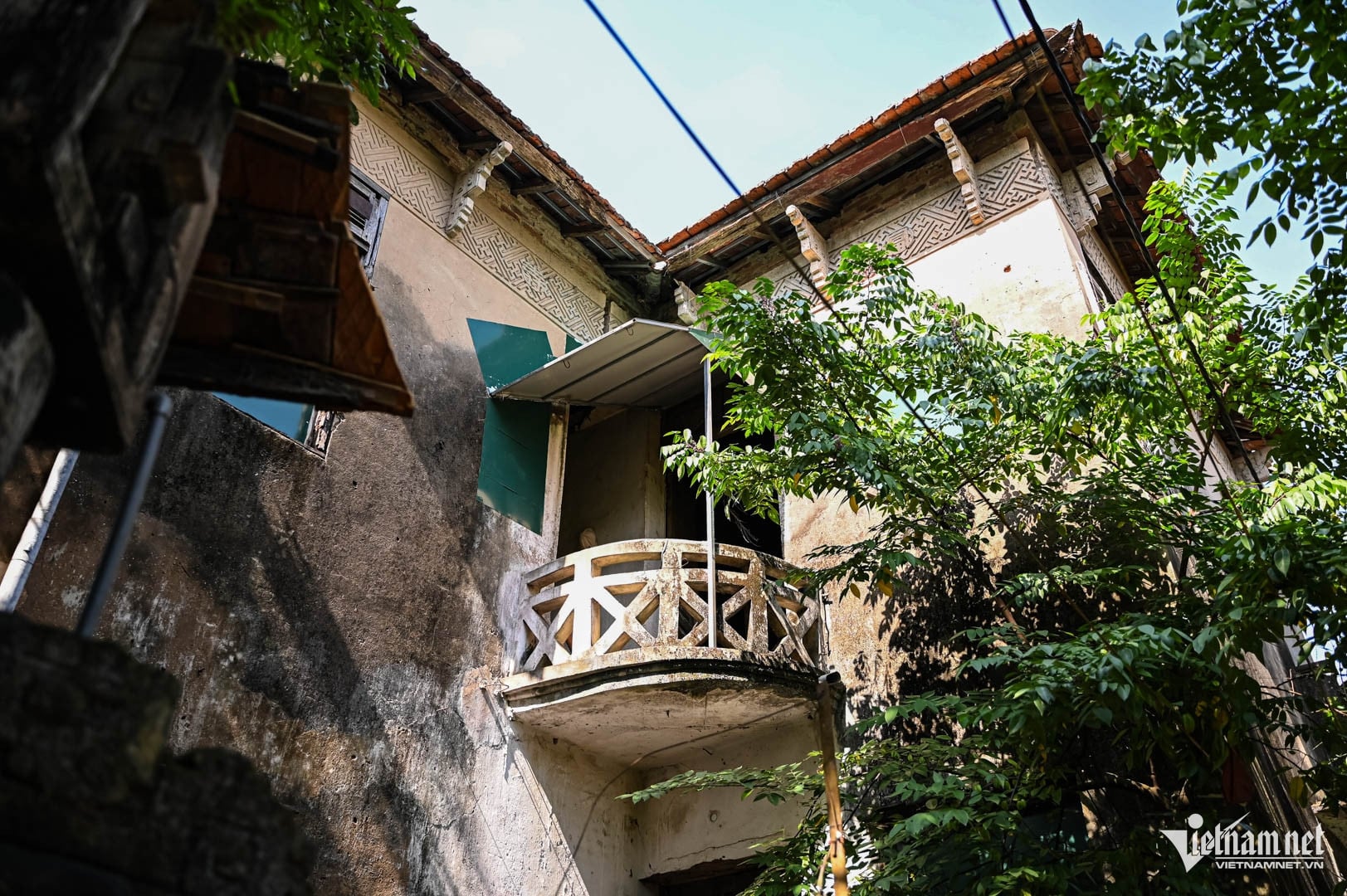
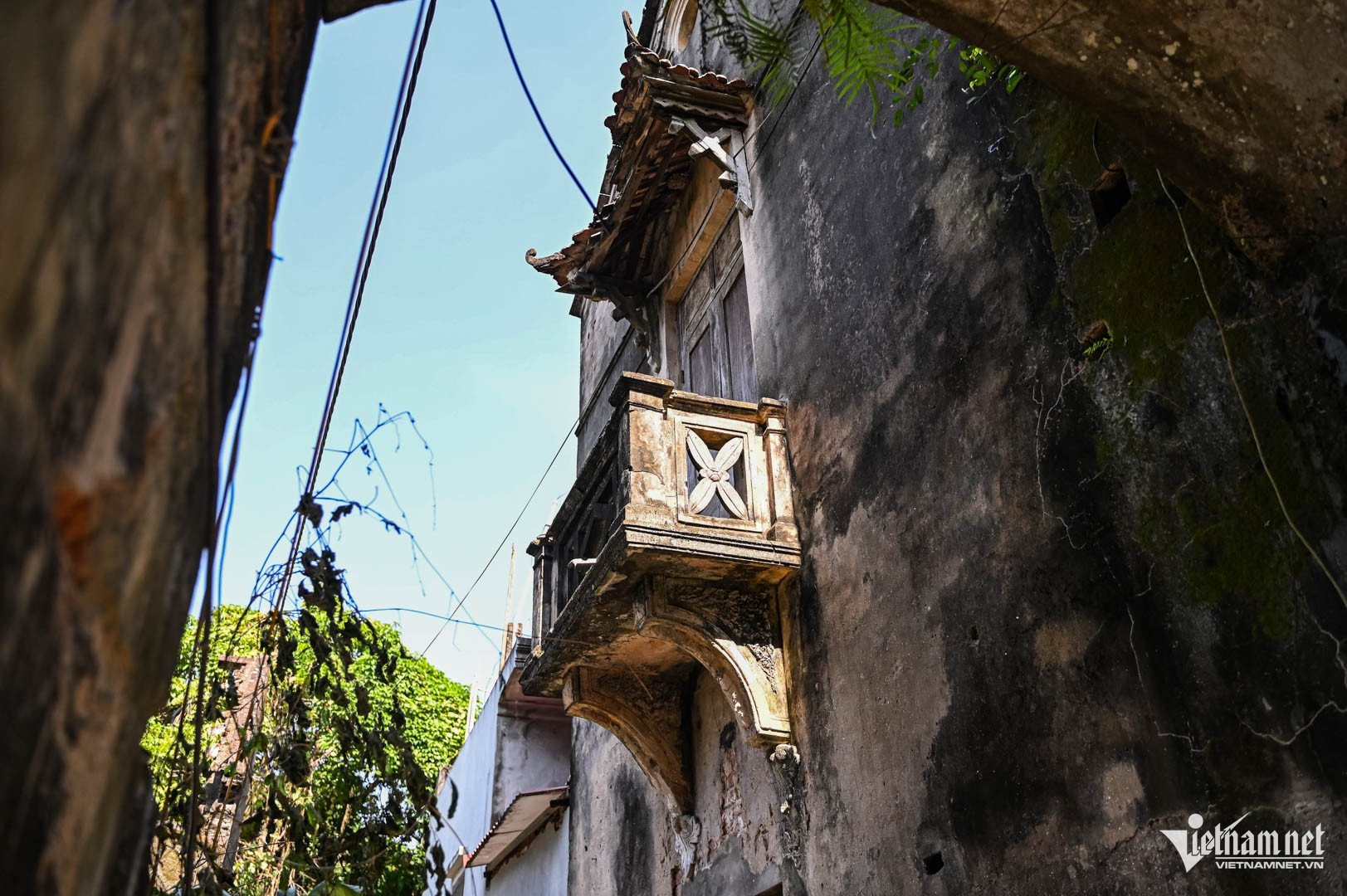

Currently, the ancient houses in Cuu village are being planned for restoration by the People's Committee of Chuyen My commune, city departments, the University of Construction... to preserve historical values.
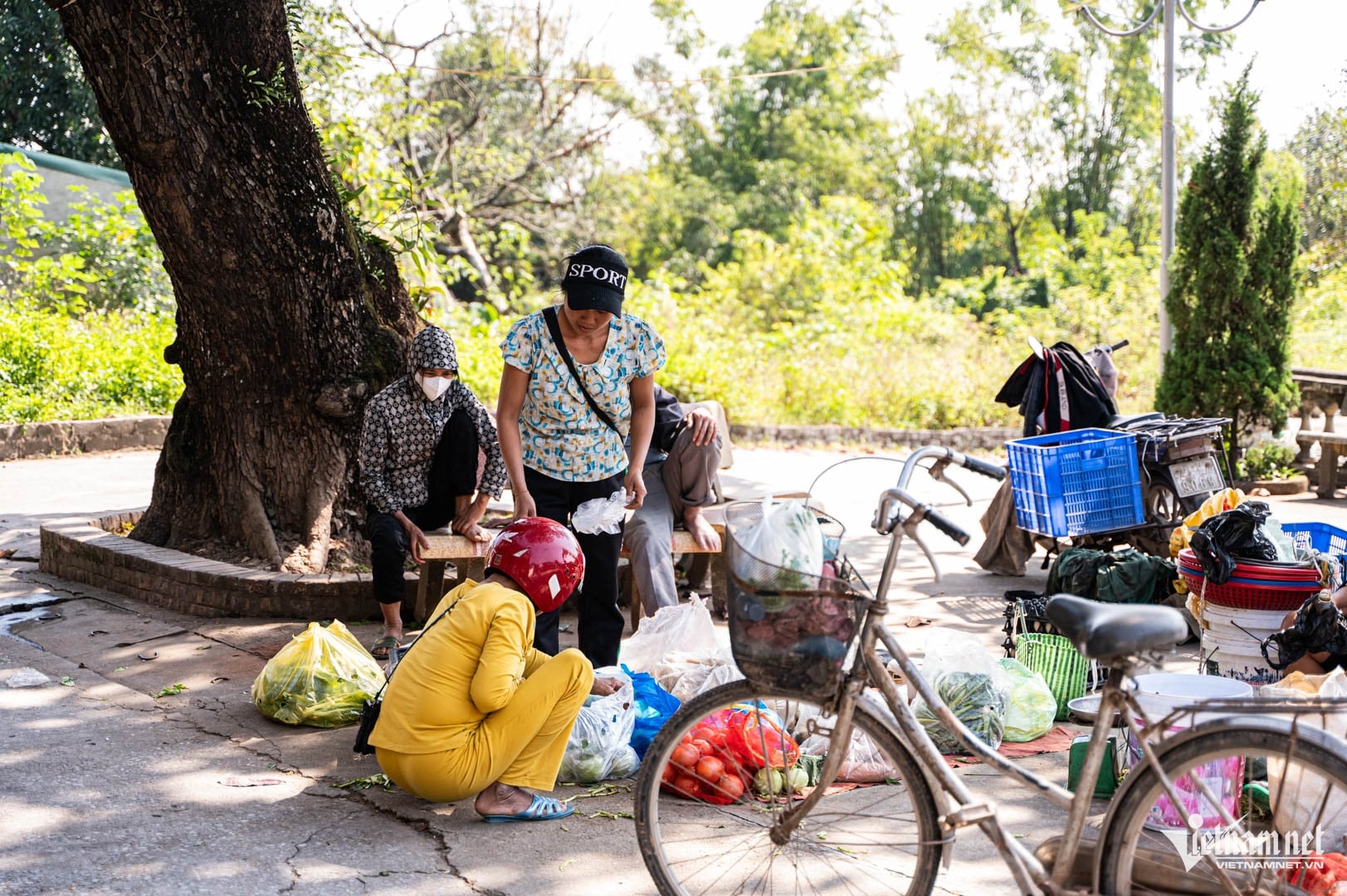
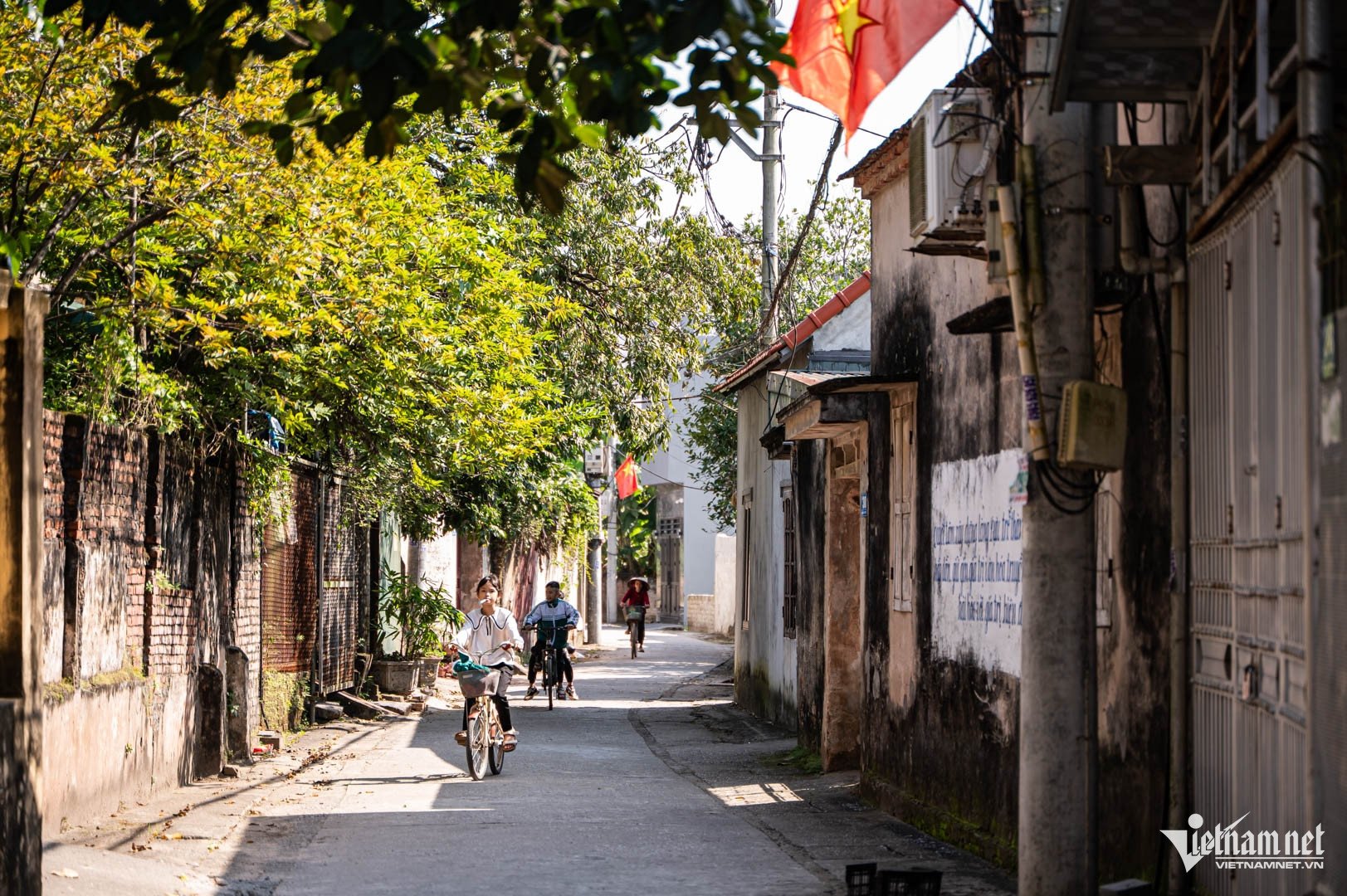
In October 2025, the Hanoi Department of Tourism introduced three new tourism products with the theme "Convergence of quintessence", including the tourist route "South Thang Long Heritage Road - Quintessence of Vietnamese Craft Villages" connecting four communes of Dai Thanh, Hong Van, Ngoc Hoi and Chuyen My.
The journey takes visitors to explore centuries-old craft villages - where the quintessence of labor and folk art has been preserved through many generations: Cuu village with its Asian - European architecture and suit tailoring; Ngau village famous for its chrysanthemum wine for the king; Phuc Am village associated with folk beliefs and traditional handicrafts; Ha Thai village famous for its sophisticated lacquer products.
Source: https://vietnamnet.vn/ngoi-lang-ha-noi-tung-noi-tieng-giau-co-nhieu-biet-thu-tay-nha-co-gio-ra-sao-2466607.html



![[Photo] Parade to celebrate the 50th anniversary of Laos' National Day](/_next/image?url=https%3A%2F%2Fvphoto.vietnam.vn%2Fthumb%2F1200x675%2Fvietnam%2Fresource%2FIMAGE%2F2025%2F12%2F02%2F1764691918289_ndo_br_0-jpg.webp&w=3840&q=75)
![[Photo] Worshiping the Tuyet Son statue - a nearly 400-year-old treasure at Keo Pagoda](/_next/image?url=https%3A%2F%2Fvphoto.vietnam.vn%2Fthumb%2F1200x675%2Fvietnam%2Fresource%2FIMAGE%2F2025%2F12%2F02%2F1764679323086_ndo_br_tempimageomw0hi-4884-jpg.webp&w=3840&q=75)

































































Comment (0)