

1. The year of Tan Ty (981)
In the third lunar month, during the first resistance war against the Song army, the army and people of Dai Co Viet, under the leadership of King Le Dai Hành, achieved resounding victories.
The Song navy, commanded by Liu Cheng, was routed at the Battle of Bach Dang River. General Hou Renbao was beheaded at Binh Lo (Soc Son, Hanoi ), and our army achieved a great victory at Tay Ket (Ha Bac). The enemy general Tran Kham To fled, while the two generals Trieu Phung Huan and Quach Quan Bien were captured alive and imprisoned in the capital Hoa Lu.
This defeat terrified the Song dynasty, which ordered a troop withdrawal. The first resistance war against the Song ended in a resounding victory.
 The first resistance war against the Song army in the year Tân Tỵ 981. Illustration: AI
2. The year of Dinh Ty (1077)
The Song Dynasty launched its second invasion of Dai Viet, led by Guo Kui and Zhao Xie. General Ly Thuong Kiet organized a strong defensive line along the Cau River, preparing to block the enemy.
On January 18, 1077, the poem "Nam Quoc Son Ha" (Mountains and Rivers of the Southern Country) resounded on the Nhu Nguyet River, affirming national sovereignty . In the third lunar month, the Song army suffered heavy losses but could not break through our defenses, forcing them to negotiate and retreat.
The second resistance war against the Song Dynasty ended in victory. In September of that year, the Nhu Nguyet River dike, over 134 km long, was reinforced by the imperial court, ensuring security in the border region.
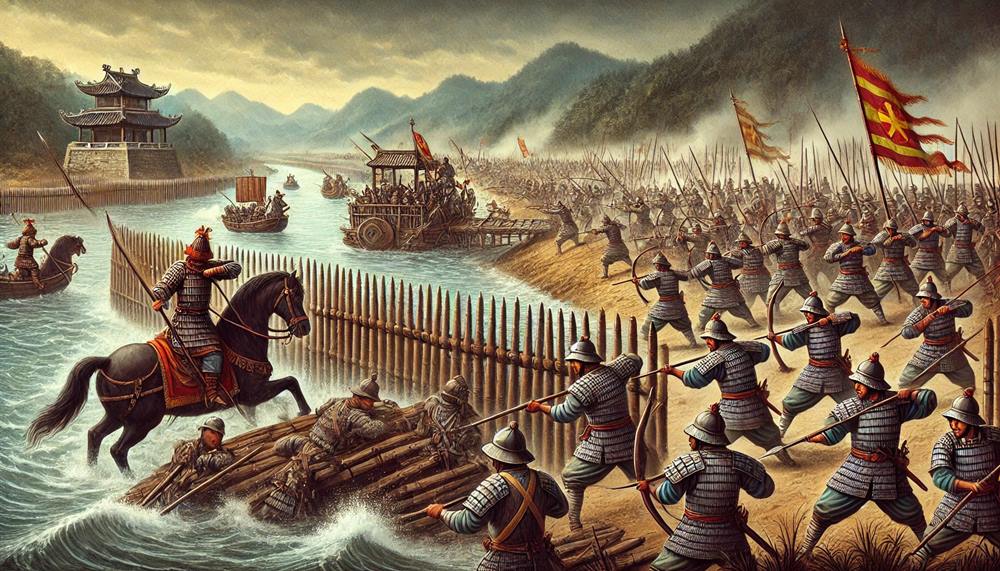 The second resistance war against the Song Dynasty in the year of Dinh Ty. Illustration: AI
3. The year of Dinh Ty (1257)
The first resistance war against the Mongol invaders broke out when Ulaan Khop Thai mobilized 30,000 troops to invade our country. Faced with the enemy's strength, King Tran Thai Tong commanded the army to strategically retreat, implementing the "scorched earth" plan to wear down the enemy's forces.
On the 24th day of the 12th lunar month, our troops launched a fierce counterattack at Dong Bo Dau (Long Bien, Hanoi), achieving victory and forcing the enemy to withdraw back to their country.
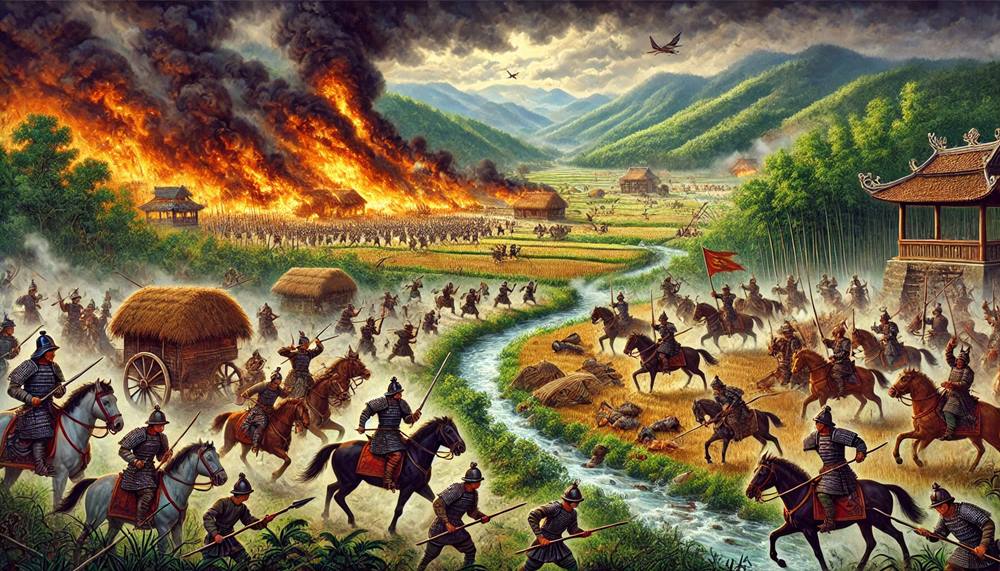 The first resistance war against the Mongol invaders in the year of Dinh Ty. Illustration: AI
4. The year of Quy Ty (1473)
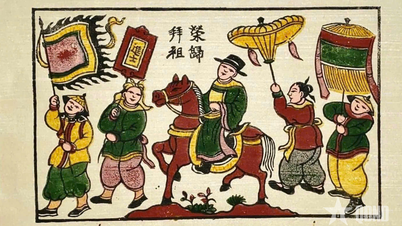
In January, King Le Thanh Tong personally performed the plowing ceremony, an initiative started during the reign of Le Dai Hanh, to encourage farmers to actively cultivate their land. In February of the lunar calendar, he issued a decree prohibiting alcohol consumption to curb excessive drinking and improve work efficiency in the court.
 King Le Thanh Tong personally performed the plowing ceremony in the year of Quy Ty (1963). (Illustrative image: AI)
5. The Year of the Water Snake (1773)
In the second lunar month, the Tay Son movement, led by the three brothers Nguyen Nhac, Nguyen Hue, and Nguyen Lu, began to develop strongly. The rebel army successively captured Ha Dao, Tuy Vien, and the regions of Quang Ngai and Binh Dinh.
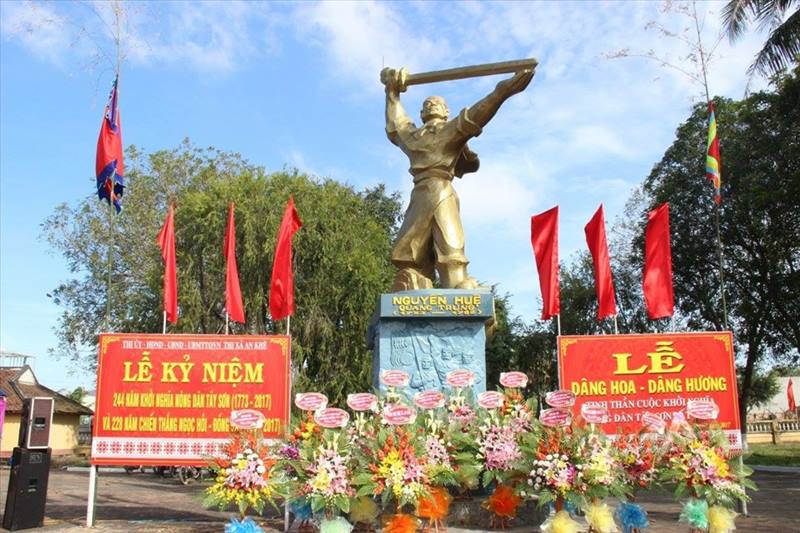 Statue of King Quang Trung - Nguyen Hue at the Tay Son Thuong Dao historical site. Photo: TXAK
By the eighth lunar month, they captured Quy Nhon city, causing Governor Nguyen Khac Tuyen to flee in panic. From then on, the Tay Son movement spread, becoming a powerful political and military force, leading to glorious victories such as overthrowing the corrupt feudal regime and defeating 200,000 Qing troops.
6. The year of Tan Ty (1821)
In January, the Phan Bá Vành rebellion broke out in Trà Lũ (Hà Nam Ninh), weakening the Nguyễn dynasty.
In April 1821, historian Phan Huy Chú presented the imperial court with his book "Lịch triều hiến chương loại chí" (Historical Records of Dynastic Constitutions), making a significant contribution to the history of Vietnamese scholarship.
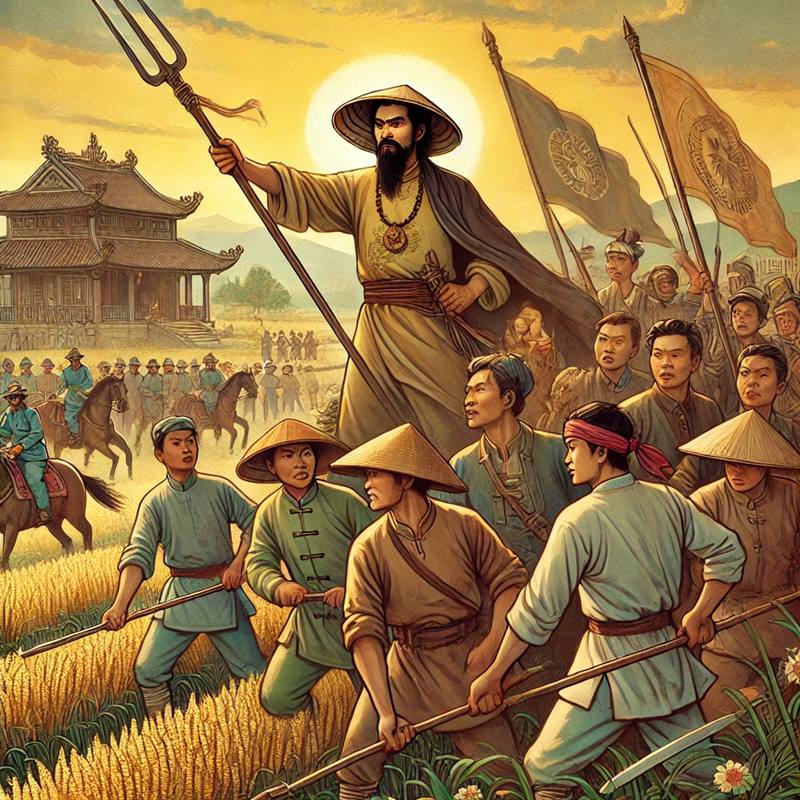 The Phan Bá Vành uprising broke out in Trà Lũ in the year Tân Tỵ. (Illustration: AI)
7. The year of Tan Ty (1941)
On January 28th, President Ho Chi Minh returned to Vietnam after 30 years of wandering abroad in search of a way to save the country, ushering in a new phase for the Vietnamese revolution.
On October 25th, the Viet Minh Front was established, becoming an important political force under the leadership of the Party. This was the prerequisite for the victory of the August Revolution in 1945, which brought power back into the hands of the people.
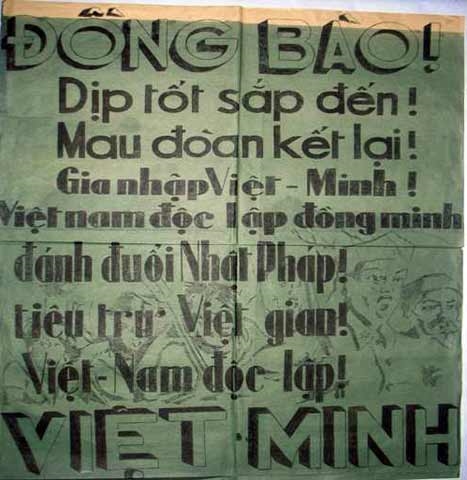 The Viet Minh's slogan called on the people to join the Viet Minh and unite to drive out the Japanese and the French. (Archival photo)
8. The Year of the Water Snake (1953)
In November, the 5th Central Committee Conference of the Party decided to carry out land reform in the liberated areas, implementing the slogan "land to the tiller". This policy made a significant contribution to the victory in the 1953-1954 Winter-Spring campaign, culminating in the Dien Bien Phu Campaign, ending the French colonial rule.
9. The year of the Snake (1965)
The US imperialists escalated the war of destruction against North Vietnam. North Vietnam shifted its focus to both resistance and economic development, laying the foundation for the comprehensive victory in 1975, the complete liberation of South Vietnam, and the reunification of the country. Vietnam embarked on the path to socialism with the goal of building an independent, prosperous, democratic, and civilized nation.




![[Image] Vietnam's colorful journey of innovation](/_next/image?url=https%3A%2F%2Fvphoto.vietnam.vn%2Fthumb%2F1200x675%2Fvietnam%2Fresource%2FIMAGE%2F2025%2F12%2F14%2F1765703036409_image-1.jpeg&w=3840&q=75)



















































![[Image] Vietnam's colorful journey of innovation](https://vphoto.vietnam.vn/thumb/402x226/vietnam/resource/IMAGE/2025/12/14/1765703036409_image-1.jpeg)























Comment (0)