

On the occasion of the national referendum on building a nuclear power plant in Kazakhstan on October 6th, Kazinform published an article on the status and development of nuclear energy in several European Union (EU) countries.
France leads the world in nuclear energy development .
France currently leads the world in the proportion of nuclear power plants in its national electricity production. According to the International Atomic Energy Agency (IAEA), the share of electricity generated from nuclear power plants in France reached 65% as of December 2023.
In the 2017 presidential election, the energy issue helped Emmanuel Macron build an image of a progressive and environmentally friendly candidate. His energy agenda included a commitment to reduce the country's nuclear power share from 75% to 50% by 2025. However, in 2022, following the Covid-19 pandemic, Macron outlined a new energy policy for the country.
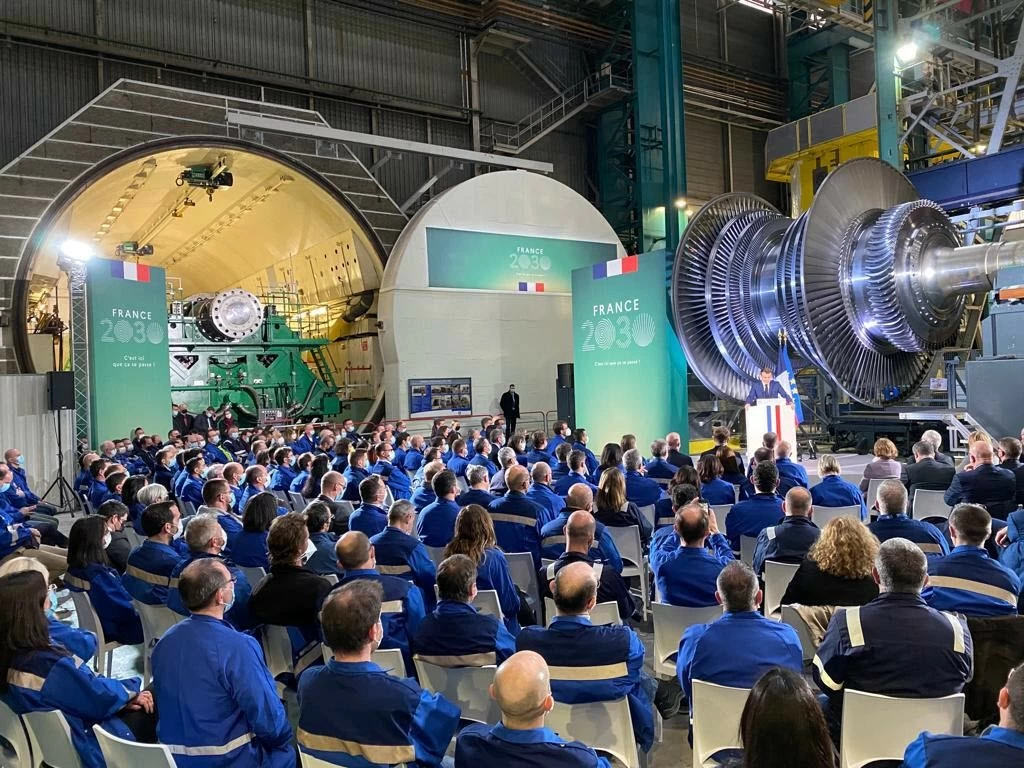 |
| French President Emmanuel Macron speaks at a factory in Belfort, eastern France, on February 10, 2022. (Source: ER) |
Speaking in Belfort, the head of the Elysee Palace presented France's nuclear energy development plan for the next 30 years, which includes the construction of six new EPR2 reactors between 2035 and 2045, and eight additional EPR reactors between 2045 and 2065.
In his speech, the French President also directed relevant companies and agencies to study the possibility of extending the service life of existing reactors to more than 50 years. He outlined the main reasons for the country's shift in energy policy towards developing nuclear energy for peaceful purposes, aiming for energy independence from foreign energy suppliers, reducing electricity prices, creating new jobs, achieving carbon neutrality, and effectively meeting France's projected 35% increase in electricity demand by 2050.
The French leader outlined the country's new energy development roadmap, declaring, "In 30 years, the nuclear restart plan will make France the first major country in the world to completely eliminate fossil fuels, as well as strengthen our industrial energy independence in line with climate requirements."
Belgium postpones closing its nuclear reactors for 10 years.
Belgium has two nuclear power plants with a net capacity of 5,761 megawatts. The country's electricity consumption has increased slowly since 1990, and in 2016, nuclear power supplied 51.3%, or 41 TWh per year, of the state's electricity needs. The first commercial nuclear power plant in the "heart of Europe" began operating in 1974.
Notably, uranium ore was discovered in Katanga in Congo, a former Belgian colony, in 1913. Thus, by the mid-20th century, Belgium had become one of the few countries with significant uranium reserves. Even before World War II, the United States had shown interest in the Belgian colony's uranium reserves. During the 1940s and 1950s, Belgium, through its colony, was one of the main suppliers of uranium to the United States.
These trade relations led to Belgium being granted access to nuclear technology for civilian purposes. As a result, in 1952, a nuclear research and training center was established in Mol. Construction of the first BR1 reactor began in 1956.
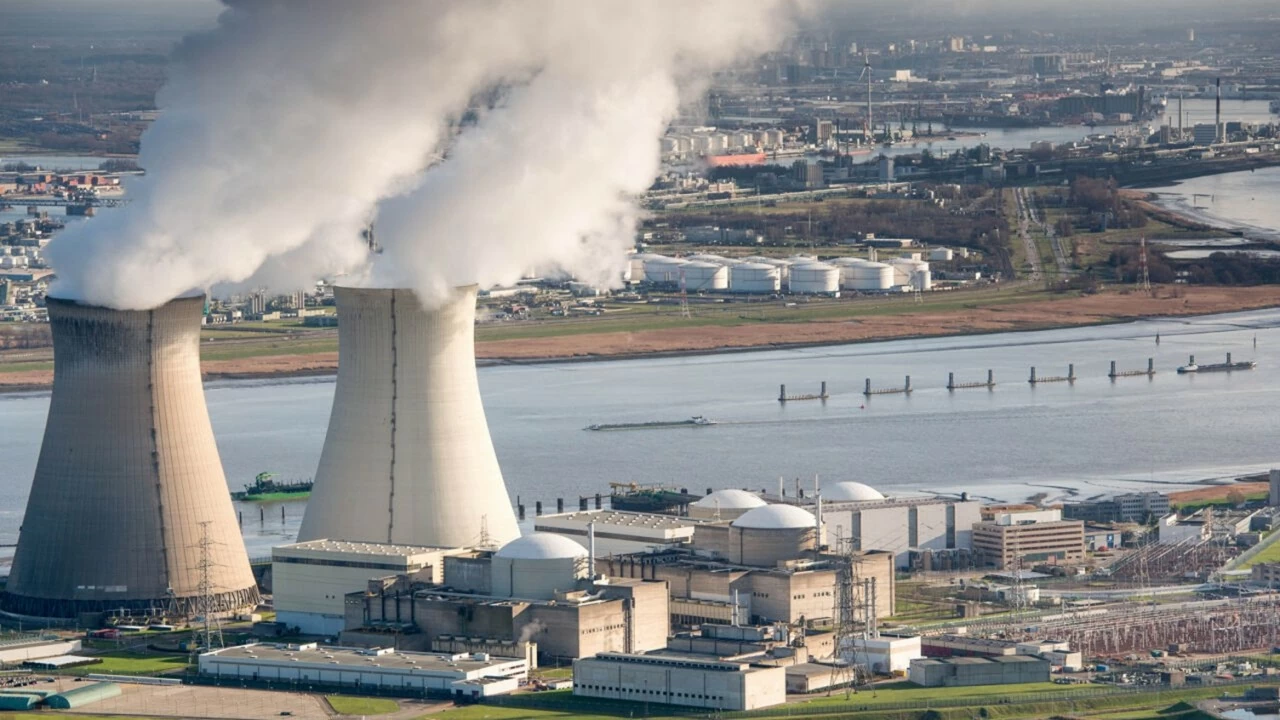 |
| Doel nuclear power plant, Belgium. (Source: VRT) |
The first nuclear power plant, Doel 1, came online in 1974. Over the next 10 years, six more reactors were connected to the grid. However, Belgium decided to completely abandon nuclear energy by 2025. Despite this, in March 2022, Belgium passed a resolution to postpone the closure of two reactors for another 10 years.
Jean Brabander, an advisor at the Brussels Diplomatic Academy and a member of the Belgian Bar Association, noted that there are differing opinions regarding the development of nuclear energy in Europe. For example, France is actively promoting the development of nuclear power plants, while Germany has decided to "freeze" them.
Jean Brabander also has differing views on the prospects of nuclear power plants. According to him, nuclear power plants will eventually have to be shut down, which would be very costly in terms of time and money. But on the other hand, it is "clean energy," with no harmful emissions.
Besides the issue of energy costs for nuclear power plants, Belgium's status as one of the first countries in the world to build a nuclear power plant has given it experience not only in operation but also in the effective handling of nuclear waste. "Today, owning two nuclear power plants helps Belgium meet its energy needs," Jean Brabander affirmed.
Czech Republic has good experience in operating nuclear power plants.
The Czech Republic has six nuclear reactors, generating approximately one-third of its electricity. The first commercial nuclear reactor came online in 1985. Czech government policy mandates a significant increase in nuclear power capacity by 2040.
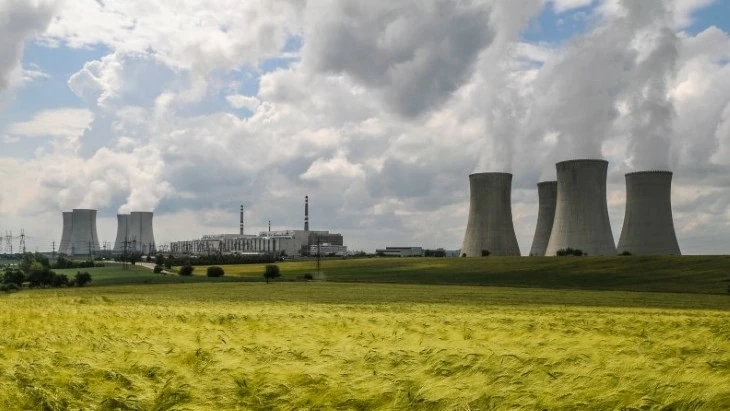 |
| Dukovany nuclear power plant, Czech Republic. (Source: CEZ) |
Nuclear energy expert Tomas Zdechovsky believes that nuclear energy is the best solution for a country like the Czech Republic. According to him, the Czech Republic has good experience in operating nuclear power plants, with two plants, Dukovany and Temelin. The technology used at these two plants is clean, and the electricity produced can be exported to neighboring countries such as Austria or Germany.
Expert Tomas Zdechovsky also spoke about the importance of holding referendums. According to him, all referendums are positive signs of democratic countries. The people have the right to vote, the people have the right to decide. If a referendum were held in the Czech Republic on nuclear energy, he is certain that more than two-thirds of Czechs would support nuclear energy for peaceful purposes.
Hungary invests in building a new nuclear power plant.
Hungary has four nuclear reactors, generating approximately half of the country's electricity. The first commercial nuclear reactor came online in 1982. In 1956, the Hungarian National Atomic Energy Commission was established, and in 1959, the country's first research reactor reached criticality. In 1966, an agreement was signed between Hungary and the Soviet Union for the construction of a nuclear power plant, and in 1967, a site in Paks, 100 km south of Budapest, was chosen for the construction of an 880-megawatt nuclear power plant.
Construction of the first two units began in 1974, and the next two were built in 1979. Four VVER-440 reactors (model V-213) were commissioned between 1982 and 1987. The Paks power plant in Hungary is owned and operated by MVM Paks Nuclear Power Plant Ltd, a subsidiary of the Hungarian state-owned company Electrical Ltd (Magyar Villamos Művek, MVM).
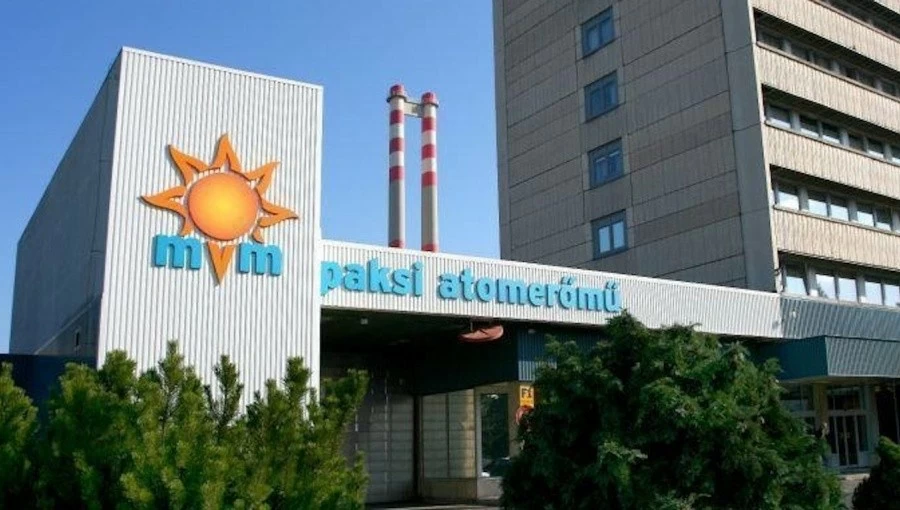 |
| The Paks nuclear power plant is owned by MVM. (Source: BNE) |
Currently, the Hungarian Parliament has expressed its full support for the construction of two new power reactors, and a construction contract has been signed.
Hungarian nuclear energy expert Andros Laszlo noted that the nuclear power plant in Paks currently produces about 50% of Hungary's total energy, and has been an integral part of Hungary's energy system for the past 40 years.
In Hungary, nuclear energy is not a politically sensitive issue. The Fidesch party supports the construction of the next nuclear power plant. Of course, there are minority groups within the Green Party that oppose nuclear energy.
Recently, Hungary decided to invest in building new nuclear power plants to replace the old ones. Andros Laszlo believes that the majority of Hungarians support the construction of a new nuclear power plant. Regarding the organization of a nationwide referendum on the construction of the nuclear power plant, he believes that public support for large-scale projects is crucial for any region of Hungary.
Source: https://baoquocte.vn/phat-trien-nang-luong-hat-nhan-tai-cac-nuoc-eu-288287.html


![[Photo] Prime Minister Pham Minh Chinh attends the Conference summarizing and implementing tasks of the judicial sector.](/_next/image?url=https%3A%2F%2Fvphoto.vietnam.vn%2Fthumb%2F1200x675%2Fvietnam%2Fresource%2FIMAGE%2F2025%2F12%2F13%2F1765616082148_dsc-5565-jpg.webp&w=3840&q=75)











































































Comment (0)