

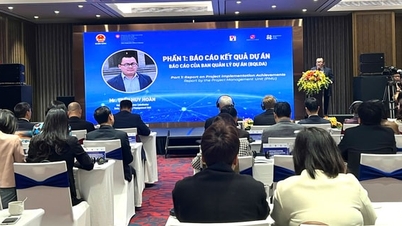
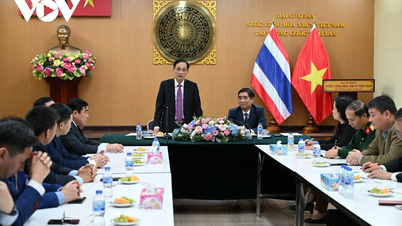
The Government's Standing Committee meeting with large private enterprises (PEs) held today (September 21st) is a special event in a special context, as we prepare to enter a new era, the era of national resurgence, as stated by General Secretary and President To Lam.
This is the first meeting of the Government Standing Committee with representatives of major private corporations aimed at resolving difficulties, promoting their pioneering role, and proactively participating in investing in large projects, contributing to socio-economic development, with corporate social responsibility being a top priority.

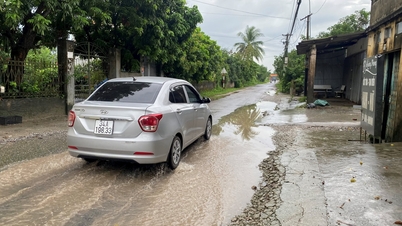
The event occurred shortly after Typhoon Yagi caused initial estimated damage of nearly 50 trillion VND. This figure is likely to increase as more people and businesses report more detailed damage to the authorities. This is a significant socio-economic blow because Typhoon Yagi and its aftermath had a very large impact, spanning 26 provinces and cities across the entire North and Thanh Hoa, which account for over 41% of the country's GDP and 40% of its population. This region includes many provinces that are centers of industry, agriculture, and tourism, which are the driving forces of the country's growth.
In this situation, many private corporations immediately announced substantial support packages. Most notably, VinGroup announced a donation of 250 billion VND for emergency relief efforts, including rebuilding approximately 2,000 collapsed houses. Banks such as SHB, VIB, MBBank, and SeABank each contributed 2 billion VND. Many other private corporations are also planning and balancing their support packages in the face of this widespread natural disaster. By joining hands with the government, private enterprises are clearly fulfilling their social responsibility very well.

According to a report by the Ministry of Planning and Investment, in 2023, the private sector contributed approximately 46% of GDP, generated about 30% of state budget revenue, and employed 85% of the workforce. A significant number of private enterprises have emerged within this sector, accumulating sufficient capital, technological expertise, and corporate governance capabilities, establishing brands in regional and global markets, and becoming a crucial driving force of the economy.
Although a number of medium and large enterprises have emerged, this force has not yet truly led the economy as expected. The proportion of investment in leading and driving sectors, especially in new fields such as clean energy production, chips, microchips, and semiconductors, remains low. There are still no projects of sufficient scale to create breakthrough momentum, spillover effects, support restructuring, and enhance the competitiveness of the economy.

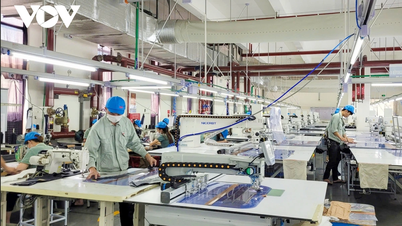
The development of Vietnam's business community is still in its infancy compared to other countries in the region and around the world. It has not yet accumulated significant capital, knowledge, technology, experience, or business traditions. The majority of businesses in the economy are small and medium-sized, lacking core technologies and the capacity to digitize and green their operations. The proportion of businesses involved in manufacturing and processing remains limited.
By the end of 2023, the total assets of some large private enterprises reached approximately $70 billion. Thus, the total assets of Vietnam's largest private corporations are only equivalent to those of Infosys Group in India. This is without even considering comparisons with leading global corporations in the fields of real estate, science, technology, automotive, etc., in other economies.
According to estimates by the World Bank (WB), 80% of global profits are generated by the top 10% of businesses. These large businesses contribute an average of one-third of export revenue and half of a nation's export growth rate. With a rapidly developing market of 100 million people like Vietnam, private enterprises have ample room for growth, and Vietnam is eager to have large, internationally renowned corporations capable of competing not just domestically.
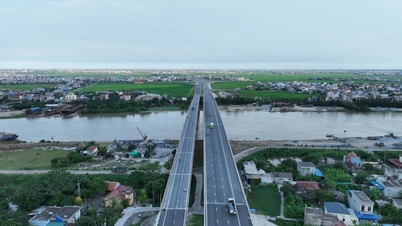
2024 is a year of acceleration and breakthroughs, of particular importance in successfully implementing the 2021-2025 socio-economic development plan. From the beginning of the year, the Government issued Resolution 01/NQ-CP, identifying 12 groups of important tasks and solutions, many of which require the leading participation and collaboration of large enterprises, such as: developing infrastructure systems (highways, airports, seaports, digital infrastructure, social infrastructure, healthcare, education); and accelerating the construction progress of important national transport infrastructure projects.
Implement the Power Development Plan VIII, effectively carry out the Declaration on the transition from coal to clean energy; attract investment in gas-fired power projects, offshore wind power, and hydrogen development in Vietnam. Develop and popularize the transition from traditional telecommunications infrastructure to digital infrastructure; promote the development of the digital economy, green economy, and circular economy. Boost research and development (R&D) activities, attract investment in the development of key industries, foundational industries, and emerging technologies (semiconductor chips, etc.).
To fulfill their pioneering and leading role in key industries and sectors; to master industrial and agricultural value chains; and to possess international competitiveness in foundational, priority, and cutting-edge industries, according to the Ministry of Planning and Investment, large enterprises need to proactively take the lead in major, difficult, and new endeavors, solving national-level problems to create momentum for economic development and create room for the development of SMEs in other sectors.

With their financial resources, research and development capabilities, high-quality human resources, extensive experience, and long-standing brands, it's time for large enterprises to shoulder greater responsibilities. Beyond business activities aimed at generating revenue and profit, large enterprises need to collaborate with major state-owned corporations and conglomerates to invest in new areas of the Fourth Industrial Revolution, meeting the demands of a green, circular, and sustainable development trend, such as electric vehicles, semiconductor industry, artificial intelligence (AI), high-quality and low-emission agriculture, etc., and participate in major national projects such as the North-South high-speed railway, urban railways, the Vientiane-Hanoi Expressway, the Vientiane-Vung Ang Railway, renewable energy, and offshore wind power.
Large enterprises need to play a pioneering role in innovation, digital transformation, and the application and mastery of science and technology in the era of the Fourth Industrial Revolution; to be pioneers in international integration and effective overseas investment; to be pioneers in the efficient exploitation of the country's resources; to be pioneers in researching and implementing breakthrough policies for socio-economic development coupled with improving social welfare; and to be pioneers in training high-quality human resources and smart management in business development. Large enterprises need to play a leading role in technology transfer, proactively forming joint ventures and partnerships, guiding and leading, and creating opportunities for SMEs to participate as subcontractors and develop together along the value chain.
In the coming period, it is hoped that businesses will continue to uphold national pride, historical traditions, internal strengths, self-reliance, and self-improvement; proactively seize opportunities and adapt to future changes; anticipate new business trends; innovate models towards green and sustainable business; focus on enhancing brand value, business ethics, and corporate culture; and build the reputation and brand of Vietnamese businesses in regional and international markets.
Source: https://vov.vn/kinh-te/su-menh-doanh-nghiep-tu-nhan-lon-truc-ky-nguyen-vuon-minh-cua-dan-toc-post1123028.vov

![[Image] Leaked images ahead of the 2025 Community Action Awards gala.](/_next/image?url=https%3A%2F%2Fvphoto.vietnam.vn%2Fthumb%2F1200x675%2Fvietnam%2Fresource%2FIMAGE%2F2025%2F12%2F16%2F1765882828720_ndo_br_thiet-ke-chua-co-ten-45-png.webp&w=3840&q=75)
![[Photo] Prime Minister Pham Minh Chinh receives Lao Minister of Education and Sports Thongsalith Mangnormek](/_next/image?url=https%3A%2F%2Fvphoto.vietnam.vn%2Fthumb%2F1200x675%2Fvietnam%2Fresource%2FIMAGE%2F2025%2F12%2F16%2F1765876834721_dsc-7519-jpg.webp&w=3840&q=75)
![[Live] 2025 Community Action Awards Gala](/_next/image?url=https%3A%2F%2Fvphoto.vietnam.vn%2Fthumb%2F1200x675%2Fvietnam%2Fresource%2FIMAGE%2F2025%2F12%2F16%2F1765899631650_ndo_tr_z7334013144784-9f9fe10a6d63584c85aff40f2957c250-jpg.webp&w=3840&q=75)
![[Photo] Prime Minister Pham Minh Chinh receives the Governor of Tochigi Province (Japan)](/_next/image?url=https%3A%2F%2Fvphoto.vietnam.vn%2Fthumb%2F1200x675%2Fvietnam%2Fresource%2FIMAGE%2F2025%2F12%2F16%2F1765892133176_dsc-8082-6425-jpg.webp&w=3840&q=75)





































































Comment (0)