


We need to capitalize on our strengths.
Compared to other localities, Da Nang city may not have many large craft villages, but it possesses unique advantages that no other place has. For example, it is home to the largest population of Co Tu people in the country and is one of the largest rattan raw material sources in the world .
Mr. Le Ba Ngoc, Vice President of the Vietnam Handicraft Export Association (Vietcraft), believes that the Co Tu community living along the Truong Son mountain range, such as Dong Giang, Tay Giang, and Nam Giang, is very large. This is a strength of Da Nang in creating unique cultural programs and spaces to attract tourists. Districts of the former Quang Nam province, such as Dong Giang, Tay Giang, and Phuoc Son, are also areas with large quantities of raw materials for handicraft production, such as rattan.
“While the world demands increasingly sustainable production, we haven't yet fully exploited the strengths of Vietnam's largest cloud-growing region. The city needs to properly and comprehensively assess the potential of the Co Tu people's handicrafts such as weaving and basketry, and from there build a truly authentic cultural craft village tourism model and affirm its position.”
For example, the ancient village of Loc Yen, the only area in the former Tien Phuoc district with "very Vietnamese" betel nut trees and "very Quang Nam" people. Currently, Da Nang has seen the emergence of creative cultural models such as Cui Lu, Au Lac artistic wood carving, Taboo bamboo workshop, Thanh Ha terracotta park… Therefore, there needs to be a mechanism to help people create small cultural spaces so that they can grow stronger,” Mr. Le Ba Ngoc proposed.
In reality, Da Nang's craft villages are small in scale and scattered across many locations. Therefore, building a creative design space for handicrafts is essential to exploit the tourism and export markets locally. This will be a place to connect with the small, scattered craft villages and provide the city's 51 artisans with the opportunity to freely express their creativity.
Ms. Dam Thi Van Dung, M.Sc., from the Da Nang Institute for Economic and Social Development Research, stated: “We need products that truly reflect Da Nang, product programs that are ‘Made in Da Nang.’ These shouldn’t just be products we hold in our hands, give to tourists, or export abroad; they could also be products with spiritual value. When we look at them, we can understand that they are products from the traditional craft villages of Da Nang.”
Find outlets for the product.
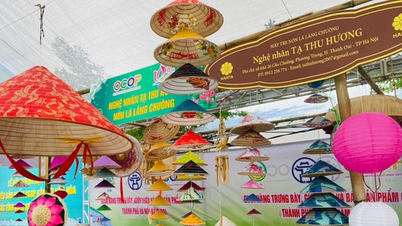
In recent years, traditional craft villages in Da Nang have generally not developed strongly, and some crafts are even facing the risk of disappearing. Therefore, the city needs to develop traditional craft villages such as Thanh Ha pottery village, Non Nuoc stone carving village, Cam Ne mat weaving village, Kim Bong carpentry village, Phuoc Kieu bronze casting village, Ma Chau silk village, and Hoi An ancient town lantern making... in order to better serve the needs of tourists.
Simultaneously, there is a plan to develop the first standardized rattan raw material area in Vietnam, focusing on the Dong Giang, Tay Giang, Nam Giang, and Phuoc Son regions, and to create mechanisms to attract large rattan businesses in Vietnam to invest in Da Nang to restore or establish rattan production centers and villages.
In addition, focus on developing the export-oriented wood handicraft industry, prioritizing the production of acacia wood raw materials, which is a strength of the western districts of the former Quang Nam province; and simultaneously develop cultural tourism centers in rural areas combined with the preservation and development of traditional crafts, such as establishing centers for preserving the Co Tu ethnic handicraft in the Dong Giang and Tay Giang areas.
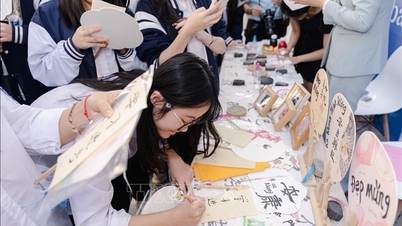
Dr. Hoang Thi Huong, from the Da Nang City Folk Arts Association, stated that studies on cultural tourism indicate a shift in tourist behavior from "passive sightseeing" to "interactive experiences," where visitors directly participate in creative activities. Therefore, experiential models like "A Day as a Non Nuoc Artisan" or "Cultural Experience Space in Nam O Fish Sauce Village" not only serve as tourism products but also as mechanisms for transmitting folk knowledge. In these models, tourists participate in role-playing experiences – an element proven to enhance cultural retention and improve their perceived value of the destination.
In addition to providing products for tourists, the city needs to develop decorative and household products for restaurants, hotels, and resorts, as well as handcrafted gifts for businesses and organizations in the area.
Simultaneously, create mechanisms to encourage strong investment in product design and development, including strategic cooperation with experts in key markets for Da Nang's handicrafts to develop new products with high added value. In particular, focus on training a professional product design team to support Da Nang businesses and closely collaborate with the city's 51 skilled artisans and craftsmen.
“Artisans play a pivotal role in the heritage value chain. Therefore, supporting them in opening training classes, combined with a policy of partially subsidizing tuition fees from the public budget, is crucial in maintaining a successor generation. The system of ‘young artisan successors’ will contribute to minimizing the risk of discontinuing folk knowledge,” Dr. Hoang Thi Huong stated.
Source: https://baodanang.vn/tai-tao-khong-gian-lang-nghe-gan-voi-thi-truong-khach-du-lich-3314603.html

![[Photo] Prime Minister Pham Minh Chinh holds a phone call with the CEO of Russia's Rosatom Corporation.](/_next/image?url=https%3A%2F%2Fvphoto.vietnam.vn%2Fthumb%2F1200x675%2Fvietnam%2Fresource%2FIMAGE%2F2025%2F12%2F11%2F1765464552365_dsc-5295-jpg.webp&w=3840&q=75)

































































Comment (0)