

(NLĐO) - The restructuring plan must ensure the requirements of being "lean, efficient, strong, effective, and efficient," and leverage the advantages of the locality.
On March 4th, the Thu Duc City Party Committee (Ho Chi Minh City) sent a document regarding the review and proposal of a plan for rearranging administrative units at the ward level.
This document aims to implement Conclusion 1251 dated March 1st of the Standing Committee of the Ho Chi Minh City Party Committee regarding the study and proposal for further restructuring of the political system's organizational apparatus.
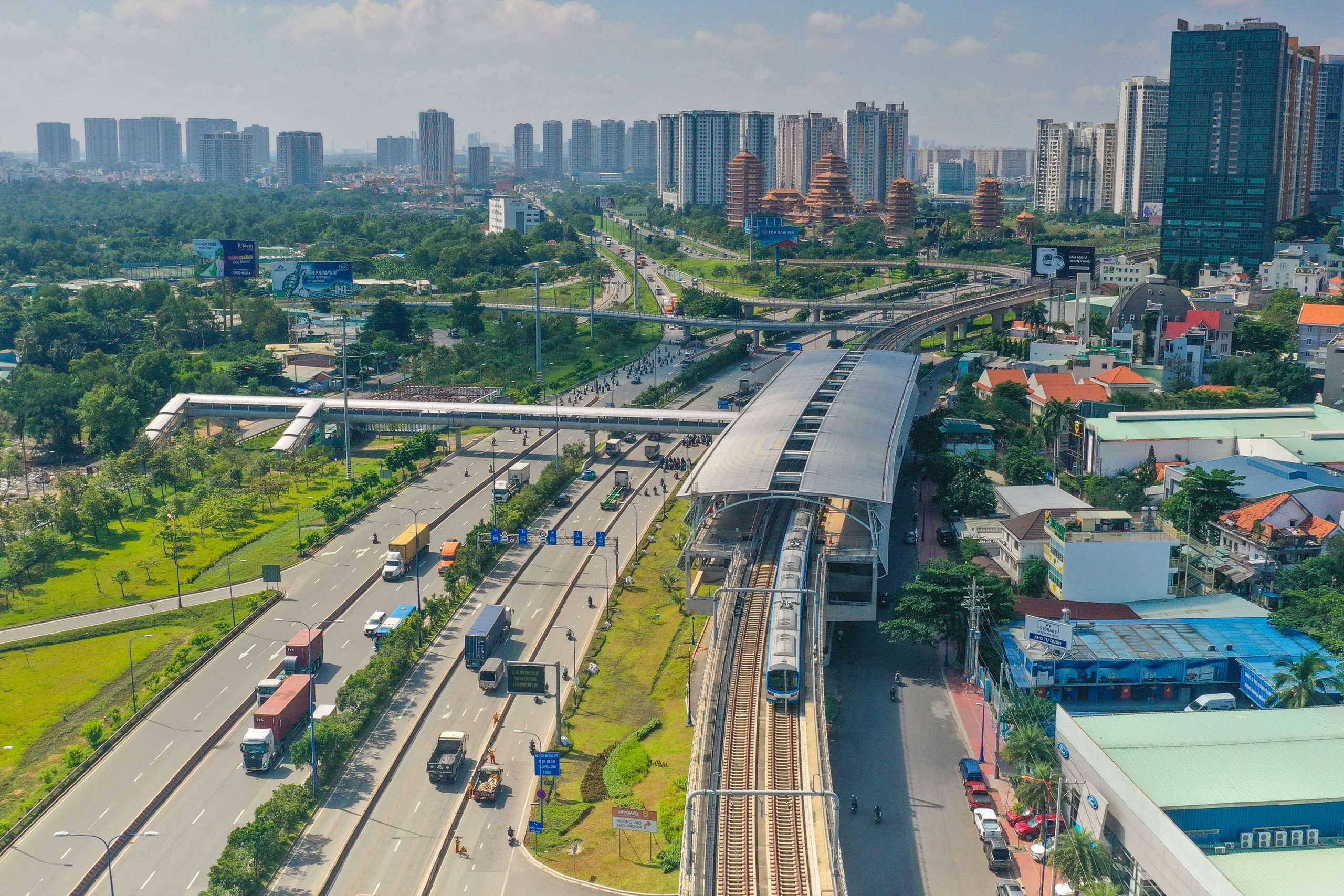
Thu Duc City Party Committee directs review of wards that have not yet met the standards.
According to Conclusion 127 dated February 28, the Politburo and the Secretariat of the Central Committee requested the development of a plan to merge some provincial-level administrative units, eliminate district-level units, and continue merging commune-level administrative units.
Following this, the Standing Committee of the Thu Duc City Party Committee requested the Thu Duc City People's Committee to review and assess the current situation of the 34 administrative wards.
Specifically, a comprehensive review and assessment of the current situation in all 34 wards in the area will be conducted according to the currently prescribed criteria; clearly identifying those wards that do not meet the standards as stipulated.
Simultaneously, a detailed assessment will be conducted on the natural area, population size, and urban development strategy in accordance with the general regulations of Thu Duc City, encompassing 9 zones, as well as the geographical, historical, cultural, ethnic, religious, national defense, security, and other specific characteristics of each ward.
Based on the review results, the People's Committee of Thu Duc City is developing a plan to reorganize administrative units by merging wards that do not meet the standards.
The proposed plan must ensure the requirements of being "lean, efficient, effective, and efficient," maximizing the potential and advantages of the locality. In addition, factors such as population density, transportation infrastructure, regional connectivity, and other socio- economic factors should be considered.
Thu Duc City covers an area of over 211 km2. Formerly Thu Duc District, it was divided into three districts in 1997: Districts 2, 9, and Thu Duc. In early 2021, these three districts officially merged to form Thu Duc City, the first city within a city in the country, comprising 34 wards, according to Resolution 1111 of the National Assembly Standing Committee.
Currently, the criteria for administrative units are based on Resolution 1211 of 2016 by the Standing Committee of the National Assembly on criteria for administrative units and classification of administrative units, as amended and supplemented by Resolution 27 of 2022.
Accordingly, a ward has a natural area of 5.5 km2 or more. In terms of population, a ward in a district must have 15,000 people or more; a ward in a city under a province or a city under a centrally governed city must have 7,000 people or more; and a ward in a town must have 5,000 people or more.
For towns, the population must be 8,000 or more, and the natural area must be 14 km2 or more. For communes, the population must be 5,000-8,000 or more, and the area must be 30-50 km2 or more.
From January 2025, Ho Chi Minh City will merge 80 wards in 10 districts (3, 4, 5, 6, 8, 10, 11, Binh Thanh, Go Vap, and Phu Nhuan), reducing the number of wards by 39. Currently, Ho Chi Minh City has 273 wards.
Source: https://nld.com.vn/thanh-uy-thu-duc-chi-dao-ra-soat-cac-phuong-chua-dat-chuan-196250304124221139.htm






























































































Comment (0)