

The Department of Construction of Dak Lak province has just submitted a report to the Provincial Party Committee and the Provincial People's Committee on the current status of the implementation of the social housing construction plan in the province in 2025, with particular emphasis on the obstacles that have arisen in the past, and proposing solutions for the investment mobilization program in 2026, looking towards 2030.
Accordingly, the target for social housing construction in Dak Lak province after the merger in 2025 has basically not been met. However, this has helped identify the root causes so that solutions can be found to accelerate the progress of social housing construction in the future.
Many obstacles and unresolved issues remain.
According to the plan, during the period 2025-2030, Dak Lak province is assigned to complete 38,007 social housing units (as agreed upon by the Standing Committee of the Provincial Party Committee in Conclusion No. 44-KL/TU, dated August 28, 2025); of which, in 2025, 2,255 social housing units are to be completed and started construction out of the 2,800 units assigned for social housing development, according to Resolution No. 19 dated July 16, 2025 of the Provincial People's Council and Decision No. 881/QD-UBND dated August 13, 2025 of the Provincial People's Committee.
However, according to the Department of Construction, as of now, the progress of social housing investment in the province in 2025 can only complete 1,348 units and start construction on 907 units. "Thus, the results of social housing development in the province in 2025 will not meet the targets set by the Government and the Provincial People's Committee," the report from the Dak Lak Provincial Department of Construction clearly states.
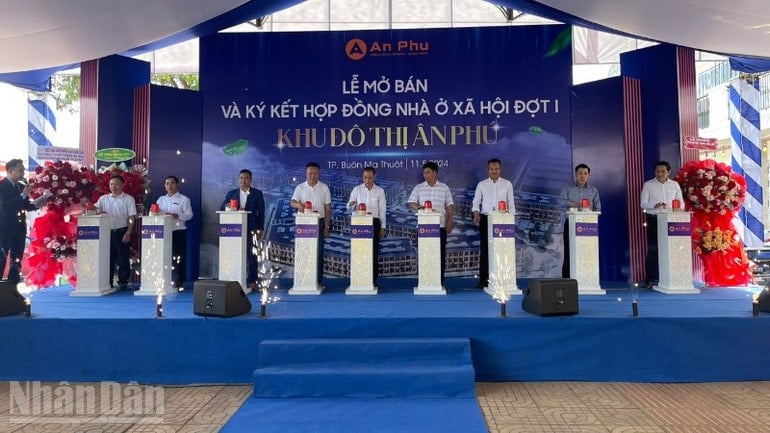
According to an analysis by the Dak Lak Provincial Department of Construction based on the implementation and investment mobilization of social housing in the area over the past years, there are still obstacles and backlogs affecting the overall progress and hindering some projects that have been registered for investment and are actually being implemented.
According to Le Hung, Deputy Director of the Dak Lak Provincial Department of Construction, the efforts of the local construction industry, along with businesses and investors, in the progress of social housing projects have been very positive. However, fundamentally, the projects are still facing difficulties regarding legal conditions, timelines, investment policies, and the actual capacity of the investors.
For social housing investment projects that utilize commercial land in urban development projects as stipulated by law, the assessment, appraisal, redesign of spaces and land use, and on-site handover still show discrepancies in legal procedures, investment progress, and technical infrastructure. Some projects that have already been implemented still face obstacles due to changes in general investment policies and decisions, local planning, etc.
Next, there is the need to balance investment resources and commercialization opportunities in social housing projects . A noteworthy reality is that some projects, based on previous policies with limited high-rise buildings, struggle to balance with efficient land use, causing financial difficulties for investors. Some previous policies and priorities for social housing buyers have also had to be adjusted or replaced over time, making investors hesitant about the economic benefits. Furthermore, some prioritized groups for social housing loans face difficulties in terms of actual repayment, further hindering the progress and legal aspects of social housing projects.
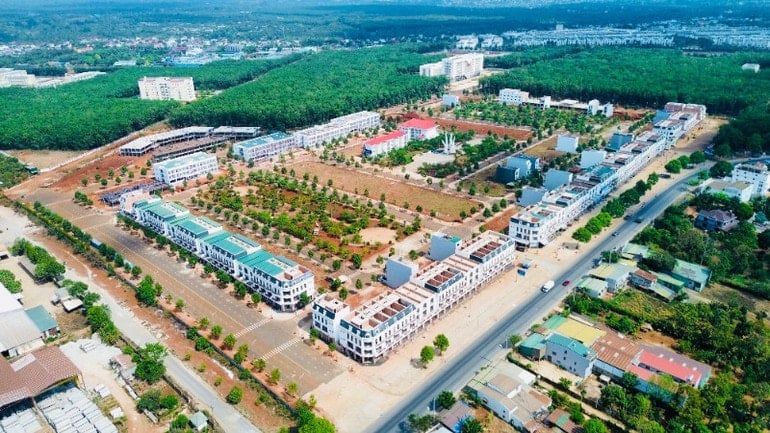
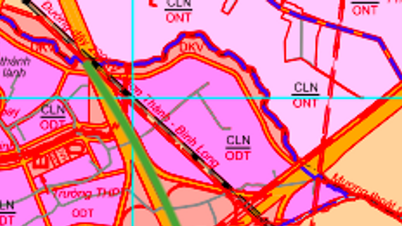
Furthermore, some social housing investment projects have been planned, but when comparing maps and current planning status, there are certain overlapping boundaries, making it difficult to organize surveying, land allocation, and compensation, resulting in delays compared to the set plan. Some projects using budget funds are affected by the investment activities of previous investors in other investment projects, requiring reassessment and verification, and a period of comparison.
Therefore, in general, social housing projects that have received investment in Dak Lak province in recent years have faced certain obstacles, failing to ensure the committed progress, as well as the ability to distribute and allocate housing and land according to the plan. The actual number of housing units invested in remains limited, and the supply to meet people's needs is still not favorable, which is also a root cause of the slow progress of projects according to investors…
All these obstacles and unresolved issues have made it impossible for Dak Lak province to achieve its investment goals for social housing projects and its committed targets for 2025.
Four solutions for the same year, 2026
Based on the current situation of social housing construction and the development trends of the housing fund and housing area in the province in 2026, the Department of Construction of Dak Lak province proposes four basic solutions to overcome obstacles, accelerate investment progress, and mobilize investment in the local social housing fund.
Firstly, local authorities need to urge investors in social housing projects to promptly complete the committed investment schedules. This is a priority and practical solution based on the long-standing implementation of social housing projects in the locality, addressing the difficulties and obstacles faced by businesses. To overcome legal obstacles and support investors in organizing and structuring projects, including those related to capital flow, technical design changes, and the impact of planning changes, local authorities must closely monitor project progress and establish shared responsibility for investment implementation.
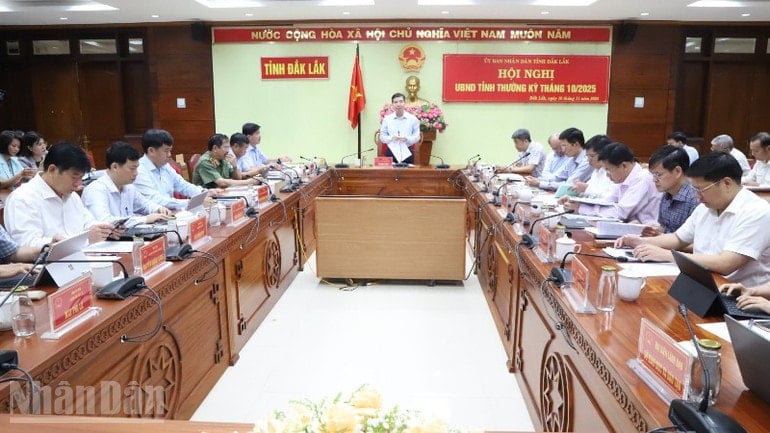
Secondly, the government and relevant agencies at all levels need to create favorable conditions to support social housing investors, facilitating the implementation and investment decision-making process. In reality, based on the 16 land plots already planned for social housing projects in Dak Lak province, some plots are facing difficulties in land compensation and clearance, as well as infrastructure connection. The construction sector proposes that the locality allocate budget to carry out compensation, land clearance, and infrastructure connection and completion as soon as possible. At the same time, the locality needs to review the current land use status through the planning stages to select other land plots of similar size but with more favorable progress, which can be used to replace the problematic plots when necessary.
With suitable land plots available for development, the province needs to clearly define the relevant legal procedures to proceed with attracting and selecting investors to participate in the construction of social housing starting in the first quarter of 2026. This work is being urgently promoted by the Dak Lak Provincial Department of Construction, but requires the coordinated attention of relevant departments and agencies, especially the spirit of business owners and investors operating in the area. In particular, guiding and advising investors who are willing to cooperate and seek business opportunities in the locality is crucial, stemming from the provincial management and leadership at all levels.
Specifically, following the direction of the Provincial People's Committee, functional management departments need to review the planning to adjust the number of floors allowed for construction in social housing development areas, in order to increase land use efficiency while still ensuring technical infrastructure requirements.
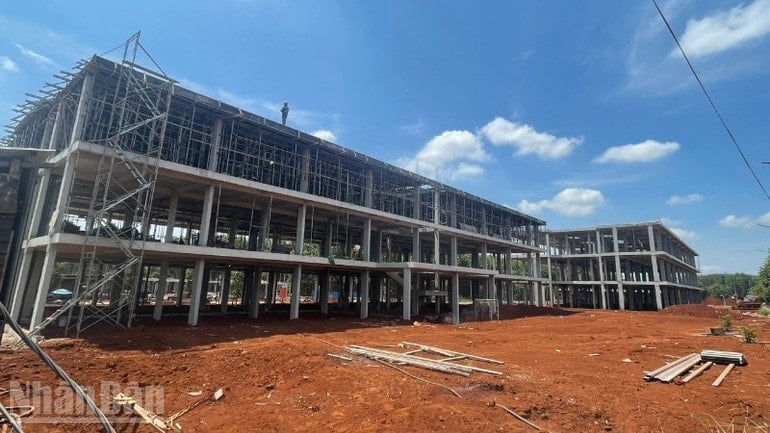
Finally, in line with the general direction and policy, the Construction sector needs to realize the target volume of housing development in the locality. Therefore, it is necessary to establish a Housing Development Fund for Dak Lak province and promote investment in social housing construction using budget funds. Specifically, the locality needs to allocate at least 20% of the funds from land use right auctions to supplement the operating capital of this Fund in order to realize and actualize the local investment capacity.
According to Mr. Le Hung, these four solutions initially set out the basic requirements for the goal of perfecting the conditions and favorable context for the implementation of social housing projects in the area. Other related requirements and issues will still need to be raised and reviewed in order to create better conditions and more effectively attract the participation and contributions of organizations and investors.
In this new direction, private sector investment is a crucial requirement, but it must be harmonized and synchronized with major policies from the local budget. Balancing the interests of investors while maintaining a reasonable balance with public investment budgets is a key requirement for the smooth implementation of social housing projects in Dak Lak province in 2026, creating momentum towards achieving the goals of the 2026-2030 period.
Source: https://baolamdong.vn/thao-go-kho-khan-vuong-mac-trong-xay-dung-nha-o-xa-hoi-o-dak-lak-410076.html
![[Photo] Prime Minister Pham Minh Chinh attends the Conference summarizing and implementing tasks of the judicial sector.](/_next/image?url=https%3A%2F%2Fvphoto.vietnam.vn%2Fthumb%2F1200x675%2Fvietnam%2Fresource%2FIMAGE%2F2025%2F12%2F13%2F1765616082148_dsc-5565-jpg.webp&w=3840&q=75)











































































Comment (0)