

Vietnam is gradually entering a period of population aging. An aging population not only poses challenges to social security policies and the healthcare system, but also becomes a challenge for each family.

Many elderly people still work to make ends meet - Photo: NAM TRAN
The elderly live with many illnesses.
According to Mr. Nguyen Trung Anh, director of the Central Geriatric Hospital, a study at the hospital showed that elderly people in Vietnam after the age of 60 suffer from 2-3 types of diseases, and this number increases to nearly 7 types of diseases after the age of 80. Sitting in a wheelchair, Mrs. Tran Thi Hoa (85 years old, Hanoi) was taken for a relaxing stroll to the reading area at the Central Geriatric Hospital (Hanoi) by Ms. Mai - hired by her family. No longer lucid, Mrs. Hoa's story was repeated in a weak, breathless voice. Ms. Mai said that Mrs. Hoa had been hospitalized for over a year. She suffers from diabetes, osteoarthritis, senile dementia, respiratory problems, etc. Although she had two children, due to busy work schedules and lack of time to care for her, and because Mrs. Hoa had many illnesses, her family brought her to the hospital for treatment to put their minds at ease. Ms. Mai was hired by the family to constantly care for her, and the family visits her on weekends. "Most elderly people here suffer from multiple illnesses at the same time; some are hospitalized for a year or even longer," Ms. Mai recounted. Not only do they live with multiple ailments in their old age, but many elderly people also struggle to make ends meet because they lack pensions and monthly allowances. At 9 PM, after finishing work, Mr. Nguyen Van Son (67 years old, Hanoi) wearily wheeled his motorbike into his small rented room. He currently works as a security guard for a fashion store in Hanoi. Mr. Son said that when he was younger, he mainly worked as a construction worker. "In the last 5 years, my health has deteriorated, and I no longer have the strength to endure the sun and rain, so I looked for other work. Through a recruitment agency, I work as a security guard for a store with an income of 6 million VND/month. The work isn't strenuous, but the salary is only enough to cover living expenses and food each month. Sometimes I think if I were to get seriously ill, I wouldn't have the money for treatment," Mr. Son said, sighing.What are the solutions for an aging population?
Experts predict that if in 2023 there were more than 7 working-age people supporting one elderly person, this number will rise to more than 3 in 2036 and to just over 2 in 2049. This situation will be even more worrying in families with only one child. According to Mr. Nguyen Trung Anh, director of the Central Geriatric Hospital, Vietnam is currently facing a low birth rate. This will impact the family structure with the "4-2-1" model – meaning 4 grandparents and 2 parents relying on the care of one child or grandchild. Mr. Anh also believes that the elderly will receive better care and lower costs when cared for by relatives. However, in reality, with the current family structure, the elderly will need a suitable healthcare system and support team in the future. "Before becoming elderly, everyone needs regular health care and a healthy lifestyle to reduce the burden of disease in the future. Besides, the healthcare system needs to keep pace with the aging population . There is a need for more centers for the elderly, nursing homes, etc.," Mr. Anh shared. In an interview with Tuoi Tre newspaper on this issue, Professor Giang Thanh Long ( Economics Faculty, National Economics University, Hanoi) stated that adapting to population aging is an urgent requirement for Vietnam. Lessons learned from countries like Japan and South Korea show that a lack of timely policies will have a significant impact on the economy and society. Professor Long believes that to adapt to population aging, many solutions need to be implemented simultaneously. Among them, it is necessary to focus on healthcare for the elderly and create jobs and a suitable working environment for them. "In the not-too-distant future, we will also have to utilize the elderly workforce like Japan and South Korea... because the proportion of the elderly in our population structure is increasing. We should learn from the experiences of these countries. For example, some countries encourage businesses to hire elderly people in certain suitable positions, along with tax exemptions for businesses. Or they create jobs and provide job placement services for the elderly, protect them, and prevent discrimination against the elderly in the workplace... thereby encouraging the elderly to work," Professor Long said.The Ministry of Health has proposed several solutions.
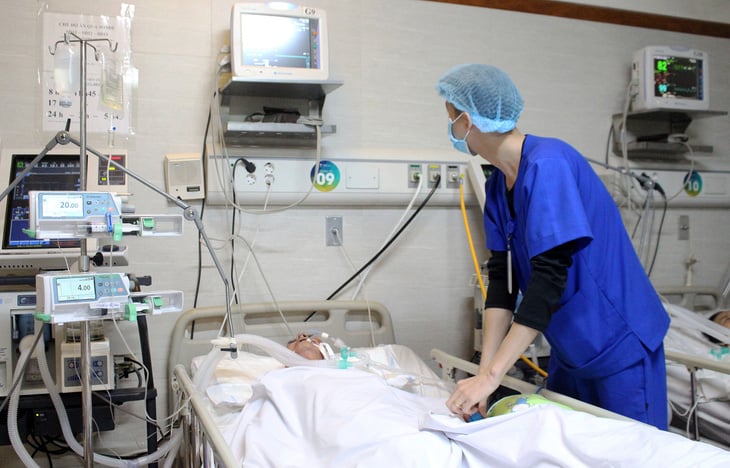
Elderly people face the risk of developing many types of diseases - Photo: DUONG LIEU




















































































Comment (0)