

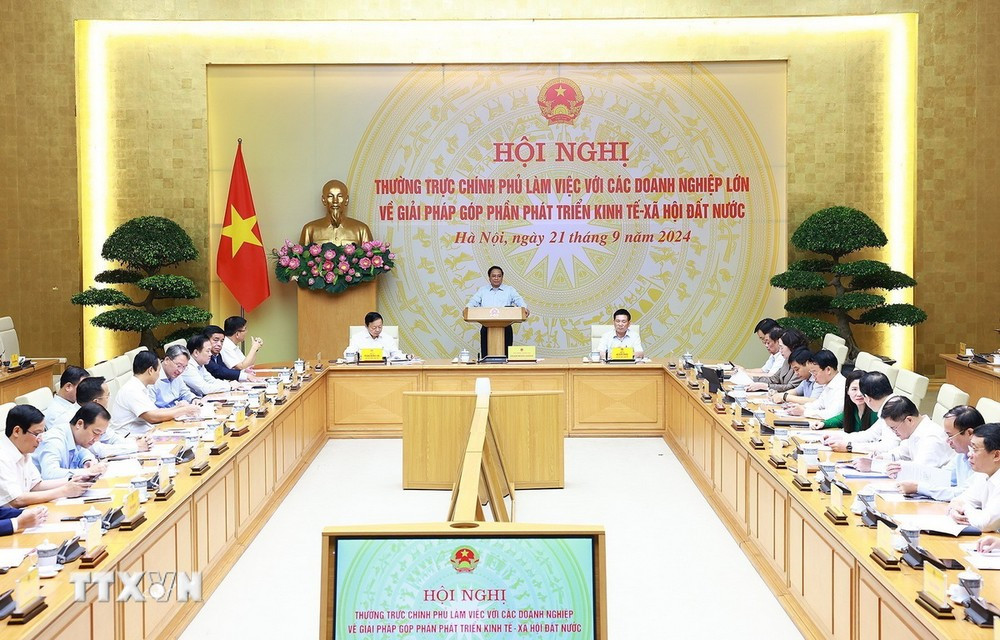
On the morning of September 21st, concluding the Government's Standing Committee meeting with large enterprises on solutions contributing to the socio -economic development of the country, Prime Minister Pham Minh Chinh requested the Deputy Prime Ministers, Ministers, and heads of agencies to directly listen to and definitively resolve the difficulties of businesses, because removing difficulties for businesses is also removing difficulties for the economy; when businesses develop, the country develops.
The private sector contributes approximately 45% of GDP.
After nearly 40 years of implementing the Doi Moi (Renovation) policy, Vietnam, from a backward economy, has risen to become one of the top 40 economies and ranks among the top 20 countries in the world in terms of trade volume. Businesses and entrepreneurs have always played a key role, being the main force of material production in the economy, and are extremely important in the cause of national construction and development.
The private sector alone contributes approximately 45% of GDP, generates about 30% of state budget revenue, employs about 85% of the workforce, and accounts for about 34% of corporate income tax revenue.
A large force of private enterprises, accumulating sufficient capacity in terms of capital scale, technological level and business management, with brands reaching regional and global markets such as: Vingroup, Thaco, Hoa Phat, SOVICO, TH...
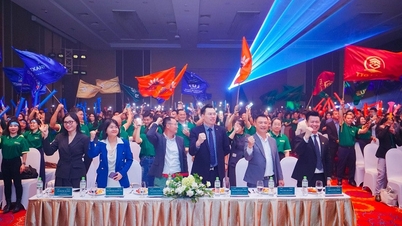
At the conference, all participating businesses shared information about their operations, difficulties and obstacles, and proposed solutions; they also shared their thoughts and visions, seeking solutions to major national challenges to achieve the goal of transforming Vietnam into a developing country with modern industry and high middle income by 2030, and a developed country with high income by 2045, as set out in the 13th National Congress of the Communist Party of Vietnam.
Businesses proposed several ideas for developing strong Vietnamese national enterprises, especially in pioneering industrial sectors such as semiconductors, AI, and green hydrogen; growth based on science and technology and innovation; and leveraging new growth drivers stemming from the circular economy, the digital economy, and new economic models.
Ms. Nguyen Thi Phuong Thao, Chairwoman of the Board of Directors of Sovico Group, stated that Sovico is a multi-sector economic group operating in the fields of banking, aviation, urban development, vocational training, technology and digital transformation… with over 40,000 employees, two listed companies, and a market capitalization of nearly 6 billion USD.
The businesswoman affirmed that the capabilities and initiatives of Vietnamese corporations are limitless; she hoped that the Prime Minister would trust private enterprises, create conditions for building regulations, laws, mechanisms, and an environment for national enterprises to form strong private economic groups with national and international brands to act as a driving force and promote small and medium-sized enterprises, the agricultural and rural sector, and startups.
Specifically, it aims to create an environment for the development of education, training, scientific and technological research, promote innovation, especially vocational training, and increase overall labor productivity; and to create conditions and mechanisms for Vietjet to proactively invest in and build a strong Vietnamese aircraft fleet.
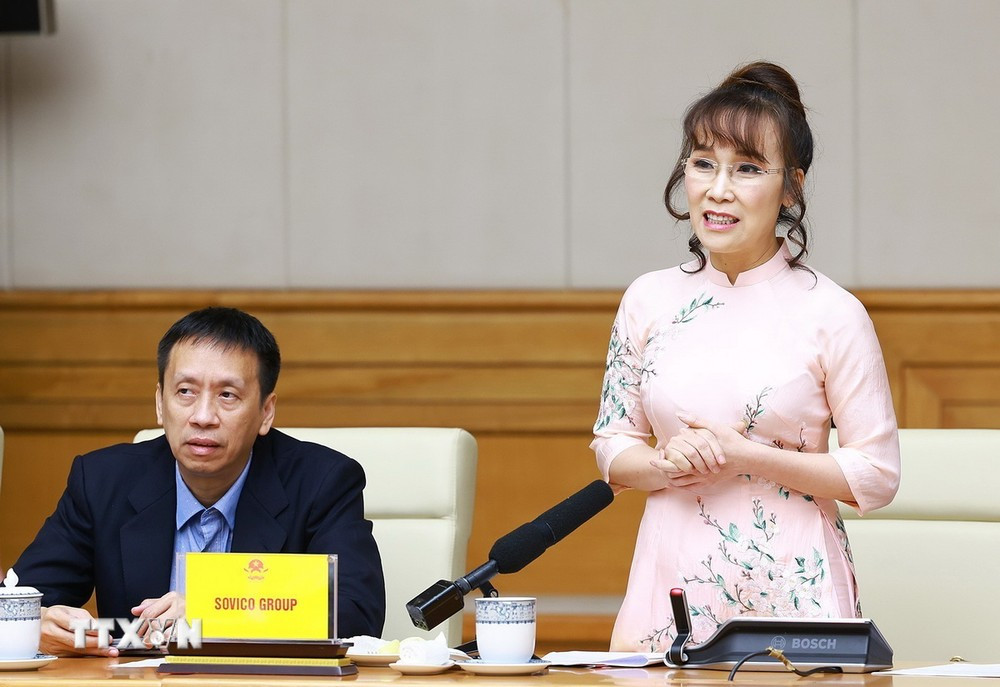
Ms. Nguyen Thi Phuong Thao welcomed the e-visa policy, which helps the aviation industry attract tourists, trade, and international investment to Vietnam most quickly; she expressed her dream of Vietnam becoming an aviation hub, a driving force for regional and global aviation growth, a center for passenger and cargo transportation, a center for aviation training and technology, and a center for aircraft repair and maintenance…
Mr. Le Van Kiem, Chairman of KN Holdings Group, stated that the company is aiming to build modern, next-generation industrial centers where Vietnam can gradually master technology and strongly develop vocational training centers, innovation centers, research centers, and technology transfer centers. Therefore, Mr. Le Van Kiem hopes that the Government will continue to create favorable conditions for the development of next-generation industrial parks that are competitive in scale within the region.
The Chairman of KN Holdings Group also expressed his wish for ministries, agencies, and localities to continue simplifying administrative procedures, especially in the areas of planning, investment, and land for industrial park infrastructure development; to encourage breakthrough investments, ensuring competitiveness with other countries in the region, in order to attract multinational strategic investors, especially in high-tech fields such as semiconductors and artificial intelligence; and to consider approving renewable energy projects that have already received investment approval, ensuring rapid implementation.
Mr. Le Van Kiem stated that KN Holdings Group is committed to always accompanying the Government in all efforts to develop the socio-economic sector, complying with the law, and actively contributing even more to society and the country's reform and development.
Mr. Dang Minh Truong, Chairman of the Board of Directors of Sun Group, proposed institutionalizing specific mechanisms to attract private enterprises to participate in projects that drive socio-economic development. These include mechanisms for land allocation and land tax; prioritizing projects with overall efficiency; continuing administrative reforms and investment procedures towards faster, more decentralized, and more empowered processes; encouraging private enterprises to participate in BT (Build-Transfer) projects; considering piloting models and specific mechanisms similar to free economic zones worldwide; considering pilot policies to facilitate the purchase and ownership of tourism real estate by foreigners; and establishing specific mechanisms to support the construction of infrastructure projects under PPPs to connect transportation to potential but still inaccessible tourist destinations.
Private enterprises implement '6 pioneering initiatives'.
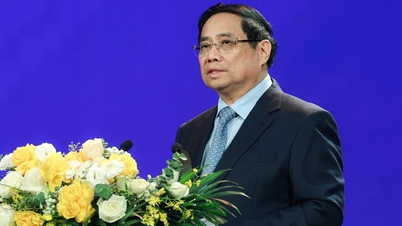
After leaders of ministries and agencies and Deputy Prime Ministers offered guidance on the development of private enterprises and their participation in national development, as well as addressing proposals and recommendations from businesses, Prime Minister Pham Minh Chinh concluded the conference by sharing with businesses the difficulties they have experienced, such as the COVID-19 pandemic, war, strategic competition, and supply chain disruptions. He thanked businesses for always standing alongside the Party, the State, and the people, contributing to overcoming difficulties and building a more prosperous and beautiful country, where the people have a comfortable and happy life; and for always supporting the Government during difficult times.
Requesting the Government Office and ministries to consider and address the contributions of businesses, the Prime Minister stated that the Government has great confidence and pride in the growth and strength of Vietnamese businesses; the Government is committed to accompanying and protecting the legitimate rights and interests of businesses; not criminalizing economic relations; studying the abolition of unnecessary permits to avoid harassment, inconvenience, and increased compliance costs for businesses; and always listening, sharing, and working together to resolve difficulties and obstacles, helping businesses overcome challenges.
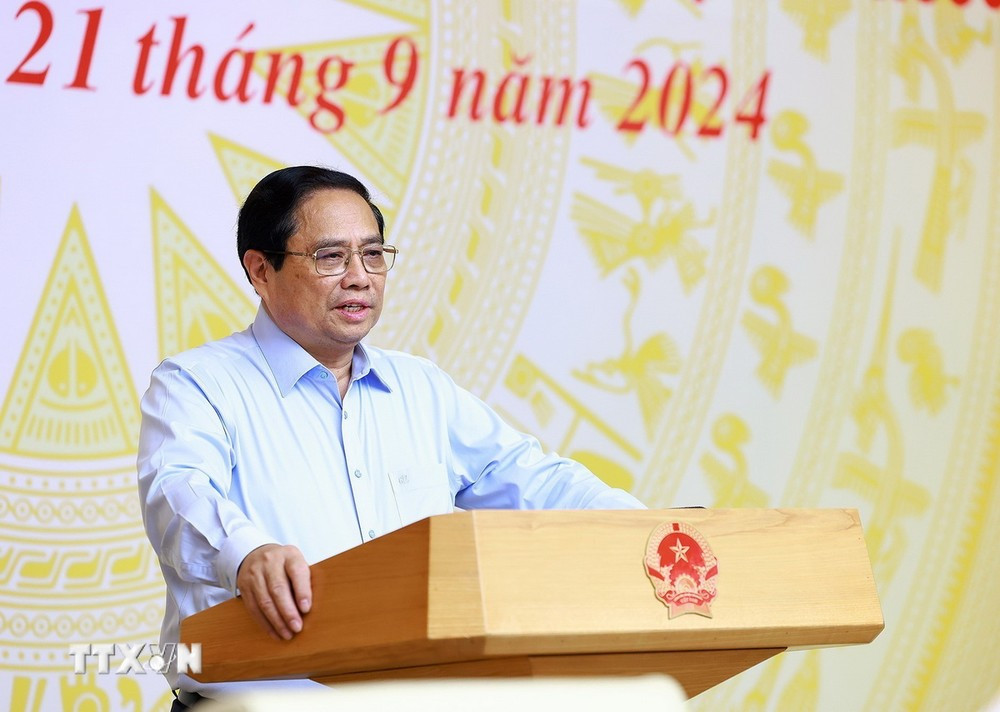
Stating that the Government continues to build and improve institutions to ensure businesses can confidently promote production and business, the Prime Minister requested Deputy Prime Ministers, Ministers, and heads of agencies to directly listen to and definitively resolve the difficulties of businesses, because removing difficulties for businesses is also removing difficulties for the economy; when businesses develop, the country develops," in the spirit of "removing obstacles wherever they arise, without shirking responsibility, avoiding trouble, or harassment."
Affirming that the Government will continue to decentralize and delegate power to ministries, sectors, and localities; resolutely cutting unnecessary administrative procedures to avoid causing inconvenience to businesses, the Prime Minister requested businesses to operate in accordance with the law, contributing to the improvement of institutions, especially those for better management, while also creating and promoting the development of businesses, particularly the improvement of the socialist-oriented market economy institutions and institutions for the implementation of key national projects.
Emphasizing that the people and businesses are the central and key players in perfecting institutions, the Prime Minister requested businesses to implement "six pioneering initiatives": pioneering in innovation and the application of science and technology; focusing on traditional growth drivers and promoting new growth drivers such as the digital economy, green economy, circular economy, knowledge economy, and sharing economy, and combating climate change; pioneering participation in global value chains and supply chains, contributing to building corporate and national brands; pioneering in creating jobs and livelihoods for the people and actively participating in social welfare activities. The Prime Minister requested businesses to pioneer in infrastructure development, especially digital infrastructure, transportation infrastructure, socio-economic and cultural infrastructure, particularly high-speed rail, expressways, airports, seaports, and green infrastructure; Pioneering in contributing to the training of high-quality human resources, reforming administrative procedures, building smart governance, and contributing to improving the investment and business environment; pioneering in solidarity, unity, and mutual support, with the motto "listening and understanding together; sharing vision, awareness, and action together; working together, enjoying together, winning together, and developing together businesses and the country."
Directing the Government Office and ministries to listen to, absorb, and resolve the proposals and recommendations of businesses, with the spirit of "saying is doing, committing is implementing effectively in practice; sharing risks, harmonizing benefits between the State, the people, and businesses," the Prime Minister thanked the businesses for proposing to undertake specific tasks contributing to national development, such as participating in the construction of the North-South high-speed railway project, expressways, steel plants, ports, airports, social housing, and improving children's physical health...
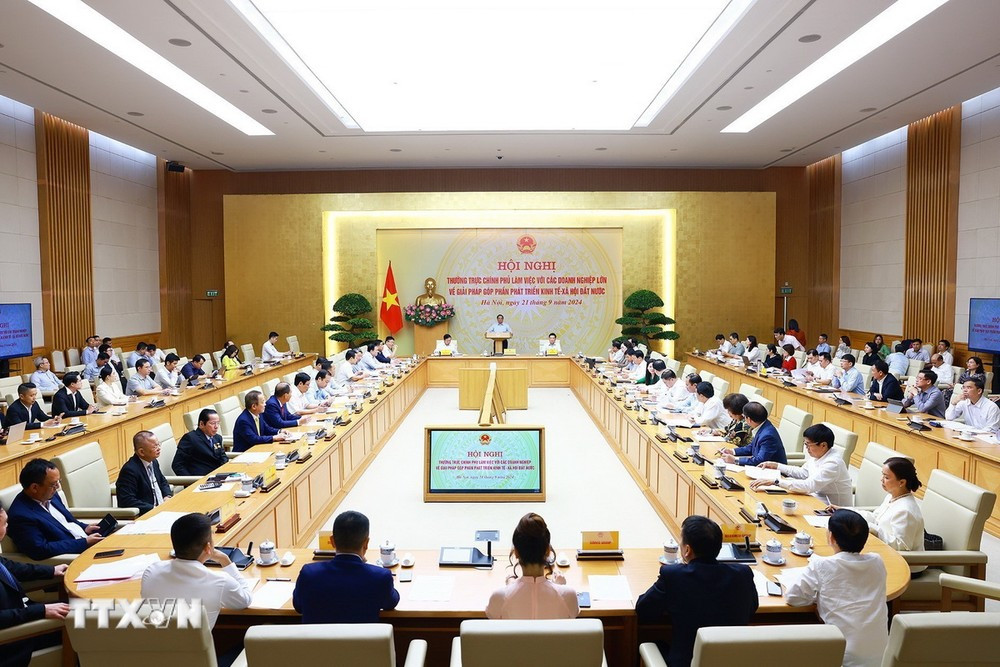
The Prime Minister stated that the government will study and assign tasks, commissioning businesses to work together and achieve success.
Prime Minister Pham Minh Chinh requested that ministries and agencies, when handling work, must demonstrate high determination, great effort, and decisive action, working together with businesses to resolve issues with the spirit of "5 clear points": clear person, clear task, clear time, clear responsibility, and clear product.
Alongside this conference, ministries and sectors will organize additional thematic conferences within their respective fields with businesses on issues related to land and environment, finance, taxation, investment, etc., to resolve obstacles and facilitate development.
Prime Minister Pham Minh Chinh expressed his hope and belief that businesses in general, and private enterprises in particular, will continue to develop strongly in both quantity and quality. He believes that many businesses will soon rise to regional and global levels, increasingly affirming their important role and contributions to the cause of national construction and defense, and contributing to enhancing Vietnam's position and prestige in the international arena.
Source: https://baodaknong.vn/thu-tuong-pham-minh-chinh-de-nghi-doanh-nghiep-thuc-hien-6-tien-phong-229835.html


![[Image] Close-up of the newly discovered "sacred road" at My Son Sanctuary](/_next/image?url=https%3A%2F%2Fvphoto.vietnam.vn%2Fthumb%2F1200x675%2Fvietnam%2Fresource%2FIMAGE%2F2025%2F12%2F13%2F1765587881240_ndo_br_ms5-jpg.webp&w=3840&q=75)





























































Comment (0)