

Support for the poor
Facing difficult circumstances, the family of Ms. Dinh Thi Hanh (26 years old, H're ethnic minority, Trung Ke 2 village, Hanh Tin Tay commune, Nghia Hanh district) was given the opportunity to borrow 100 million VND from the Social Policy Bank to create jobs.
With this capital, the family invested in equipment for her husband to work in acacia harvesting, bringing in a significant income. Ms. Hanh herself also found work as a factory worker in the industrial zone with a stable income. Through hard work, the couple gradually saved up to renovate their house, buy household items, and raise their children. Currently, her family has escaped poverty.
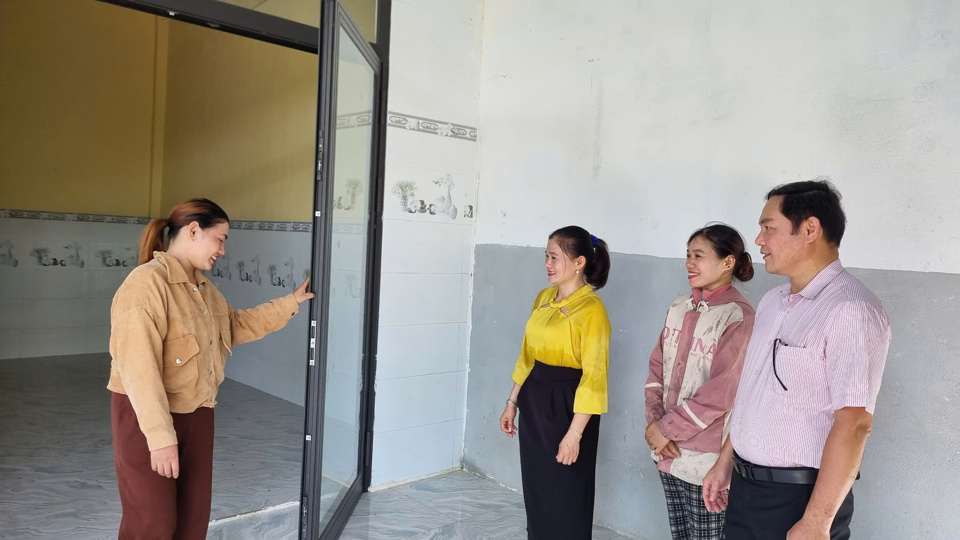
“My husband and I are very grateful to the Party and the State for providing capital to develop our economy and increase our income. I never thought I would one day live in such a beautiful, spacious house,” Ms. Hanh shared.
Also in Trung Ke 2 village (Hanh Tin Tay commune), the family of Ms. Dinh Thi Bia (a H're ethnic minority) decided to stop at two children, not having any more, in order to focus on economic development and improve their quality of life.
"Whether it's a girl or a boy, it's best to only have two children so you have time to focus on your work. Now, besides raising pigs and cows, I also sell groceries, and my husband works on the acacia plantation, so our family life is gradually improving," said Ms. Bia.
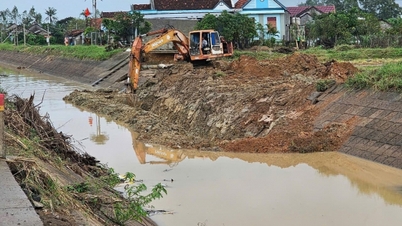
In recent years, the rural landscape of mountainous communes in Nghia Hanh district, including areas inhabited by ethnic minorities, has undergone positive changes.
Thanks to the government, associations, and organizations' efforts in promoting awareness and effectively implementing sustainable poverty reduction programs and new rural development initiatives, people's lives are improving.
In the delta region, sustainable poverty reduction efforts are also emphasized, with various support methods tailored to each target group.
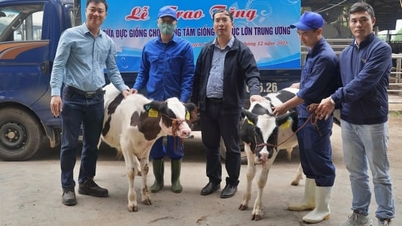
Ms. Huynh Thi Hon (73 years old, Dai An Dong 1 village, Hanh Thuan commune) recently received a breeding cow from the government as part of a sustainable poverty reduction program to help develop her economy.
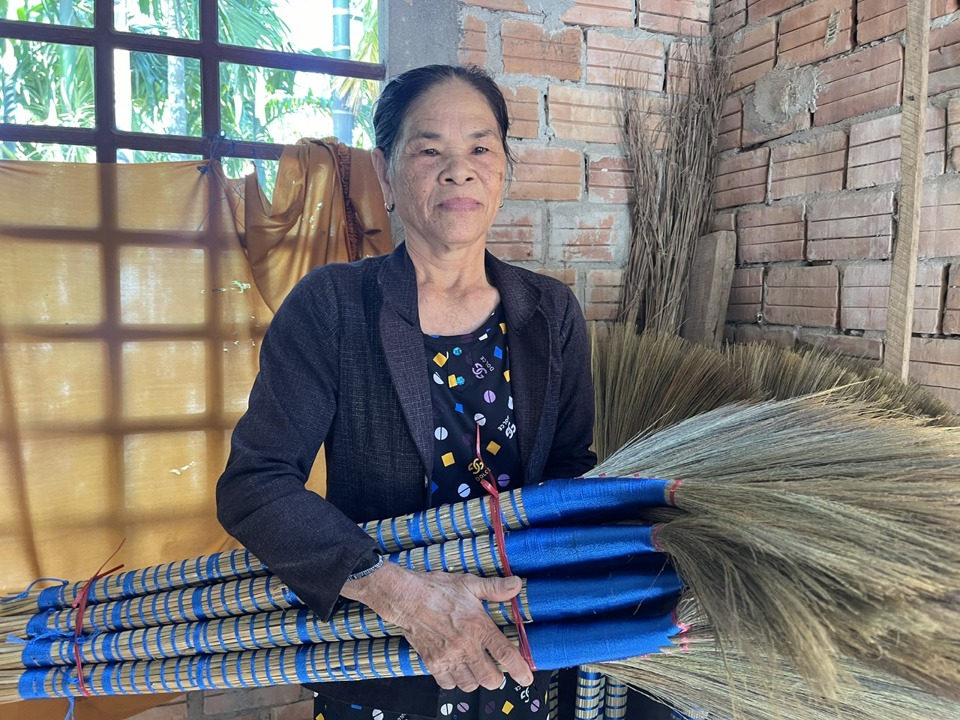
Ms. Hon is a single parent who previously received 20 million VND in assistance for house repairs. Now, receiving a breeding cow, Ms. Hon is very pleased.
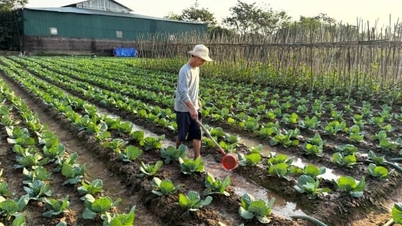
"I'm growing more grass to feed the cows. In addition, I'm maintaining my broom-making craft to increase my income, determined to escape the near-poverty status," Mrs. Hon expressed.
To effectively implement the National Target Program for Sustainable Poverty Reduction, the Nghia Hanh district government has focused on implementing projects to diversify livelihoods, develop poverty reduction models; support production development and improve nutrition; develop vocational education and sustainable employment; communicate and reduce poverty through information; and enhance capacity building and program monitoring and evaluation.
Specifically, under the Livelihood Diversification and Poverty Reduction Model Development Project (part of the National Target Program for Sustainable Poverty Reduction), in 2022-2023, Nghia Hanh district provided livestock breeding support (over 3.2 billion VND) to 115 poor, near-poor, and newly-escaped-from-poverty households in 8 communes: Hanh Thuan, Hanh Thinh, Hanh Tin Dong, Hanh Thien, Hanh Duc, Hanh Minh, Hanh Dung, and Hanh Tin Tay.
Simultaneously, the project to support the development of value chain linkages in Zebu hybrid cattle farming was implemented with a budget of over 1 billion VND, attracting 38 poor and near-poor households to participate. In addition, preferential credit capital also provided support to help poor and near-poor households develop their economy.
According to statistics, in Nghia Hanh district, 100% of workers from poor, near-poor, and newly-escaped-from-poverty households in need receive support in connecting with, advising on, and guiding career paths, providing labor market information, and assisting in finding employment. 100% of people from poor and near-poor households receive support to participate in health insurance.
The rate of children from poor and near-poor households attending school at the appropriate age reached 95%. Approximately 92% of poor and near-poor households have access to telecommunication and internet services, and access to information on sustainable poverty reduction through publications and media products.
Focus on implementing many solutions synchronously
According to Dinh Xuan Sam, Chairman of the People's Committee of Nghia Hanh district, the district's poverty reduction efforts have achieved many positive results in recent years. Every year, the district has met its assigned poverty reduction targets, and no new poor households have emerged.
To achieve this, appropriate plans and measures are required. These include focusing on a door-to-door approach to address existing issues such as: preventing household registration separation for the purpose of being included in poor or near-poor households during the review process; and encouraging family members of those responsible for caring for, supporting, and caring for their parents and relatives.
Nevertheless, poverty reduction efforts still face some difficulties and limitations. These include a small number of poor households who rely on government assistance and have not truly strived to overcome poverty. Many poor households are eligible for social welfare programs, making it very difficult for them to escape poverty.
Specifically, according to the results of the review of poor and near-poor households at the end of 2023, there were 452 poor households in the district with no ability to work, accounting for 54.19% of the total number of poor households; and 320 near-poor households with no ability to work, accounting for 21.57% of the total number of near-poor households.
From now until 2025, Nghia Hanh district will continue to focus on implementing the National Target Program for Sustainable Poverty Reduction, striving to reduce the number of poor households to 634 by the end of 2024, accounting for 2.41%. By the end of 2025, this number will be further reduced to 469 households, accounting for 1.77%.
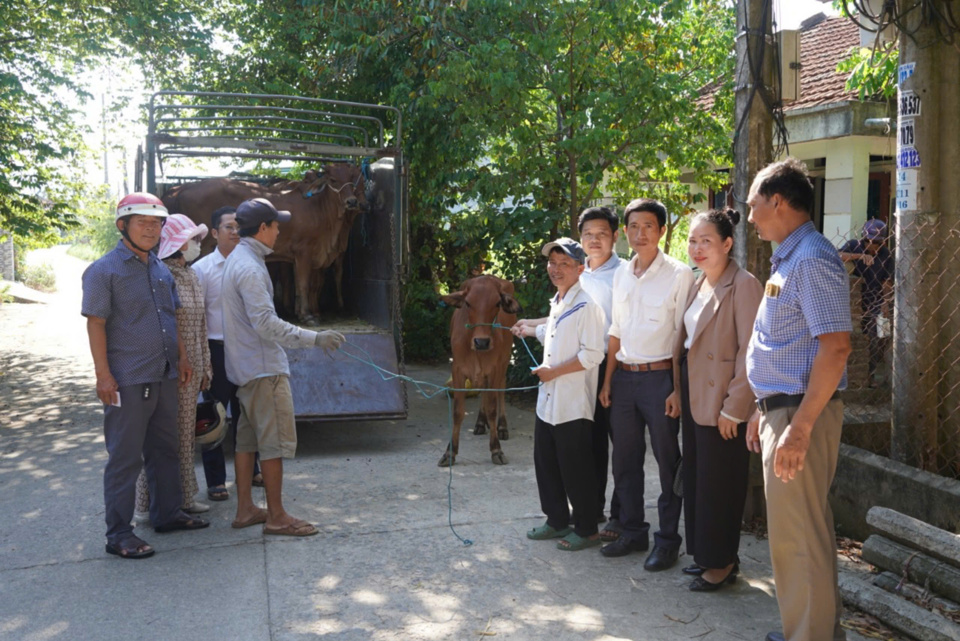
According to the Chairman of the People's Committee of Nghia Hanh district, Dinh Xuan Sam, the district will continue to focus on various solutions to achieve the above goal. These include concentrating on promoting support for production and business development, and providing training to improve the capacity of poor households.
At the same time, integrate the production development support activities of the National Target Programs to address the root causes of lack of production capital, lack of labor skills, lack of production means, etc., and direct localities to implement them.
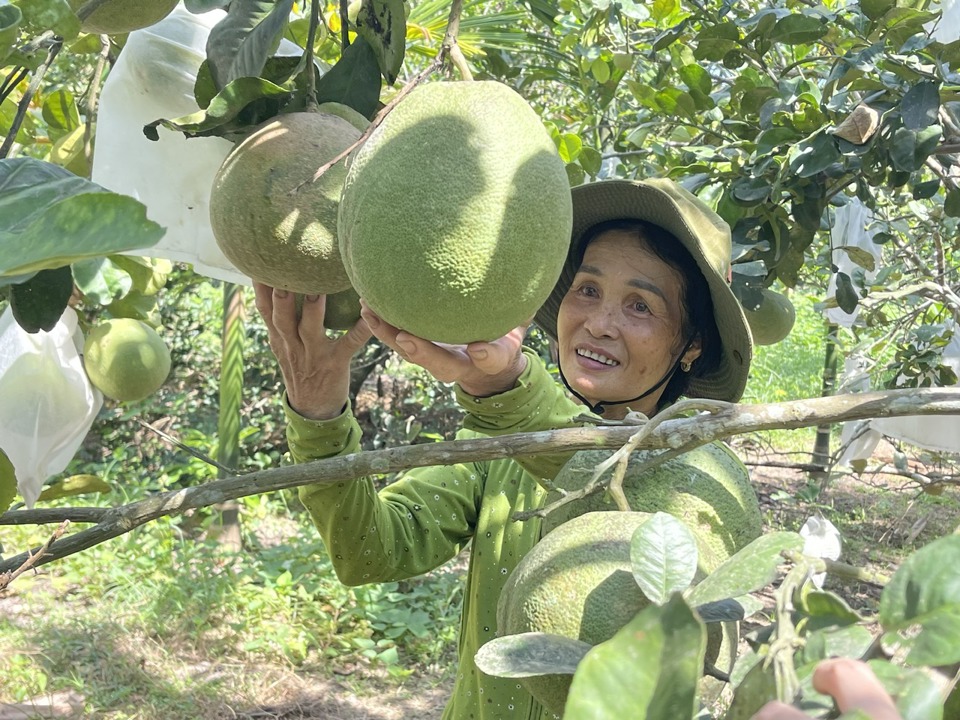
For poor and near-poor households who are capable of working but lack land for production, local authorities and units are directed to create favorable conditions for these households to access land (lending land, leasing land, etc.) so that they can have land for production and business, thereby increasing their income and improving their living standards.
Strengthen the dissemination of information and guidance to poor and near-poor households to access and borrow preferential credit, so that, together with capital from national target programs, they can expand production scale and develop household economies.
In addition, fully implement existing poverty reduction policies such as healthcare, education , social welfare benefits, legal assistance, etc., to help stabilize the lives of poor households without working members, or with sick or seriously ill family members, or those who have suffered accidents.
Source: https://kinhtedothi.vn/thuc-hien-dong-bo-nhieu-giai-phap-de-giam-ngheo-ben-vung.html
![[Photo] Prime Minister Pham Minh Chinh holds a phone call with the CEO of Russia's Rosatom Corporation.](/_next/image?url=https%3A%2F%2Fvphoto.vietnam.vn%2Fthumb%2F1200x675%2Fvietnam%2Fresource%2FIMAGE%2F2025%2F12%2F11%2F1765464552365_dsc-5295-jpg.webp&w=3840&q=75)


![[Photo] Closing Ceremony of the 10th Session of the 15th National Assembly](/_next/image?url=https%3A%2F%2Fvphoto.vietnam.vn%2Fthumb%2F1200x675%2Fvietnam%2Fresource%2FIMAGE%2F2025%2F12%2F11%2F1765448959967_image-1437-jpg.webp&w=3840&q=75)































![[OFFICIAL] MISA GROUP ANNOUNCES ITS PIONEERING BRAND POSITIONING IN BUILDING AGENTIC AI FOR BUSINESSES, HOUSEHOLDS, AND THE GOVERNMENT](https://vphoto.vietnam.vn/thumb/402x226/vietnam/resource/IMAGE/2025/12/11/1765444754256_agentic-ai_postfb-scaled.png)


















































Comment (0)