

The Russia-Ukraine conflict has moved beyond the trenches, troops, and tanks; it has spread to a "battlefield" of agreements and diplomacy , the relationships between bankers, insurance companies, and lawyers, oil suppliers, microchips, and superyachts...
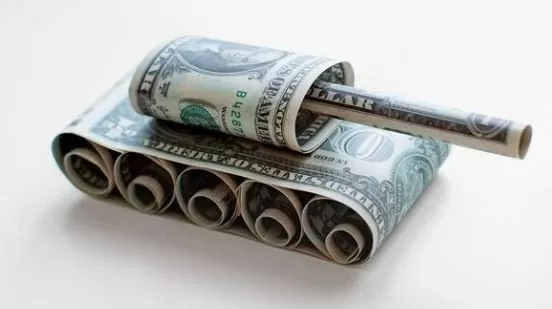 |
| Sanctioning Russia or the West's all-out ' economic war'. Image from the cover of the book "Punishing Putin: Inside the global economics war to bring down Russia" by journalist Stephanie Baker. (Source: stephaniebakerwriter.com) |
In her newly published book detailing the West's "economic war" against Russia, influential Bloomberg economic journalist Stephanie Baker wrote, "I believe it is just as fierce as the military conflict unfolding on the ground."
But will sanctions really impact Moscow?... Here are some fresh perspectives from veteran British-American writer Stephanie Baker, who has been writing about the Russian economy since the 1990s and has unlimited access to both Western and Russian sources, to get to the bottom of the issue.
A massive economic and financial experiment.
The front has spread across Manhattan's financial district, London's most luxurious neighborhoods, and even the mailboxes used by shell companies in tax havens. And this economic war is just as fierce as the bloody military attacks taking place on the ground in Ukraine.
In her book, "Punishing Putin: Inside the Global Economics War to Bring Down Russia," journalist Baker outlines how the U.S. and several European nations imposed unprecedented economic sanctions on Russia following their military campaign in Ukraine in February 2022. In her view, these sanctions were so broad that they constituted "economic warfare" in the Russia-Ukraine conflict.
Some of these sanctions came immediately and attracted significant attention, such as the seizure of superyachts and assets belonging to Russian oligarchs. Russian billionaire Roman Abramovich was forced to sell his favorite football club, Chelsea. Western companies including Adidas, McDonald's, and Unilever faced pressure from investors and consumers to cut losses and leave Russia.
However, there are other sanctions, though less widely seen, that have a much broader impact. For example, Western governments have frozen the foreign assets of the Russian central bank – totaling around $300 billion (€284 billion) – and banned the export of dual-use goods, such as microchips, to Russia. Or the EU and G7 countries have imposed a price ceiling of $60 (€57) per barrel of Russian oil exports by the end of 2022, aimed at damaging the Kremlin's finances without disrupting the global oil market.
Journalist Stephanie Baker, who has spent at least 34 years researching the Russian economy, has revealed how Washington, Brussels, and London seized superyachts, attempted to manipulate global oil prices, and tried to prevent the sale of technology to the Russian military. She also shows how ideas and actions have diverged due to conflicts of interest within the Western alliance.
And as the cost of sustaining a conflict with Russia increased, another economic front emerged. The US and the EU questioned whether they should seize Russia's massive $300 billion in foreign exchange reserves accumulated in the West.
Illustrating Moscow's response to Western economic repression, Baker stated that luxury yachts have been deployed to waters under the sovereignty of Russia's allies, an "army" of lawyers has been tasked with protecting the assets of oligarchs in Western cities, and Dubai has replaced London as the preferred destination. New supply chains and routes for the "flow" of oil and microchips continue to bolster Russia's state treasury and secure its resources in the military conflict with Ukraine.
Thus, as sanctions continue to be imposed by the West, Russia is also constantly implementing new countermeasures. So, in reality, have Western sanctions been ineffective? And what else could happen in this economic war?
A Bloomberg journalist analyzed that the initial sanctions had little effect on Russia because "there was virtually no enforcement, as Moscow had many ways to counter them and many loopholes were found," for example, Western chip manufacturers said they could not control their supply chains when their chip technology was found in Russian missiles...
Recently, enforcement has become much stronger, with many Russian oil tankers being blacklisted for transporting oil below the price ceiling, but these measures are still insufficient. Later, when secondary sanctions were considered, they seemed to begin to pose a real threat to Moscow, such as sanctions against Chinese banks that finance exports of goods for the Russian defense industry...
The front spans the globe.
Packed with facts and figures without being dry, from a phone call to compelling real-life stories, the book "Punishing Putin: Inside the Global Economics War to Bring Down Russia" takes readers into intense behind-the-scenes discussions, leading to an entirely new era of carefully calculated "political and economic maneuvering."
Journalist Baker argues that these new strategies are completely rearranging global alliances, and that this will affect the world order today, and even for generations to come.
Despite successive rounds of sanctions, Moscow remained undeterred by eight years of US sanctions (the first since 2014, when Russia annexed Crimea), when Russian President Vladimir Putin ordered the launch of a military operation in Ukraine (February 2022). Within hours, Western leaders employed economic tools to counter a nuclear-armed power.
What followed were massive "economic and financial experiments" taking place all over the world, undeniably capable of impacting and changing the world, and potentially plunging the globe into a devastating recession.
But the purpose of these economic attacks from the West is simple – to weaken President Putin's military machine and damage the Russian economy – once the 11th largest on the planet.
Journalist Stephanie Baker called the wave of Western sanctions a "fierce shadow war" and stated that her research clearly shows that the conclusion that the West's economic attack on Russia has been ineffective is incorrect.
"I see this as an effective propaganda campaign from Russia. Therefore, support for sanctions may decrease."
Facing a series of difficulties due to the impact of sanctions, "I'm not saying that the Russian economy will collapse, but if oil prices fall sharply and some key pillars weaken, then the conflict cannot last much longer," Stephanie Baker concluded.
Source: https://baoquocte.vn/trung-phat-nga-hay-chien-dich-tan-cong-kinh-te-tong-luc-cua-phuong-tay-tren-khap-the-gioi-294717.html

![[Photo] Closing Ceremony of the 10th Session of the 15th National Assembly](/_next/image?url=https%3A%2F%2Fvphoto.vietnam.vn%2Fthumb%2F1200x675%2Fvietnam%2Fresource%2FIMAGE%2F2025%2F12%2F11%2F1765448959967_image-1437-jpg.webp&w=3840&q=75)

![[Photo] Prime Minister Pham Minh Chinh holds a phone call with the CEO of Russia's Rosatom Corporation.](/_next/image?url=https%3A%2F%2Fvphoto.vietnam.vn%2Fthumb%2F1200x675%2Fvietnam%2Fresource%2FIMAGE%2F2025%2F12%2F11%2F1765464552365_dsc-5295-jpg.webp&w=3840&q=75)








































![[OFFICIAL] MISA GROUP ANNOUNCES ITS PIONEERING BRAND POSITIONING IN BUILDING AGENTIC AI FOR BUSINESSES, HOUSEHOLDS, AND THE GOVERNMENT](https://vphoto.vietnam.vn/thumb/402x226/vietnam/resource/IMAGE/2025/12/11/1765444754256_agentic-ai_postfb-scaled.png)

















































Comment (0)