

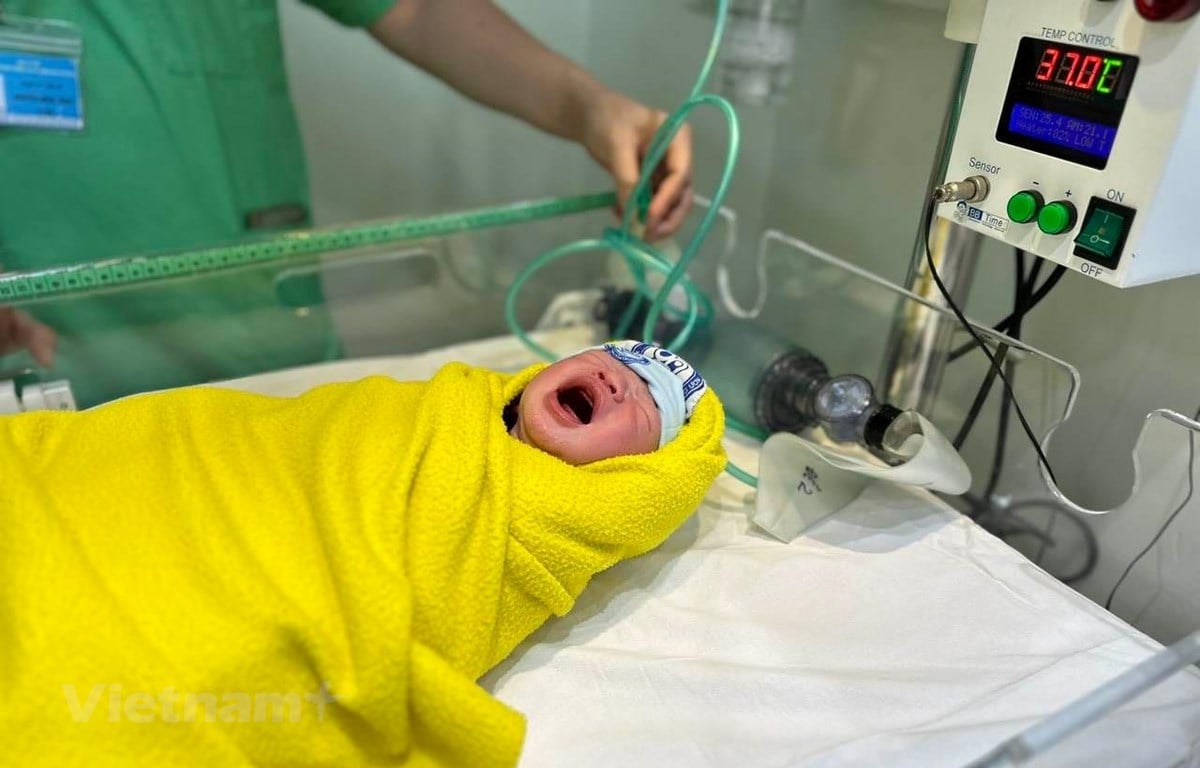
Vietnam's population will soon reach 100 million in April. This milestone will make Vietnam the 15th most populous country in the world and one of only three Southeast Asian countries with a population of 100 million .
Experts believe that reaching 100 million people presents a great opportunity for Vietnam to enhance its influence in the region; however, it also comes with numerous challenges, as the quality of the population still falls short of many targets.
100 million hopes
The United Nations Population Fund (UNFPA) in Vietnam believes the world is changing rapidly and Vietnam should not fall behind. A population of 100 million means Vietnam has a large domestic market, the ability to attract more foreign direct investment, a healthy, highly educated and skilled workforce, innovative thinking, and strong national momentum.
[Vietnam and the international community coordinate to solve population issues]
Therefore, Vietnam needs to realize that 100 million people by 2023 is not just a number, but a vision for building a strong and prosperous Vietnam for present and future generations. Because 100 million Vietnamese people symbolize "100 million hopes, 100 million dreams, and 100 million solutions."
Statistics show that Vietnam currently has the highest proportion of young people in its history: 21% of the total population are young people aged 10 to 24. Vietnam's demographic dividend will continue until 2039 with the presence of young, highly productive labor groups, and the potential to further leverage the advantages of its demographic structure to boost the country's socio -economic growth.
Professor Nguyen Dinh Cu, former Director of the Institute of Population and Social Issues (National Economics University), and Chairman of the Scientific Council of the Institute for Population, Family and Children Research, believes that the event of welcoming the 100 millionth citizen will be an important and impressive milestone for the nation.
Professor Nguyen Dinh Cu analyzed that if a population of 100 million lacks economic development and has a low level of education, progress will be very difficult. However, if 100 million people are placed in a context of economic development and a high level of education, it presents a huge opportunity for development. Vietnam is a large market with a large population and a large workforce (over 50 million workers), thus providing the conditions for developing a diversified economy across multiple sectors, promoting the development of both industry and services.
"A large population and abundant workforce are attractive to foreign investors. However, in terms of challenges, a population of 100 million also raises issues of food and energy security, especially given the low land area per capita and climate change… ensuring quality education, healthcare, and environmental protection for 100 million people will be a very complex problem," Professor Nguyen Dinh Cu pointed out.
UNFPA also points out the challenges posed as both mortality and fertility rates decline, and Vietnam will soon complete its demographic transition. The fact that Vietnamese people today live healthier and longer lives is a significant achievement. However, the decline in fertility rates and limited birth rates in recent decades are causing Vietnam's population to age rapidly.
The solution must be to prioritize people.
According to UNFPA calculations, Vietnam is projected to become an aging country by 2036, with the number of people aged 65 and over reaching 15.5 million, accounting for more than 14% of the total population. Furthermore, due to the persistent preference for male children in Vietnamese society, coupled with declining birth rates, limited birth rates, and available technologies, prenatal sex selection is widespread, resulting in an estimated 47,000 girls missing each year. It is projected that by 2034, Vietnam will have a surplus of 1.5 million men aged 15-49, and this number is expected to reach 2.5 million by 2059.
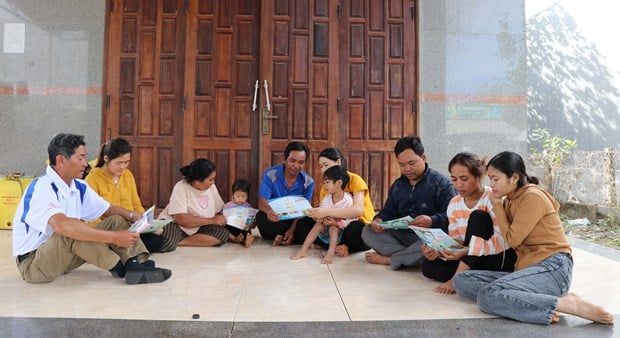 Health workers in border communes go directly to villages, hamlets, and households to disseminate information about health, population, and family programs to the people. (Photo: Hong Diep/VNA)
UNFPA emphasizes that in population work, it is crucial to highlight that people are the solution, not the problem. The issue is not about having more or fewer people, but about ensuring that everyone has more equal access to opportunities.
Therefore, UNFPA recommends that Vietnam take appropriate steps to ensure that all citizens are supported in exercising their rights, including the right to make decisions about sexual and reproductive health, as well as gender equality. As the guardian of the 1994 International Conference on Population and Development (ICPD), which Vietnam participated in, UNFPA recommends that Vietnam fully comply with the ICPD principles, according to which individuals and couples should be free to make responsible decisions about the number of births, the spacing between births, and the timing of childbirth.
To achieve this, all relevant units must ensure that every woman, every mother, and every couple has access to quality sexual and reproductive health care services and social policies that support children, and that housing support for young couples can be considered.
UNFPA recommends that Vietnam continue to invest in young people through health, education, and employment opportunities policies and programs to meet the needs of the labor market in the new era and promote innovation within the country.
Similar to other middle-income countries worldwide, inequality and disparities persist in Vietnam, with significantly higher maternal mortality rates and unmet family planning needs among ethnic minorities, migrant workers, and young people. Therefore, UNFPA suggests that Vietnam needs to strengthen policies on health-related services, including sexual and reproductive health.

![[Photo] The captivating scenery of the fragrant maple forest in Quang Tri](/_next/image?url=https%3A%2F%2Fvphoto.vietnam.vn%2Fthumb%2F1200x675%2Fvietnam%2Fresource%2FIMAGE%2F2025%2F12%2F10%2F1765353233198_lan09046-jpg.webp&w=3840&q=75)

![[Photo] Explore the US Navy's USS Robert Smalls warship](/_next/image?url=https%3A%2F%2Fvphoto.vietnam.vn%2Fthumb%2F1200x675%2Fvietnam%2Fresource%2FIMAGE%2F2025%2F12%2F10%2F1765341533272_11212121-8303-jpg.webp&w=3840&q=75)















![[Video] The craft of making Dong Ho folk paintings has been inscribed by UNESCO on the List of Crafts in Need of Urgent Safeguarding.](https://vphoto.vietnam.vn/thumb/402x226/vietnam/resource/IMAGE/2025/12/10/1765350246533_tranh-dong-ho-734-jpg.webp)























































Comment (0)