

 |
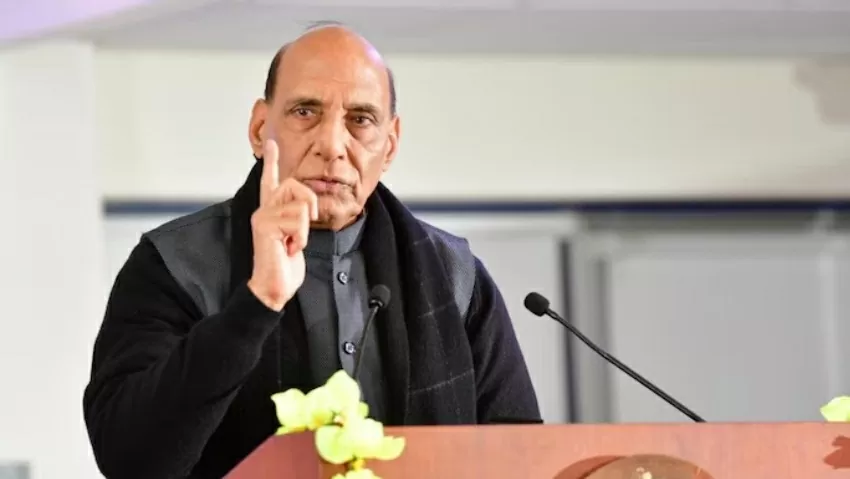
| Indian Defence Minister Rajnath Singh. (Source: India Today) |
Speaking at the ASEAN Defence Ministers' Meeting in Kuala Lumpur, Malaysia, Mr. Singh emphasized this point. Citing the United Nations Convention on the Law of the Sea (UNCLOS), Mr. Singh said: "India's support for freedom of navigation and overflight in the Indo-Pacific region is not aimed at any particular country but at protecting the collective interests of all stakeholders in the region."
Mr. Singh also affirmed that India's strategic engagement with ASEAN is not transactional but long-term and based on principles, built on the shared belief that the Indo-Pacific region should remain open, inclusive, and free from coercion.
The Minister emphasized India's security vision for the Indo-Pacific region, which integrates defense cooperation with economic development, technology sharing, and human resource development. The link between security, growth, and sustainability shapes India's approach to its partnership with ASEAN.
In July 2016, the Philippines won its case against China at the Permanent Court of Arbitration of the United Nations. The court ruled in favor of the Philippines, affirming that China's claim of historical rights within the "nine-dash line" had no legal basis under UNCLOS.
However, China refused to accept the ruling. It claims sovereignty over almost the entire South China Sea by making false claims about islands, including the construction of artificial islands, to significantly extend its territorial waters right to the doorstep of other nations.
Source: https://baoquocte.vn/an-do-thach-thuc-trung-quoc-tai-bien-dong-333154.html





























































































Comment (0)