


There's a long-standing theory that Apple will take a feature that's been around on Android for several years, add it to the iPhone, and give it a new name. Then, Apple will introduce this feature with great fanfare as a groundbreaking invention.
That's exactly what Apple did in its keynote speech at the annual WWDC 2025 event, when it revealed several new features that will be included in Apple Intelligence when the software update launches later this year.
"Blatant copying"
A host of new AI-powered features that improve the user experience will be coming to iPhone, iPad, Mac, Apple Watch, and Vision Pro. The most notable is Live Translation.
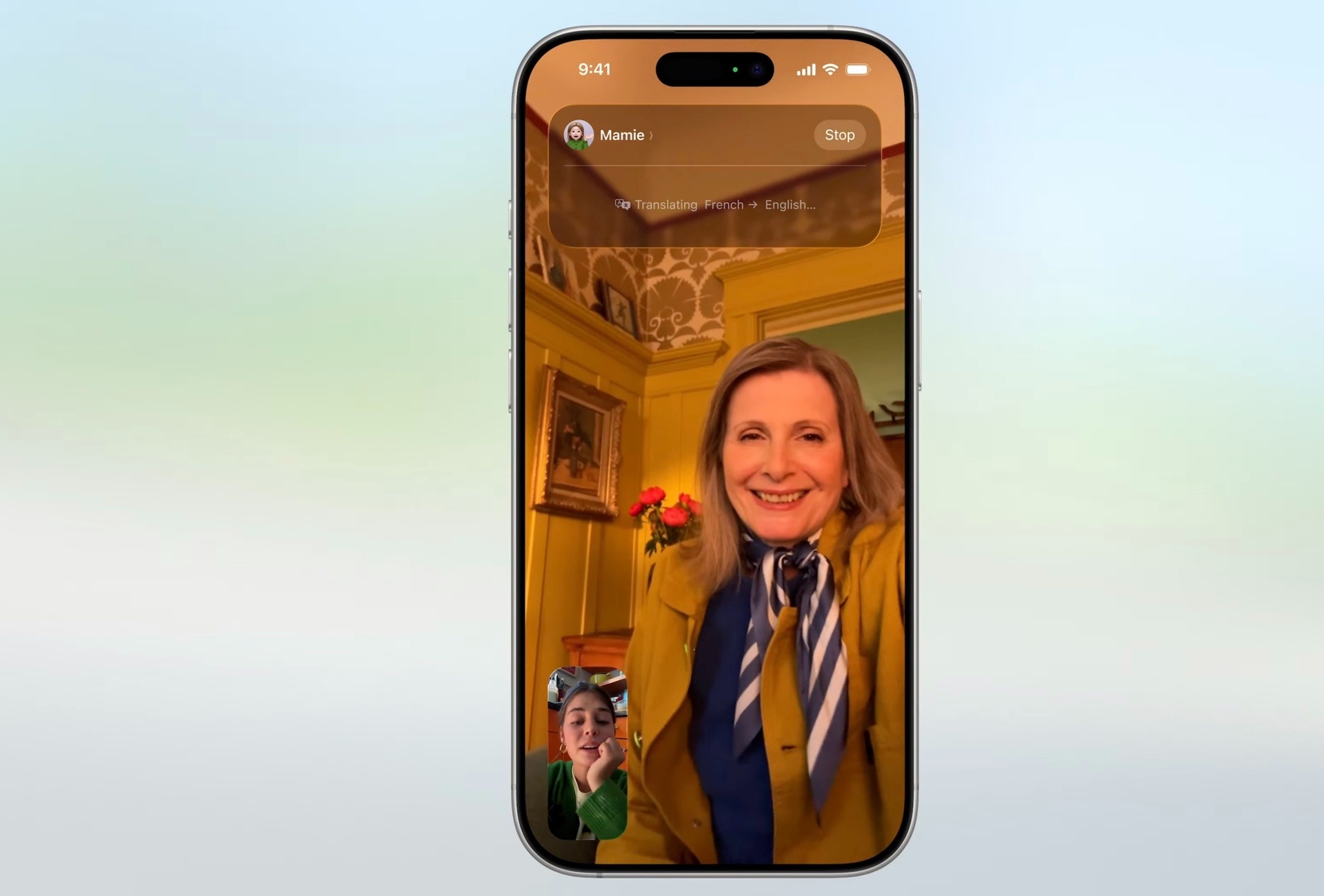 |
Live Translation feature in FaceTime calls. Photo: Apple. |
Designed to break down language barriers in communication, Live Translation integrates into messaging, FaceTime, and phone apps. This feature runs entirely on the device to ensure privacy for conversations.
Message content can be automatically translated as the user types, and replies are translated instantly. On FaceTime, live subtitles display the translation while the user listens to the other person's voice. Phone calls are also translated in real time.
In fact, this is a useful feature that Samsung previously introduced on its Galaxy AI. The South Korean brand even calls this feature by a similar name: Live Translate.
Similar to Apple, Samsung's Live Translate feature translates call content into other languages in real time. Thanks to an integrated language model and optimized hardware, the recording and processing of content takes place directly on the device to ensure user privacy.
Additionally, Google also showcased live translation at I/O 2022 with the first images of the augmented reality (AR) glasses prototype under development. In Google's video , the device translates languages and displays the results live in front of the user.
"You can see what I'm saying in real time, like subtitles," a Google representative shared. In the video, Google's AR glasses can be seen equipped with external speakers and designed quite similarly to regular fashion eyewear.
As a latecomer, Apple will need to address the inherent weaknesses of this translation feature. Specifically, when using Live Translate, users will find it difficult to determine when to start and stop speaking for the AI to translate.
According to Cnet reporter Lisa Eadicicco, who tried it out at a bustling Paris market, it was difficult for her to focus on the conversation because she had to pay attention to what was displayed on the screen. Ultimately, the reporter bought items the traditional way: pointing, gesturing, and using her broken French to describe what she was buying.
Answer or hear calls on behalf of the user.
When Google introduced the Pixel 6 and Pixel 6 Pro in 2021, they announced a very useful new feature for users called Hold for Me. When activated, Pixel AI will listen when someone answers the call and then notify the user with a prompt so they can continue the conversation.
This feature is quite useful as it allows users to comfortably do other things without having to keep listening to see if the person on the other end of the line has returned to the conversation. Once the user on the other end returns to the conversation, the virtual assistant on the Pixel will notify them with an audio message.
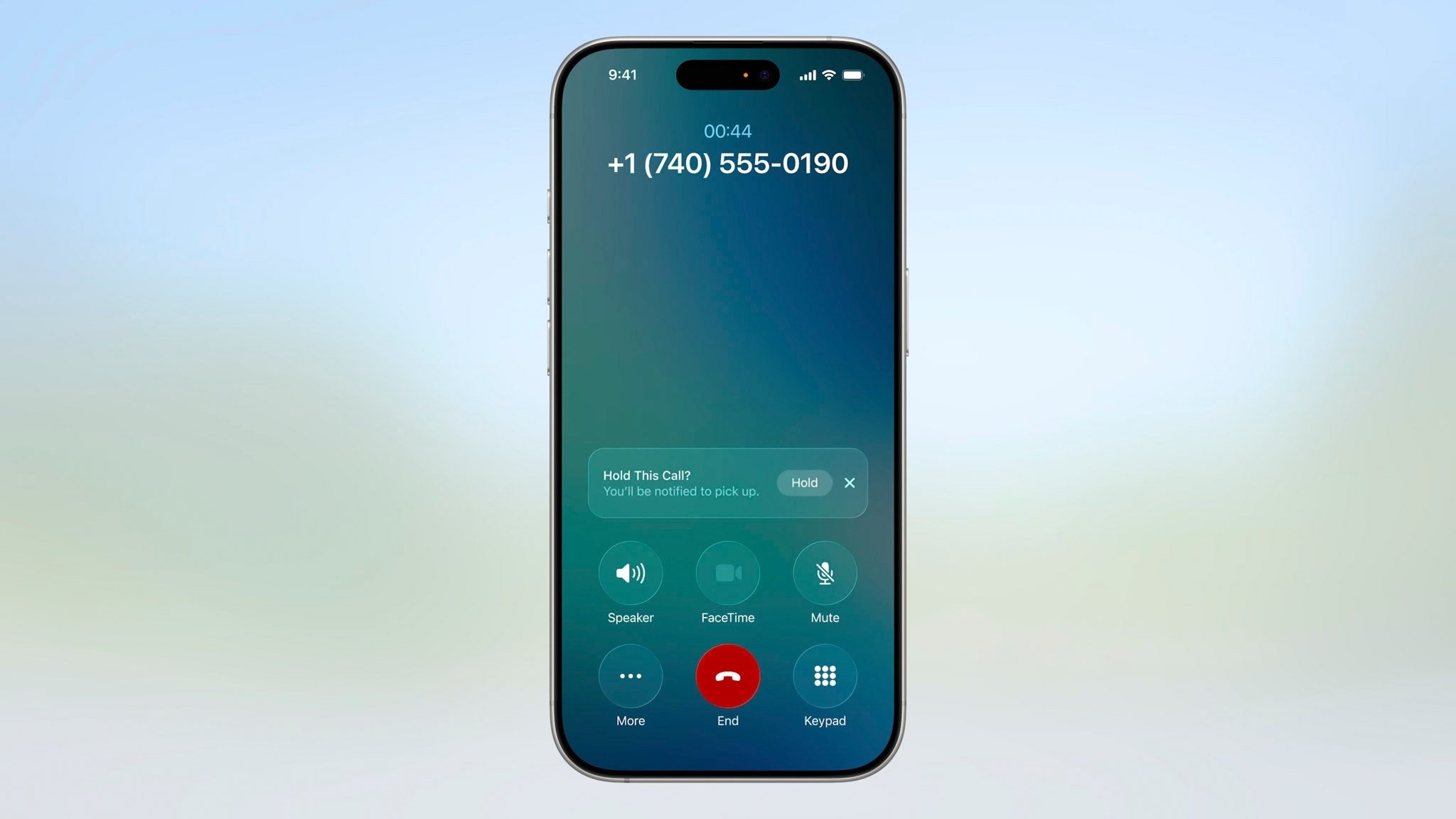 |
This feature, which answers or takes calls on behalf of the user when they are busy, is called Hold Assist. Photo: Apple. |
This is a great feature and one that many users have been urging Apple to bring to the iPhone. That has become a reality with Apple's announcement of a similar version called Hold Assist.
According to Apple, when a call is held, users can leave their iPhone on silent standby while they return to their work. When a call center agent is ready, users will be notified to resume the call.
Finally, a feature previously available on Pixel models called Google Call Screen uses AI and asks the caller to reveal their name and reason for calling before connecting the call.
Apple currently has a similar feature called Call Screening that helps users avoid distractions. Similar to Google Call Screen, the system collects information about the caller and provides the necessary details to help users decide whether or not to answer the call.
Hold Assist, Live Translation, and Call Screening are all useful features on Android and have been long awaited by many iPhone users.
According to PhoneArena reporter Alan Friedman, these three AI features highlight the differences between Google and Apple when it comes to their operating systems.
Accordingly, Android is adapted to improve the user experience. Apple waits before adding these useful new features and then comes up with a somewhat similar name.
"Nevertheless, I'm happy to see Apple adding these features to iOS and I'm really looking forward to using them," Friedman commented.
Source: https://znews.vn/apple-lai-hoc-android-post1559633.html

![[Photo] The General Secretary and the Prime Minister attend the groundbreaking ceremony for multiple-level boarding schools in border areas.](https://vphoto.vietnam.vn/thumb/1200x675/vietnam/resource/IMAGE/2026/03/19/1773888999705_vna-potal-tong-bi-thu-va-thu-tuong-du-le-khoi-cong-dong-tho-dong-loat-cac-truong-noi-tru-lien-cap-bien-gioi-8649904-3885-jpg.webp)


































































































Comment (0)