

With a history spanning approximately 5,000 years, despite a turbulent and eventful period, South Korea is currently one of the leading countries in the field of preserving and promoting its cultural heritage.
This is also a country that has built a brand, transforming cultural heritage into an important part of the tourism industry, using cultural heritage to create highlights, increase attractiveness and satisfaction for tourists.
The appeal of cultural heritage tourism
South Korea currently has 14 UNESCO World Heritage sites, some of which attract tens of thousands of tourists each year, such as: Changdeokgung Palace; Hwaseong Fortress; Gochang, Hwasun and Ganghwa Tombstone Complexes; Gyeongju Historic Area; Joseon Dynasty Tombs; Hahoe and Yangdong Historic Villages; Jeju Volcanic Island...
These historical sites not only possess architectural value but also hold significant cultural and historical value. Organizing tours and festivals at these sites provides opportunities for visitors to gain a deeper understanding of the country's culture and history.
Visitors can also try on traditional Korean clothing like hanbok; participate in cooking classes, or take food tours to learn how to prepare and enjoy traditional Korean dishes.
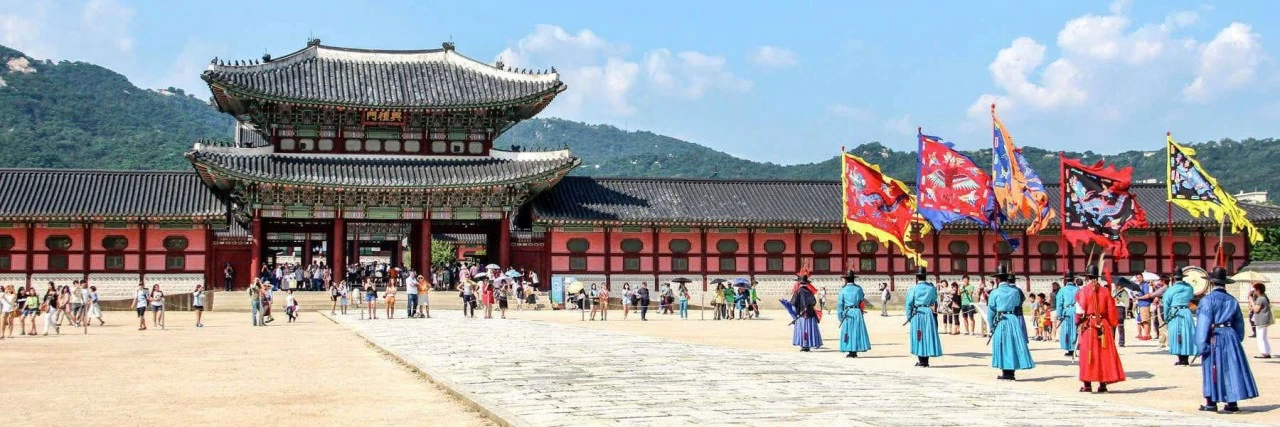 |
| A parade at Gyeongbokgung Palace, Seoul, South Korea. (Source: bordersofadventure.com) |
Some ancient villages in this country are likened to living pages, recording unique cultural aspects, from architecture and customs to oral traditions. This is how Koreans assert that historical sites have the ability to "speak" for people living in the world today and transform them into cultural tourism assets.
Koreans place great emphasis on introducing their unique customs and traditions to foreign tourists. These introductions are very natural and practical; for example, when introducing Buddhism, tourists are taken to ancient temples, listen to sermons, and spend the night there.
There, visitors can participate in temple activities such as sweeping the courtyard, visiting the living quarters and dining areas of the monks, and admiring spaces that recreate the daily life of ancient Koreans. Through these activities, foreign visitors can clearly experience Korean traditions.
Useful solutions from South Korea
The South Korean government has always considered cultural heritage as a prerequisite and environment for tourism development. In an effort to enhance the country's status and image, South Korea is focusing on implementing a "National Branding Initiative" by promoting cultural heritage in the tourism sector.
With its perspective on preservation, emphasizing "using the old as a foundation for building the new" and "the best way to preserve is to use it regularly," this nation has ensured a harmonious balance between preservation and promotion, enabling cultural heritage sites to effectively promote traditional culture, enhance the nation's standing internationally, and contribute to overall economic development, particularly tourism and services.
South Korea has also built a rigorous and systematic heritage preservation system, ensuring three objectives: preserving the heritage in its original state, systematic management, and effective utilization. This system is a multi-level program aimed at preserving and developing the country's cultural heritage.
Managed by the Cultural Heritage Administration (CHA), the program is based on the legal framework of the Cultural Heritage Protection Act of 1962, continuously expanded and upgraded over the years to reflect current practices. The laws encompass not only tangible heritage such as architectural structures and antiques, but also intangible heritage such as music, dance, and traditional festivals.
To promote the value of cultural heritage, in South Korea, programs such as "Cultural Heritage Parks" for elementary school students help children access and learn about traditional cultural values.
Classes on crafts, cooking, and festivals are also regularly held to educate the younger generation about the importance of cultural heritage and create connections between generations.
In addition, the South Korean government is strengthening training and research in cultural tourism to improve the quality of the country's cultural tourism services and products, alongside establishing research centers, practice centers, and specialized schools for cultural tourism.
South Korea has implemented effective financial policies for businesses as well as for the preservation and promotion of its heritage.
Cultural tourism businesses, restaurants, and hotels are provided with loans and financial support to improve service quality and develop new products such as traditional experiences, Korean cuisine, rail tourism, and cruise tourism.
Preserving historical relics not only brings cultural value but also has a positive impact on economic development. When relics are preserved and promoted, the number of tourists increases, generating revenue for the locality.
Tourism products that combine cultural heritage, such as experiential tours and traditional culinary programs, not only attract tourists but also create jobs and increase income for local people. This shows that preserving cultural heritage and developing the economy can go hand in hand, benefiting both the community and the national economy.
South Korea has implemented numerous restoration campaigns, such as renovating the area surrounding Gyeongbokgung Palace and developing tourist information centers at historical sites. These efforts not only help preserve heritage values but also create a favorable environment for tourists to experience culture and history.
Cultural events promoting the country's distinctive culture, such as the Seoul Light Festival, Jinhae Cherry Blossom Festival, Busan Arts Festival, Boseong Tea Festival, and Pyeongchang Mushroom Festival, are regularly held. The Busan Art Exhibition and the Korean Kimchi Festival not only attract tourists but also contribute to raising awareness of the cultural value of the heritage.
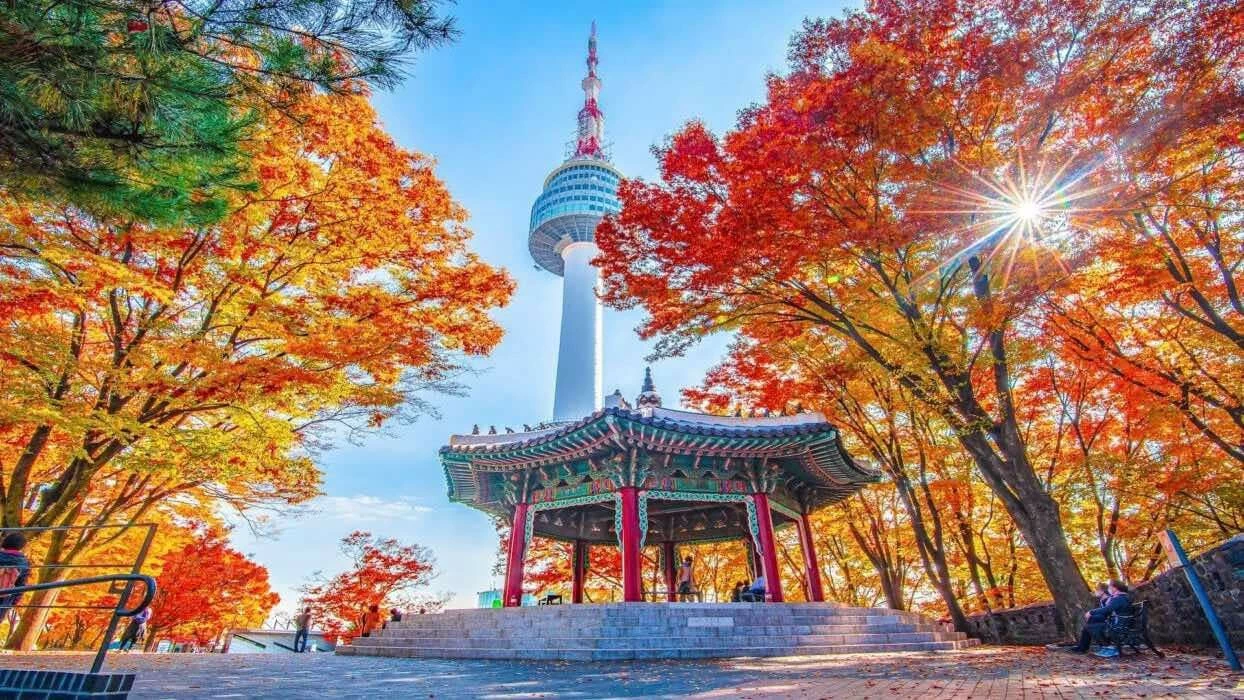 |
| Namsan Tower - a symbol of love. (Source: agoda.com) |
Currently, some villages in South Korea have become attractive tourist destinations. There, multi-generational families are conscious of preserving local cultural values in order to attract tourists.
The South Korean government regularly organizes local events to raise public awareness, helping citizens understand the value of what they possess, and to honor and treat national heritage with respect.
In addition, educational and cultural heritage promotion programs by the government and non-profit organizations actively engage communities in restoring traditional practices and ensuring their transmission through generations.
Schools are increasingly incorporating local history and traditional arts into their curricula, fostering a sense of pride and understanding among young people. Programs such as the Cultural Heritage Park (an educational program for elementary school students) and the Cultural Heritage Dreamer and Performance (an educational program for middle and high school students) are currently very popular with Korean teenagers.
Furthermore, through the media, people's awareness and love for heritage have been enhanced. The government has also invested in several competitions for creative writing and feature writing about activities related to heritage conservation.
South Korea also places great emphasis on transmission and continuity. The Korean Cultural Heritage Foundation supports educational programs for young people and provides professional training programs to cultivate expertise in traditional crafts and cultural heritage for future generations.
In parallel with that, the Promoting the application of technology in leveraging heritage values associated with tourism is being utilized for the preservation and restoration of heritage sites, such as technologies like 3D scanning, virtual reality (VR), and augmented reality (AR).
Virtual museums, online classes, and social media campaigns allow for a wider dissemination of traditional knowledge. For example, online Korean cooking classes have become incredibly popular, allowing people worldwide to explore the complexities of Korean cuisine. This not only helps preserve heritage sustainably but also creates a novel and engaging experience for visitors.
Source: https://baoquocte.vn/bao-ton-phat-huy-di-san-van-hoa-gan-voi-phat-trien-du-lich-bai-hoc-kinh-nghiem-tu-han-quoc-292054.html



























![[Video] The craft of making Dong Ho folk paintings has been inscribed by UNESCO on the List of Crafts in Need of Urgent Safeguarding.](https://vphoto.vietnam.vn/thumb/402x226/vietnam/resource/IMAGE/2025/12/10/1765350246533_tranh-dong-ho-734-jpg.webp)



















































Comment (0)