Strange white rocks discovered on Mars, suspected to be traces of ancient rain.
The appearance of white rocks at the Jezero crater is opening up a fascinating new hypothesis: Mars may have once experienced periods of heavy rainfall sufficient to alter its geology.
Báo Khoa học và Đời sống•11/12/2025
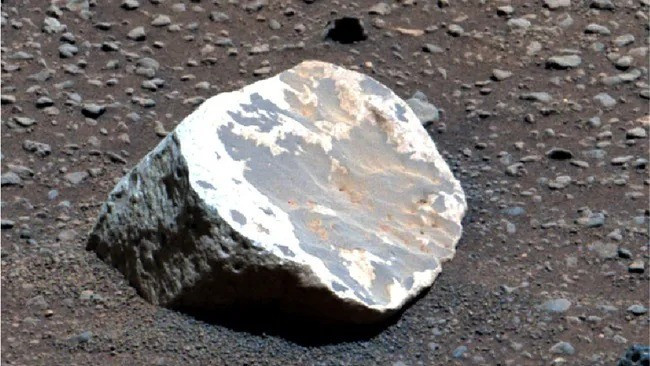
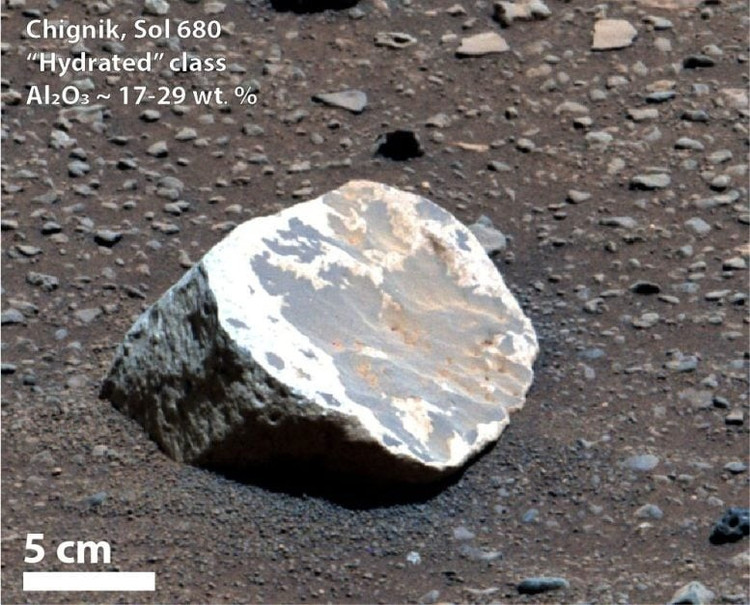
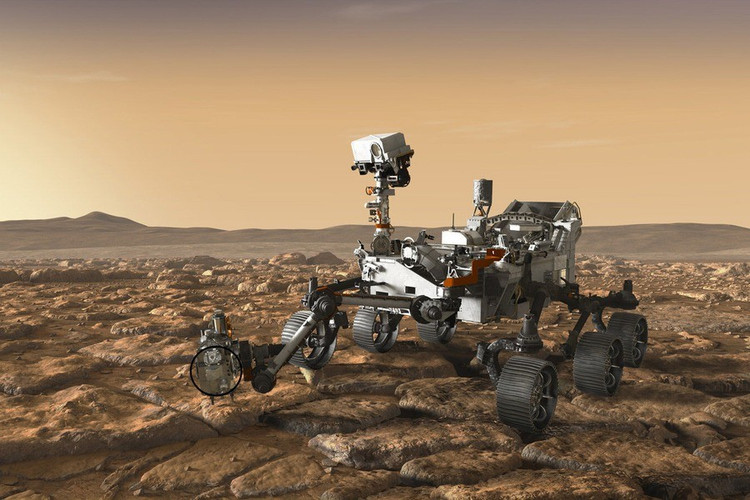
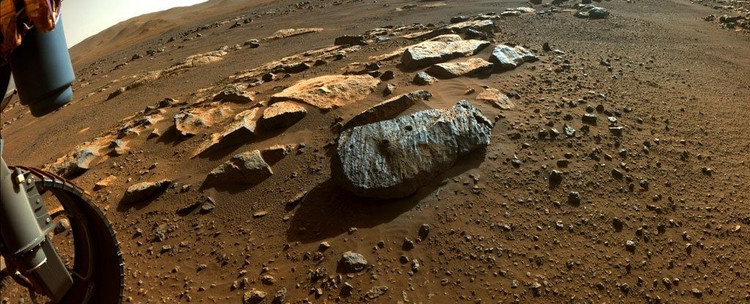
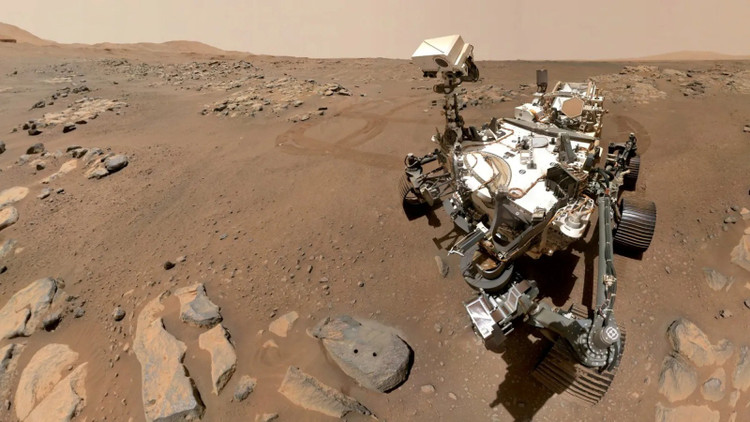
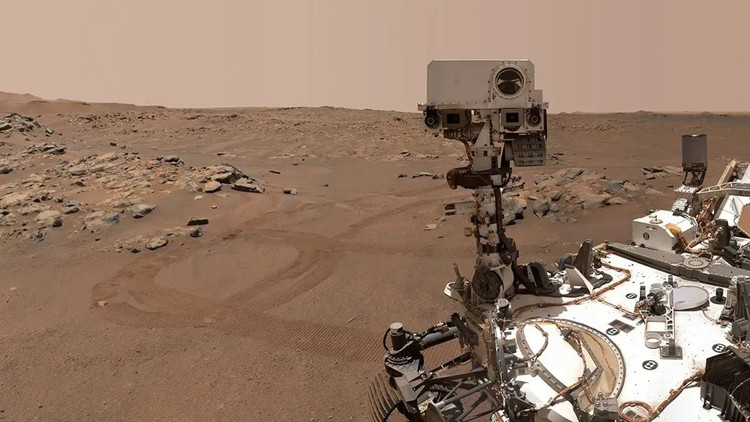
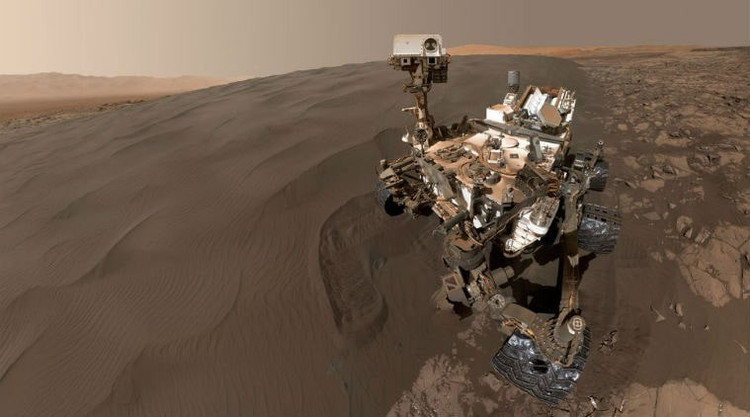
A study published on December 1st in the journal Communications Earth & Environment suggests that unusually white rocks indicate Mars once had wet areas with heavy rainfall, similar to tropical regions on Earth. Photo: NASA. NASA's Perseverance rover has discovered strange-looking white rocks on the surface of the red planet. Upon closer inspection, researchers found these rocks to be kaolinite – a type of aluminum-rich clay. Photo: NASA / Communications Earth & Environment.
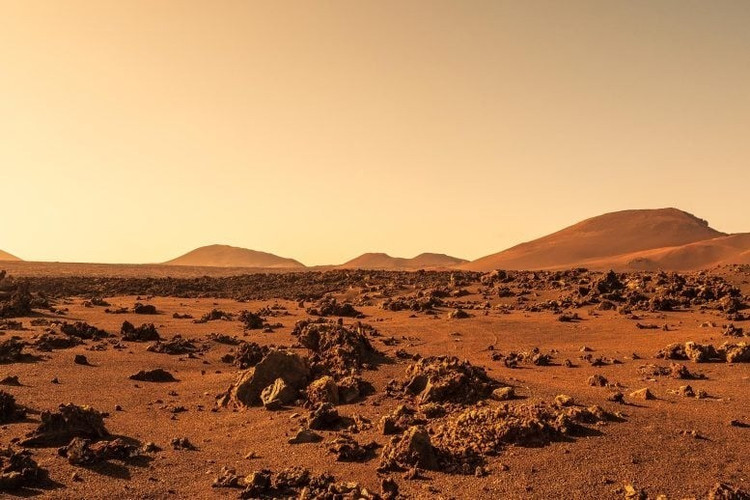
On Earth, kaolinite is most commonly formed in warm, humid conditions, such as in tropical rainforests. It typically forms in rocks that have been eroded of other minerals after millions of years of consistent rainfall. Photo: NASA. However, the prevailing atmospheric conditions on Mars today are cold and dry. The red planet also has a thin atmosphere, composed primarily of carbon dioxide. Photo: Shutterstock. Adrian Broz, a soil scientist at Purdue University and lead author of the study, said that although Mars currently has very harsh conditions—barren, cold, and without liquid water on its surface—the red planet once had more water than it does today. (Image: news.mit.edu)
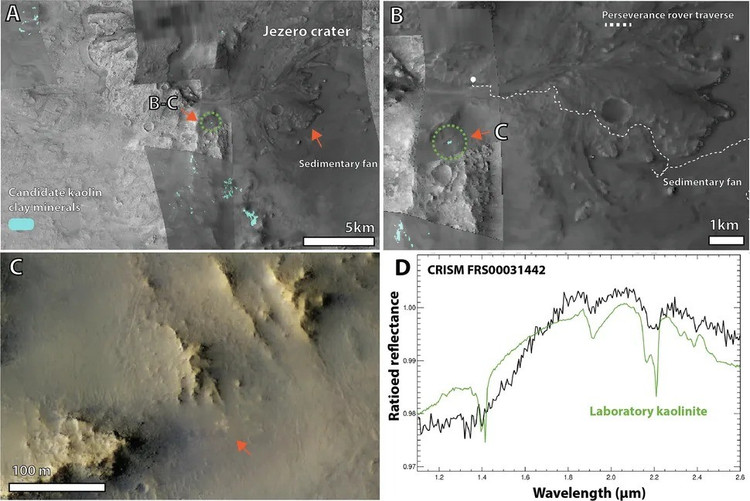
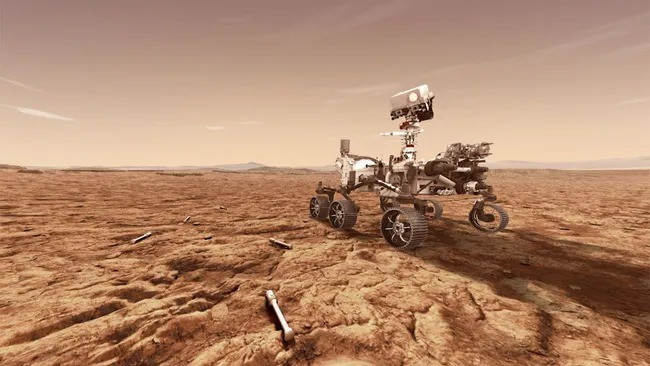
Scientist Adrian and his colleagues compared the structure of kaolinite on Mars, examined by various instruments on the Perseverance rover, with samples from Earth taken from South Africa and San Diego. The rocks appear very similar, suggesting they were formed in similar ways. Image: NASA/JPL-Caltech. Satellite imagery of the Martian surface appears to reveal larger kaolinite deposits elsewhere on the planet. However, Perseverance and other probes have yet to explore those areas. Image: NASA, JPL-Caltech, MSSS, SWNS/Zenger. The presence of kaolinite in rocks on the surface of Mars strengthens the hypothesis that the red planet was once a humid oasis, although the timing and processes that led to its arid, cold state are still debated. Image: NASA/JPL-Caltech.
Some leading theories suggest that Mars lost water sometime between 3 and 4 billion years ago when its magnetic field weakened enough for solar winds to blow away its atmosphere. This process was likely very complex and multifaceted. Image: NASA/JPL-Caltech. Researchers say studying the types of rocks on the planet could help us better understand the process and timing of Mars' water loss. Photo: NASA.
Readers are invited to watch the video : A map of the universe with over 900,000 stars, galaxies, and black holes. Source: THĐT1.

 Báo Khoa học và Đời sống•11/12/2025









![[Photo] Closing Ceremony of the 10th Session of the 15th National Assembly](/_next/image?url=https%3A%2F%2Fvphoto.vietnam.vn%2Fthumb%2F1200x675%2Fvietnam%2Fresource%2FIMAGE%2F2025%2F12%2F11%2F1765448959967_image-1437-jpg.webp&w=3840&q=75)































![[OFFICIAL] MISA GROUP ANNOUNCES ITS PIONEERING BRAND POSITIONING IN BUILDING AGENTIC AI FOR BUSINESSES, HOUSEHOLDS, AND THE GOVERNMENT](https://vphoto.vietnam.vn/thumb/402x226/vietnam/resource/IMAGE/2025/12/11/1765444754256_agentic-ai_postfb-scaled.png)

















































Comment (0)