

The Estonian Ministry of Defence stated: “The arrival of the new K9 'Thunder' howitzers demonstrates our long-standing commitment to combat readiness, resilience and cooperation. Estonia invests in security because our freedoms deserve to be protected.”
The K9 is one of several South Korean weapon systems rapidly gaining market share within NATO, despite strong lobbying efforts by Germany to promote its competing products. The K9 is currently in service with the armies of Finland, Norway, Poland, and Türkiye, while Romania is expected to begin receiving the artillery piece before the end of the decade.
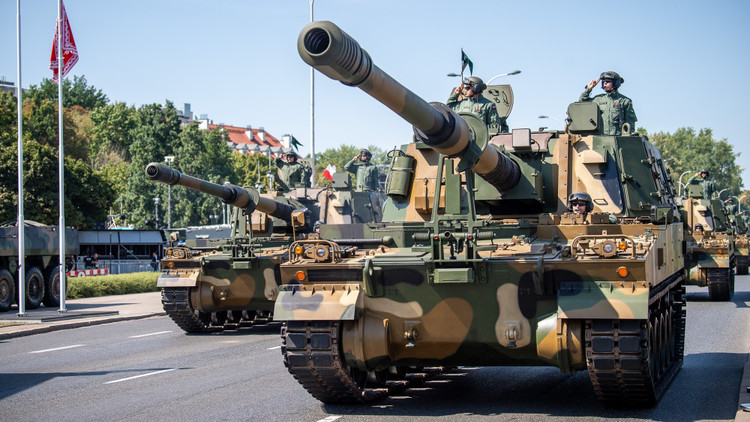
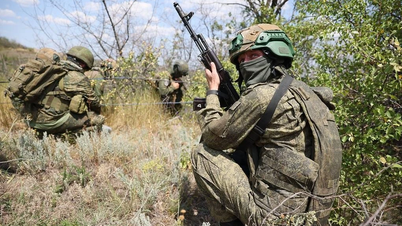
NATO's increasing deployment of K9 artillery pieces and other advanced equipment from South Korea is putting new pressure on Russia's defenses, at a time when Moscow needs to rebuild its artillery forces, which have declined to less than 5% of their Soviet-era size. Key features of the K9 include its automatic loading system, a maximum firing rate of six rounds per minute, and the ability to fire in various trajectories in a short period of time.
The new K9A1 variant is equipped with an upgraded fire control system and computer, allowing firing without starting the main engine — reducing fuel consumption, decreasing maintenance requirements, and improving accuracy through the combined use of inertial navigation and GPS. New long-range ammunition also increases the K9's range to 54 km.
Meanwhile, in 2023, Russia commissioned the new generation 2S35 Koalitsiya-SV self-propelled artillery system. This system is considered to have superior accuracy compared to previous generations thanks to the use of advanced laser guidance.
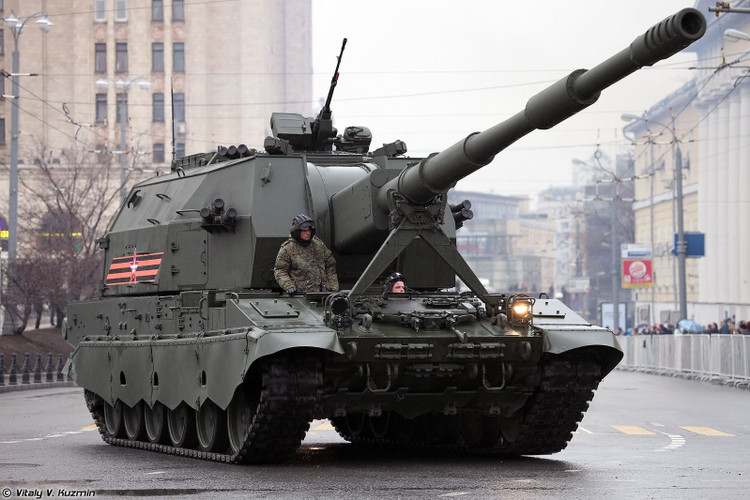
The Koalitsiya-SV's 152mm cannon has a range of 70 km and, under optimal conditions, can fire up to 20 rounds per minute, although this rate decreases significantly if sustained for extended periods. However, since mass production only began in 2021, the number of systems in service with the Russian military remains limited and is unlikely to keep pace with the K9's production rate in the near future.
Russian artillery capabilities were significantly bolstered by large-scale aid reportedly from North Korea, including substantial quantities of 122mm, 152mm, and 170mm ammunition, as well as 170mm self-propelled guns. These 170mm guns were considered by many senior Ukrainian officers to be one of the most serious challenges facing their frontline forces.
Source: https://khoahocdoisong.vn/nga-doi-mat-kho-phao-tu-hanh-k9-giap-bien-gioi-voi-nato-post2149074617.html





































































Comment (0)